Home » Jazz Articles » Year in Review » 2012: The Year in Jazz
2012: The Year in Jazz

Here's a look at significant happenings across the jazz world over the past 12 months:
International Jazz Day
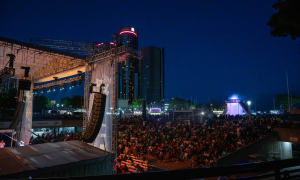
Jazz everywhere now has an official day to call its own. In 2011, the United Nations Educational, Scientific and Cultural Organization named pianist Herbie Hancock a Goodwill Ambassador. He wasted no time in making an impact in that role, partnering with UNESCO and the Thelonious Monk Institute to present International Jazz Day events in Paris and, on April 30, sunrise and sunset all-star concerts at Congo Square in New Orleans and the United Nations World Headquarters in New York respectively. The three-hour sunset concert featured several dozen all-star musicians from around the globe.
Latin Jazz Grammy Restored
The Recording Academy restored the Latin Jazz category to the Grammy Awards, in a June announcement that was seen as a major victory for Latin jazz musicians and fans. They'd protested vehemently after the Academy's trustees reduced the award categories from 109 to 78 in 2011. Drummer Bobby Sanabria led the drive to get the category restored. A judge dismissed a musicians' lawsuit against the Recording Academy in April, but the trustees relented on Latin jazz and a few other categories two months later.
Silver Anniversary
Jazz at Lincoln Center is in the midst of celebrating its 25th anniversary season as an arts organization—one that has grown quite robust under the leadership of Managing and Artistic Director Wynton Marsalis. The organization, which is blessed with a sleek concert hall, influential donors and big bucks in its till, is working to make an impact outside the Big Apple. JALC is also evolving by working to build a global audience for jazz through social media and its website. It now broadcasts concerts over the Internet, and is preparing hundreds of concert recordings so they can be made available online. In October, JALC opened a new venue in Qatar, a small peninsula nation on the Persian Gulf. Jazz at Lincoln Center Doha, a new 4,500 square-foot performance room at the St. Regis Doha hotel, is the first in a series of jazz clubs that St. Regis and JALC plan to create through a global partnership.
Economic Issues
Jazz is hardly immune to the ups and downs of the economy. At times, it seems most vulnerable. We saw it this year on the club and festival front, and the impact of Mother Nature. We saw it after Superstorm Sandy in late October. Many musicians weren't able to get into New York City for gigs, or to leave their Big Apple home base for gigs elsewhere across the U.S., eliminating much-needed income in some cases. The storm damage wiped out more than a few home studios and/or instruments.
The Jazz Foundation of America staff worked tirelessly to help New York-area musicians with food, warm clothing, emergency needs and rent subsidies for some who had gigs canceled. Saxophonist Joe Lovano and bassist Mark Egan were among more than a dozen jazz musicians who took part in a Hudson Valley Musicians for Hurricane Sandy Relief benefit concert, which took place at the Sugar Loaf Performing Arts Center in mid-November. The Preservation Hall Jazz Band partnered with Ropeadope, Okayplayer, the Jazz Foundation of America and the NYC Food Truck Association to form Renew York, with to aid musicians affected by the storm, much as they'd helped with similar post-Katrina efforts in New Orleans.
More than a handful of area jazz clubs were impacted, with weeklong closings in some cases. The Blue Note was shuttered for five nights, the longest closure in its 31-year history. Programming at the Jazz Gallery was suspended even longer. Lacking electricity in Greenwich Village, Small's Jazz featured jam sessions by candlelight and flashlight.
Clubs Come, Go and Come Back
The club scene was in great flux throughout 2012. New York's fabled Oak Room at the Algonquin Hotel closed for good in February after a 32-year cabaret run. Feinstein's, the high-end supper club at the Loews Regency Hotel in Manhattan, is closing in January 2013 after 13 years at that site. Singer-pianist Michael Feinstein intends to move the club to a new space. Owner Alvin Reed closed Harlem's Lenox Lounge, a jazz club that opened in 1942, after the landlord doubled his monthly rent. Drummer Cecil Brooks III closed his Cecil's Jazz Club in West Orange, N.J. to concentrate on playing music and producing records. Café Paradiso closed in Ottawa, where it had been the center of the jazz scene in Canada's capital city.
On the plus side of the equation, renowned architect Frank Gehry signed on as pro bono designer of a new home for the Jazz Bakery in Los Angeles's Culver City neighborhood. A $10 million fundraising campaign is underway for the Jazz Bakery, which lost its lease at the Helms Bakery complex in 2009. Its new home will be next to the Kirk Douglas Theater. SFJAZZ's new SFJAZZ Center in San Francisco is set to open on January 21, 2013. New York's Kitano New York hotel expanded its jazz programming with an adjacent new supper club, Jazz at Kitano. Two years after the Cape May Jazz Festival folded due to financial and organizational woes (after presenting 34 weekend festivals in 17 years), a full-blown event returned to New Jersey's southernmost point in November with the Exit 0 International Jazz Festival. Producer Michael Kline's Spy Boy Productions plans to make the event a twice-a-year phenomenon like its predecessor.
Credit Where Credit is Long Overdue
"Solar" is a classic Miles Davis composition, right? Wrong. Library of Congress's jazz specialist Larry Appelbaum found proof that the instrumental was actually written by Chuck Wayne. The guitarist failed to register the song for copyright, which was filed in 1963 by Prestige Records identifying the composer as Davis. Appelbaum found a recording from 1946 in the Chuck Wayne Collection in which one clearly hears the famous theme. The tune is titled "Sonny" after Sonny Berman who also can be heard on the record. Ironically, the "Solar" melody of this song ended is engraved on Davis's tombstone.
Stamp of Approval
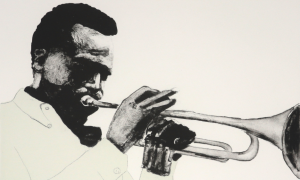
In June, the United States Postal Service and its French equivalent, La Poste, released a joint pair of commemorative stamps, one honoring Miles Davis, the other honoring singer Edith Piaf. The Davis stamp featured David Gahr's classic profile photograph that became the cover of the trumpeter's A Tribute to Jack Johnson (Columbia, 1970).
Stamp Perpetual Honors for Brownie, Mingus and Davis
Wilmington, DE officials dedicated a statue in Kirkwood Park November 9 to honor native son, trumpeter Clifford Brown, who died 56 years ago at age 25. Groundbreaking was held last April for a memorial to Charles Mingus in Nogales, Ariz., where the bassist was born in 1922. The memorial is set to open in April 2013 during the Charles Mingus Hometown Jazz Festival. The city of Alton, Ill., announced plans to honor native son Miles Davis with a life-sized statue of the trumpeter in the heart of the downtown entertainment district on Third Street.
Awards Galore
Drummer Jack DeJohnette, saxophonist Von Freeman, bassist Charlie Haden, singer Sheila Jordan, and trumpeter and jazz advocacy activist Jimmy Owens were honored in January 2012 as National Endowment for the Arts Jazz Masters. 2013 honors will be bestowed in January 2013 to singer/pianist Mose Allison, saxophonist Lou Donaldson, pianist Eddie Palmieri and Village Vanguard owner Lorraine Gordon.
Sonny Rollins won musician of the year, tenor saxophonist of the year and best record honors with Road Shows, Vol. 2 at the Jazz Journalists Associations' 2012 Jazz Awards. Pianist Horace Silver received the JJA's Lifetime Achievement Award.
Jazz-related winners at the 54th Grammy Awards in February were Chick Corea for "500 Miles High," off Forever (Concord, 2011) (Best Improvised Jazz Solo); drummer Terri Lyne Carrington for The Mosaic Project (Concord, 2011) (Best Jazz Vocal Album); Corea, bassist Stanley Clarke} and drummer Lenny White for Forever (Best Jazz Instrumental Album). Singers Tony Bennett and Amy Winehouse won the Best Pop Duo/Group Performance category for their take on "Body and Soul."
Trumpeter/composer Arturo Sandoval won the Latin Grammy for Best Latin Jazz Album for his Dizzy Gillespie tribute CD, Dear Diz (Every Day I Think Of You) (Concord, 2011). Sandoval was touring Spain with Gillespie in 1990 when he defected from Cuba. Chick Corea won the Best Instrumental Album category for his Further Explorations (Concord, 2012), with bassist Eddie Gomez and drummer Paul Motian. Conguero, bandleader and salsa singer Poncho Sanchez and singer/songwriter Milton Nascimento received Lifetime Achievement Awards from the Latin Recording Academy during the weeklong Latin Grammy Awards celebration in Las Vegas in November.
Drummer Jamison Ross won first place at the 25th annual Thelonious Monk International Jazz Competition in September. Drummers Justin Brown and Colin Stranahan finished second and third respectively.
French singer Cyrille Aimée, now based in Brooklyn, NY, took first-place honors in the first Sarah Vaughan International Jazz Vocal Competition in Newark, NJ. Aimée was a 2010 Thelonious Monk Vocal Competition finalist.
Drummer Roy Haynes received the George Peabody Medal for Outstanding Contributions to Music in America from the Peabody Conservatory in Baltimore.
Pianist Kenny Barron and bassist Ron Carter received lifetime achievement awards at the eighth annual DC Jazz Festival in June.
The United Nations appointed pianist Danilo Pérez as U.N. Artist for Peace to recognize his efforts to promote music programs for children living in extreme poverty in his native Panama.
Pianist/composer Myra Melford won the $75,000 2012 Alpert Award in the Arts for Music from the Herb Alpert Foundation.
Trombonist Daniel Blacksberg, Sun Ra Arkestra leader Marshall Allen, pianist/composer Matthew Mitchell and saxophonist/composer Greg Osby were among 13 Philadelphia-area artists receiving $60,000 no-strings-attached Pew Fellowships in the Arts in 2012. The honors recognize their artistic achievements and the potential to use the fellowship to advance their work.
Drummer Jimmy Cobb received 2012's Donostiako Jazzaldia Award from the Heineken Jazzaldia festival in San Sebastian, Spain.
The Beale Street Brass Note Walk of Fame in Memphis honored saxophonist Charles Lloyd in April, when he returned to play a concert in his hometown for the first time since 1964.
2012's jazz inductees into the Memphis Music Hall of Fame in November included bandleader Jimmie Lunceford, composer and cornetist W.C. Handy, saxophonist George Coleman, educator W.T. McDaniel, singer Memphis Minnie and trumpeter Willie Mitchell.
Bassist, vocalist, composer and bandleader Esperanza Spalding won a Smithsonian Magazine American Ingenuity Award in the performing arts category at a Washington, DC, gala in November.
Clarinetist Don Byron, guitarist Bill Frisell, drummer John Hollenbeck, pianist Vijay Iyer and flautist Nicole Mitchell were among the 21 performing artists in the first class of Doris Duke Artists, a new initiative of the Doris Duke Charitable Foundation. Each will receive an unrestricted, multi-year cash grant of $225,000, plus as much as $50,000 more in targeted support for retirement savings and audience development.
Composer-pianist Vijay Iyer also won the Greenfield Prize, awarded this year in the field of music, from the Hermitage Artist Retreat and the Greenfield Foundation. The prize includes a $30,000 commission of an original work of art, a residency at the Hermitage in Englewood, FL, and a partnership with a professional arts organization to develop the work.
Other Notable Moments
Commemorative Performance
The New York Pops orchestra celebrated the 65th anniversary of singer Ella Fitzgerald's Carnegie Hall debut with on March 16, with a commemorative performance featuring Patti Austin singing Fitzgerald's classic Sings the Gershwin Songbook (Verve, 1959).
There's an App For That
Blue Note Records launched an innovative new app that enables users to explore and discover music spanning the entire history of the label from 1939 to present. The app is housed on the online music streaming service Spotify.
Minted Fresh Music
There's a new jazz record label on the block—with a production twist. Iridium Live will release live recordings from the New York midtown club by the same name. In additional to traditional sales vehicles in stores, online and at the club, releases in the Iridium's Freshly Burned series will be available for purchase immediately following performances.
Close Call
Blind jazz-rock guitarist Jeff Golub stepped onto the tracks at a New York subway station in September but was only grazed by a train as the motorman screeched it to a halt. Golub had his guide dog at his side but mistakenly believed he was stepping through a door onto a subway car. He said the train hit him on the leg before he was able to climb back onto the platform with the help of fellow straphangers.
Nobody Wins This One
Singer Dee Dee Bridgewater, the headliner at the first Miami Nice Jazz Festival on October 26, took to the stage at Miami's Gusman Center, but said she would not perform because of a contract dispute. After getting half of her $17,000 fee in advance via wire, final payment at the concert was by regular check, not cash or a certified check as specified. Bridgewater then walked off stage. Organizers said she left with the check even though she didn't perform. If that didn't cause enough of a stir among area jazz fans, the Miami Jazz Festival, which was scheduled on November 17 and 18 with acts including Trio Da Paz and pianist Monty Alexander, was canceled because of poor ticket sales.
2012 Final Bars
There were many losses in the jazz world during 2012, ranging from pianist, composer and bandleader Dave Brubeck and composer Clare Fischer to drummer Pete La Roca, saxophonists Red Holloway, John Tchicai and David S. Ware, and singer Etta James. A comprehensive listing follows.
Accordionists Juri Kravets, Frank Marocco and Krzysztof Puszynski; accordionist, pianist and composer One Eivin Pedersen.
Balafon player Kélétigui Diabate.
Bandleader, arranger, composer and musical director Mort Lindsey; bandleader, composer and arranger Jairo Varela.
Banjoist/guitarist Reg Quantrill.
Bassists Bob Badgley, Jimmy Bond, Lloyd Brevett, Joe Bruno, Joe Byrd, Freddie Deronde, Charles Flores, Victor Gaskin, Chris Giles, Dick Kniss, Takayoshi Matsunaga, Chuck Metcalf, Richie Pillot, Jacky Samson, Nabil Totah, Nick Tountas and Zbigniew Wegehaupt; bassist and artist manager John Levy; bassist, singer and broadcaster Wally Wrightman; bassist, organist, composer and arranger Ed Lincoln; bassist, percussionist and singer Dalio Arce Vital; bassist, trumpeter and accordionist John Forrest (aka Blackie); bassist and composer Eric Moseholm.
Cellist Denis Van Hecke.
Clarinetist Pete Kennedy; clarinetist, saxophonist, producer and writer Joe Muranyi; clarinetist and soprano saxophonist Lee Childs; clarinetist and composer Tale Ognenovski; clarinetist, saxophonist and bandleader Jacky June; clarinetist, arranger and bandleader Maxim Saury.
Composers Sadao Bekku, Richard Rodney Bennett; composer, pianist, singer, conductor and educator Marvin Hamlisch; composer, arranger, conductor, songwriter and pianist Ivan Lane; composer, lyricist and pianist Billy Barnes; composer, producer and author Ilhan Mimaroğlu; composer, conductor and clarinetist Severino Araújo; composer and trombonist Harry Betts; composer and educator Peter Cork.
Cornetist, pianist, singer and bandleader Ernie Carson.
Drummers Tom Bruno, Ed Cassidy, Bob Dartsch, Robbie France, Charles Hooper, Sonny Igoe, Jimmy "Junebug" Jackson, Eddie Jenkins, Vinnie Johnson, Bobby Malloy, Larance Marable, Tony Marsh, Bruce Morley, Bill Rowe, Pete "La Roca" Sims, Sune Spångberg, Paul van Wageningen; bass drummer and singer Lionel Batiste; drummer, guitarist and singer Osvaldo Fattoruso; drummer and educator Derryl Goes Faber; drummer, composer and performance artist Adam Noidlt (Frank Köllges); drummer, bandleader, composer, arranger and educator Wade Barnes; drummer, percussionist, educator and author Elliot Fine; drummer and educator Frisner Augustin; drummer and comedian Klaus D. Huber; drummer, saxophonist and artist Walter Malli; actor, performance artist, director and drummer Steve Ben Israel; drummer, singer and guitarist Osvaldo Fattoruso; drummer and broadcaster Bob French (Wiki).
Guitarists Mickey "Guitar" Baker, Roland Bautista, Joe Cinderella, Pete Cosey, Jerry Gordon, Rune Gustafsson, Ubaldo de Lío, Hans Samer, Patrick Saussois, Steven Springer, Yomo Toro, Bert Weedon; guitarist, Chapman Stick, Warr guitarist and educator Frank Jolliffe; guitar, mandolin, harmonica and kalimba player Phil Mathieu; mandolin and guitarist and educator John McGann; guitarists and singers Michael Burks (aka Iron Man), Paul Ponnudora,; guitarist and promotor Raúl Abzueta; guitarist and bassist "Mighty" Joe Young; guitarist and educator John Scott Henderson (Louisville-based, not to be confused with the L.A.-based guitarist Scott Henderson); guitarist, singer and songwriter John C. Marshall; guitarist and producer Alex Merck.
Keyboardist, singer, songwriter and producer Larry Butler.
Lyricist Hal David.
Multi-instrumentalist Nitro Deluxe (Manny Scretching Jr.).
Organist Leon Spencer Jr.; organist and composer Jon Lord.
Percussionists Luis Abreu, Manolito González, Manuel Vásquez "Mangüé" Goyoneche, Lala Kovačev, Manuel "Manolo" Labarrera; percussionist, composer, and arranger Ralph Ferraro; percussionist, composer and educator Obo Addy.
Pianists Ian Bargh, Charles Bell, Borah Bergman, Jean-Francois Boillat, John Vernon Bow, Bubi Chen, Jodie Christian, Jerome Eisner, Jean Fanis, Eddie Fritz, Walter Günthardt, Paquito Hechevarria, Basil Hunter, Maurice "Moe" Lavallee, Reginald "Reggie" Lewis, Anthony Maonde, Pat Murray, Ian Pearce, Austin Peralta, Ray Pitts, Omar Sharriff (Dave Alexander), Jeff Sweet, Rob van den Broeck, Charles "Manny" Williams, Don Wilson; pianist, bandleader, composer and arranger Dave Brubeck; pianists, arrangers, composers and bandleaders Graeme Bell, Jef Gilson, Fritz Pauer, Rob Pronk, Hal Schaefer, Shimrit Shoshan; pianists and composers Jose Roberto Bertrami, Burrell Gluskin, Pete Saberton, Bernardo Sassetti; pianist and organist Carol Britto; pianist, organist, bandleader, composer and arranger Clare Fischer; pianist and NARAS past president Mike Melvoin; pianist, guitarist, arranger and educator George Mesterhazy; pianist, arranger, composer, conductor and songwriter Ivan Lane; pianists, composers and arrangers Lee Rodgers Grant, Jimmy Walter; pianist, composer and saxophonist István Regős; pianist and bandleader Noel Kelehan; pianist, bandleader and artist manager José Curbelo; pianists, singers and composers Sergio Mihanovich, Uldis Stabulnieks; actor and keyboard player Sherman Hemsley; pianist, composer and conductor Gaspero C. Trainito; pianist and conductor Noel Kelehan; pianist and kecapi player Bubi Chen; pianist, composer and singer Uldis Stabulnieks; pianist, singer, composer, educator and lawyer Steve Prosser; pianist, drummer and bandleader Stan Greig; pianist, bandleader, composer and educator Ken Chaney.
Saxophonists Bucky Adams, Flavio Ambrosetti, Robert Barnes, Bill Beyea, Totti Bergh, Bill Caldwell, Doudou Chancy, Lol Coxhill, Joki Freund, Willie George, Salvador Guerzo, Andy Hamilton, Red Holloway, Lasse Hörnfeldt, Ben Kynard, Nobuyuki Morikawa, Dick Oats, Frank Pantrini, Joe Pompei, Carl Randall, Al Seibert, John Tchicai, Bill Tillman, Larry Unthank, Vince Wallace, Vinnie Walsh, David S. Ware, Edwin "Rocky" Wynder; saxophonist and clarinetist Bill Beyea; saxophonist, writer and educator Paul Wagner; saxophonists, clarinetists and flutists Bill Caldwell, Jackie Kelso (John Kelson), saxophonist, clarinetist, flutist, bandleader and educator Hal McKusick; saxophonist, clarinetist, flutist and pianist Byard Lancaster, saxophonist and flutist Sean Bergin; saxophonists and arrangers Derek Bridge, Salvador Guerzo, Tommy Newsom; saxophonist, bandleader, composer and arranger Dieudonné Nino Malapet; saxophonist, flutist, clarinetist, pianist, composer and arranger Robert W. "Housewine" Roden; saxophonist, composer and poet Faruq Z. Bey; saxophonist and composer Tomasz Szukalski; saxophonists and educators Rick Britto, Ken Revell; saxophonist and bandleader Von Freeman; Cambodian king, film maker, pianist, saxophonist and composer Norodom Sihanouk; saxophonist, composer and arranger Ray Pitts; saxophonist and bandleader Félix del Rosario; saxophonist, painter and sculptor Günther Klatt.
Singers David Allyn, Ayten Alpman, Fontella Bass, Georges Bellec, Tetjana Bojeva, Nina Bundy, Marie Ellington (Maria Hawkins Cole, who was the wife of Nat, mother of Natalie), James "Sugar Boy" Crawford, Kay Davis (Kathryn Wimp), Ray Desforges, Edwin Duff, Nello Ferrara, Etta James, Guy Konkèt, Dorothy McGuire, Robert Moore, Anne Marie Moss, Alf Pearson, Pery Ribeiro, Kelly Ryan, Jody Sandhaus, Jill Seifers Walsh, Carrie Smith, Dottie Smith, Kathy Taraschi, James Van Buren, Italia Vaniglio, Andy Williams, Leroy Wofford; singer and former Puerto Rico legislator Ruth Fernández; singer, vibraphonist, drummer, percussionist, bandleader, talent scout, disc jockey, composer, arranger, producer and impresario Johnny Otis (Ioannis Alexandres Veliotes); singer, saxophonist, percussionist, composer and bandleader Jimmy Castor; singers and actresses Rebecca Dorsey, Betty Rhodes; singer and percussionist Jimmy Sabater; singer and songwriter Christiane Weber; singer, songwriter and multi-instrumentalist Lucio Dalla; singer and composer Art Jenkins; singer and actor Pery Ribeiro; singer and arranger Todd Buffa; actress, singer and concert producer Janet Carroll; singers and guitarists Ben Tinker, Seydina Insa Wade; singer, actor and author Tony Martin; singer, multi-instrumentalist, composer and arranger Magro Waghabi; singer, broadcaster and writer "Uptown" Janice Brown; singer, pianist, trumpeter, singer, guitarist and composer Terry Callier; singers and percussionists Luisito Ayala and Sammy Ayala; singer, vibraphonist and drummer Hazy Osterwald; singer and bassist Ray Lamere (aka Sugar Ray); singer and banjo player Bruce McNichols; jazz poet and performance artist Jayne Cortez.
Sitarists Ustad Shamim Ahmed Khan, Jalal Zolfonoun; sitarist, composer, bandleader and educator Ravi Shankar.
Theremin player, flutist, guitarist, bass guitarist and singer Barbara Buchholz.
Trombonists Eddie Bert, Joe Ciavardone, Jerry Dorn, Jerry Heath, Frank Parr; trombonist and educator Jimmy Harrison; trombonist, pianist, arranger and music educator Eddie Harvey; trombonist, trumpeter, bandleader and broadcaster Bruce Davis; trombonist, bandleader and composer Frode Thingnaes; bass trombonist Mike Wimberly.
Trumpeters Chuck Austin, Bill Brimfield, Jean-François Canape, Lou Colombo, Raymond Court, Ted Curson, Maurice D. Davis, Frank Gay, Fred Gérard, Don Ingle, Cornelius "Bruce" Johnson, Virgil Jones, Warren Luening, John McAndrew, Tam Mott, Khalil Shaheed (Tommy Hall), Erwin "Whitey" Thomas; trumpeter and vocalist Art Jenkins; trumpeter, pianist, neverlur player and writer Andreas Lunnan; trumpeter, composer, bandleader, educator and actor Abram Wilson; trumpeter and actor Rafik Katschanow; trumpeter, saxophonist, clarinetist and pianist Russell Leroy (Rusty) Mason; trumpeter, arranger, composer and educator Jim Edison.
Vibes players Phil Kraus, A.J. Mantas; vibes player, pianist and composer Teddy Charles; vibes player, pianist and arranger Margie Hyams.
Violinist and composer Gale Hess.
Washboard player Joe Shenton.
Latin percussion instrument developer and inventor Ray Enhoffer.
Music agent and record producer Daidy Davis-Boyer; producer, booking agent, executive, marketing and public relations person and special events coordinator Gloria June Powers; producer and cabaret impresario Donald Smith; producer and Enja label co-founder Horst Weber; music publisher Howie Richmond; music publishing industry executive Frances Preston; record producer Carl Davis; producer, singer, drummer and philanthropist Charles Newel (Chuck) Huggins; record producer, label owner and jazz party organizer Mat Domber; manager, producer and record label executive Alan Mintz; record producer and recording engineer Howard H. Scott; show, festival and record producer Manny Fox.
Orchestra contractor, conductor and trumpeter Jules Chaiken.
Television variety show producer and director Bob Henry; television producer and host Dick Clark.
Club owners Doug Cole, Howard Coleman Sr., Keith Crombie, Tony Goldman, Jerry Krantz, Richard Harding; club manager Curtis Moses.
Dancers Jeni LeGon, Juanita Boisseau Ramseur; dancers and choreographers Remy Charlip, Niles Ford, Ethel Winter.
Founding chairman of the Canadian Radio-Television Commission Pierre Juneau.
Festival organizers Günther "Papa Jazz" Blaschke, Bo Gronningsaeter, Heinrich Schultz; jazz festival founder and artistic director Xavier Brocker; concert promoter Julius Pischl; concert and festival producer, librettist, playwright and director Isaiah Sheffer.
Graphic designer Eiko Ishioka; artists Frederick J. Brown, Viredo Espinosa, LeRoy Neiman, Jan Sawka.
Instrument accessory designer Jim Marshall.
Executive Vice President of the Louis Armstrong Educational Foundation, press agent, manager and recording executive Phoebe Jacobs; Lincoln Center executive and philanthropist Martin Segal.
Broadcasters Ray Briem, Alan Grant, Achim Hebgen, Hal Jackson, Bob Jones, Nomvula Motsa, Gil Noble, M. L. Thatch, Chuck Workman; broadcaster and world music promoter Erwin Frankel; broadcasters and historians Günter Discher, Jamal A. Muhammad; broadcaster and educator Nomvula Motsa; broadcaster, musician and actor Cocky "Two Bull" Tlhotlhalemaje.
Filmmaker Claude Santiago.
Photographers Calvin Hicks, Jim McCrary, Roger Prigent, Ken Regan, Dennis Scharlau.
Writers Mary Campbell, Geoff Chapman, Gerard Conte, Rolf Dahlgren, Neil Leonard, Rampholo Molefhe, Werner Panke, Josef Skvorecky, Dita von Szadkowski; writer, photographer and vibraphonist Ueli Dust; writer, broadcaster and photographer Jimmie Jones; editor, writer and broadcaster Yozo Iwanami; writer and composer Hans G. Helms; writer and broadcaster Richard Pedraza Consuegra; jazz researcher and archivist Annie Kuebler; editor, collector and discographer and Ellington expert Sjef Hoefsmith; musicologist Franya Berkman; historian Eric Hobsbawm; writer and educator Jean-Pierre Moussaron; writer and editor Jean-Louis Ginibre.
Tags
PREVIOUS / NEXT

Become a Sustaining Member

Since 1995, All About Jazz has championed jazz as an art form and supported the musicians who create it. Over three decades, it has grown into one of the world's leading jazz resources, serving hundreds of thousands of readers, musicians, presenters and industry professionals each month.
Help Build the Future of All About Jazz
Your support helps us continue building All About Jazz for the next generation—expanding our editorial coverage, preserving jazz history, developing new community features and creating better ways to discover the music and the people behind it.
Become a sustaining member for as little as $20 per year and you'll immediately enjoy an ad-free experience along with access to subscriber features and future articles for a full year.
Together, we're not simply sustaining All About Jazz—we're building its future. Thank you for being part of the journey.