Home » Jazz Articles » Interview » Tom Everett: Jazz at Harvard
Tom Everett: Jazz at Harvard
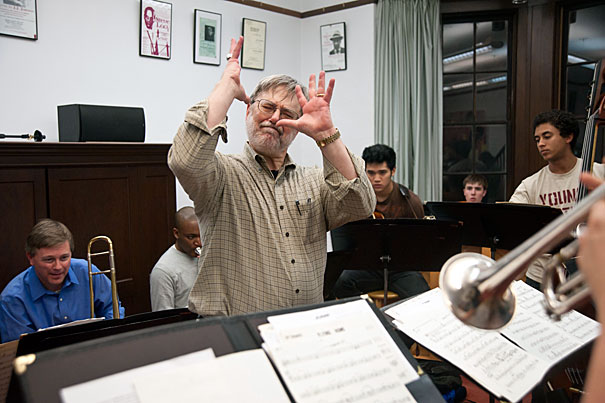

Jazz is an art music that the world looks upon as developing and flourishing in the context of this country, despite encountering great hardship and prejudice. It's a wonder it survived in some ways, but I think the artists had to play it.
Yet Everett's accomplishments at Harvard are just one part of a long career as a performer, educator and musical advocate. Everett has played with established big bands and premiered over thirty works for bass trombone in the world of classical music. Through it all, he's combined the resourcefulness and imagination of an improviser with the tireless devotion of a teacher.
Chapter Index
- Laureates and Pulitzers, No Dukes or Counts
- Early Influences and Playing in Ithaca's First Jazz Band
- Founding Harvard's First Jazz Band Under the Radar
- Inviting Heroes to Campus and Teaching Harvard's First Jazz History Course
- Improvising a Jazz Curriculum
- Playing (and Pranking) with Dorsey and Dizzy
- Getting the Bass Trombone Heard
- Many Roles, One Responsibility
- Eighty Years and Beyond
Laureates and Pulitzers, No Dukes or Counts
All About Jazz: When you were hired as Director of Bands for Harvard University in 1971, there was no jazz band and no jazz courses. You organized the first jazz band in Harvard's history the same year you started, and a year later taught the first jazz history course (in the Extension School, with the first undergraduate course to follow in 1976). What motivated you to tell your brand new employers, at the oldest institution of higher education in the nation, "we need a jazz band"?
Tom Everett: That's really interesting, because no one "told" the employers. In fact, I'm not sure anyone was aware I was even employed here. As the band director, I was hired to conduct the concert band (which was not of a jazz nature at all), and to serve as advisor and overseer of the university marching band. In some ways I actually took the position at Harvard because I was a [trombone] player and I figured Boston was a pretty good place if you're going to play; I found that extremely tempting, as a way to pursue my own musical interests on the side.
But jazz was a love of mine. I was still getting into it; I wasn't an authority by any means (if I am an authority today) but it hit me that Harvard is a very intimidating place. To see who's teaching some of the courses, just to see some of the titles of the courses, some of the alumni, the positions where Harvard people are, yet when I went over to the music department and other places on campus, I could not find any acknowledgment of jazz in 1971, much less any opportunities to get involved in it or study it.
These students are going to be influential people: politically, business-wise, leaders in the community, educators, setting standards and priorities. They have insights into what is substantial, significant, and valuable in peoples' lives. These kids were coming through this school not having taken a course in jazz, much less coming face to face with an award-winning jazz player or former secretary of the state jazz player. There was nothing like that, and yet this is substantial music, from the standpoint of having a better understanding of the social growths, economics and racial minority history in this country, as well as pop culture [and] ethnomusicology. I just didn't think that was right.
Early Influences and Playing in Ithaca's First Jazz Band
AAJ: How did that love for jazz develop in your own life?
TE: I had very little formal contact with it as a high school student [playing trumpet at that time]. I had a private teacher who was smart enough to expose me to something outside of method books in band and orchestra, and he encouraged me to get a Harry James album [the soundtrack to Young Man with a Horn (Columbia, 1950)"]. Listening to Harry James, the first thing that amazed me and that I identified with was James' technical prowess: a crisp sound; he could play fast and he could play high, but as far the feel and the idea of improvisation, I didn't get that yet. That started in my mid teens.
 One of my first (and everyone else's) jazz records was Dave Brubeck's Time Out (1959, Columbia), and the inside sleeve had pictures of other Columbia records, from Nat King Cole, Perry Como, Frank Sinatra, and Miles Davis ....another trumpet player. I don't know why but I went out and bought his album Round About Midnight (Columbia, 1957). I got improvisation when I heard that: they're creating in the moment, the head is when they play together, and then they're doing their own thing. I got caught up in the excitement [and thought] "How do you do that?" After repeated listening I would just sing the solos.
 When I got to Ithaca [College], someone said to me, "Who do you think you are, Miles Davis?" I came back humming part of Mile Davis' solo on "Milestones" and the guy started humming it along with me. And that was an incredible realization. I never knew anyone else was as passionate about this music. "Someone else likes this," how naïve. [laughs]
AAJ: What was rest of the jazz scene at Ithaca like in the sixties?
TE: There was no jazz playing at Ithaca. The signs in the practice rooms actually said, "No Jazz Playing On These Pianos." It was a good school, but very conservative, very stuffy. There was very little contemporary music until my senior year. It was a successful school in turning out music educators, particularly in the New York state area and particularly Long Island, but it was really behind the times.
To be fair there weren't very many jazz programs in the country, but there were actual programs at [University of] North Texas State, Berklee [College of Music] and at Indiana University. There were jazz bands, but not many programs. [University of] Notre Dame had one of the most famous jazz bands, in fact they had a jazz festival for college bands in the late fifties and sixties. [Massachusetts Institute of Technology] had a terrific band directed by Herb Pomeroy. Berklee has had jazz bands since the fifties but they never got much publicity. [New England Conservatory] never had a formal band till 1967 or 68, when Gunther Schuller got there. So Ithaca wasn't different from a lot of other institutions, where students formed a jazz band and rehearsed at the fraternity house or something, and maybe played off campus occasionally, but there was no formally recognized group that was part of the school's program.
AAJ: How did you start playing jazz at Ithaca?
TE: [This fellow jazz loving friend of mine] had some charts, and said "Hey, you want to play in a big band?" The only things I'd ever played in high school were stage band arrangements, no original charts, just stock arrangements. And it was really exciting [to play those jazz arrangements]! He had some Stan Kenton and some Woody Herman stuff, which was different but authentic jazz. He had also arranged some other charts. That started it, and it was exciting enough that I said him, "Why don't you do this on a regular basis?"
 I was bored compared to his enthusiasm; he was just going to make this happen. Eventually he petitioned the college, and they would have nothing to do with it. They said you don't have a faculty advisor, so he got a faculty advisor. They said there was no repertoire to substantiate it, so he came to them with a program for a concert that included third stream compositions, which they had to admit was "kind of acceptable" music. I think we did J. J. Johnson's "Poem for Brass," Jimmy Giuffre's "Pharaoh," and a modal arrangement [professor of composition] Warren Benson made of "Nature Boy," featuring Ithaca's saxophone professor (who couldn't improvise a note). Here we have a professor playing with us, and Warren Benson raving, putting up flyers on his bulletin board and [telling people] "Hey, there's a jazz concert this Sunday afternoon, everyone go!" That was very exciting, and after that, the college had to acknowledge us, or at least let us rehearse, so that band started taking off.
 Some things take their own energy. It just takes a couple of people to take risks, put it together or yell loud enough, and to bring the balls and bats and gloves to get things started.
Founding Harvard's First Jazz Band Under the Radar
AAJ: How did you put together your own jazz band your first year at Harvard?
TE: I wasn't teaching any courses, I didn't have any academic rank. I was the band director, and it was almost like, "You're the band director, good luck." I was a department of one, the previous band director was no longer there so I had no one to sit down and talk to. My support team, my fellow workers, my colleagues and comrades were the students. I had an office surrounded by students, and unless I went into Harvard Yard or sought one out, I'd never see another adult, much less a Harvard official.
There was very little funding at the time. The marching band had to raise most of the money on its own. It was a question of, "How do I raise money to do some jazz things?" There was no interest on campus, there weren't grants you could write for that I knew of at the time, but fortunately I owned some big band charts and I had the enthusiasm, and Harvard kids can be pretty curious. I didn't say all the kids were great players, or had a lot of experience, or were even proficient technicians, but they were curious. If you get someone who is curious, a lot more can happen than with someone who can play all the notes, but is just standing there biding their time.
 Very few of the students were aware of jazz at all. I had a few that were very into Weather Report, which was big at that time. A lot had listened to Maynard Ferguson's band, which transferred popular and rock tunes to a big jazz band. I had a tenor player who liked Sonny Rollins, but the majority of these students had no idea of the history of this music or its players. They came through high school in stage bands during the sixties, and often they were playing the music of Glenn Miller or Count Basie, which is terrific, but there were no Duke Ellington charts available; no one was playing Duke Ellington.
 The majority of repertoire that these kids came through, playing in public school bands, was crap. It really was nothing substantial or connected with anything real, with some exceptions. But I had some charts and got some students together from the marching band. Some of them had never played a jazz thing in their life.
I was very pleased to find out the kids were excited, partly because this was something we weren't supposed to be doing, because they did it on their own, late at night, at the band office. It wasn't supported by anyone, but they were doing it and [whispers] no one else on campus was. So what we were doing was kind of undercover, underground.
Plus [the early seventies] seemed like such a competitive time in some ways. Everybody was upset about something and everybody seemed to have a gripe. And these students got together one night a week to play this music, and it built camaraderie. It was something new, a little outrageous, yet it fit into some of the things going on. It was music coming out of the Afro-American tradition, in some ways not protest music, at least not consistently, but it did have a different statement to it, something other than mainstream America.
And they started listening, on their own, to Freddie Hubbard, Dizzy Gillespie and even Roy Eldridge, trying to imitate these musicians, to speak the language; not trying to read something that was supposed to be like something else, but (as best they could) conversing with a record of how this artist played. Students would ask "Did you ever hear of Art Blakey [sic]?" [laughs], and tell me, "I could almost dance to that!"
Yet there weren't many improvisers. Put that all together with the joy of taking a risk, of [students asking] "what do I do with my solo? Is the music written down?" [And I would reply] "Well, can you sing the melody? Now, can you find that on the horn?" [The students would look back and say] "Huh?" If we played the melody, everyone knew what it was. If you played the chord changes, they would have no idea. Now we put the melody and harmony together and [students] would say "Oh yeah," and then if you took the melody away again, they would say "That was kind of there all along, I never really listened to it before, but I understand, it made it sound fuller!" You can't imagine how different that was from many of their other musical experiences.
Inviting Heroes to Campus and Teaching Harvard's First Jazz History Course
AAJ: Harvard has also hosted a different visiting artist every year, which must also be an illuminating experience for these students.
TE: Observing students' facial expressions while Max Roach played was as rewarding as hearing him play Sanders Theatre. I can still see the kids' eyes popping out as he played. Just his timekeeping changed their whole rhythmic approach, without Max saying a word. Max did something to galvanize them and tap into an energy and intuition that I had not been able to develop.
 AAJ: How did the visiting artists series originate?
 TE: I started by inviting people I knew, personal heroes (usually trombone players in the early years). The jazz band was two years old when we had our first concert in Sanders Theatre. I went to the Director of the Summer School [who had previously helped me organize both the Harvard Summer Pops Band as well as the first jazz history course]. I told him I'd like to bring Carl Fontana (who had been a hero of mine) in from the West Coast, and it's going to cost a thousand dollars. When the Summer School Director asked about Carl, what he heard was "Woody Herman, Stan Kenton," that he had played with bands he knew.
At that time you had to pay rental for everything in Sanders Theatre. The director thought about it, and asked if can we put Summer School catalogs out at this concert. We could do the concert, but in his mind it was a release party for the Summer School catalog. As you walked in the door there were no tickets. We printed up a program, but outside the door and in front of the stage were piles and piles of catalogs. That's also why our concert has been in April ever since. This is how things happen, they're really thought out.
That got us started: to have a major artist there, to have it in Sanders Theatre (which is a lovely venue), and to have the major expense picked up. Plus, I didn't know much about publicity. A news release from Tom Everett or even the Harvard band didn't have the same distribution as a release from the Harvard Summer School. That got calendar listings. People were more aware of the concert than with just us spreading the word among students. Now, we have Harvard's Office for the Arts for the major concerts, who do a remarkable job.
AAJ: How did you start teaching?
TE: [The Director of the Summer School] was a fan of Erroll Garner, Teddy Wilson and Art Tatum, but he hadn't found many other people who had that interest. It so happened that one fall he was filling in for the Director of the Extension School. He said "Hey, we don't have any courses on jazz. Would you like to teach a course on jazz in the Extension School?"
That first year (I'm still laughing at this), the course was titled "The History of Jazz," covering its roots to the present day, in one semester, two hours a week for eight weeks. Eventually we split it up into two semesters, and even that is too much for the average listener who doesn't have a lengthy listening background. You could almost do a whole course on just the Swing era, or Duke Ellington, or bop or piano players.
I got a foot in the Department of Music by teaching a course through the Department of African and African American Studies. Through an alumnus' donation for jazz to the Office for the Arts, we worked something out where this sizable amount would go to a jazz course one year. Since it was a course about music it was cross-listed; because it involved a piano and some recording equipment, it was held in the music department.

Louis Armstrong
That course met two days a week for an hour, on Tuesdays and Thursdays. On Tuesday I'd lecture on Louis Armstrong, and on Thursday Doc Cheatham would come in to play for the class, talk about Louis and explain how he was different from other players. Another Tuesday would be an introduction to the Swing era, and on Thursday Teddy Wilson would come in. Believe it or not, Teddy Wilson kept writing, [offering to come up another time from Connecticut]. He was scuffling. In the early seventies, Teddy Wilson wasn't revered. Some people who weren't in a position to do anything about it revered him. I said to the kids "Teddy Wilson is going to be here!" [and they replied] "who?"
It was really very exciting: talk about Charles Mingus and the new music, and Jimmy Knepper would come in. Talk about the history of drumming, and Alan Dawson would come in. Jazz singing? Joe Williams would come in. Talk about Lester Young? Al Cohn and Zoot Sims would come in (actually they were in town for the Boston Globe Jazz Festival). Impressionism in jazz? Bill Evans would come in, and I got to meet one of my heroes. It's also when I first met Illinois Jacquet [Harvard's most frequent visiting artist], when he came in to talk about the Swing era.
What's interesting is that for the music department, this was not a full music department course. I don't think they really wanted it listed there, but that's the way the course got listed anyway. It turned out to be the largest music class at the time, and it increased the music department's numbers, so they kept it as is.
Finally, in the late seventies, I approached Harvard's Office for the Arts and said, "Hey, Help; we're trying to do something, we have no support, the music department is not Interested. Do you think jazz deserves some visibility on campus?" Myra Mayman, the director of OFA at the time, thought so, and since there was no one else to support this investigation or engagement in music making, they would lend their support. So that gave us more of a connection to the university, as well as funding, and it's just grown from there.
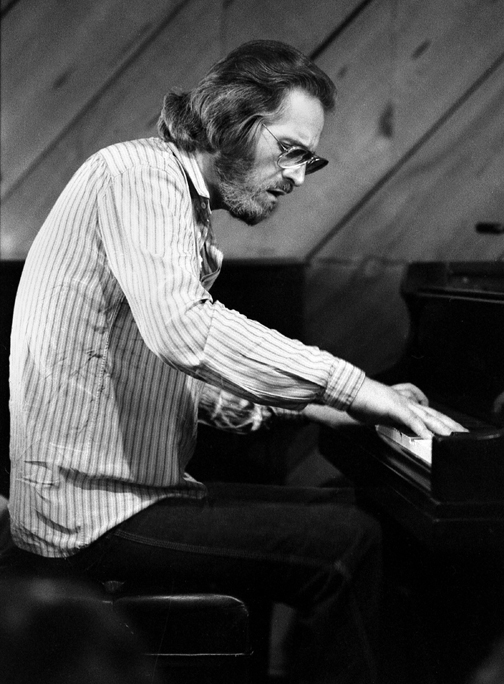 The Office for the Arts and I developed a plan to teach the class one year so that all funding goes to artists coming in, and for the next year to bring a jazz artist to campus, [starting] a new residency. The first year was the Bill Evans Trio and John Lewis. We commissioned John Lewis to write a piece called "The Gates of Harvard" for the trio and the Harvard Jazz Orchestra, which was actually the jazz band plus a string quartet. It was something that the Harvard establishment could see [and say] "Strings! This must be a good piece! This belongs to Harvard." I'm still dealing with that in some cases. It was not so much putting things down (in some cases it was), but mostly it was a matter of little to no exposure to jazz or unintended ignorance on their part. For professors in their forties and fifties at that time, their education was during the Swing Era. To them, [jazz was] pop music. [Their sentiment was] "That was fun, I used to dance to that, but we're talking about Goethe, Michelangelo, Mozart and Bach with these students."
 [Back] in my second year, I was getting a one year appointment and I went in to talk to my supervisor (one of the deans) and mentioned that I'm working with a jazz band now. My supervisor looked me and said, "Thomas [laughing in haughty accent], Harvard has not had a jazz band in its 345 years of existence. It does not need one now." That was the response. I was not amused. I wasn't angry. I was just taken aback. That was the last response I expected (but I don't know what I expected). If you believe in something you go for it, and hopefully find others that will go along and lend whatever support they can.
 Improvising a Jazz Curriculum
 AAJ: On the issue of seminal figures in arts and culture, what and who did you feel students needed to learn playing and studying jazz? How did you build a performance repertoire and curriculum for jazz from the ground up?
TE: I did not have the background, knowledge, depth or experience for the music and the literature at that time to really make such substantial decisions. It's not simply a matter of reading the books, though they provide great insight. It's a matter of experiencing, participating and observing the music. I hadn't played enough jazz, and the more you play it, the more you realize there is to learn.
I tried to avoid playing purely educational/pop/generic/stock charts, the same fifty charts that companies publish for educators to buy every year because they're the new things and often based upon pop tunes of the day. I looked for charts with significant links to the jazz tradition. At the time I included Maynard Ferguson, Stan Kenton and some other things because I thought they were great. In hindsight and now, I'm more aware of repertoire, concepts, pieces, approaches and styles that offer greater exposure to something more substantial and closer to the roots of the music.
Yet it started out with what did I have and what was available. That was the first group of charts. If I could choose any charts I wanted, I knew that eventually I'm going to have to beg, steal or borrow Duke Ellington or Gil Evans charts, or other original charts. In the early seventies none of this music was published. So I'd meet this guy at a gig, and say, "Hey, I've got some Stan Kenton charts, you got anything?" [And he'd reply] "Well I've got this thing...I'll trade it to you for 'Four Brothers' or whatever," and that's the way the library was built. As I got to know musicians better, I'd say, "Hey, do you know anyone who has this?" or "I would love to play that arrangement you wrote, have you heard of anyone playing it?" And I'd be able to get back to Benny Golson and tell him, "I tracked down this piece you haven't heard in thirty years! Do you have any other people you know who have some of your music? Maybe I can help you find it."
AAJ: You're an improviser!
TE: Absolutely. I am not a disciplined, organized person but I do improvise. I've had success in doing things in untraditional ways. I think if I had a regular nine to five position, doing what's been done before, that it wouldn't be as successful as finding ways to work with what I see or hear.
I've been very, very fortunate in all of this: the opportunities I've had, the people I've worked with and the freedom of this position in not being locked into a university department, a traditional budget, or procedures that might not have accommodated my unorthodox approach. I've been able to find a creative route, to take a different direction toward successful and unique results. [The reaction was,] "Do anything you want, all you have to do is be able to make it work."
I've also been extremely fortunate to have the ongoing support and contributions from the Office for the Arts, without which jazz at Harvard could not have reached its current level of influence. Helping the music department and Office for the Arts put the "Forty Years of Jazz at Harvard" program together, I lost some nights of sleep saying, "That's how I got here!" It's like someone coming up to you after your solo, playing a recording of that solo and saying, "Listen to this part." In improvisation it's hard to look back, you're in the moment. You're not saying, "Then I got to here." That may be the saving grace in whatever I've done, that it's wherever it goes, and I follow it or lead it. It's made for an interesting, frustrating and unique career.
I wish I could improvise jazz better!. I was actually embarrassed when playing with some bands when I arrived in Boston. I wouldn't take a gig as an improviser because I'm not exceptional at it. I didn't know if my time and effort would ever allow me to play something that did justice to the music or the tradition, but I believed I could do something as an educator and promoter of this music. When I played with the Dorsey brothers or Dizzy Gillespie's big band, I played the bass trombone part. There is no improvisation in that part, but I sure enjoyed playing it, and hopefully played it well.
Playing (and Pranking) with Dorsey and Dizzy
AAJ: How did you start playing with those big bands?
TE: The first professional band I played in was a smaller big band—for a group called Hines, Hines, and Dad—during my first year out of college. It was Gregory Hines and [Maurice] Hines, the dancing brothers, and their father [Maurice] "Papa" Hines [Sr.] playing drums. They would play college campuses, and the Hines brothers would tell jokes, sing and dance; it was a club shtick, in concert form.

Si Zenter
When I started teaching public school in Ithaca, I got a call one night, picked up the phone and [the caller asked], "Is this Tom Everett, the bass trombone player?" I said yes and he said, "This is Si Zenter calling," and I said, "Fuck you," and hung up the phone! [laughs] He called about a minute later, and said someone recommended me for joining the band. That was a hard decision. I asked how long do I have to let him know, and [Zentner] said "'Till I hang up the phone!" I thought about it, but it was my first year teaching and I had signed a contract. I told him that I couldn't break my contract, but to let me know if anything changed over the summer.
That was the last I heard from him, but, about a year later, around 1967 or 68, I got a call from a contractor in Syracuse, New York who must have worked with Zenter, [asking me] to sub with the Tommy Dorsey band. That was really my first major name band. I drove through a rainstorm for the gig after I finished teaching at four o'clock (Syracuse was about two hours from where I was teaching) for an eight o'clock dancing concert. When I got to the ballroom, I was told to look for the band manager, and found a guy behind the curtain. I asked him if he was with the Dorsey band, and he replied (a little tough), "Why are you asking?"
After I explained that I was the trombone player, the band manager told me to grab a jacket and a tie from this steamer trunk, which looked like it had been through hell. When I opened it up, there was the most awful odor coming out of it. It was filled with sequined jackets, rolled up into the balls, and they looked like they had never been cleaned. I finally found one [that fit], and I put my hand in the pocket because I was going to put my mouthpiece there to keep it warm. Thank god I didn't, because I took out my hand and there were cigarette butts in the pocket, and cigarette holes in the jacket. From a distance you might say "Wow, sequined jackets, now that's showbiz!" but up close was not quite the same. I took a tie from the bottom of the trunk and put it on. Well, [my tie] had something moving in it. I kept scratching most of the night. This was the big time!
And yet, when [the band was] onstage behind the curtain and the curtain opened, the people were standing out there on the main dance floor [under] a glittering globe, and they started applauding. [Bandleader] Warren Covington kicked off the first chord, and I'll tell you, I've never experienced anything like it. I almost dropped the trombone because everything was goose bumps. It was a magical moment, despite what was going on inside my tie and jacket. I could see how people, especially kids, would be willing to do this for no money, just seeing peoples' faces each night. I also realized that, after a couple of nights (at least for me), it lost its charm and exoticness.
When I came to Boston in 1971, I got some calls from the same contractor in Syracuse, who was now setting up a tour for the Jimmy Dorsey band through New England, in Lowell and a few other places. Lee Castle, who played trumpet with the original [Jimmy Dorsey] band, was the bandleader. All the guys in the band except for the other trombonist were really very young, just out of college. It was a strange looking band, maybe two or three people that looked like they lived and died with the band, alongside all these youngsters.

Tom Everett (left) with Dizzy Gillespie, mid-'80s
[Playing with] Dizzy Gillespie occurred through Phil Wilson, in the mid-eighties. Dizzy was in town for Boston Jazz Society's Man of the Year award, and they gave Roy Haynes a lifetime achievement award. They also gave one of the first Boston Jazz Society scholarships to a Berklee College student named Terri Lyne Carrington!
I think [saxophonist] Jimmy Mosher was in that band, Tony Lada and Phil Wilson [on trombone], Larry Monroe on lead alto, Greg Hopkins on trumpet; a lot of Boston people played in that band.
Phil Wilson introduced me to Dizzy just before the show started. Dizzy kind of looked me up and down, very funny and exaggerated, like he was smelling if the fish was fresh or not. Phil told Dizzy that I was the band director at Harvard, and all of sudden Dizzy faked this gasp: "Hah-vahd? You're from (gasp) Hah-vahd? How are things (gasp) at Hah-vahd?" I [said to myself], "Oh man, you're going to give me this, aren't you? [laughs] But I'm going to take it from Dizzy Gillespie because I'm still honored." He stuck his hand out and we shook, and we were both cracking up. That was one of the way a musician would welcome you. It's a type of initiation.
My first night [with the Tommy Dorsey band] we played "Marie," [where the whole band answers the vocalist] in a call-and-response. Warren Covington actually sang, as well as fronted the band from behind the trombone. I'm reading my music, but everyone else had been there more than a couple of weeks and knew the part. The words are written down, but the third trombone chair's words were scribbled out. Above it, you would not believe the things they wrote in there about Marie. So we're playing the chart, I saw the words and when we got to that point I sang, "Marie is a..." but I could hear no one else in the band was saying that. As I'm saying all this I feel their eyes on me, because they know this is written in my part, and no one warns you [laughs]. These little things bring everyone together. You have to have a sense of humor and have fun. If you're the new guy, everyone goes through it; you either get angry, or you laugh.
AAJ: How did playing with those groups change your perspective, as an educator as well as a player?
TE: There is no greater way to learn about all aspects of the music, personal, historical, social and technical, than playing with the masters. Not just the masters, but also playing with the musicians that have mastered this music, sitting down next to an unknown trombonist who's been playing with the band for many years. To hear him play and hear how he talks about the music, that experience brings insights that no recording, video or textbook can provide. There's something about playing with an individual who has made this music their life: the music is them, and they are the music.
AAJ: Can you give me an example from a group you played with or musician you shared a section with?
TE: So many times it's osmosis of sitting next to someone. Rather than them saying anything or you realizing, "this is how they do it," you walk away with a greater commitment and respect for them and the music. That's why I want the Harvard students to have that close association, not just walking in and doing a clinic, but working with [visiting artists] for a week or several times a semester.

The Jimmy Dorsey Band
At one time, [the Jimmy Dorsey] band had four trombones where most had three; Dorsey liked that sound, (or maybe he wanted to have one more trombone than his brother). When I subbed with the band, everything had been cut down for financial reasons, so the arrangements from the original Dorsey book were rewritten for the reduced instrumentation. The first time I played through, it was just the lead trombone player and myself, where there had been four trombone players. The lead trombone player asked me, "What's the matter, kid?" and I replied that [the music] doesn't feel right, it doesn't sound full enough. And this trombonist, almost with tears in his eyes, said "Man, nothing does anymore. You should have heard this when there were four of us." And he said it proudly as well as sadly, not just for himself but also for the music. He's been doing this his whole life, and it must have hurt him to keep doing it, but he has to. It's not just a gig for these guys. They believe in this music and want to get it out there.
 Getting the Bass Trombone Heard
 AAJ: Your own belief in the bass trombone has led to your premiering over thirty works for the instrument in a non-jazz context (while also founding the International Trombone Association). How did those commissions develop?
TE: While still teaching high school, I would schedule solo recitals for myself to keep my chops up, to challenge myself musically and for my students to see someone passionate about music performing. I performed everything I could find for bass trombone but had to fill those recitals in with a Baroque piece originally written for bassoon, a tuba piece or a trombone piece transposed down an octave. I thought these pieces didn't sound the way they were intended, or weren't completely successful on bass trombone. So I did some research and found some original pieces that no one knew or cared about, or were no longer available.
It wasn't a solo instrument, it had very little literature; who would write for it? Bass trombone? Well, that was the guy who played the lowest chair in the orchestra. Yet I thought the bass trombone had a unique sound on its own, and wanted composers to discover and explore its distinct possibilities.
I finally started commissioning works. Commissions for new music were still relatively unusual, especially from individual soloists. Following World War II, every college had a composer on their faculty. Now, where are all these composers going to get their music played? Their performances were usually by faculty in their department, if they got any performances at all, and publication was very seldom. Someone [would approach them and say] "I'd like to play your music, I have a recital planned nine months away at this place, and if I could play it and you deem my performance acceptable, I would like to schedule that piece for this concert." That was the commission.
Often money wasn't even mentioned. Composers were thirsty, just like I was thirsty for literature written for the instrument I loved. They were interested in people who wanted them to write. They were composers, that's what they wanted to do.
< Previous
History of Jazz in Reverse
Next >
Inana
Comments
Tags
Tom Everett
Interview
Andrew J. Sammut
United States
anthony braxton
Dave Brubeck
Dizzy Gillespie
Quincy Jones
J.J. Johnson
Steve Lacy
Harry James
Nat King Cole
frank sinatra
Miles Davis
Herb Pomeroy
Gunther Schuller
Stan Kenton
Woody Herman
Jimmy Giuffre
Weather Report
Maynard Ferguson
Sonny Rollins
Glenn Miller
Count Basie
duke ellington
Freddie Hubbard
Roy Eldridge
Art Bakey
Max Roach
Carl Fontana
Erroll Garner
Teddy Wilson
Art Tatum
Louis Armstrong
Doc Cheatham
Charles Mingus
Jimmy Knepper
Alan Dawson
Joe Williams
Al Cohn
Zoot Sims
Bill Evans
Illinois Jacquet
John Lewis
Gil Evans
benny golson
Tommy Dorsey
Warren Covington
Jimmy Dorsey
Lee Castle
Phil Wilson
Roy Haynes
Terri Lyne Carrington
Larry Monroe
Greg Hopkins
Randy Weston
Steve Swallow
Clark Terry
Brian Lynch
Eddie Palmieri
Gerry Mulligan
Buck Clayton
For the Love of Jazz
 All About Jazz has been a pillar of jazz since 1995, championing it as an art form and, more importantly, supporting the musicians who create it. Our enduring commitment has made "AAJ" one of the most culturally important websites of its kind, read by hundreds of thousands of fans, musicians and industry figures every month.
You Can Help
To expand our coverage even further and develop new means to foster jazz discovery and connectivity we need your help. You can become a sustaining member for a modest $20 and in return, we'll immediately hide those pesky ads plus provide access to future articles for a full year. This winning combination will vastly improve your AAJ experience and allow us to vigorously build on the pioneering work we first started in 1995. So enjoy an ad-free AAJ experience and help us remain a positive beacon for jazz by making a donation today.

Giveaway

Eligible winners: 15
Days remaining: 4
Days remaining: 4