Home » Jazz Articles » Interview » Jeff Lofton: Jazz to the People
Jeff Lofton: Jazz to the People
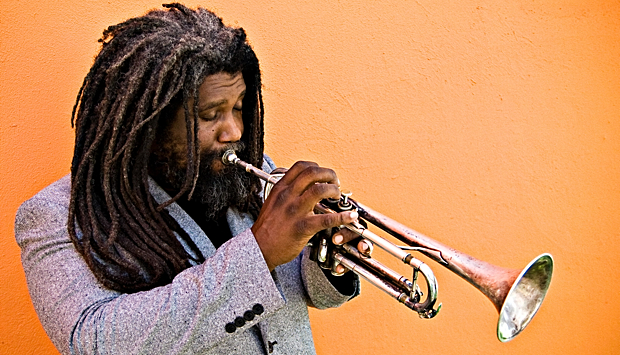

A talented, open-minded musician, composer and bandleader, Lofton is faithfully committed to the music he plays. Here is a man with a mission: bring jazz power to the people, ideally contributing to return jazz to a central position in the life-art-business triangle. Immersed in this praiseworthy endeavor for jazz appreciation and acknowledgement, Lofton truly feels an encouraging sense of belonging that keeps him steadily going.
Growing Up with Music
All About Jazz: When did you start learning music?Jeff Lofton: Formally at 11, that's when I took my first music class at school, but I always had access to keyboards, organs, pianos, and stuff like that when I was little, so my first experiences where probably messing around with piano.
AAJ: Was there a lot of music in your family?
JL:Yeah, there was always some kind of instrument around. My mom was always playing some type of keyboard so keyboard is the first thing I had. Then I got my first trumpet at 11.
AAJ: What music did you listen to by that time?
JL: I was listening to Channel 40, whatever was on the radio. Earth, Wind & Fire, Elton John, Cool & the Gang, Neil Sedaka, ELO, Brothers Johnson, and then Chuck Mangione, that was the first instrumental music. It wasn't really jazz; it was more of fusion. 1977, I think I first heard that. I was 10, 11 years old. At that time I was limited to the music collection of my brother and what was at the top 40 radio.
AAJ: How did you actually learn how to play?
JL: Initially I had band class every day in school, I had an instructor. I was fortunate to have a band director who actually played trumpet. But from an early age I really started to play what I was listening to.
AAJ: How do you remember the changes during the civil rights era?
JL: 1971 was the first year I attended public school. It was also the first year of mandatory desegregation so it was different. Going to school in South Carolina you had a lot of challenges. My biggest challenge was just the poor educational system. But it wasn't poor everywhere. The thing about South Carolina and its educational system is that you could be literally 20 miles in one direction and you could go to a failing school, just a horrible education and then you could have a magnet school that's 20 miles away that's one of the top schools in the country. It just depends on where you are. We have really good schools and really horrible schools. So in middle school I went to a pretty horrible school and then we moved and we went to a much better school. And that's kind of what made the difference for me personally. I had a different level of instruction. The band director was more into classical music. It was just a much better educational school once we moved. I was about 13 years old.
AAJ: What was the social significance of music back then?
JL: See, at that time, '70s, most of the music that was significant in that sense was played by James Brown and Bootsy Collins with Parliament and Funkadelic. You also had some social relevant stuff from the old jazz, but a lot of the music of that time which was developed when fusion was just being developed. For the first time, really, in the history of America you have free Africans, where we can express our clothing, we can express our culture, we can change the way our hair is. We don't have to relax our hair and slick it back and put linen and stuff like that. For the first time, we had a Black culture that was developing independently in the sense of people being free, and you have music that represents that. You have music that's a lot freer, that's based in rhythms, in soul, and hard bop, and you have music that can also embrace a free, avant-garde culture. You know, in the '70s and '80s, there was a lot of interesting avant-garde music developing in jazz, stuff that really couldn't been developed at any other time. You also had the soul sound coming up from the late '60s.
Hard bop was a reaction to the West Coast sound and the West Coast players, in essence the white players of the West Coast like Chet Baker, Stan Getz, Art Pepper, Lee Konitz. Those cats—who are great players, of course—but the hard bop reaction to that was coming out of Art Blakey and Eddie Harris, later Masqualero, Horace Silver. That sound was a direct reaction to the Miles' cool school basically, and all those players. Basically, the cool school took the blues out of jazz and hard bop put the blues back in.
AAJ: What about the relationship between classical music and jazz?
JL: Jazz is basically formed from several kinds of music. One of them is classical music. The others are ragtime and boogie woogie, which kind of are similar music. But the boogie woogie part is kind of where rock 'n' roll split off from jazz. The ragtime mixed with classical, mixed with Caribbean beats and the blues is kind of where you get jazz from. Classical music is very important to jazz really. The structures are similar. You still have the basic classical forms for music. The difference is of course you have improvisation and improvisation is based on a different type of feeling, the swing basically which creates jazz.
Classical music is very important, as you see in many jazz artists all the way back from Satchmo Legacy Band to the present. You can listen to Bird [Charlie Parker] play and he'll quote [Igor] Stravinsky. Like "Strangers in Paradise," that [Alexander] Borodin piece, that's played in jazz a lot. There's a lot of music also that came out that was called third stream music where the Modern Jazz Quartet and Gunther Schuller basically created a fusion between classical music and jazz. There's some real interesting music that came out of that.
But the biggest influence you see, more than anything else, is jazz influencing classical music more than classical music influencing jazz. George Gershwin's the most obvious of all of those. He was so influenced by James P. Johnson, Jelly Roll Morton and Fats Waller... You can hear it in his popular writing. So you have Leonard Bernstein, [Aaron] Copland, Stravinsky, and a bunch of French composers. These classical composers were influenced by jazz music and I think that that really changed the course of a lot of the writing. You get new sounds coming out. You know, classical pieces that have saxophones; these big rhythms coming out like [Leonard Bernstein's] West Side Story (1961). And of course, even how they connected stuff like musical and show tunes. Duke Ellington kind of set the standard for what those tunes are supposed to sound like. So when you have writers like Gershwin and Cole Porter that are writing for these musicals, when they're thinking about what they're writing they're thinking in terms of "how can I make this sound like an Ellington piece. How can I make it sound like Fletcher Henderson or Louis Armstrong?"
AAJ: And how did the jump blues of the '40s and '50s relate to rock 'n' roll?
JL: Early rock 'n' roll is boogie, that's what it is. Basically you've got swing, big band era music and from that comes the idea of kind of rock 'n' roll. Rock 'n' roll is blues, pure blues sometimes, but usually a boogie woogie style of blues. That boogie woogie kind of off the rag, real New Orleans-style playing, that kind of playing is where rock 'n' roll gets its roots. But in any music you've got certain characteristics. Early jazz is basically based upon the same music that Tejano [Tex-Mex] or polka music is. It's the one and the three, which is the march form. Now, early jazz was written to march, you had the second line, so the tempo was like this [shows second line tempo]. Jazz has that. If you take it one step further you've got country music. It's the same music over and over, changed slightly for different audiences.
That beat, the one and three, becomes the two and four in swing, and that's where boogie woogie comes from, too. You have bop showing up as a reaction to swing, basically. Swing had become real popular music. More popular than rock 'n' roll was. There was nothing comparable. There was no music like that and everybody wanted to have a big band. The cats that were into bebop they wanted music that not everybody could play. They were trying to create something that not every little high school musician out there would form a band and try to do. They were trying to create something higher and greater and bigger.
The problem with bebop, why it lost out to rock 'n' roll is because bebop took the dance out. What made jazz popular more than anything else was the lindy hop and the jitterbug. It was the dancing that connected the swing music to the audience. When you connect that dance with an audience then you have the party. It's party music. Just like today; it's got a good beat and I can dance to it, just like American Bandstand. Bebop took that out. They would actually put up signs saying "No dancing." And you can dance with bebop too, it's got all those same elements. Once you take the dance out it's bound up. Once you take the popular music and turn into a non-dancing music, some other dance music is going to arrive. That's just how it happens.
People wanna dance, they wanna party and they want music for that. So once you take bop and bop gets popular, if they can't dance to it they're gonna turn into something else: rock 'n' roll. Rock 'n' roll, of course, with the boogie woogie element. There wasn't better music to dance at the time. Boogie woogie was where everything was coming from. And, of course, it's more focused on lyrics and melody and it's always simple. Just blues, play some simple lines on it and give them some lyrics so they can dance. That was the death of jazz in a lot of senses.
Music in Austin
AAJ: There are many great Texan musicians who are often not thought of as Texan, in many cases because they moved up north. How was the atmosphere down there?JL: More than anything else, you had an exodus. You have a big migration after slavery. It's like a continuous migration. From Mississippi and Louisiana usually they went to Chicago because that was close. The people from North Carolina, South Carolina, and Alabama... usually they went to New York because that was closer. And then you got some people moving to the West too. All these migrations are really no different from the exodus in the bible. People that have been oppressed, they want to move somewhere else.
Then you have the musical exodus as well. You have cats that are leaving Mississippi and Louisiana to go to Chicago because that's where the music's at. Chicago was the first jazz city of the north. Chicago was a hot spot of jazz, so everybody was going up there. It was the place to be. If you were a player, that's where you went. Later, New York—the transition, especially when Louis Armstrong moved to New York—that's when jazz really took off. So you have the normal migration, which is black people running from oppression and then you have the musical migration which is all the players want to be where the music is and where it all happens at. More than anything else, that's a whole influence. You get these pockets, like the South side of Chicago, Detroit, New York, Cleveland... You know, you got these pockets of Black culture where the music developed.
AAJ: How do you think it affected Austin?
JL: Well I'm not an expert on Austin's history. I do know that Victory Grill was built in 1945, after WWII. See, this is what you got to understand, you got black soldiers going off to war, they're coming back, they've been in places like France and they're being treated much better than in the United States so when they come back they're in a different mood.
It's that generation of African-Americans after WWII that really set the standards for what the educated intelligentsia of the black community was gonna be. It was at that time that you had the start of the Civil Rights Movement, as a reaction of soldiers coming back from the war in WWII. That was a big part. They fought for the country and died over in Japan or in Germany and then they come back to racism. And it is not the first war of course to happen. The difference, I guess, there was maybe media —you had television, you had radio, so communication was broader.
You also had for the first time—and this is very important—a popular Black music. You have a popular music, you have recordings and all the music in the country, in the world in fact, is being based on this Black music. That's not the conditions that they came back from WWI in. So when you come back, you can listen to Duke Ellington and Louis Armstrong on the radio and you can see all these people trying to imitate them. You can see how popular they are. You could see them in movies even. But you can't go to a restaurant and order anything. So that's why the Civil Rights Movement started then and not after WWI, because you have a popular Black music which is saturating the culture and creating the first truly integrated audiences.
AAJ: What do you think about Austin being named the Live Music Capital of the World?
JL: In a sense I agree. There's probably more live music here than any city I've seen. But in another sense, it's musically limited. Austin is a town with a lot of musical potential and a lot of appreciation for music. But Austin is a town that is not jazz educated. There're certain cities you go into, there's such a rich history of jazz that the populace has a different understanding. In Chicago if you go on the street and play something that's jazz, you've got a much better chance of getting somebody to know what you're doing, because the culture is set up for that. Like in New Orleans, Chicago, LA, Kansas City, St. Louis, New York, Boston... these are cities that have an appreciation of jazz, because they have jazz history and culture being connected. Austin is missing that. Austin has the blues history, the country history, and the folk music history connection. I think a lot of this is because of the segregated nature of the city. Because the city was segregated in such a way, jazz didn't fit in. Country and blues were just saturated here. You got cultural exchanges between black and white on blues, but you didn't get so much on jazz—and, of course, jazz was popular music.
To be the Live Music Capital of the World you have to represent all music, and all music is not represented here. It's more like the blues and country music capital in a sense. Austin's missing some of the musical education that some of the other cities like Boston or New York or Chicago have already had. One of the things I wanna do is educate people that what they're listening to is already jazz. If you're listening to country music, country music of the '50s and '60s, that's jazz. That's all it is. A steel guitar, a shuffle beat... change the lyrics and the way you sing it... '50s country is '30s jazz. If you like soul music, '60s soul music is '50s hard bop. It's the same music. Slightly changed, put some lyrics in it.
So one of the things I wanna do is: "Look, you're listening to jazz already. You've been listening to it all your life." Jazz is the musical background for all American music; everything. It's that scheme in the culture. But it's not perceived that way by the populace. They don't make a connection. They don't realize that Louis Armstrong was the first rock star. He was the first superstar, the first musical genius from America that was known an American musical genius. His influence is so great people don't even realize. If you call people "cat"—"Hey cat! What's up cat? Where you going?"—that's him. You know, "cool," the word. That's him. I mean, a lot of these terms come straight from his mouth and became popular because he said it. That's all it is. And imagine this in a segregated country in the '20s. For him to be that popular how impressive the music had to be to the people.
The thing about jazz, is there's a reason why jazz didn't happen in the eighteen hundreds. Jazz could only happen when it happened, it couldn't have happened before. Only a free society could create jazz. You couldn't have slavery and jazz, there's no way. They wouldn't have had the opportunity to have the instruments, the opportunity to practice... if you're a slave, you ain't got three or four hours to practice piano a day. You don't have time to get those kind of chops to play that music, right? You don't have access to classical music and mix it with this and that. You also don't have the freedom to be taught or to say "Hey, we're gonna hang out together and we're gonna play your classical roots and mix it with this blues roots..." So jazz could not exist until slavery ended.
Jazz is truly the music of freedom, it's a free music, it's the music of free people. It represents freedom. You know, that's why Hitler wasn't so fond of it. That's why the Russians weren't fond of jazz or rock 'n' roll, which is basically another form of jazz. Rock 'n' roll is just another jazz invention. It's the same music, slightly different. Take the drumming, change it up a little bit, put it on the one and three instead of two and four... It's all it is, it's all jazz, all of it. That's why a jazz musician can sit in with all these musicians, 'cause they're playing the same music. Same licks I play for Thelonious Monk I can play on an Elvis Presley tune.
There's only one music really, only one American form. You can go back as far as bluegrass. Bluegrass is African banjo and guitar playing mixed with Celtic and Irish music. That's all bluegrass is. So all of these American forms come from African people; country, bluegrass, rock, pop... all of them. And all the Latin forms, you know, meringue, salsa, soca... have the same origin. All of this music is one music, and that is one thing that record companies have tried to create—these segregations and separations, to keep people from making connections.
AAJ: I believe you have played with Austin jazz greats like Dr. James Polk. How has that experience been?
JL: Me and Chris [Jones] were talking about that one night and basically when you're playing with Dr. Polk, it's like you can do anything. You can take the music any place you wanna go, pretty much. I mean, there're no limits when you're playing with a cat like that. We both agree he's one of the best players in the world. There's really nobody that I can think of that I would say: "Oh yeah, he's greater than Polk." There's like nobody out there. Dr. Polk is one of the great jazz pianists. If I was putting a band together and could pick anybody, he would be somebody I would consider. That's out of a lot of great cats out there. The level that he's on, the way he's playing, the stuff he does... it's just great. To be able to play with him, it raises everybody's levl. The continuity that he plays with, there's so many cats that I've played with that they don't have that mental musical library. He can just take stuff from all over the place and put it in the music, which most people just can't do that. It's rare.
Recordings
AAJ: I've noticed that musicians in Austin work a lot on a live basis, but it's not so much about recording.JL: Well, the recording costs money, that's really what it is, unless you got your own studio. You got to get funds together and it's just much easier to get them when you're getting paid. If I'm recording then basically I got to pay out of my pocket as opposed to the venue. It's really an economic thing. You find out that the most prolific recorders are solo singers/songwriters because they don't have to rely on a band. They come up and record, it's all them and it didn't take all that extra cash.
AAJ: Why did you call your CD Jazz to the People (Self Produced, 2009)? Do the people need some jazz?
JL: The people definitely need some jazz. The people need jazz badly. One of the things is it allows you to hear music that is not been played before. I know that doesn't sound like a huge concept but when you think of a song you say, "Oh I love that song by Prince, Michael Jackson, Madonna..." That song is exactly the same way you heard it on the radio. The song you're thinking of is that way they didn't on that album on the radio. When you say, "Oh I wanna hear 'Well You Needn't,' by Monk," you don't have that same concept. The concept that I will hear that recording, that performance of that song, it's not what you get. Immediately you get I wonder how it's gonna sound like, and who's playing, and how are they gonna do it this time. Those elements of music that are taken out of pop music deliberately are what expand our consciousness. Those elements of surprise and of rhythmic and melodic invention are the things that enlighten us, that take us out of the space here and put us into a higher conscience. That's why people need jazz, because you can't get that from any other form. All the other forms are designed to sound the same every time. Jazz is designed to be different every time you hear it.
So Jazz to the People is music for the people, of the people, by the people. Classical music is called classical because it was the music of the aristocracy. It was the music of the kings, and the queens. Originally it was called court music as well. The music of the peasants, that was called folk music, not classical music. Jazz is of the people in the same way that folk music is of the people. The play on jazz to the people is a play on the Black Panthers' "power to the people." Just like you say all power to all the people, I say all jazz to all the people. Because that is, to me, power. Jazz is power. It is the music that can change and transform.
AAJ: One of your most successful shows was playing the music of Miles Davis. You have even played different periods of his music. What was your relationship with his music, you both being trumpet players?
JL: When I originally did that, it was an attempt to do the early '50s Prestige sound. You know, the quartet with Red Garland, Paul Chambers and Philly Joe Jones, to try to emulate the sound of that time. Miles has a very distinct sound in the early '50s, mid-'50s and late '50s. That first show was the early '50s tunes, the mid-'50s, the late Prestige stuff like Steaming (1961), Cooking (1957), Relaxing (1957) and then, of course, going to Columbia [Records].
The first show was my attempt to recreate musically the first quintet, and also musically the three distinct '50s Miles Davis styles. I chose Miles in that era because quite frankly it wasn't done before. That's not an era where people really deal with these days. Mostly Miles' tributes are fusion, generally speaking. Or it's the Herbie Hancock, Wayne Shorter... which I love of course. Not enough attention is given to that '50s Prestige sound and this set the standard for so much. There's so much jazz out there that's based on that I felt like it needed more recognition. If you bring that kind of music out, if you don't try to recreate, if you don't play it, it dies. It becomes museum music.
AAJ: Tell me about your other recording, Jazz Therapy (Self Produced, 2005).
JL: Jazz Therapy was my first album. It was recorded in South Carolina at South Carolina State University. It's really an interesting attempt; I still kind of feel like it's an attempt because it was my first recording. It's really my take on to standards. I wanted to create a sense, a feeling from that album. When I played "What is This Thing Called Love," I wanted that to be a version of that that people would look back to and say: "Oh yeah, I like that version." With "Georgia on My Mind," I wanted that to be a definitive version as a ballad, so that, as years go by, people could say: "Oh, I love Ray Charles' version, here's another version of it."
AAJ: You also included another version of "Georgia on My Mind" in Jazz to the People.
JL: I kind of wanted some continuity to tie those both albums together and to show the progression, but also jazz is always recreating so I wanted another version of that too. I felt like that song is a song that eventually would be associated with me. I probably put another version of it when I do another straight-ahead album. Like it's associated with Ray Charles, I want that song to be associated with me.
AAJ: Why did you choose that song in particular?
JL: Well, it's kind of a musical sacred cow. Once Ray Charles does something like that it's like no one can really touch it, and no one really tries to touch it. So I wanted to do that attempt partly because nobody else has got really to this. The other reason is that it's just such a great tune, one of my favorite. It's a Hoagy Carmichael tune, and I love this writer. He's one of the most incredible songwriters. My dad was always a big Ray Charles fan, so it kind of reminded me I had him here. He died in 2002, and when I made the recording that was kind of in my mind as well, kind of a tribute.
AAJ: Before you recorded with a band named Deja Voodoo, tell me about that.
JL: It was a rock-fusion hip-hop version. It was a group of players from South Carolina; two guitar players, bass, drums and we had two MCs as well. So it was hip-hop meets rock meets funks with some jazz influences. It was a real tight band and a real good group. Unfortunately, like so many musical endeavors...
AAJ: For a time you also worked as a hip-hop producer. What did you look for in the artists?
JL: Well, at that time I was working with a record company. I was really working as a musical director and making sure the artists had tracks to work with and get in the studio and get the best performance and recordings, then the mastering and all that kind of stuff. What we looked for in the artists was an incredibly strong lyrical ability. That was the basic line. The person had to really have some serious lyrics, poetic stuff. Second was timing, the flow basically. We had artists that we would give them a track, tell them to go to the next room, and we'd do the recording in three hours, they had a song.
Style
AAJ: Do you have any particular influence on trumpet?JL: I'm influenced by Lee Morgan and Clifford Brown, Freddie Hubbard, Dizzy [Gillespie], Miles, Howard McGhee, Blue Mitchell, Donald Byrd, Kenny Dorham... But probably obviously most is Miles and probably secondly Freddie Hubbard and Gillespie boy. Louis Armstrong is another great influence. It took me a while to get back but I studied his music and his style and he influences me as well. There're tunes that he did that I do now, like "Mack the Knife." Even people like Harry James. I'm influenced by some of the stuff he did. Harry "Sweets" Edison, I love all the stuff he did with Billie Holiday, Clark Terry... Cootie Williams is one of my favorites and greatest influence. That sound and all of the Ellington stuff.
I think that Duke Ellington has influenced me as much as anybody. I think if you're gonna be a jazz musician you almost have to spend a lot of time listening to Duke Ellington. Otherwise you're not really gonna understand anything. You're not gonna really get to understand Bud Powell or Red Garland or Wynton Kelly. As a pianist, not only as a composer, he is a really big influence on the bop players and the modern players probably more so than Fats Waller or Jelly Roll Morton or any of those cats. Duke Ellington is kind of where you can trace back Monk and Bud Powell, and even somebody like Art Tatum. That's saying something.
AAJ: Do you identify yourself with any particular style?
JL: I'm a bop player. I play in the bop style and the hard bop style but I also like avant-garde music and fusion, and I play some Dixieland... I would say bebop, straight-ahead jazz. as they call it. is kind of where my head is most of the times.
AAJ: Historically different jazz styles have been associated with different decades. How do you see jazz today?
JL: I think music in general has developed so much over the last hundred years that categorization is almost impossible. What you got now is jazz music recreating other music. You got that album by Cyrus Chestnut of Elvis tunes. So jazz is still doing the same thing it's been doing, taking these musical ideas, other musical forms, pop tunes or whatever and recreating them in a jazz way. I think the big difference right now is that you have a lot more independent artists creating independent sounds just because the technology.
AAJ: What role has hip-hop played in the development of black music?
JL: Well it is black music right now, it is pop music... If you look at what you have most of all with hip-hop is poetry over drumming. If you take scat and you take a drummer and mix them together it is one step away from hip-hop. You're talking about someone creating lyrics but it's not just lyrics. It's about the pace, style, flow... about the rhythmic connection, the call-and-response. Those things are improvisational elements. We have a lot of MCs that just go freestyle. Well, what is freestyle but improvisation? It's improvisation over a beat. It's the same musical concept.
Hip-hop is growing and changing, you got more groups interested in that and of course fusion is the connection. The group we had, Deja Voodoo, worked because we had consciousness. We were aware enough of the music to realize how to fit their lyrics and their pace and their flow to what we were doing. So we had like a fusion band where we would do some intricate stuff, play some stuff that was very Milesy, but we had hip-hop artists too because they fit. You know, it's not swinging, it's a funk beat basically, it's more James Brown-oriented but it's the same concept.
Past and Present
AAJ: How has the musical scene changed since you started playing?JL: I think the main change is technology. When I was growing up if I wanted to hear jazz in Columbia, South Carolina I either had to be lucky and had parents that were hip or I had to be old enough to go into a club that had jazz, or be fortunate enough to have a public radio. I had a really top-notch public radio system that played lots and lots of jazz so I had access to it. Now, all I got to do is type in a name and I got access to everything. I mean, the Internet has created access for a young jazz musician in Istanbul to have the same chance than a cat in New York to play. That is unprecedented, that's the biggest change.
AAJ: It seems like jazz today has a lot of perfectly trained musicians but not many big names coming out so much. Of course, there has been quite a bit of controversy around The Marsalis Family.
JL: When Wynton Marsalis came out a lot of people were saying jazz was dead. It was a very rough time for jazz. He inspired so many players, brought so much light into it and you may never have another situation quite like Wynton because of the time. But there's a lot of young cats coming out. In fact, I think there's probably more young jazz players now than there were at that time. A lot of these guys you don't hear as much. You got guys like Jeremy Pelt, young trumpet player out in New York doing a lot of things. Eric Alexander, saxophonist around my age. He's just kind of more recently get notoriety. Cats like Brian Blade—drummer—Sean Jones, Maurice Brown, Christian Scott aTunde Adjuah...
I think because the music is more independent you're not seeing as much of it being presented in the old style of "Go to the record store, here it is." Record stores are almost dead now. There's not many independent record stores. I think people are learning more from these artists from the Internet from Facebook and MySpace, rather than going to see them or seeing the record somewhere or having somebody telling them about them.
AAJ: Do you have any lifetime record or artist?
JL: If I could only listen to one artist I'd probably be Sun Ra, because it contains the most music. You can hear the avant-garde, the Ellington tune, John Cage... so much music, so prolific that you got everything and you got him. You have early piano playing, the most modern, late piano playing, you got big band, you got small ensembles... you got everything.
Photo Credit: Dwayne Hills
< Previous
Daniel Gassin Sextet
Next >
Winters & Mays
Comments

Tags
Jeff Lofton
Interview
Josep Pedro
United States
Earth, Wind & Fire
Chuck Mangione
Chet Baker
Stan Getz
Art Pepper
Lee Konitz
Art Blakey
Eddie Harris
Horace Silver
Satchmo
Charlie Parker
Modern Jazz Quartet
Gunther Schuller
[George] Gershwin
James P. Johnson
Jelly Roll Morton
Fats Waller
Leonard Bernstein
duke ellington
Cole Porter
Fletcher Henderson
Louis Armstrong
[Thelonious] Monk
Elvis [Presley]
Dr. James Polk
Michael Jackson
Miles Davis
Red Garland
Paul Chambers
Philly Jo Jones
Herbie Hancock
Wayne Shorter
Ray Charles
Hoagy Carmichael
lee morgan
Clifford Brown
Freddie Hubbard
Howard McGhee
Blue Mitchell
Donald Byrd
Kenny Dorham
Harry James
Harry "Sweets" Edison
Billie Holiday
Clark Terry
Cootie Williams
Bud Powell
Wynton Kelly
Monk
Art Tatum
CYRUS CHESTNUT
the Marsalis circle
wynton marsalis
Jeremy Pelt
Eric Alexander
Brian Blade
Sean Jones
Maurice Brown
CHRISTIAN SCOTT
Sun Ra
John Cage
For the Love of Jazz
 All About Jazz has been a pillar of jazz since 1995, championing it as an art form and, more importantly, supporting the musicians who create it. Our enduring commitment has made "AAJ" one of the most culturally important websites of its kind, read by hundreds of thousands of fans, musicians and industry figures every month.
You Can Help
To expand our coverage even further and develop new means to foster jazz discovery and connectivity we need your help. You can become a sustaining member for a modest $20 and in return, we'll immediately hide those pesky ads plus provide access to future articles for a full year. This winning combination will vastly improve your AAJ experience and allow us to vigorously build on the pioneering work we first started in 1995. So enjoy an ad-free AAJ experience and help us remain a positive beacon for jazz by making a donation today.

Giveaway

Eligible winners: 15
Days remaining: 4
Days remaining: 4