Home » Jazz Musicians » Earl Turbinton
Earl Turbinton
Earl Turbinton - alto, soprano saxophone, educator
Earl Turbinton, the adventurous saxophonist who helped pioneer the modern jazz scene in New Orleans, followed an idiosyncratic path in music. A jazz master, he could take an audience along on his musical journey, altering consciousness at will with playing that was both spiritual and passionate.
Earl Turbinton grew up in New Orleans and graduated from Booker T. Washington High School. Turbinton's musical training was with bandleader and educator, Clyde Kerr, Sr., who had an enormous influence on the New Orleans music scene. He continued his musical education and studied jazz with clarinetist Alvin Batiste at Southern University.
As with many New Orleans musicians who were jazz players at heart, Turbinton often made his living playing R&B, blues, and funk gigs. He was a sideman in the early ‘60’s on the road backing Bill Doggett and Jerry Butler. In the late ‘60s, Turbinton co-founded The Jazz Workshop; a nonprofit Decatur Street club that he hoped would serve as an incubator for avant-jazz. That ambition did not come to pass, but the "African Cowboy," as Mr. Turbinton referred to himself, continued to work as a leader and sideman.
But he kept coming back to jazz, developing into a world-class player. Evidence of that was his appearance on Joe Zawinul's 1970 solo album, “Zawinul.” As a result of those sessions, Earl was asked to join Weather Report, but decided against it. Instead, he went back out on the road for several years, this time with B. B. King's band, and appeared on B.B.’s 1972 release "Five Long Years."
During much of the 1970s in New Orleans Earl held down a teaching position while also gigging regularly around town playing jazz or backing up local favorites such as Professor Longhair and L'il Queenie and the Percolators. He also recorded with his brother, Willie Tee (Wilson Turbinton), on several notable projects, including their band The Gaturs. Earl joined Willie for his groundbreaking collaboration with the Wild Magnolias, uniting funk grooves and instrumentation with the Mardi Gras Indians' unique music. They put out two records “Wild Magnolias,” (’74) and “They Call Us Wild Magnolias.” (’75) Also in this time frame, he often gigged with the future members of jazz ensemble Astral Project, ignoring the unspoken color barriers that sometimes bedeviled bandstands.
He accepted odd jobs for extra income, but mostly focused on musical pursuits. He directed the jazz studies program at Dillard University and taught privately; his students included saxophonist Wessell Anderson and vocalist Cassandra Wilson. The National Endowment for the Arts named him a Jazz Fellow in 1983. He visited every continent except Antarctica and lectured at jazz clinics at universities and prisons.
Read moreTags
Buster Williams: Pinnacle
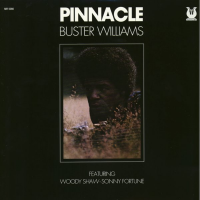
by C. Andrew Hovan
As if producer and archival sleuth Zev Feldman weren’t already busy enough unearthing lost jazz treasures, he has recently launched a new imprint, Time Traveler. A devoted collector in his own right, Feldman has turned his attention—at least initially—to the storied catalog of Muse Records. Founded in 1972 by Joe Fields, with significant contributions from Don Schlitten, Muse weathered the shifting tides of the industry for a quarter century. While portions of the catalog have resurfaced on CD over the ...
Continue ReadingBuster Williams: Pinnacle
by Andrew Schinder
Bass legend Buster Williams has built a long, prolific career traversing the innerwebs of diverse jazz styles and sub-genres, developing into a beloved sideman and one of the finest rhythmists of jazz's modern period. Williams' bass can elevate any material, and he has contributed to some of the most treasured recordings in the jazz canon, in particular supporting Kenny Barron, Woody Shaw and, of course, Herbie Hancock. But Williams has an exceptional discography of his own, if a bit overshadowed by ...
Continue ReadingMusic
Recordings: As Leader | As Sideperson

Similar

Chet Baker
trumpet and vocals
Lee Konitz
saxophone, alto
Grover Washington, Jr.
saxophone
Jason Parker
trumpet
Avery Sharpe
bass, acoustic
Claude Williamson
piano
Diego Urcola
trumpet
Martin Wind
bass, acoustic
Sammy Figueroa
percussion
Todd Coolman
bass
Tardo Hammer
piano
Douglas Ewart
bassoon

Tri-Fi
band / ensemble / orchestra