Home » Jazz Articles » Interview » Bob Mintzer: Amazing Reach
Bob Mintzer: Amazing Reach


Reaching other people with the music - that’s an amazing thing... I know when I hear great music, it makes me hopeful and inspired and optimistic, and that’s a great way to influence people.
Born in 1953 in New Rochelle, New York, a town that sits just two miles north of New York City, Mintzer has been an active professional jazz musician ever since his college days at the Manhattan School of Music. Beginning in 1975, he had a two-and-a-half year stint with the Buddy Rich Big Band, where he started writing and arranging for large ensembles. His playing and writing experience there led to a spot with the Thad Jones/Mel Lewis Jazz Orchestra. By the early 1980s, Mintzer was leading his own big band, performing at Seventh Avenue South, the legendary New York City club owned by Randy Brecker and Michael Brecker, and recording for Digital Music Products (DMP), one of the first fully digital recording labels. He joined the Yellowjackets in 1991, bringing a straight-ahead jazz sensibility to a band that had already begun blending such flavoring in with its earlier R&B and fusion sound. Other important associations Mintzer has had over the years include such musicians as percussionist Tito Puente, drummer Art Blakey, bassist Jaco Pastorius and Gil Evans, in addition to session work for Aretha Franklin, James Taylor and many others.
Mintzer has written some 200 arrangements for big band. He's recorded more than 30 albums as a leader and played on hundreds of others. His Homage to Count Basie (DMP) won a Grammy award for best large jazz-ensemble recording in 2001, and, in all, he's has been nominated for 13 Grammys for his solo work, big-band CDs and work with the Yellowjackets. He's been based in Los Angeles since 2008, when he joined the faculty of the University of Southern California, where he now heads the jazz studies program and holds the Bowen H. "Buzz" McCoy and Barbara M. McCoy endowed chair in jazz.
The Bob Mintzer Big Band began an association with the Manchester Craftsmen's Guild MCG Jazz label beginning in 2004, after a long relationship with DMP that resulted in 12 albums. The band's fourth release on MCG is a Brazilian-flavored recording, For the Moment (MCG, 2012).
 All About Jazz: What inspired you to focus your big band on the sounds of Brazil with For the Moment?
Bob Mintzer: The idea for this CD came about from meeting Chico Pinheiro, a great guitarist, singer and composer. We had a very modern-day kind of meeting-online, on Facebook initially. Somebody recommended I check him out. I went to his Facebook page and listened to his music. I was very taken with it, and I left him a message. It turned out he was a fan of mine and had done his final project at Berklee on my writing. We had lunch when I was still living in New York and talked about doing something together. The first thing we did, I played on his recording There's a Storm Inside (Sunnyside, 2010). And it was soon after that that I started to think about doing a Brazilian big-band project. I looked to him, and he was eager. Chico contributed two original compositions and also performs on "Corcovado," and he sings and plays guitar beautifully on those. Marty Ashby plays guitar on the rest of the album, and he's a beautiful player as well.
With my own writing on the CD, I focused on different cities and places that I've been to in Brazil that have their own indigenous style of music and rhythms, and this inspired me to write a bunch of original tunes as well as arrange some of the standard tunes typically associated with the Brazilian songbook. We went to Manchester Craftsmen's Guild in Pittsburgh, did two concerts and recorded them, and hence we have this CD. It was really a nice experience-very challenging and inspiring to work with Chico, a great, great musician. I think, sonically, this may be one of the better records I've made. The woodwind writing and the textural elements really turned out well on this one. It's a nice-sounding record that features a lot of musical devices and great playing.
AAJ: One of the tunes on the album, "For All We Know," might not seem an obvious choice for the Brazilian theme, but this was inspired by Claus Ogerman's original arrangements for Joao Gilberto and Antonio Carlos Jobim. Is Ogerman an influence on your writing?
BM: Yes, indeed, clearly. He really was an innovator in terms of orchestration and using such a vast array of colors and textures in arranging.
AAJ: Who are some others who have influenced you?
BM: I've studied a lot of different arrangers, from Duke Ellington and all the great writers and arrangers in the Basie band to Gil Evans and just about everyone-anyone and anybody in and out of jazz music.
AAJ: There are four original compositions of yours on the recording. What was your approach to composing for these tunes?
BM: The first composition on the CD is called "Aha," and it's actually a tune that I wrote for the Yellowjackets, at least initially. It kind of morphed into this tune that had this sort of funny little groove-it tilts over into the Brazilian rhythm called baião a little bit. And it's a fun sort of open tune for soloing, too.
AAJ: The title track, "For the Moment," is based on another composition.
BM: I took the harmony of "Never Let Me Go," which is such a great tune, and I kind of fashioned it into this little Brazilian-tinged tune that features a woodwind section using a nice, light sound. The title for my tune comes from the idea of being present in whatever you do in the moment, for the moment-living for the moment. Another CD of mine not too long ago had a similar title, In the Moment (Art of Life, 2007), so I guess I must feel strongly about this way of thinking.

AAJ: You only solo on three of the tunes on the album, and you also leave room for Bob Malach to solo.
BM: He's a great tenor saxophonist. What's interesting is that one reviewer of the CD said that I took all the solos and didn't leave enough room for other people, but I disagree with this completely. As a big-band leader, it's so important to have as many players as possible to solo. That's part of the joy and beauty of big bands, and I'm always very vigilant of that and do my utmost to make sure that everyone gets to play.
AAJ: In addition to Chico Pinheiro, another important musician featured on the CD is Russell Ferrante.
BM: Russell is one of the greatest piano players I know. He's a team player. He's one of the best accompanists there is, a dynamic soloist. I'm comfortable with using him on any project I do. One of the all-time greats. Clearly an unsung hero in many ways. A very quiet, unassuming guy, and I think he deserves a lot more recognition than he gets.
AAJ: Peter Erskine plays a prominent role on the CD, too.
BM: Yes, Peter is a long-time friend. We actually met in high school. We went to an arts high school together in 1969, the Interlochen Arts Academy in Michigan, and we've collaborated on many things since then. We started out on similar paths. I joined Buddy Rich; he went with Stan Kenton and later Maynard Ferguson. He then joined Weather Report, and we kind of met up in Jaco Pastorius' band in the early '80s and wound up playing on each other's solo recordings. Now, since I moved to Los Angeles, we're both on the faculty at USC and play together all the time.
AAJ: You mentioned Marty Ashby as playing guitar on the CD. He also played an important role with his connection with the Manchester Craftsman's Guild.
BM: He's a very well-rounded person. He's a great musician and a great organizer of jazz music, and he does it all. I'm so very grateful for all that he does-somebody who pioneers the cause of jazz music in a huge way.
AAJ: Switching over to your work with the Yellowjackets, the band had a recent change in personnel, with Felix Pastorius filling in for Jimmy Haslip on bass. How do you find playing with Felix?
BM: Felix is a really excellent musician-very clever guy. He's doing very nicely with the band. We're all having a great time working with him. We're getting ready to do a new recording with him soon, which we're looking forward to.

AAJ: You did some outstanding work with Jaco Pastorius, such as his big band featured on the Birthday Concert (Warner Bros., 1981). How do you compare your work with Jaco and Felix?
BM: Working with Jaco was very interesting and challenging. He had some really unusual concepts and ideas. He, obviously, was a very great bassist, as is Felix. Felix, while he's been influenced by his dad, as any electric bassist has been, he's got some stuff of his own. He's extremely clever and hard working. When he solos on Yellowjackets tunes, he really gets inside the harmony and plays some unexpected things, really brilliant things. I mean, Jaco was that way, too. Jaco played in that era, when we were young, playing with a lot of bands-Wayne Cochran, Blood, Sweat and Tears and, of course, Weather Report. I think there are fewer opportunities right now to hone your craft playing, so Jaco had a little edge, maybe, but Felix is coming along. He's definitely someone to watch. Being with the Yellowjackets, I think, will be a huge opportunity for him for a lot of growth. Both Pastoriuses are pretty challenging and inspiring.
AAJ: Another record of yours that comes to mind with Jaco Pastorius is I Remember Jaco (Novus, 1992).
BM: The situation there came out of meeting a producer who was doing some things for BMG in Japan. I think I had just joined the Yellowjackets and was interested in doing a little small band project separate from the band. I just thought that doing a tribute to Jaco, who had such a profound effect on my musicianship, seemed like a good idea, and they liked the idea, so that's how that all came about. I did a second project for BMG, Twin Tenors (Novus, 1994), where Michael Brecker and I played together.
AAJ: One curious thing about the Yellowjackets is that you'll still see it referred to as primarily a fusion group. With the earliest iteration of the band, that was true, but it seems pretty much straight-ahead jazz lately. Do you characterize it as fusion in your mind?

BM: I don't bother characterizing it. I mean, the band's been around for over 30 years now, and it's taken on a life and momentum all its own. It's just a Yellowjackets sound. There are courses taught at major universities on the music of the Yellowjackets. It's gone so far beyond the original fusion genre. In a band that's a collaborative effort like the Yellowjackets, whenever there's a personnel change, the music changes accordingly. When I got in the band, I brought a straight-ahead sensibility to what was already there. The music sort of goes well beyond categorization, I feel. And we leave it at that. Everyone is a prolific composer, and everyone is encouraged to contribute compositionally. We try to come up with music that's compelling and interesting to play, and it's Yellowjackets music, for sure. Many people say they hear a couple of bars, and they know that it's Yellowjackets. The way we approach rhythm and melody and harmony and the way we interact-all of those little details-that's how music works.
AAJ: You have a very active touring schedule with the band.
BM: Yes, we recently went to Shanghai and Beijing.
AAJ: You're so busy. You're one of the great sax soloists around, arranger, composer, educator-how do you juggle everything?
BM: I have a pretty full life. I think a lot of it is time management-pacing yourself and organizing your time. Sometimes it gets hectic, but I've been doing this for many years. It's nothing new.
AAJ: You're also working with other groups aside from the Yellowjackets and the big band. Are you still working with a quartet?
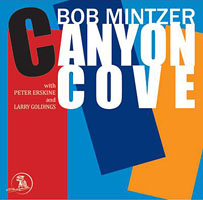
BM: On occasion. Since I've moved to Los Angeles, I've been playing with Peter Erskine, Alan Pasqua and Darek Oles a good bit. We're all on the faculty at USC. I still would like to play some with my guys in New York, John Riley, Jay Anderson and Phil Markowitz, who did In the Moment together with me. Lately, I've also been playing with an organ trio. I did a CD called Canyon Cove (Pony Canyon, 2010) with Larry Goldings and Peter Erskine. That was a lot of fun. I try to keep it interesting. I do a fair amount of big-band guesting and some orchestrating for different people. I just did an orchestra arrangement for Toninho Horta for a concert with the Philharmonic in Sao Paulo. I love Toninho's writing and playing, so that was a real joy. I wrote a piece for tenor saxophone and concert band, called "Go," and we play that a couple of times a year, and that's a lot of fun.
AAJ: You also have a working big band that you put together in L.A., too.
BM: Yes, I put a band together out here, just to play locally. But I've taken L.A. guys on tour, too. In June I took a band to Tokyo to play the Blue Note there for four nights. It was mostly New York guys, at least in the horn section. Lincoln Goines from New York came; he was on the CD, a great all-around bassist who really does the Brazilian thing very well. Chico Pinheiro came. And from L.A., Peter Erskine and Russell Ferrante came. Bob Sheppard, a saxophonist, and John Daversa, a really fine trumpet player, came on the trip, both from L.A. I like to mix it up and play with guys I have long-standing relationships with, who can really play the music. Some of those people happen to live in New York, and my friends in L.A. also play great. So, it was a really a very nice gathering to get the New York and L.A. guys together.
While the scene is smaller in Los Angeles, I have to say that there's a very vibrant, interesting scene out here-guys who are really trying to play some music. From what I see, with the glut of musicians in New York, some of the better players there are starting to reconsider the whole mindset that New York is the only place to be if you're going to play jazz. There's a nice scene out in L.A. And the weather is good. There are options nowadays. Plus, from the standpoint of a working jazz musician like myself, you go to the airport, you get on a plane, and you travel around. So, in that regard, you can live anywhere. There are compelling reasons to live in a nice place.
AAJ: What are you focusing on as an educator at the University of Southern California?
BM: Quite a lot. I'm the chair of the jazz department now. I'm the director of the top big band there. I teach arranging and composition. I teach a really great class to freshmen and sophomores, called Jazz Elements, an all-around jazz workshop where we talk about repertoire, vocabulary and theoretical devices, and really get inside the music. Everybody writes, transcribes, arranges, plays the drums and piano and gets a good head start on the lifelong skills you need to really refine your connection with the music. That's a lot of fun. And I take four or five private students on saxophone.
AAJ: How many students are in the jazz program at USC?

BM: There are about 85 majors, and there are minors as well. The faculty is pretty amazing. It's Peter Erskine and Alan Pasqua, Russ Ferrante, Vince Mendoza, Bill Watrous, Bob Sheppard and several other great musicians. Ambrose Akinmusire is a great young trumpet player who just signed on. So we have a working faculty, which is a great conduit for the students to have an entryway into the world of work in jazz. In fact, I took one of our trombone students, a junior named Derick Hughes, over to Japan with me in June. He did a wonderful job. He's already getting busy around L.A. He's playing with Bill Holman and a lot of other bands. So there's a lot of opportunity that way, being that the faculty are working musicians.
The philosophy at USC is to really get people well versed in the language of jazz but also to realistically acquire other skills that will allow them to work, not necessarily only in jazz but also by being an arranger, a producer, knowing about the technology of recording, using notation and, for that matter, being involved in other styles of playing. We have a big pop-music department, a flagship classical-composition department there, and there's one of the best film schools in the world, so there are many opportunities to explore other areas of activity and potential income while you're a student.
AAJ: Looking back on your own student days, your early jazz education included some work with Jazzmobile in New York, which Billy Taylor founded back in the 1960s.
BM: Yes, that was an initial opportunity for me to see up close what jazz music was like in terms of a live setting. It really had a profound effect. But I had several of those opportunities, being around New York when I was a kid. Another one was being 15 years old and going to the Village Gate to hear the Miles Davis Quintet and the Thelonious Monk Quartet. I was just so entranced by this musical conversation I was witnessing and how great it sounded, how interesting. I didn't understand a lot of what I was hearing, but it really drew me in and made me want to learn more about it.
AAJ: Earlier, you mentioned the performing arts academy you attended in high school, the Interlochen Arts Academy in Michigan, where you met Peter Erskine. How was that experience for you?
BM: It was wonderful. It was a life-changing experience where I got to study with some very fine teachers and rub shoulders with students who were living the life that one must live to become proficient as a musician. When I arrived there, instead of just casually exploring music, listening and fooling around with different instruments, I learned how to really focus my time and spend four or five or six hours a day practicing a variety of skills that pinpoint all the qualities one needs to be a dynamic musician. I got my habits up and running so that once I graduated from high school, I was able to really work in an efficient way and learn a lot.
AAJ: Did your interest in arranging and composing start at an early age, in those days?
 BM: Yes. I think my interest in writing was linked to a keen interest in trying to figure out how music worked. So I would hear a song and sit at a piano and try to figure out how that song went and, in doing so, discovered various components of harmony, melody and rhythm. Inevitably I would discover that if I stayed with it, it would lead to something a little different and something that I could perhaps call a composition of my own. I started doing that very, very young, and once I got into school and started playing in bands a little bit, the prospect of writing for other musicians was very intriguing. As soon as I had my first experience doing that, I was gone. It was such a thrilling feeling to get kids to play something I wrote and see how they might interpret it. And to this day, I just love doing that-it's really gratifying.
AAJ: After high school, you worked with Jackie McLean at the University of Hartford.
BM: Yes. Jackie had just started teaching at the Hartt School of Music there. I went there as a classical clarinet major, actually. I didn't have a lot of contact with Jackie, but I had some, and he was very encouraging. He actually told me I should leave that school and move to New York. That's where the scene was then, so after two and a half years I transferred to Manhattan School of Music and started hanging out on the scene in New York. At that time, which was 1972 and '73, there was a big scene, the loft scene, and guys were jamming. Nobody was making any money playing jazz at that time. There were a few gigs, and they paid a meager salary. But we just loved the opportunity to get to play at all, just play for the sake of the music. At that time, to pay my rent, I would play wedding gigs, play in Latin bands for 15 bucks a night or do whatever I could to support my jazz habit.
 AAJ: You mentioned majoring in classical clarinet. What made you decide to do that?
BM: I was a clarinet major when I went to Interlochen. That's how I got into that school. I had played a fair amount of clarinet in school, and outside of school, I was playing guitar in rock-and-roll bands and messed around with saxophone just a little bit. I was a classical-clarinet major in college, too. I didn't really study jazz in college. Jackie McLean had just arrived at Hartt when I was there, and the jazz component was minimal. Most of what I did in school was classical. I did jazz outside of school. I was listening incessantly to recordings. I was sitting in and eventually working with the local jazz groups around Hartford and going down to New York as much as I could and play with people and meet people. And then, when I transferred to Manhattan School of Music, that jazz program was pretty minimal as well. It was just a big band, and there was one little combo class, and that was about it for jazz. The rest of the school was classical. In those days, jazz education hadn't really taken hold yet. There were programs at North Texas State, Miami University, Berklee, of course, and not many others.
So, for me, at Manhattan School of Music, I found my way through the jazz world outside of school, sitting in and hanging out and jamming. I'm actually glad it all worked out the way it did, because my experience with classical music really carried over and informed my jazz playing and my playing in general. It also gave me some other skills that allowed me to work in symphonic and chamber music while I was waiting for a jazz career to get going. Ultimately, the clarinet fell by the wayside, and I found myself wanting to play more and more saxophone in a jazz context.
AAJ: Whom do you count as your influences on saxophone?
BM: Initially it was John Coltrane, Joe Henderson and Sonny Rollins, Eddie Harris. Shortly afterwards, Lester Young, Ben Webster, Dexter Gordon, Sonny Stitt, Hank Mobley, Wayne Shorter, George Coleman, Al Cohn, Zoot Sims. I mean, anybody and everybody. And I'm still working on it, still delving as deep as I can into the rich history of tenor saxophone. Stanley Turrentine, who was an acquaintance, was a big influence on all of us. In fact, I had my students transcribe one of his recordings with Shirley Scott recently. What a great, beautiful player. The way he combined R&B and bebop-a melodic, swinging, beautiful player. Everybody, anybody, all of the above have influenced me, and I think once you get serious about playing this music, you make a point of being thorough in your research.
AAJ: But you've really developed your own sound.
BM: That's always hardest for the person doing the playing to realize. Everybody has their own sound, and I think that those who really persevere and play a lot tend to develop more of a sound, I suppose, just out of having the experience of playing with people. You come up with something that eventually becomes the way you sound. You can still hear influences in anybody's playing. I think as a composer and player, you stumble onto things, you discover things. You put the notes together. You gather the people together to play. You play repeatedly, things happen, and hopefully, you as a musical personality emerge.
AAJ: One bit of experience you had very early in your career that ties in with the Brazilian sound on For the Moment was the work you did in 1974 with Deodato, the Brazilian pianist and composer who made a big splash by mixing jazz and pop music.
BM: That was actually my first gig out of Manhattan School of Music, playing with a four-man horn section at the height of his success back then. We did a bunch of touring, and it was very interesting to play in that kind of ensemble and travel the world. I went with him to Japan, Canada and all over the U.S. It was a beginning, and, of course, once you get on a band with that kind of visibility, people hear you, and word sort of gets around. That, and also playing with Tito Puente's band and being on the scene in New York, helped me to be considered for the Buddy Rich band in 1975.
AAJ: How did you like working with Buddy Rich? He had a reputation as a tough taskmaster.
BM: He could be really tough and at times unreasonable, but he was all about the music and all about playing great. Once you got past the yelling and screaming, you quickly realized it was all about playing your best. I'm forever grateful, number one, to have the opportunity to play every night and travel the world and, number two, to write my first big-band arrangements for that band. That was an incredible experience. And, to counter some of the usual stuff you hear about Buddy, he was extremely supportive of my writing and playing. He was very generous and very giving in that regard. I played with Buddy for two and a half years, and I made a little different kind of name for myself through that, touring and playing, not only as a member of the band but as a writer/arranger. When I got off of that band, I got a call to join the Thad Jones/Mel Lewis Orchestra, I think in part based on the fact that I was a writer and a player.
AAJ: Taking things a few years forward, you formed your own first big band in the early '80s. It started out at Seventh Avenue South, the club owned by Randy and Michael Brecker. Had you met them around that time?
BM: I knew them already. When Mike and Randy Brecker opened Seventh Avenue South, several of the people who wound up playing in my big band were playing at Seventh Avenue South with their own respective small groups. I was sort of summoned to round up a bunch of people who were playing there and put them in a big band for this little event. Without realizing it, I had formed something that was going to be very long lasting, but I didn't know it at the time.
AAJ: Your playing as a sax soloist is compared to Michael Brecker's, from time to time.
BM: Yeah, it's inevitable, and I'll be the first to admit it. He was a huge influence. We were good friends. We played together periodically, and I admired what he did. In fact, in a lot of the session work I was doing around New York, the producers would say, "Can you do a solo like Michael Brecker?" He pretty much set the standard for contemporary jazz/R&B saxophone playing. I think I'm the kind of person who absorbs things quickly, and just being around him, I absorbed a good deal of what he did. We all have our influences. I do think there are things I do that are different than what he did, although I can't even begin to do some of the things he did. He was a total virtuoso. We had a lot of common influences- Coltrane, Stanley Turrentine, Junior Walker, Sonny Rollins, Joe Henderson. I think he certainly went well past that initial sound that he created. He developed and grew not only as a player but as a composer. I'd like to think that I've done the same. It's tragic that Michael died so young, but on a positive note, if there is such a thing, he left an incredible legacy, not only as a musician but as a human being: a great person and a great artist.
AAJ: Not long after you formed the big band, you also started your association with Tom Jung and his company, Digital Music Products.
BM: That happened a couple of years later. I met Tom in '84, and he actually came by Seventh Avenue South. He heard the band, and he was just starting this digital compact-disc label, which was one of the first. And he needed a band-a large ensemble to kind of showcase what he was attempting to do, which was to display very textural, dynamic large-ensemble jazz music in this new digital domain. That was a great opportunity for me, because not only were jazz fans interested in the music but there was the whole high-end audiophile community who, due to the fact that there were so few CD titles available at that time, were buying up any and all CDs of any sort of quality. So it was a built-in market for those first couple of CDs we made for DMP, and they did very well.
AAJ: You were talking a little about the work you've done in other contexts-rock, pop and symphony orchestras. How do you like working outside of the jazz context?
BM: Well, I love to play, and I always enjoy the freedom that working affords you. I've always been interested in all kinds of music. I love James Brown and Tower of Power. I love Igor Stravinsky. I like medieval music, Afro-Caribbean, Brazilian and African music. I like folk music. So I have the sensibility and skills that allow me to do session work, and I did it. It was available, and it was challenging. I enjoyed it and, as a result, had the opportunity to play with Aretha Franklin, James Taylor, the Bee Gees, Steve Winwood, Queen-with all sorts of stylistically different artists. I played some really great music with some great people. With jazz, where I'm a composer, producer and artist, it's a different kind of thing. There's a different focus. It's more about improvisation and playing in a way that's determined by me, whereas as a session player, you're called upon to go in and fit into this pre-existing scenario and try to play your best in an appropriate way that serves the music.
AAJ: Do you find different session opportunities now that you're in L.A.?
BM: I didn't really come out here to do sessions. I came out here to teach at USC. I did the freelance thing in New York, and I sort of feel it's on to the next chapter. The way I spend my time nowadays is writing and playing with the Yellowjackets, my own groups, writing for various-sized ensembles where I'm incorporated in a playing situation, generally my own. That's what most interests me, and I think as we get older, we try to zero in on areas that are most interesting and stimulating.
AAJ: We haven't talked about your bass clarinet work. When did you start playing bass clarinet?
BM: I started bringing it around the sessions in the late '70s. I found a way to amplify the instrument with a Barcus Berry pickup, so I was able to compete volume-wise and hear myself a little better. When I got called to play with Jaco Pastorius, that seemed like a really great opportunity to play the instrument, because he frequently would play melodic lines and needed a bass instrument to kind of take over the traditional bass area. And the bass clarinet is ideal for that due to its low range. So I really started to develop a sound and conception playing with Jaco. It was sort of a logical place to go, being that I was a clarinet major. I spent all that time on the instrument. It's a great instrument to play. I don't play it so much, but I really enjoy it when I do.
AAJ: Another important collaborator for you more recently has been the vocalist Kurt Elling.
BM: He sang on the first three big-band CDs that we did for MCG. On the first one, Bob Mintzer Big Band Live at MCG (MCG, 2004), there's version of the Herbie Hancock tune "Eye of the Hurricane" that's just blazing. Kurt sings about 20 choruses in his solo, vocalese like you've never heard before anywhere. I still marvel at that whenever I listen to it. He's great- extraordinary. In fact, I just took him to Japan with my big band. We did a bunch of those arrangements that I did on my CDs over there. He's one of the best male vocalists I know. He sings like an instrument: such exacting pitch and beautiful phrasing, such a bright guy and has so much to say.

AAJ: The Hudson Project (Stretch, 2000), with John Abercrombie, Peter Erskine and John Patitucci, is another notable live recording of yours.
BM: That was a great band. That was put together by the D'Addario company. We were all in one way or another associated with their family of products. I was endorsing Vandoren reeds at the time. John Abercrombie and John Patitucci used D'Addario strings, and Peter was endorsing Evans drumheads. So D'Addario sponsored this tour and made a record out of one of the concerts. I had played with these guys quite a lot over the years, and it was really fun to get together with all of them.
Playing with a guitar instead of piano was great-a different animal- and makes you play a little differently, especially with somebody like John Abercrombie, who's such a kind of line-type player. He's very contrapuntal, not always playing chords but sometimes playing melodies as accompaniment to you soloing. I enjoyed that a lot. John was one of the first musicians I met in New York, back in 1971. He lived in a loft down on Warren Street, way downtown. I used to go down there and play with him and Richie Beirach, Jeff Williams, who was a drummer who lived down there, Marc Copland, who was formerly Marc Cohen and a saxophonist, now a pianist. They all lived in there, and it was great playing with them.
< Previous
Born to Sing: No Plan B
Next >
Monome
Comments

Tags
bob mintzer
Interview
Bob Kenselaar
Terri Hinte
United States
California
Los Angeles
yellowjackets
Buddy Rich
Thad Jones
Mel Lewis
Randy
Michael Brecker
Tito Puente
Art Blakey
Jaco Pastorius
Gil Evans
Aretha Franklin
Count Basie
Chico Pinheiro
Marty Ashby
Claus Ogerman
Joao Gilberto
Antonio Carlos Jobim
duke ellington
Bob Malach
Russell Ferrante
Peter Erskine
Stan Kenton
Maynard Ferguson
Felix Pastorius
Jimmy Haslip
Weather Report
Alan Pasqua
Darek Oles
John Riley
Jay Anderson
Phil Markowitz
Larry Goldings
Toninho Horta
Lincoln Goines
Bob Sheppard
John Daversa
Vince Mendoza
Bill Watrous
ambrose akinmusire
Eric Hughes
Bill Holman
Billy Taylor
Miles Davis
Thelonious Monk
Jackie McLean
John Coltrane
Joe Henderson
Sonny Rollins
Eddie Harris
Lester Young
ben webster
Dexter Gordon
Sonny Stitt
Hank Mobley
Wayne Shorter
George Coleman
Al Cohn
Zoot Sims
Stanley Turrentine
Shirley Scott
Deodato
Kurt Elling
Herbie Hancock
John Abercrombie
John Patitucci
Richie Beirach
Jeff Williams
Marc Copland
For the Love of Jazz
 All About Jazz has been a pillar of jazz since 1995, championing it as an art form and, more importantly, supporting the musicians who create it. Our enduring commitment has made "AAJ" one of the most culturally important websites of its kind, read by hundreds of thousands of fans, musicians and industry figures every month.
You Can Help
To expand our coverage even further and develop new means to foster jazz discovery and connectivity we need your help. You can become a sustaining member for a modest $20 and in return, we'll immediately hide those pesky ads plus provide access to future articles for a full year. This winning combination will vastly improve your AAJ experience and allow us to vigorously build on the pioneering work we first started in 1995. So enjoy an ad-free AAJ experience and help us remain a positive beacon for jazz by making a donation today.Near


Giveaway

Eligible winners: 2
Days remaining: 1
Days remaining: 1



