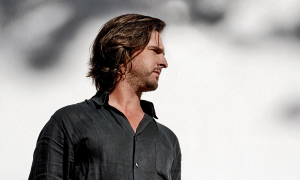
Home » Jazz Articles » Interview » Bobby Broom: Building a Legacy
Bobby Broom: Building a Legacy


"I didn't know it was a descendent of the banjo," Broom recalls. "I found out later it was a tenor guitar. I still have it. I didn't do anything with it. I was about 8. About four years after that I decided I wanted to play guitar. There was no clear reason why I made that decision. I just woke up one morning and decided that was it. I wanted a guitar. I was 12."
Now 51, Broom has been playing that instrument ever since, and rose at a remarkable level, playing with pianist Al Haig at the ripe age of 12 and with Sonny Rollins for the first time at 16, years before touring with the Saxophone Colossus. Broom's style—a rich, thick sound; expressive and swinging—is forged in the tradition of jazz and blues. He can bring those sensibilities to musical landscapes like Stevie Wonder tunes, the focus of his most recent recording with his Deep Blue Organ Trio, Wonderful! (Origin, 2011). Or he can blaze through standards. The 2009 recording from his longstanding guitar trio, Plays for Monk (Origin) is an important interpretation of those great compositions rendered soulfully and thoughtfully through an instrument Monk did not employ.
Broom has carved out a fine career and in the last decade has documented that with a string of exceptional recordings. By his own admission, "practice, apprenticeship, productivity, perseverance and faith" have led to a place in jazz that he can be proud of, even if he isn't a household name in the jazz world. The body of work is there. The contributions on the bandstand speak for themselves. Peers speak in glowing terms. Pat Metheny wrote on his own website in 2008 that "I have been a huge fan of Bobby since I first heard him with Sonny Rollins," calling his new recording at that time, The Way I Play, Origin, 2008), "one of the best guitar trio records ever."
"This validation, especially from those that I respect and from fans, is what keeps me going. It always has. To be sixteen years old, knowing that you're a fledgling, but you're being encouraged and having your efforts endorsed by great musicians was like a crazy dream," says Broom. "Those episodes are long gone, but I'm still making progress and getting validation and encouragement that I need to continue. I guess in a way I've always been in this position—somewhat of an underdog and a true jazz musician. I'm happy that I've made an impact on those who appreciate what I do."
 Broom has more to say and the years ahead will bear that out. Some of that came from a curiosity he had as soon as he knew the guitar was his thing. He advanced rapidly. Even when his technical ability wasn't quite there yet his vision of what to look and strive for spearheaded things until that technique came around. The "feel," so important in improvisational music, was innate. He started hearing jazz as a teenager and took steps to investigate further. He inquired at a record store, and was handed George Benson's Bad Benson (CTI, 1974), an album that includes a version of "Take Five."
"My life changed in that moment," Broom says directly. "Everything seemed to make sense, what George played. I was 14 or something like that. I'd heard an awful lot of music. Somewhere in my brain I understood a lot, just innately. Not theoretically, technically or anything like that. Music made sense to me. Most of what George played, although I didn't know what it was, made sense to my ear. I knew it was tremendous. It sounded like he could do anything and everything as an improviser. I understood improvisation. I understood what he was playing, relative to the song, the harmony, the chords as they moved. All of it made sense. I had never heard anybody play an instrument, let alone the guitar, like that, with that kind of freedom and joy. And power and expressiveness. I thought, 'Man, if this is what you can do on the guitar, then this is what I want to pursue. I want to do this.'"
Broom knew he couldn't duplicate what he heard. "It seemed so personal, like someone speaking. I thought, 'I want to be able to speak in that way, at some point. With that kind of freedom. The feeling I'm getting from hearing him, I want to be able to give that to myself.' To be able to do that was the inspiration. Then I found that all of jazz made me feel that way, as I then started to trace and go through the music and do research looking for answers to my questions. Finding out about Charlie Parker and Miles Davis and Dizzy Gillespie and John Coltrane and all of the great people in stories and in books and on the backs of the records, the liner notes. Making all those connections. All of jazz and anybody that played it gave me that feeling. At that point it was an obsession. Something I had to do and I wanted to do."

It resulted in a career for the New York City native, who from those teen years has played and recorded with the likes of Hugh Masekela, Kenny Burrell, Charles Earland, Stanley Turrentine, Kenny Garrett, Gillespie, Dr. John, David Murray, and Eric Alexander. He even did a short stint with Miles Davis in the trumpeter's latter, funky period.
After playing as a sideman with remarkable musicians, and getting some of his own recordings out, Broom settled in on a small group sound. His guitar voice floats in and around in those settings. Pierces them at times. Broom's Deep Blue Organ Trio, with Chris Foreman on Hammond B3 and Greg Rockingham on drums, was formed in 1999. They met in the early 1990s around Chicago and did gigs, some of them quite regular, like the Cotton Club in Chicago for about two years. In 1999, they decided to become a regular band. Wonderful! is their fourth recording.
Broom is aware of the great organ trios of the past that featured guitar. "Because of the players that have been involved in making that music—Wes Montgomery, Grant Green, Pat Martino, Kenny Burrell. That sound and that instrumentation is documented so well and to such an extent, it has become part of the story of jazz for the guitarist," he explains. "I heard, being a fan of all the guitarists I mention, I heard quite a bit of that music when I became interested in jazz as a teenager and started to pursue it as a fan and a student and enthusiast. Those records were among my favorites. I really had to study those guitar players through that music. And I enjoyed it."
"One of the first records I came across that was a jazz recording—and I didn't really make the differentiation at that point because I was 10 or 11—was Charles Earland's Black Talk (OJC, 1969). There was something about that recording that was striking. It was a hit at that time. He did "More Today Than Yesterday" and "Age of Aquarius." That was the first record I recall being obsessed with. This was before I was a student of guitar. I always had some kind of attraction to that music."
Still, Deep Blue Organ Trio seeks its own ground, offers its own take on the genre. Broom says, "As a musician you can only envision what you've ingested and processed. The instrumentation is the same, so you're going to get something that's akin to that sound. But the idea is definitely not to recreate anything that went before. If it reminds people, or even us, of some of the things we liked and are familiar with, that's OK. That may be good. But we like to bring our own perspective to what we're doing and that's the point. We pay standard jazz repertoire on some of the recordings. We also play a lot of modern tunes, or tunes that are from our childhoods. Tunes that were popular for us."
 The Stevie Wonder material took a lot of preparation, he says. Unlike the jazz standard repertoire, these songs were new to the band in terms of performance. "We were familiar with them as listeners, but we had to become familiar with them as players. It was a matter of getting comfortable with the material and seeing how the songs would fit our group and how we play. We had to discard some things that we thought we'd be able to play. Maybe it didn't sound the way we wanted it to. It wasn't a comfortable fit. But we came to some good choices. By the time we got to the studio, it was not very difficult to get it together."
The record has good grooves throughout. The heavy funk of Wonder's "Jesus children of America" is tipped into foot-patting swing. Broom's sound and choices during his solo are delectable. The popular "My Cherie Amor" is a tender ballad, dreamy and ethereal, in the hands of this group. Broom squeezes out the sweetness that can be realized in the composition when it's broken down to the essence. The band tells its own story on each selection and its sweet stuff.
"It's modern from my perspective," says Broom. "We're not trying to reinvent the wheel. We're just trying to make music and find material that is meaningful to us and listeners like us. In that way, it is current and relevant."

Meanwhile, Broom's other trio, with Dennis Carroll on bass and Kobie Watkins on drums, is on a break. The trio also has its own identity when it comes to playing anything from Monk to standards—even rock and pop favorites, as they did on Song and Dance (Origin, 2007). " In my twenty years of playing with Bobby, I've always felt that his style of playing melds the feelings of all-American blues with an urban hip soulfulness that really speaks to the progression of jazz," Carroll has said of the guitarist. That feeling on guitar spreads through the entire trio. The band did a recording prior to deciding on the hiatus, and that could appear in 2012. And it has a new twist: original tunes, dubbed Upper West Side Story (Origin).
"I've been recording quite a bit now since 2000. I've made nine or 10 records. That's about one a year. It's a task to come up with 'What am I going to do next?' and have it be a natural choice as much as possible. I try not to think about it too much and belabor that part of the process. I've been holding off on the idea of recording a lot of original material. Although I do write, I felt like I wanted to establish my voice on the guitar for listeners. I wanted listeners to know who I was. I didn't feel that presenting a whole program of original material was the thing to do to help establish that. I wanted to give people something they were a bit more familiar with. Something they might gravitate toward. Something to meet them halfway, familiarize myself with the listener in that way."
"The group sound has been documented and recognized to some degree, as well as my own playing and sound. So I feel comfortable in doing that. That's what the new trio record is. All-original material."
So he combines performing, and now writing, with his diligent work as an educator. That's a well-rounded career in which Broom can influence musicians on multiple levels.
As a youngster starting out on guitar, jazz didn't mean much. But through a teacher, Jimmy Carter, he became acquainted with jazz and about jazz and saw the music in a different light. "Eventually it all made sense. I started hearing music on the radio in my natural environment that was associated with jazz. Herbie Hancock was popular. Grover Washington, Jr. These guys were having these hits on radio. It was music I related to and that I liked. There was improvisation. I thought, 'If this is jazz, then I like jazz.' That's when the connection was made."
Broom attended the former High School of Music and Art (now LaGuardia High School of Performing Arts) and music became serious work, something Broom ate up at a fast pace.
 "I think I was enamored with this music. I had this fervor about wanting to be involved in it. I was not ashamed to play. That's one thing I learned from Jimmy Carter—learning by doing. A large part of our lessons consisted of just us playing together. He would write a chart the week before, I would learn it, then we could come together and play. That developed over the course of a few years. After a while, I'm kind of familiar with the performance process through him. He did theory with me, but it was also a mentoring situation. So I didn't have any fear. I was naive. I didn't have any fear about not sounding good. I didn't have a conscience about it yet. I was more concerned with being involved and learning from the situation that I was in."
The arts high school gave Broom more structure, which he knew he needed. "I went there in the 10th grade and there I met quite a few young people that were of like mind. That's a great environment to learn, grow, discover new things and reinforce what it is you're trying to do as a student. That was a really good move for me."
In addition to playing with some jazz greats at a young age, because he had no fear, Broom also landed in a musical written by another mentor, pianist and playwright Weldon Irvine, who was Nina Simone's musical director and organist. He wrote the lyric to Simone's hit, "Young, Gifted and Black." In addition, he wrote a musical, "Young, Gifted and Broke" for a group of teenagers. It was performed at the Billie Holiday Theatre with Broom among the participants.
"The role was a teenage jazz musician. We did a nine-month run at the Billie Holiday Theater in Bed-Stuy, Brooklyn. I was a senior in high school, so 16 years old. After the play one night, he said, 'Call your mom and tell her we're going to go out. I'm going to take you out to sit in.' I said, 'What's that?'" recalls Broom fondly.
"We went to a club and Al Haig was playing with his trio. I said, 'He played with Charlie Parker. I know who that is.' So Weldon approaches Al, talks to him a little bit and came back and said, 'He says it's cool for you to play.' I was, like, 'Cool.' No reservation. I get up and we played. Afterward, Al said, 'I do this gig every week at a club on the upper East Side called Gregory's. Whenever you want, come by and play.' I was there three or four nights a week. That kind of opportunity is amazing. A learning opportunity and everything else ... Now I'm playing with somebody that played with Charlie Parker, who I idolized. That's amazing. And I'm learning this music. And this guy thinks it's OK for me to do that.
 Deep Blue Organ Trio, from left: Greg Rockingham, Chris Foreman, Bobby Broom
"I didn't think I sounded good. I didn't judge too much. I didn't think I sounded bad. I didn't judge it in that way. The whole idea was to keep getting better. Fortunately, I had the opportunity to do that."
Another momentous time in high school was his encounter with the great Sonny Rollins. He was approached by Aurell Ray, Rollins' guitarist at the time, who arranged for Broom to participate in a rehearsal with Rollins, bassist Bob Cranshaw, and drummer Eddie Moore. Rollins offered to take Broom on tour with the band. Broom declined the offer, explaining that he was still a senior in high school. But Broom found himself playing a concert at Carnegie Hall in 1977 with Rollins, Cranshaw, Moore, Ray, pianist Mike Nock, and trumpeter Donald Byrd.
"When I played that concert with him, it was right around my 16th birthday. I was a kid," recounts Broom. "When I look back at some of those situations, playing with Sonny Rollins and all of that, I can't really look at it objectively. Even though I'm looking at it subjectively, I have to try to see it in the way I saw it then. Because seeing it from my perspective now, I'm going, 'How could I have done that? I couldn't even play.' But when I step back, I say it wasn't about how good I was, it was about the potential that I had. It was about the earnestness that I had. It was about the innocence and how enthused I was. I'm sure these guys could tell that. I'm sure I had enough together that indicated that and it probably excited them too, in a way, I would imagine. I know how I feel when I hear a kid now that can play a little bit."
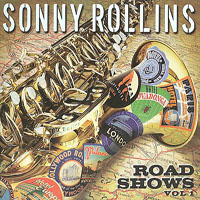
Broom rejoined Rollins in 2005 and can be heard on the albums No Problem (Milestone, 1981), Reel Life (Milestone, 1983), Sonny, Please (Doxy, 2006), and Road Shows, Vol. 1 (Doxy, 2008).
"What can I say about that, other than I'm glad I got the opportunity to do more of it? To have that experience of playing with him in his band and then go on to do a lot of other things—to have a career in music then revisit that [Rollins] situation 25 years later. Having formed my ideas about music, being an educator and espousing certain ideas and philosophies about playing and about jazz and what it's all about. I know my ideas come directly from my experiences with these kinds of people and with this music."
 Broom also had the opportunity to join Art Blakey's Jazz Messengers, something no other guitarist had done. He had been sitting in with the band, along with young trumpeter Wynton Marsalis in New York. The drummer invited both to his circle. Marsalis went. Broom went with a younger band led by trumpeter Tom Browne. That move, however, started Broom's recording career.
"I don't know what would have happened had I made the other decision [to join Blakey], but I know what happened by going on and playing with Tom Browne," the guitarist says. That included meeting and playing with the likes of Omar Hakim, Marcus Miller, and Bernard Wright. "Things could have been a lot different, but they didn't happen in a straight line. Tom Browne and that whole crew of musicians were not traditionalists. We were definitely jazz musicians. We studied jazz, we listened to jazz, we loved jazz and could play jazz. But we were interested in a lot of different things.
"The music that we were making was kind of along the lines of the music I heard that attracted me to jazz in the first place. Herbie Hancock Headhunters and Grover Washington Jr. fusion. I don't mean jazz/rock fusion from the '70s. I mean a fusion of styles that included black music—R&B, funk, soul and jazz. It was kind of a precursor to what became known as Smooth Jazz. We weren't thinking of any of that. We were just making music. We had the opportunity to record. We were playing on each other's records. That's what was happening.; When I think about it, if I had continued along that track, making records like Clean Sweep (Arista, 1981) for six more years, and Smooth Jazz had been created and I had continued on, maybe I would have been one of the Smooth Jazz guitar legends."
 He adds, "Fortunately, that didn't happen. And I say that for personal reasons. After Clean Sweep was when Sonny Rollins called, when I got a call from Jackie McLean about teaching. Although Sonny wasn't playing strictly straight-ahead music at that time either. Still, I was getting exposed to the life of jazz, with one of the most successful jazz musicians working at that time. I'm getting exposed to that kind of life and to the music of this historic figure. So I'm getting a lesson in jazz as a working musician, which was what I was attracted to in the first place. Thank goodness for me that this happened and it didn't get limited to this one way of doing it. Fortunately for me I wasn't bound by the recording contract that I had and trying to become a star in this way. I would have loved it if it happened, I guess, but it didn't happen in that way. It seems that I was pulled in the direction that I was supposed to go."
That career included work with some jazz stalwarts. But a funny thing happened when he was with Kenny Burrell's Jazz Guitar Band. "That was 1986 and 87. I was living in Chicago at the time. I was probably already being written off by some. 'There goes another one moving out of town [NYC]. What the heck is he doing?' But I was continuing to practice and play. I was continuing to travel on the road internationally and doing what I had been doing. So it was OK, relative to being a working musician." It became known that Miles Davis was interested.
"The funny thing about the Miles band ... when I was living in New York in the early '80s there was a club called 55 Grand Street. Everybody used to hang out there. Mike Stern had an apartment with his wife upstairs. There was music every night and all the musicians were there. Some were hanging out every night. Mike Stern, Hiram Bullock. Marcus Miller from time to time. Victor Bailey. A bunch of us. So I was hearing at that time, 'You're on line for Miles' gig.' I'm going, 'Miles' gig? I don't play like that. With distortion. How am I going to play in Miles' band?' I blew it off. Although it would be really cool, it didn't make sense to me, even at that time.
"Five years later, I'm living in Chicago and Miles has a whole new band. Everybody in his band is from Chicago. Darryl Jones on bass, Bobby Irving on keyboards, Miles' nephew, Vince Wilburn, on drums. I get a call from somebody saying that Miles wants to hear me play and to put a tape together. So I did. I did my best distorted guitar impersonation," he says, recalling the matter with a chuckle. "Knowing what Miles wanted to hear, I went for that. He called me to come to New York to rehearse.
"At the same time, I just got finished playing on two records, Live at the Village Vanguard (Blue Note) with Kenny Burrell and the Jazz Guitar Band, with an upright bass, Kenny Washington on drums ... and I'm at home making a tape for Miles with distorted guitar. That doesn't even make sense to me now. But I did it because it as a chance to play with Miles. I wasn't going to pass that up.
 "What I should have done is just play my best guitar, period. I went to New York, did some gigs with [Miles]. I actually had to find a sub for one of the gigs because I had agreed to do a gig with Kenny. It was our first live performance after the record. It was a significant thing. Playing with Kenny Burrell, being chosen as one of the young guitarists he was presenting in this new group on Blue Note Records. So I had to call Miles to tell him I had to get a sub; I needed to make this gig. I'm 26 years old. That's pretty funny. But I did it. I thought that was the end of that. But he had me do a few more gigs. I was surprised by that. But obviously, it was not a comfortable fit for either one of us. My true sound was the one that I played with Kenny Burrell and the Jazz Guitar Band. That was the real me."
Broom didn't stop his formal music education, and between his hard work as a performer and recording musician he earned a bachelor's degree in 1986. He also went back to school and got his master's in 2005. Education is important to him.
"I wanted to honor the commitment that I made to my career in jazz education," he explains. "At that point, I had devoted 10-12 years of my life to teaching at the college level. I felt it was something I wanted to do to honor that. So I went back and got a master's in jazz pedagogy. Then Sonny called again and asked me about working. That was right at the tail end of my studies. So I was able to work it out.
 "I learned early on from Jackie McLean that a person like me is valuable in jazz academia because of my experience, because of my knowledge and level of education, being a literate and studied musician ... I had no experience as a teacher when I got that first call. I was 20-something, early 20s. I didn't know what to say or do. [McLean] said, 'Just be yourself. Talk to the kids. They are aspiring to do what you're doing right now.' So that is something that made sense to me. I think it still applies."
So Broom keeps recording, teaching, studying. His individual and luscious guitar sound gains favor and influence among players and fans. "Looking at the big picture, things are going good. I feel pretty good now, having looked back at the last 10 years and having amassed a bit of a body of a work that I felt was lacking when I moved away in the mid '80s. I changed the course of my career, but that was the same time as the emergence of the Young Lions of the '80s. Wynton and Branford and Terence Blanchard, Donald Harrison and all of that. They had an association with Art Blakey. So I felt if I had done the gig with Blakey and stayed around New York, maybe I'd be recording with those guys or associated more with those guys ... As a result I felt under-recorded, underrepresented as far as my recorded output. Although I'd made records as a sideman with various people.
"In the last decade, in addition to all of that I felt as a player I'd reached a point where I felt confident about my voice and that I was ready to establish that. Some of us late bloomers ... finding my sound and honing it and being ready to present it ... I just felt it hadn't been documented. Certainly not as a leader. As a sideman, you're a sideman and it's not your presentation. You're going to sound like yourself, hopefully, but you're it's not your show. I just felt it was time to do that. So I feel OK about what's happened as far as that's concerned."
He's got other projects to be considered, including possibly getting together with bassist Victor Bailey, and old friend going back to Berklee College of Music, and drummer Poogie Bell, a longtime member of Marcus Miller's band.
"Aside from that, I'm looking forward to greater opportunity for live performances with both of my groups. I think I've documented and said what I need to say in terms of presenting myself as a guitarist and bandleader. And a musician that has some vision. I feel I'm ready to go out and establish that more in the realm of live performance. Sometimes I feel like I'm operating on my own steam, but apparently that's enough because the response that I get keeps me going," he says, adding as he laughs softly, "Maybe it's just me."
Selected Discography
Deep Blue Organ Trio, Wonderful! (Origin, 2011)
Bobby Broom, Plays for Monk (Origin, 2009)
Bobby Broom, The Way I Play (Origin, 2008)
Deep Blue Organ Trio, Folk Music (Origin, 2007)
Bobby Broom, Song and Dance (Origin, 2007)
Sonny Rollins, Sonny Please (Doxy, 2006)
Deep Blue Organ Trio, Goin' To Town: Live at the Green Mill (Delmark, 2006)
Deep Blue Organ Trio, Deep Blue Bruise (Delmark, 2004)
Bobby Broom, Modern Man (Delmark, 2001)
Photo Credits
Page 1: Mark Sheldon, Courtesy of Bobby Broom
Page 2: Courtesy of Jazz Music Archives
Pages 3, 4: Courtesy of Bobby Broom
Page 5: Jose Horn
Page 6: Mark Ladenson
Comments

Tags
Bobby Broom
Interview
R.J. DeLuke
Terri Hinte
United States
Al Haig
Sonny Rollins
Stevie Wonder
pat metheny
george benson
Charlie Parker
Miles Davis
Dizzy Gillespie
John Coltrane
Hugh Masekela
Kenny Burrell
Charles Earland
Stanley Turrentine
Kenny Garrett
Dr. John
David Murray
Eric Alexander
Chris Foreman
Greg Rockingham
Wes Montgomery
Grant Green
Pat Martino
Dennis Carroll
kobie watkins
Herbie Hancock
Grover Washington, Jr.
Billie Holiday
Bob Cranshaw
Eddie Moore
Mike Nock
Donald Byrd
Art Blakey
wynton marsalis
Tom Browne
Omar Hakim
Marcus Miller
Jackie McLean
Mike Stern
Hiram Bullock
Victor Bailey
Darryl Jones
Kenny Washington
Terence Blanchard
Donald Harrison
Poogie Bell
For the Love of Jazz
 All About Jazz has been a pillar of jazz since 1995, championing it as an art form and, more importantly, supporting the musicians who create it. Our enduring commitment has made "AAJ" one of the most culturally important websites of its kind, read by hundreds of thousands of fans, musicians and industry figures every month.
You Can Help
To expand our coverage even further and develop new means to foster jazz discovery and connectivity we need your help. You can become a sustaining member for a modest $20 and in return, we'll immediately hide those pesky ads plus provide access to future articles for a full year. This winning combination will vastly improve your AAJ experience and allow us to vigorously build on the pioneering work we first started in 1995. So enjoy an ad-free AAJ experience and help us remain a positive beacon for jazz by making a donation today.

Giveaway

Eligible winners: 15
Days remaining: 4
Days remaining: 4