Home » Jazz Articles » Interview » Stanley Clarke: Path Maker
Stanley Clarke: Path Maker
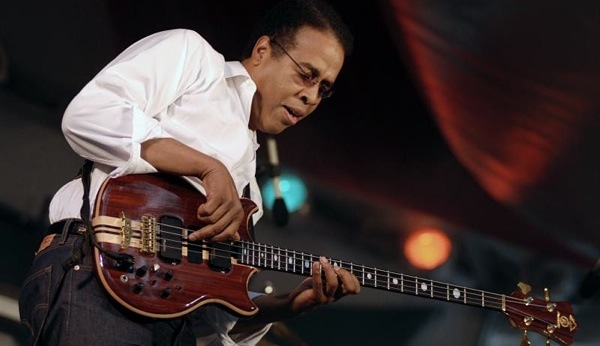

At an early age, the Philadelphia native already knew what he wanted to do for the rest of his life. The bass was going to be his voice. He looked up to giants like John Coltrane and Miles Davis, and his first years were marked by musical contact with respected jazz musicians such as Pharoah Sanders, Art Blakey, Joe Henderson and Dexter Gordon. He was young and he learned well. The rest was just a matter of time.
With Chick Corea and Return to Forever, Clarke had his golden opportunity to explore new horizons within jazz in the 1970s that other bands like Weather Report and Mahavishnu Orchestra had also made their main priority. The journey was grand. The music was expanding, and jazz had, in these musicians, a new door to improvisation never explored before. Their influence lives on, and today they are still considered brilliant by most, with Clarke continuing to reign on an instrument that some believe he gave the ability to speak other beautiful languages.
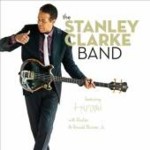
In June, 2010 he released The Stanley Clarke Band(Heads Up, 2010), featuring pianist Hiromi, keyboardist Ruslan Sirota and drummer Ronald Bruner Jr.—a group effort, where he gave room to his musicians to grow while making one thing very clear: he still knows what innovation is all about.
All About Jazz: Who is Stanley Clarke today?
Stanley Clarke: Stanley Clarke today is a father, a musician, a guy who thinks he is younger than he really is [laughs]. A lot of things.
AAJ: What has changed since the days of the Philadelphia Academy of Music? Is there anything that when you look back to those days you think "Wow, that's different"?
SC: Well, I think I am always amazed at how simplistic and idealistic I was, and just in general how young people are when we are young, and just kinda how that changes. I think that I am less idealistic on certain things and maybe more on others right now. But you shift. There is always a shift when you get older, especially in the art world, when you have art endeavors, when you have things you try to do creatively. This society that we live in is not necessarily set up for that, is not necessarily set up to make it easy for the purest, for someone that has some sort of art that they want to share with people. It's not really set up for that, although there are things you can do with the help of others—lawyers, agents, etc.—that would give you the appearance that your message is getting through, and that makes it easier. But it is fascinating, actually, to see every year exactly what's happening out here.
AAJ: Anything that you would have liked to have stayed the same, personally or professionally?
 SC: There was that girlfriend... [laughs]...[but] no, not really. I'm actually happy with all the changes and everything that I've done, particularly in music. I wouldn't trade it for anything, not even the stuff I was doing at the time and maybe I thought it was a mistake. I am glad that I did it just for the sake of knowing and understanding what things not to do. Definitely wouldn't do it again, but perhaps I could tell someone else about it to help them out. It's a very interesting thing and you spend a good part of your teenage years and then your college years really focused on something. Most people are not like that on the planet. They get out of school and they might get a job, and maybe that job is not exactly what they wanted to do, even if they like it. Some of us are very lucky; I do consider it in part to be luck. There is talent, but there is some luck too. To come out and actually do exactly what you want to do.
 Most people are really focused on something, like I was really focused on bass, and I know some people that were focused on other instruments and things, and you spend all the time, in a lot of ways, just into this thing, and when you hit the real world you are not particularly trained or equipped for the kind of horrible things that can happen to you, if you walk into a blind world. You don't have all that. And it can be pretty shocking when reality hits you. You come out of college, and you're going to get married, take care of a family, or hell, maybe you just have to take care of yourself, or you have a message or something you want to put out artistically, not only musically, but also as a painter or as a writer, and you are in a particular environment and it feels like everything in that environment is against you or preventing you from doing what you want to do, and that affects your psychology, and all that, and you have to be able to maneuver all the time in the world of art. I think that's the biggest thing.
AAJ: The New York days, with Horace Silver, Art Blakey, Dexter Gordon, Joe Henderson, Pharaoh Saunders, Gil Evans, Stan Getz, and a young Chick Corea. Were you aware of the importance of those days? I remember interviewing Chick Corea when I was too young to appreciate that moment completely, and today, looking back, I know I was a lucky person.
SC: Ah, not really. I think, and maybe this is one of the reasons that will explain to you why, when you interviewed Chick Corea years ago, and you were like eighteen years old, you were not really aware of the magnitude of that moment; jazz musicians, traditionally—and I hate to use this word because it has been so overused—they kinda have this "underdog" mentality. But it's just kinda like you don't have an over reaching, flamboyant kind of thing, like a rock musician. If you remember Prince, when he first came on the scene, you never had a perception of Prince being anything other than what he is now. As a matter of fact he couldn't get any bigger; he was just big, even when he didn't sell a lot of records. A lot of musicians are like that. He came out, and part of the presentation was this "I am a rock star," and everything, down to what was said, done, and, of course, played—which can be the least thing on the list—is part of the package.
With jazz musicians, it's the opposite. I can actually say, and I know Chick never did, that I have never said or even thought "Wow, I'm a legend." I'm not even going to try to like that word. When people say "Oh, Stanley, you are a living legend," I go, "Really?..well..." [laughs]. The big thing that jazz musicians do, it's kinda like the guy that's in the back room and is really struggling to get this picture-perfect. He is not out there in the world letting it see what kind of pants he is wearing that day, and definitely is not letting the world know what he thinks about anything. You will never see anybody on TV ask a jazz musician, "What do you think of President Obama?."
I remember something this one time, I got a big laugh out of it, but I felt sorry for the artist. One time they had this interview, I think it was Britney Spears, and they asked her what she thought of George Bush, or something to do with George Bush, and you could see that she was totally unequipped, and didn't know what to answer, and had no clue what they had asked her. So she replied something, and the next day everybody was on it. I don't think it was her fault, I mean, that wasn't her job: she is a singer. I felt bad for her. But because those kinds of audiences are out there, humans tend to think that you know something they don't know. And it's not true.
 The way this world is set up, it's just a business and it is for certain individuals to do this or that and to be presented a certain way. It has nothing to do with your intelligence. There are a few guys I know that nobody knows, and I may think they are incredible, and maybe they made one or two records, and they can have great conversations. I was very happy when Frank Zappa was getting interviewed a lot, because people started to see that he was a really articulate man, but because of his persona, no one would even think of asking him anything. They thought he was always on drugs or something, and I think he might have never done drugs in his life.
 So, getting back to your question: as a musician, I was only interested in sounding good. It didn't matter, even in some cases, how much we were getting paid. We were just out there really trying to sound good and living up to the tradition of jazz music, and the guys that came before us. Like for instance, I didn't really realize how big Return to Forever was until the last reunion that we did a couple of years ago. It was huge; we could have played any of those places two or three times, and we didn't, because we said we couldn't do it. But that was a pretty important band, and all those individuals have their own history.
The great thing about Chick Corea, myself and [drummer] Lenny White, and not so much with [guitarist] Al Di Meola, is that we can go back to those guys. Chick and I played with Art Blakey; I played with Dexter Gordon, and we both played with Stan Getz; Lenny White played with Jackie McLean and a lot of older jazz musicians, so we had that in common. So whether we knew that was big, it's not something you thought about; if I would have thought about it at the time, I wouldn't have been with those people, I wouldn't have played the way I did. It's kinda like an oxymoron in concept, to have those two things together; a guy that thinks he is so big and there he is, playing at nineteen with Dexter Gordon. You're so scared you can't think of anything [laughs].
AAJ: And how do you think something like Return to Forever happened, musically? You said that you guys were not really aware of the magnitude of the band at the time, but were you musically aware of the newness of what you were doing?

SC: We were aware that we were different, in just sort of a simplistic way. We didn't sound like Weather Report, we didn't sound like Miles Davis, we didn't sound like anybody else. And I think it was more fashionable back then to have some distinction in your art; no one asked us to copy someone. Nowadays it's more and more like that. Now, in instrumental jazz music, you have smooth jazz; some of those artists are friends of mine and I like those guys, and I have done my share of smooth jazz music. The only problem with smooth jazz is that the power of radio has forced a lot of musicians to copy each other, and that is never good for an art form, and I will leave it at that. But we had a lot of fun back then. I always like to say that it takes a lot of courage to be yourself; sometimes, in certain environments, it's easier to copy somebody else. Like all guys wearing green sweaters and playing the baritone saxophone, because some guy that plays the baritone saxophone is selling thirty million records and he wears green sweaters, you know what I mean? They do it because they think it's the easier road, and maybe it is. But in the long run it's not good for the art form.
The reason why I think our time, with the bands that came up when we came up, was important is because it was a very rich period, where all the bands were different. We really had nothing to do with Weather Report, even though all those bands came from the Miles Davis tree, because all those guys that had played with Miles had put their bands together. But all the bands were different and had different reasons to play the music they played. Some were spiritual-based guru, we had a Scientology thing going on, Weather Report was probably the first world music band out there, and others had other motivations. It was okay; there was a lot of freedom back then. It was a nice time.
AAJ: Do you think that that underdog attitude has to do with the musicians or with the media? There was this interview with John Coltrane, once, where the interviewer was very cocky and trying to push his buttons. There was no appreciation or respect towards Coltrane, and there have been many others interviews like that in the past and the present with jazz musicians.
SC: I think you nailed it. The media goes towards the obvious, because it's easy. Like for instance, jazz is more appreciated in places like Europe. When you are there, it's appreciated a little more. You almost get the feeling, here in the States, that there is an almost aggressive attempt to stop the music of jazz, as opposed to just being dismissed, "Well, we are just not going to hear it here!" This country is kinda like, "Whatever settles and makes something more interesting, we'll go for that." For instance, I don't know if you remember when Jay Leno first came on, and had Branford Marsalis basically run the band. And at that time jazz was fashionable, because of the Marsalis brothers. And you could see jazz artists on Jay Leno. I remember Roy Hargrove sitting on the couch talking with Leno. And eventually that stopped.
Probably what happened, was that ratings went down and they kinda said "Well, maybe it's because we had the jazz musicians there." It's kind of hard to pinpoint. There isn't like a lot of money made when you play jazz, compared to Dave Matthews or The Police or The Rolling Stones, or something like that. So obviously, the media is going to look at that because there is more of it. I, myself, like to look at it like cars. When you look at Chevys, they sell more Chevys than Rolls Royce. When I was young I think it was my aunt that told me, "The music that you play is like Rolls Royce hard; you're not gonna sell as many as Chevys, but Rolls Royce is a better car," and I still have that in my head. When I was younger I still wondered.
But I was fortunate, compared to other jazz musicians. We sold lots of records, especially with Return to Forever, I have a couple of records that did very well. So there were some time periods where things were pretty cool for jazz musicians. And even when smooth jazz things started, Kenny G and all those guys, people were out there buying stuff. That is a good thing, even though some people may put down Kenny G or those types of artists. I kinda look at those guys like "pseudo play artists."
Somebody told me "Man, I am listening to a lot of jazz, it's incredible, I am feeling full," and I am thinking this guys is listening to some deep music, so I asked him what he was listening to, and I was waiting to hear that he had every Coltrane record, some Miles... and he says "I got two Kenny G records" [laughs]. And I was like "Yeah man, you're really listening to it!" But four years later, he turned me on to an obscure Charles Mingus record. And he was like, "I'm going to see Wayne Shorter." So how do you get to it? I mean, how far you get into it? The human being is an adventure for all of us, so even if a guy starts off with someone that you may think it's not the best saxophonist, or writer, or painter, the guy that likes it and embraces it can be like the guy that ends up checking some other stuff out.
 Of course, it is not like that all the time, and some people may follow whoever the new Kenny G is and that's it, that is jazz and that is what I am listening to. There's all kinds of listeners out there, At this point in my life I don't think too much about the newcomers and how it affects the music; I used to, but not so much anymore, because I understand it much better. You can't control it. How come you don't see a jazz musician on CNN more than a couple times a years? You can't control it. The agent that books those kinds of people is not necessarily connected to jazz or even likes it, or what's around it. Well, me neither. I like jazz music, but I sure don't like the lack of interest. And as a matter of fact it's even deeper than that; it doesn't even get up to the plate to possibly have interest in some cases. Many records have come out. You can go to many neighborhoods in America, and listen to artists nobody else knows about. There's nothing you can do about it, and I think it's dangerous for an artist to even think about it.
 Now you have that going, and that, along with the difficulty of selling CDs, that has more to do with the technology, and a lot of young people think they should get it for free. Personally it doesn't really bother me so much, I have had my share of gold records, selling tons of records, and I just don't really think of making a record to make money or take care of my family. That is the furthest thing from my mind. I make records now just to document what I do; it's kinda like a calling card, a document of where am at as an artist, and that is it, totally.
AAJ: Tell me about The Stanley Clarke Band.
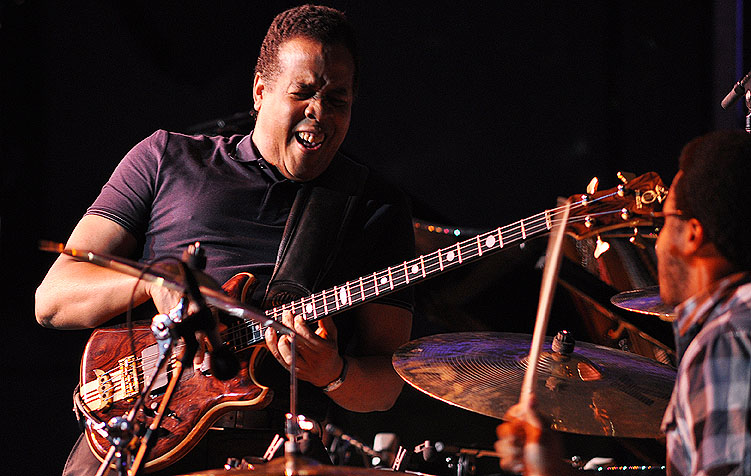
SC: It' a cool record, in the sense that is a record with some guys I have been playing with for a long time, and we thought about making a record. So I said, "Why don't you guys get involved a little bit more and write some songs, and we can make it like a group record? Let's get into it." I can surely make a record, write the songs, hire some musicians, but I thought "let's try something out here," you guys come in, or find a studio, or work here in my house, and have some fun, and that's what we did. And that's how we came out with a really nice effort, and it's nice. I think it's one of those records that will be out there, and people will come across it, and probably will take a year or two for the last person to finally come across it [laughs], but it's one of those things, and it's a really good record, I really like it.
I don't really think about a record to have anything to do with sales anymore, so I can only talk about the music. This record has a lot of things; if you read the back cover, there are little quotes, and the musicians I have played with on this album are really aware people that have lost something. You are not going to hear any lyrics about something that's important in the world, and also CNN is not going to come and knocking on their door wanting to know what they're thinking, because as we know the best musicians don't think anything [laughs].
So what I thought this time, I had little ideas. Let's make the cover an inside cover; let's not make it like it conforms to anything, so everything is a mishmash of everything. My daughter, who is graduating from college, she actually came up with the idea with the cover on the inside, which we put together, found the quotes and others things, and I am sure people listen to the music and maybe later down the road they'll be like, "Let's read what this is," and it's fun.
AAJ: And how did you come up with a title like "Larry Has Traveled 11 Miles and Waited a Lifetime for the Return of Vis"?
SC: Well, this tune was coming and it remind me to Weather Report, Return to Forever, and all these sorts of things, with the seventies kind of feel with fusion, or jazz rock, we didn't call it fusion back then. And sitting with Lenny White, that helped me to put the record together, he said, "You need a curious title for that," so putting all those names of bands together we came up with that long sentence for a title [laughs].
AAJ: I also wanted to ask you about "Bass Folk Song No. 6 (Mo Anam Cara)."
SC: That's a song reminds me of the city of Dublin. One time, I was looking for the roots of my family. I am definitely African American, but then there is this Clarke thing too. What the hell? Where's this name from? Obviously some guy named Clarke started this thing, and maybe with some African American woman, who knows? So a couple of family members and I searched for these Clarke's around Dublin, and kinda made it near Florida, so my family kinda comes from there. So once I checked that out, I don't know, this little song started playing in my head. I had this thing, I had written, like, ten bass folk songs, things that you just play on the bass and you don't really need anyone else to play with you, just a solo piece for the bass. I am actually going to release these on a record and video. And that's really what it is, a lot of emotion in that. When I play it live, people really like it, because it's a sobering sound and it plays well on the bass—earthy, and very melodic at the same time. There's a lot on there.
AAJ: On "Sonny Rollins," you painted this portrait of Rollins perfectly.
 SC: I think there are a few musicians that really are important to me. Sonny, Coltrane, Miles...they are really, really important to me. I saw Sonny Rollins in Europe two years ago, and he looked great, and he was playing great, and had such a high spirit. I had the pleasure of recording with him once or twice, I played some shows with him as well, and I just wanted to do this. I wanted the whole piece to be about Sonny. I opened up the piece, where I played Charles Mingus' bass in the front, so that was kind of special.
AAJ: What was it like to have Lenny White co-produce the album?
SC: Lenny is like my slightly older brother, you know [laughs]? I have known Lenny a long time. When I first came to New York, the greatest thing that happened to me, more so than playing with Dexter Gordon and all those other people, was meeting Lenny, and the reason for that was that Lenny, in a funny sort of way must have known somehow that I was kind of green to an environment like New York, and in a lot of ways he kinda looked out for me. Like, "No, don't play with that guy, don't hang with that guy, play with this guy, don't do this..." and things like that. Lenny is a really good guy, he's very caring individual. He was my first friend in the Big Apple. And I remember when Chick was putting Return to Forever together, I told Chick, "Hire Lenny White." I think I might have forced it a bit much [laughs]. So Lenny came in that band, and it was great. I have always had a connection with him. I am always doing something with Lenny. Last year, I think it was our fortieth year making music together. I'm thinking about maybe making a record together about that. So we might put something out together.
 AAJ: What would you like for people to walk away with after listening to this album?
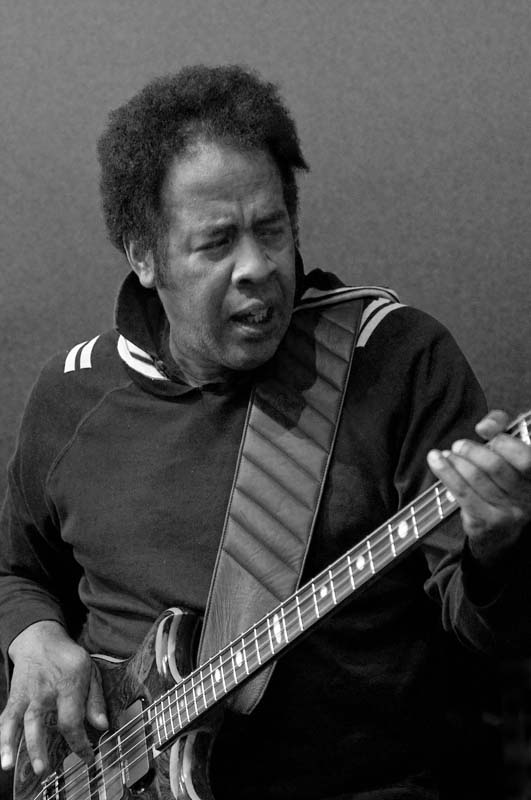
SC: Just have a good feeling, guys playing, nothing really special. I'm not the kind of person that you have to feel some kind of profound feeling or something. Just that it is a good record and it is a good bass album, an album that presents the bass in a good way, keeps moving it forward, and everyone else sounds good as well. It's a really fun record, so that's it.
AAJ: How would you describe the sound of an electric bass, as opposed to the upright bass?
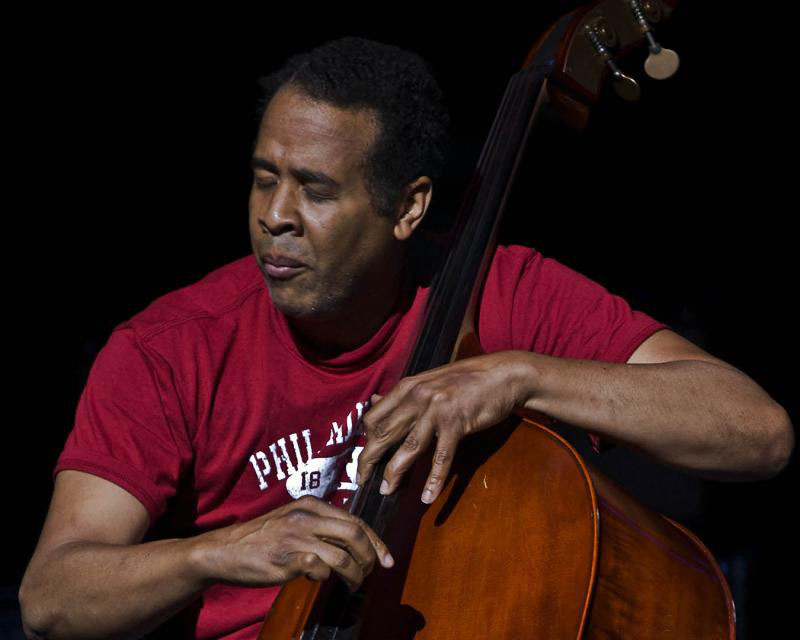
SC: The electric bass, if it's recorded well, it kinda hits you in the head like a hammer. If you take a towel and put it around the hammer, a really good material towel, and get that same strike in the head, that is the acoustic bass. The acoustic bass has many more dynamic qualities than the electric bass, just natural dynamic qualities. Yes, with the electric bass and all the new changes and electronics you can move notes and get it to sound like a lot of things. But the acoustic bass, the beauty of it, if you have a good one, when you hear a note, within that note you hear many, many different sounds. It's a beautiful sounding instrument. The electric bass is beautiful too, is just less dynamic.
The acoustic bass probably feels more like home, because that's where I started out with. When I play it I feel safe; when I'm holding the acoustic bass, I feel invincible. Even though I made a lot of records, and played a lot of stuff on the electric bass, and a lot of people just know me from my electric bass work, the acoustic bass is where I cut my teeth with after playing many years. I think I wanted to be the first African American in the Philadelphia Orchestra, but then I think Chick Corea came to Philadelphia, and we talked, and that changed that [laughs].
AAJ: Do you ever get a competitive feeling off of other bass players, musically?
SC: No, I don't think the playing field is that big; to compete for what? It's not the kind of playing field to compete for something. What do you end up with? What determents who won? When you are a musician, and I think this is true for whatever kind of musician you are I think, of course you want fame and fortune, or you want great art and then the byproducts are fame and fortune. The problem is that if you are a jazz musician, yeah, you could go, "This guy made more money than the other guy," but it is miniscule [laughs]. I don't really sense that too much, at least with the people I know, I don't really sense that competitive thing too much. I will say that back in the seventies, possibly with the managers of the groups there was probably something like that going on, but we all played in the same circles, we were all in the same shows. I don't really feel it so much. It's probably there, but I don't think it's a factor, it's insignificant.
AAJ: have you ever felt musically misunderstood?
SC: Not really. I think that people, very early in my career, got the idea that I was trying to be unorthodox on the bass and get people to see other things about the instrument, I think that's the thing that I brought to the game. Hey, you can make this with the bass. Hey, you can make a record as a bassist, you can be a leader. You can take your band and travel as a leader. Even though that's not specifically a musical thing, it's kind of a concept; I still think people saw that a lot with me.
AAJ: Do you think the concept of jazz fusion might be a step down sometimes, when it comes to jazz? You know some people tend to frown when it comes to fusion, or smooth jazz.
SC: You know, what I learned is that so much in art is relative. Some people may say that, at least, the fusion that we were doing was a step up from traditional jazz music, and for some people it was probably a step down—or not even on the ladder. It really depends on the person. If you want to put music on a ladder, as in one is better than the other, if that's a game that you want to play, you almost have to really play all those different types of music to really come up your own judgment on it, because sometimes you can't really know what it takes to do something until you actually get yourself into it and try it.
 It's kinda like a guy looking at a painting of a flower that's perfect and is very simple, and it could look like, "Wow, that is probably easy to do," from another artist's point of view, and when that person paints a flower is not quite "it," you know? I think it's always a little weird when you try to say that something is better than the other, because fusion music—the jazz-rock music that we played back in the seventies—was fundamentally different from straight-ahead jazz. Number one, there were so many different elements that came into the music.
 A lot of our music was written, ensemble, so the whole compositional element was really very important, and a lot of that music we played was very virtuosic stuff, people playing very fast, and you had to have a lot of technique to play in some of those bands. So is that better? Is that worse? It was a totally different type of thing. I'll tell you one thing, I remember sometimes being in some of those fusion bands and having some of the traditional players try to play that stuff, and it was interesting; and also vice versa, having some of the jazz rock players going to a bebop thing, and it's not easy. Everybody learned a lot; it's different.
AAJ: What's the best thing that has happened to you, musically?
SC: Well, you know I'd like to mention one thing, but I would just have to say being introduced to John Coltrane's music. I feel like a have a very soft heart for that, for his music. I mean, to me, I still am a real Coltrane fanatic, but when I was young, I was really nutty. I was the guy that would show up at a party and all the kids would be there heavy dancing to Motown, and I'd come in there looking really strange and going to the guy that controlled the records and put on a Coltrane record, and everybody wanted to kill me, "Let's murder him now!" To me, it was just natural: "I can't believe you can't feel this!" It was a great thing, because I even had friends of mine that I grew up with that couldn't understand what the hell Coltrane was doing, and now Coltrane is part of their musical diet. And you know? That's nice.
AAJ: And what's the best thing that's ever happened to you, personally?
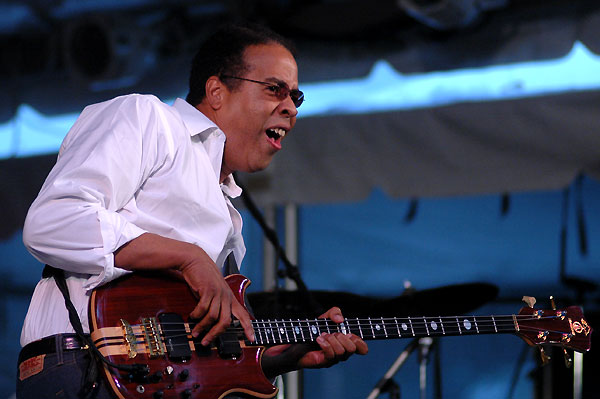
SC: Well, to have health, you know? I've gone through life and I am still in relatively good shape, and that's a nice thing, to wake up and feel some sort of joy in life and feel purposeful, like you have a purpose and you can feel it. That's a great feeling. Actually I look forward to getting up in the mornings.
AAJ: Do you have any regrets?
SC: Musically, I can't lie and say that there's nothing, because there's some records and some things that I played that I wish I hadn't, even though, off the top of my head, I can't remember so much. But, there are things like that. And in life I think I am pretty much like anybody; there's certain people that I wish I didn't trust so heavily, certain women that I wish I hadn't fallen in love with, women that I should have fallen in love with...[laughs]...things like that. But I would say in general there is no huge, global regret on anything. I mean, I don't regret that I got into music, or that I am who I am, or that I have a career that I chose to do, all the big stuff I wouldn't change it for anything.
AAJ: So what would you say jazz means to you?
SC: Jazz to me is the spirit of play within music. It's like getting into an art form that you can really explore and really experience freedom within the art form. And what's really unique about jazz is that there is tradition there as well. Sometimes you can get some types of classical music, and I always wonder, do they really feel any sense of freedom? And then there are rules, in the classical world, when they play Mozart, you have to play a certain way, and you have to use certain instruments, and things like that, and it's beautiful stuff. When I hear, it I love it.
But I wonder, do they really feel a sense of freedom and creativity when they play it? And they are also playing somebody else's music. So one of the cool things about jazz is that we have all those rules in our music, but then there is some sort of unspoken agreement to explore and see what happens, and that's special. So that's why I say it's the spirit of play, because it is really like, as a kid, going into the playground: you have all these kids there, all these things, and you never know what's going to happen, good or bad.
Selected Discography
Stanley Clarke, The Stanley Clarke Band (Heads Up, 2010)
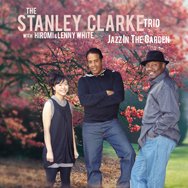
Stanley Clarke, Jazz in the Garden (Heads Up, 2009)
S.M.V., Thunder (Heads Up, 2008)
Stanley Clarke, The Toys of Men (Heads Up, 2007)
Stanley Clarke, 1,2,To The Bass (Sony, 2003)
Stanley Clarke, The Bass-ic Collection (Sony, 1997)
Stanley Clarke, The Rite of Strings (Gai Saber, 1995)
Stanley Clarke, If This Bass Could Only Talk (Portrait, 1988)
Stanley Clarke, The Clarke/Duke Project, Vol. 2 (Epic, 1983)
Stanley Clarke, The Clarke/Duke Project, Vol. 1 (Epic, 1981)
Stanley Clarke, I Wanna Play for You (Nemperor, 1979)
Return to Forever, Live: The Complete Concert (Columbia, 1985)
Stanley Clarke, School Days (Nemperor, 1976)
Stanley Clarke, Journey to Love (Nemperor, 1975)
Return to Forever, Romantic Warrior (Columbia, 1975)
Stanley Clarke, Children of Forever (Polydor, 1973)
Chick Corea/Return to Forever, Hymn of the Seventh Galaxy (Polydor, 1973)
Chick Corea/Return to Forever, Light as a Feather (Polydor, 1973)
Chick Corea, Return to Forever (ECM, 1972)
Pharoah Sanders, Black Unity (1971)
Photo Credits
Page 1: Bill King
Page 2: Leon P. Sealey
Page 3: Roger Humbert
Page 4: Atael Weissman
Page 5: John R. Fowler
Page 6: Kris King
< Previous
Alone at the Village Vanguard
Next >
Endangered Blood
Comments

Tags
Stanley Clarke
Interview
Esther Berlanga-Ryan
United States
John Coltrane
Miles Davis
Pharoah Sanders
Art Blakey
Joe Henderson
Dexter Gordon
Chick Corea
Return To Forever
Weather Report
Mahavishnu Orchestra
Hiromi
Ruslan Sirota
Horace Silver
Gil Evans
Stan Getz
Frank Zappa
Lenny White
Al Di Meola
Jackie McLean
Branford Marsalis
Roy Hargrove
The Rolling Stones
Kenny G
Charles Mingus
Wayne Shorter
Sonny Rollins
Bill King
Concerts
For the Love of Jazz
 All About Jazz has been a pillar of jazz since 1995, championing it as an art form and, more importantly, supporting the musicians who create it. Our enduring commitment has made "AAJ" one of the most culturally important websites of its kind, read by hundreds of thousands of fans, musicians and industry figures every month.
You Can Help
To expand our coverage even further and develop new means to foster jazz discovery and connectivity we need your help. You can become a sustaining member for a modest $20 and in return, we'll immediately hide those pesky ads plus provide access to future articles for a full year. This winning combination will vastly improve your AAJ experience and allow us to vigorously build on the pioneering work we first started in 1995. So enjoy an ad-free AAJ experience and help us remain a positive beacon for jazz by making a donation today.

Giveaway

Eligible winners: 2
Days remaining: 4
Days remaining: 4



