Home » Jazz Articles » Interview » Dave Liebman: A New York Story
Dave Liebman: A New York Story


When I'd see Trane or Cannonball or Miles when I was a kid--when those guys walked into a club ... man, the vibe. That's what I wanted to be: this underground heavy that everybody was almost afraid to talk to because of their skills.
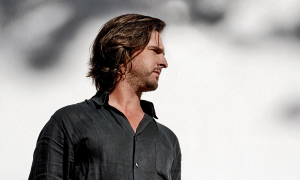
On January 11, 2011, Liebman is being awarded the 2011 Jazz Masters Fellowship from the National Endowment for the Arts (NEA), and it's a milestone for both the saxophonist and his generation. In addition to being publicly honored at the annual awards ceremony, which takes place at New York's Frederick P. Rose Hall (the home of Jazz at Lincoln Center), the fellowship includes a $25,000 bursary. Though this is not a huge amount of money when compared, for example, to the MacArthur Fellows Program (which carries a whopping half-million-dollar, no-strings-attached grant), the ever-organized, always forward-thinking Liebman has already put that money to good use, hiring a both a publicist (Braithwaite and Katz's Ann Braithwaite) and a web-savvy person (Michael Crowell) to increase his overall presence on the public's radar and his specific visibility in the world of social media, with a revamped Facebook page.
But how much impact will the fellowship actually have on his career? "I don't think it's gonna do a lot; I've spent the money already," Liebman says, laughing. "I don't see my price going up or my popularity going up; that's not a side effect. The best thing is, your bio, three years from now, will say 'NEA Jazz Masters,' and that's nice. But in the real world, my answer to this is two-fold: one is objective, the other subjective. First of all, I am the first one of my generation to get this—I'm the youngest, if you don't take into account that the Marsalis clan is getting it this year also [a fellowship is also being awarded, in 2011, to the Marsalis Family as a group: Ellis Marsalis, Branford Marsalis, Wynton Marsalis, Delfeayo Marsalis and Jason Marsalis]. I'm the youngest individual, let's say. And I think, as I am saying to everybody, it's a reflection of the fact that the '70s is finally kosher—that we weren't just a blip on the screen that tried to play rock and roll and get across. We actually kept going, some of us, and I can name about 10 other people who certainly deserve to be looked at for this award, and that means that not all was so bad in the so-called Fusion Era.
"It's very funny that I'm getting the award opposite Marsalis," Liebman continues, "but in this respect, when Marsalis came on the scene and basically drew a line in the sand, guys of our generation got lost in the cracks, and now this is the establishment saying, 'Excuse me, there are a lot of guys there who deserve it.' From a cultural and historical standpoint, I think is interesting. Of course I certainly do not consider myself in the same breath as, say, Wayne Shorter or Miles Davis or whoever of the 120 guys who have received the award. I mean, some of them, yes, but most of them are just way beyond anything I could ever dream of, and I have to pinch myself, in a certain way, that I'm up there with those guys. If I went down the list, some of them I could say, 'This guy stands to the left' and 'That guy stands to the right,' and the guys on the right are the real deal. I'm okay, but from day one the real deal is these guys who are at a really, really high level to which I aspire—and am hopefully getting better at—but musically, they're in another category. I'm just glad to be up there with them. The others? I'm cool; I'll stand beside some of them. But a few guys? I can't believe I'm in the same breath as Miles Davis, for God's sake, or [Elvin] Jones; I never thought of that!"
How Liebman got to this point is a story in itself: one that reveals the truth of being a working musician, but one that also shines a light on Liebman's particular strengths as an organizer, a band leader and a champion of jazz education.
Chapter Index
- A New York Story
- The Loft Scene: Free Life Communication
- Rubbing Shoulders
- International Association of Schools of Jazz
- Survival in the 21st Century
- Dave Liebman Group
- Recording
- A Plethora of Projects and Partners
A New York Story
Born and raised in New York—Brooklyn, specifically—Liebman grew up at a time when jazz education was not what it is today—where clubs and lofts were the schools and jam sessions the teachers. "It's a New York story," Liebman begins. "I was from New York; I was there from the get-go. In some cases, that worked against me because I played before my time, and guys don't forget; on the other hand, I was there, on line, and living in a loft, and I knew that I had to play every day to get better. I wasn't the kind of guy who could wake up every morning and just be great. And in those days, that meant getting a loft and having drums, piano and a bass, literally; having some mu tea, because we were all macrobiotic, some stimulants of sorts; and doing our job, which was to come up anytime you wanted to play. At that time, it was mostly free jazz—just playing your horn.
 "Guys knew guys, and it's not unlike it is now, where you get jobs and you get recommended, usually by a guy you know on your own instrument," Liebman continues. "The first time for me, I was with Pete La Roca because [drummer] Bob Moses—who was already a friend of mind and way ahead of me—he said, 'Pete La Roca is looking for a saxophonist and Jim Pepper can't make it. Would you like to go?' That was my first time, playing with Steve Swallow, Chick Corea and Pete La Roca.
 "For example, with Ten Wheel Drive [a brass-heavy jazz-rock outfit emerging at the time of Chicago and Blood, Sweat and Tears], [I got the gig] through my friend from the club date days in the Catskill Mountains. He got the job on trumpet, recommended me, and I auditioned.
[With] Elvin [Jones], it all went through [bassist] Gene Perla. Basically, Gene said, 'I'm gonna get you and Steve Grossman the gig,' and eventually Joe Farrell was moving on. He got me to sit in one night, and I got the gig with Elvin.
[The gig with] Miles was because I was living with Chick [Corea] and Dave Holland in the same loft. I was around, Grossman was there ahead of me [with Davis], and I was with Elvin.
"So in a certain way," Liebman concludes, "these things that happened to me, and of course formed the basis of my career, were because you were around—and, of course, you were good enough to get going; obviously I was good enough to be accepted. But, really, you had to just be there, be on it, and be with guys who were moving ahead as well. It's who you hitch your horse to; it really was like that in those days. We didn't have dozens or hundreds of musicians [like there are now]; in my generation we had maybe 20-30 guys, so you knew everybody and you saw them every night because the clubs—they were where you bought a beer and sat all night. So there was a community. Within that community there were cliques—there were the downtown guys, the uptown guys, the Dixieland guys and the free guys, but it was much smaller than it is now, so you could navigate your circles and have some kind of relationship, and that would grow because someone would say, 'I know a guy and he plays saxophone. Let's hear him.'"
In those days—the mid-1960s through to the early 1970s—the New York scene was hot, but it was also small, in relative terms. But things aren't all that different when it comes to the players themselves, according to Liebman; only the scale has changed. "If we'd stopped in 1955 or 1965, and said, 'Let's look,' there might have been 20 good tenor players playing in New York City, and [among those 20], 'This guy's a little more generic, this guy has something personal to say and this guy doesn't have it together yet.' But now, instead of 20, there's 200 or 2,000! And the volume makes it seem different than it's always been, or different than before. But individuality is not something anyone or any school can teach. The need to express oneself and have something of value to say that's absolutely unique, it's not a common thing, and that's always been true of artists, in general. Now, we're just seeing more of it, that's all."
Liebman considers himself fortunate, growing up when he did. "I came in at the right time," he explains. "It was time for a middle-class white boy to get in there [laughs]. I'm not the only one; look, there was Joshua Breakstone and Randy Brecker, Richie Beirach, you name it. Our generation was the postwar baby boomers who had parents that enabled us to do what we wanted. That's really the truth, because without that we'd all be schoolteachers or working in a factory, like the generation before that. By the '60s, if you were middle-class in America—and I'm being very general now and observing sociologically, which is not my field—I think that we really were the first generation to do what we wanted to do, rather than being about survival.
"Our parents were making a living and encouraging us to be who we wanted to be and not to be like our fathers—not to go out to the field and work," Liebman continues. "We were urban, liberal people and arts were important—that was the culture of the day, and equally, there was a very uneducated poor class also—obviously, things happened in the ghettos in '68, all the black-white stuff. But, in general, guys like me had a chance, and we could have easily gone into something else; it could have been another art. If it had been two years later and I'd heard Jimi Hendrix when I heard John Coltrane, I can almost promise you I'd be playing guitar. I could see it; he could have had that effect on me, because it was so mind-blowing and so above the earth, coming from somewhere else. We were ready for it, and we were being exposed to it; this was really an explosion of communication of media, not comparable to what we have now with the computer, obviously, but to what came before, in the '60s, when you had only three TV stations in most cities and you had just records. The youth culture was announced, and we were the beneficiaries of that. For the lucky few of us who heard jazz at the right time and said that's what we liked, that's why this happened. I must say, we were like fish out of water compared to jazz beforehand, which was mostly black. We kinda turned it around because of the number of white guys that came out of my generation.
 "We were the eclectic generation," Liebman concludes, "because of our influences; because in the '60s, you finally had Ravi Shankar next to Béla Bartók string quartets. It wasn't difficult to get, and people were finally starting to listen to this stuff in a more regular manner. Bird [Charlie Parker] and great people like Stravinsky, we all know that; but for it to leak down to a 17-year-old kid in the middle of New York, who could hear the Bulgarian Girl's Choir in 1964 because [Bob] Moses turned him onto it, and the next thing go see Trane live at the Half Note, and then rock and roll. I've gotta say that, in the end, if there's one real reason, one event or one thing that really changed the way that jazz was perceived, it was the rock-and-roll explosion of the '60s, and what it meant to be people of that generation. Because you couldn't escape it, asit was tied to political and social things, because of the whole hippie shit and Vietnam—that really changed everybody. In other words, even if it wasn't the music, it was just such a shock that my generation had to reflect change to what came before."
The Loft Scene: Free Life Communication
If there's a single scene that defined jazz in New York in the 1970s, it was the loft scene, with musicians living together in lofts that, outfitted with pianos, basses, drums and more, became 24/7 musical laboratories where much of the music that began to emerge from Liebman's generation was first seeded. But beyond the creative aspect of the scene, Liebman was instrumental in cofounding Free Life Communication, a collective of musicians (many of them famous today, but just getting started then), who were able to go beyond the solitary experimentation of the loft and out into the world, through public performance.

"In the 1960s-'70s, when I got into the loft scene and was playing so much of this free jazz, we were playing for ourselves—endless sessions," Liebman explains. "Bob Moses, Lenny White, Chick Corea, both Breckers, Bob Berg, and other people not so known—dozens of guys were coming up, and it just dawned on me. I remember talking to Moses and saying, 'You know that collective in Chicago [the Association for the Advancement of Creative Musicians, or AACM], and in St. Louis, with Oliver Lake and those cats?' So—me being, I guess, already good at administrating and organization—these were my first tests, so to speak. But having some talent in that respect, I said, 'Let's do something; we gotta get out there into the real world.'
"So we called a meeting," Liebman continues. "I'd written about it, and we had 30 guys sitting on the floor in my loft on West 19th Street, and I said, 'Guys, you know, we just gotta get something together because we're sitting in the loft playing for each other. We gotta get out. Where are we gonna go?' We weren't good enough to be at the clubs—not yet, especially since we were also playing such avant-garde stuff, mostly—so I said, 'What we've gotta do is go to museums and libraries and churches, and put the concerts on.' So Bob Berg came up with the name. We had a discussion: Anthony Braxton had come up to speak to us that night, and Leroy Jenkins—two separate times during this four- or five-hour meeting—and we got it together. We got a lawyer who got us 501(c) nonprofit [status], and we got an accountant, and then—lo and behold—we got a grant from the New York State Council of the Arts, and we got into a building called The Space for Innovative Development—that was built by a philanthropic society, The Rubin Foundation, that was supporting orchestras at that time—and they took us on as their avant-garde music group.
"I can't tell you how amazing it was," Liebman recalls enthusiastically."They came up to my loft, Mr. and Mrs. Rubin—a three-floor walkup on 19th street, my loft, spray- painted, with multicolored material stapled to the ceiling—and these two sophisticated people, limousine outside, they came up to hear the group. We played—me and Moses and I forget who else—for 45 minutes and it was completely free—we gave them some tea, and they were very nice. The next thing I know, we have a space in a building—three thousand square feet—with a pristine piano and wood floor, and money from the New York State Council for the Arts to buy pillows! We bought, like, fifty pillows, so that people would come and lay out on the pillows. And we did 300 concerts the first year."
 Free Life Communication wasn't about making money, at least not directly. But it gave its members an opportunity to grow in front of an audience, which brought a whole different kind of energy and drive to its performances. It led to paying gigs for many of its members and, ultimately, the dissolution of the collective. "It was all-volunteer," Liebman says. "We got funding for one year, we had this space given to us for free, and had a piano given to us for free. I was the president, Richie [Beirach] was the vice president, [bassist] Frank Tusa ... we kinda ran it because Moses, who originated the idea, wasn't the kinda guy to do day-to- day stuff. We had a secretary, a treasurer ... the whole deal, and I must say that in my life, when I look back at that time—something that not many people know about— besides having this grassroots, self-help, free music organization, in certain ways that was my introduction to how to organize, beyond organizing music in a group, which is a very different thing.
 "My mother was an organizer," Liebman concludes, "and she said, 'You've gotta read Robert's Rules of Order and parliamentary procedure,' and I was running these meetings according to the law. We were nonprofit, we had to do a tax statement and everything, and this went on for a couple years. But then the need for it disappeared for guys like me, because that's when I got the gigs with Elvin and Miles; we all started to get work. The organization went on for a few more years and then petered out, but it was quite something. At one point, we had 60 members, dozens of concerts, almost all exclusively free jazz à la [John Coltrane's] Ascension (Impulse!, 1965). I mean we're talking 20-saxophone-players-playing-at-once kinda stuff. I still have tapes of it and minutes to the meetings; this was an underground period where, I'd say, of those 30 or 40 guys, a good 10 or 15 are guys that I could name right now that you would know."
 Rubbing Shoulders
 In the "small town in a big city" environment of the 1970s New York jazz scene, where everybody knew everybody, at least in musicians' circles, there was an opportunity to really appreciate how so many of the musicians who came up through that time—and some, beforehand—got to be who they ultimately became. But even the most innovative musician with the most distinct voice has to start somewhere, and few musicians (if any) can deny that, at one time or another, they wore their musical influences on their sleeves. "Each guy I'm gonna name," Liebman begins, "each guy had a certain distinct thing that they played. Steve Grossman had the Impressions (Impulse!, 1963) era of Trane down; I had the '65-66 period; and Michael [Brecker] went back to the early Impressions period. "
Liebman has particularly vivid recollections about Bob Berg, who died in a tragic car accident in 2002, at the age of 51. "Bob was the 'old Trane' guy, as Jerry Bergonzi would become," Liebman recalls. "Bergonzi was not from New York, but he lived there for a while during this period, and he was Wayned-out; he only wanted to play like Wayne [Shorter]. We all played like somebody, and Bob was the old Trane guy; he played in that group where he's most well-known [for this kind of playing]: Eastern Rebellion, with [pianist] Cedar Walton. That group was a real hardcore, hard bop group, and we loved it—that was Bob's thing. What happened to Bob is that he did Miles [Berg played with Davis from 1984-87, appearing on the trumpeter's You're Under Arrest (Columbia, 1985), as well as the posthumous The Complete Miles Davis At Montreux: 1973-1991 (Sony, 2002) box set], and I don't know why or how, and may God bless him, may he rest in peace, but he ended up sounding more like Michael [Brecker] than Michael. I never really understood why, because he didn't sound like that in the beginning. He was known for Eastern Rebellion, and that was great."
Archivist Sam Stephenson's "The Jazz Loft Project," which is only now making available previously unheard or unseen recordings and images by legendary photographer W. Eugene Smith from the late 1950s through early 1960s, holds special meaning for Liebman, as it further reveals some perhaps surprising roots of musicians who have since become world-renowned. "It's about a guy who had a loft that ended up being just a few doors from where I had my last of four or five lofts in the '80s," Liebman says. "But this is the late '50s into '65, which was before my time. Smith set the loft up for people to play, and had the microphones, tapes and pictures. I was just listening to the radio the other day, going up to Boston to get my daughter, and man, there was this one tape with Chick Corea, it's gotta be '61-'62, and he's playing exactly like Bill Evans, and there's another session where he sounds exactly like Bud Powell. And then there's Paul Bley from '64, playing on changes; you cannot believe the tempo that Paul Bley—who you never associate with playing fast tempos—was absolutely killing. It was a whole scene. These loft tapes were hidden for years. It's one of those finds—a Mozart's bones kinda thing."
And while most musicians met through the club scene or the loft scene, others still met each other in, perhaps, the most unlikely of places. "Ralph Towner— when he first came to New York in the '60s, I was playing with a big band somewhere in Queens or Brooklyn," says Liebman. "This has gotta be '66, '67, '68, and I was maybe in high school or just starting college, and the pianist in the big band was Ralph Towner [laughs]. I didn't even know he was a guitarist."
International Association of Schools of Jazz
Most musicians who have managed to accomplish what Liebman has, have plenty of which to be proud. But beyond his talents as a saxophonist, a composer, a bandleader, and a cofounder of Free Life Communication, Liebman has another major life accomplishment, one that is focused on continuing the in-jeopardy practice of mentoring: the oral tradition that—before the emergence of high-profile institutions like Berklee College of Music, the Manhattan School of Music and the New England Conservatory—ensured that younger jazz generations were groomed by those who came before. Liebman founded the International Association of Schools of Jazz in 1989, and in its 20-year existence the IASJ has grown to include schools from over 40 countries worldwide.
 Sometimes life works and lessons learned from past experiences set a person up for greater challenges to come; the organizational skills Liebman honed with Free Life Communication gave him the perfect background for the far-more-ambitious IASJ. But other aspects of Liebman's early years also contributed and consolidated. "I started with music [in University]; I thought I'd get a music degree and do some teaching," says Liebman. "There were no jazz programs at that time, and I did not want to leave New York, so Berklee, Miami—the three or four that existed in America at the time—were not on the table. I didn't want to leave New York because I knew, for one thing, that if I wanted to get better at this, you couldn't leave New York. Therefore, the best thing was Queens College, which was a city school well known for its music department. Of course, when you said music at that time, you were not even talking a saxophone major, number one, so that meant clarinet; and number two, the first day you walked in they give you a list of four years of listening that you'd be required to know, which began with Palestrina and worked its way up to Stockhausen. Now, I was not that up on my classical shit; I didn't know it, I didn't like it, I didn't care for it that much. I mean, I played a certain amount of it as an instrumentalist, but it wasn't on my calendar, man, because I was looking at Miles and trying to transcribe Trane and all that. So I quickly realized that I could not be a music major, and switched to psychology the second semester, which in those days was the catchall when you didn't know what you were doing [laughs]—English and literature became it, and now, maybe, it's business management—every 10 years it changes for those people who have no idea what the fuck they want to do [laughs].
 "In any case," Liebman continues, "I did love history. I was quite good at it in high school—I won some contests. I was really pretty good at it because I loved it, and I'd had a great teacher. So I said, 'Let me just major in something I like, let me go to a school with a little more prestige,' and so forth, and so I went to NYU, which at that time had a campus up in the Bronx—a very pristine, amazing campus in the middle of a hellhole—and I majored in history and got my Bachelor of Science in American history."
But like many aspiring musicians, Liebman may have been going to school for something completely different by day, but by night, it was another story. "I basically led two lives," Liebman recalls. "I was going to school and then going downtown to play and try to get my shit together. This is pre-loft, when I was 18-22; the loft followed right after that. So that was my education credits, and I don't know how that reflected, but really, you've gotta remember that people didn't talk much about music. They didn't really take lessons with anybody; you just hung out with them, maybe. Until I got with Jamey Aebersold—I don't know where he called me up in the late '70s, but he said, 'Could you come and do one of my things?' He said 'a clinic,' and as naive as this sounds, I didn't have any idea what a clinic had to do with music [laughs].
"So, I said, 'Clinic? What do you mean?'" Liebman continues. "He said, 'Oh, you know'- -he had that twang in his voice—and said, 'You know, you'll have some saxophone players, you'll have 100 people. Just play a set, and that'll be it.' And then I walked into a cauldron because, man, those guys—David Baker, Jerry Coker, Dan Haerle, Jamey Aebersold—those four guys and their legions could teach a fly how to sing the blues. I mean, they had it together, at least up until 1960. They could explain what jazz was and how you played it, and I never saw it organized like that before—or since, for that matter. And they were so humane and great about it, and they could all play; it wasn't just about getting up there. They were great guys, and so I started to do clinics with Jamey, and realized, 'You know what? This teaching thing is viable. It certainly looks like it's growing. It's a great way to pay back for the good fortune I had of being with Elvin Jones and Miles—this is like me offering apprenticeship, this is me mentoring, and it's a source of income,' which you needed if you were a jazz musician at that time. I wasn't making that much money playing jazz, and I wasn't going to play commercial sessions. I wasn't going to do like what Brecker did; I wasn't gonna go into the studio and play eight bars for anybody.
"And the teaching thing was natural for me," Liebman says. "I don't know why, but I had a knack for it and I liked it—I liked organizing and trying to explain my stuff. That was in the '80s, and was the beginning of doing clinics worldwide—with Quest we did it, or I did it alone, and I was going to countries and talking to guys in France about what I just did in Germany, and they didn't know who the guys were across the border. I said, 'This is ridiculous, everybody knows Miles Davis, and everybody knows "Blue Bossa"; we've got more in common than we don't.' The Common Market was about the biggest deal Europe had in the '80s—they had nothing. So I said, 'You know what, I've got a certain amount of prestige, I'm in a position where I could probably be writing and instigating some interest; maybe get these people together.'
 "And that was the formation of the organization," Liebman continues. "I wrote letters and people said, 'Yes, that sounds great—like the United Nations of jazz.' So I called a meeting at my publishers'; they gave me their premises. I remember sitting in this restaurant in the afternoon—I think it was April 29, 1989, in a small town near Stuttgart, called Rottenburg—writing that I'll be there and anyone who really wants to do this, come and meet me. And, lo and behold, 15 countries showed up. And that's 20 years ago; now we have over 40 countries, on every continent. To be able to organize people—especially people like artists and musicians, not the normal type of person—and to put something together that's both idealistic and on the ground and running and does really well? I had a sense of not just knowing how to organize on a real, practical level, but how to be a leader and bring disparate people together, who have a common bond but are as individual as jazz musicians are. My first meeting of IASJ, I had 15 countries sitting at a table with me—trusting me, coming all the way to Germany from as far away as Japan and the States and Israel and Europe—saying, 'What do you want to say? What do you want to do?' And it was because of Free Life, really, that I had those abilities.
"This is not mega-mega," Liebman concludes, "but my meetings are with 100-150 people—50 students who, by the end of the week, will know each other. The mantra here is cross-cultural communication via the vehicle of jazz. That's the mantra, and that's what I wanted to do. I don't care about the teachers knowing each other, like the IAJE was [International Association of Jazz Educators, which went under in 2008]. IAJE was more administrative and teachers and stuff, and showing off your band and wearing uniforms. I just want 50 kids from 50 countries to eventually get together in six different groups, and by the end of the week put on a great performance- -and jam all week, just get to know other; and, via that, the teachers and administrators sharing how you finance, how you choose your students, what's your syllabus, how do you get your books—real administration problems. So our meetings are two-pronged: the students doing their thing, and then my chairman, he takes care of the teachers, has pedagogical meetings and that kind of stuff, like a conference. When someone asks, in music, 'What is your best thing?' I say, 'Forming this organization is definitely, by far, the heaviest thing I've done."

"Because I'm so eclectic and I'm aggressive, I can find some way to put out a record, and that's to my advantage," Liebman explains. "I once had this discussion with Chick Corea, years ago, that if I was beholden to a label, yes, there'd be the great advantages—if, of course, it was a viable label—a Blue Note, something like that. You get promotion that you won't get any other way. But if I was tied to a label, I wouldn't artistically be able to do the variety of things I'm doing; there's no way a contract would stand for me to be putting out three records at the same time, although we have very little control because some of these records are five years old when they're released, some are ten years old, and some come out within three months. You have no control over the business anymore. You used to attempt to have some control, and in some cases you could say, 'Please don't put out a competitive record within three months; it doesn't do anybody any good.' You would say that to another label and they might abide by that, but these days, it's such a hit-and-miss thing, so it looks like I have a lot coming out. But it's an advantage and disadvantage: an advantage because I can artistically do what I want, but a disadvantage because, of course, with most of these labels, I'm lucky if they sell a couple hundred copies."
Industry doom-and-gloom reports of the demise of the CD—or any hard media—seem premature, if for no reasons other than the burgeoning revival of interest in vinyl, and that most people who want to take music home after attending a show are not enthusiastic about slapping 20 dollars down at a merchandise table, only to walk away with a card that's a download key; they want something tangible in their hands. Many artists are selling more music from the stage than any other place, but it's still not always enough. "There's a definite advantage," Liebman says, "but, of course, that means you have to have a show, and that's another aspect of the business. I always say there's a lot of smoke and no fire—it appears that people are busy, and in certain ways they are busy. But it's highly competitive, because every young kid on the block is willing to play for half of what you make.
"So, let's say the opportunity exists," Liebman continues. "It's not like you go out on the street and sell your CD. You have to have a gig, and to make it viable, to sell a couple hundred, you have to have a thousand people there to sell ten percent ... or five percent. It's a little bit of a catch-22 in that there's the image that we're getting a lot done, that we're selling a lot of records off the stage, but most guys are only selling a couple dozen or, at most, maybe one or two hundred. We're not talking about three, four, five thousand, like it used to be. That's the problem, and that's why. I don't know who can stay in business, as far as record companies go, because there's no way for them to make money. We self-produce, that's what we do; the young guys self-produce on Facebook, and maybe they hit a vein and sell a couple hundred, but it is not good at this point.
"You have to combine all things now," Liebman explains. "At the Manhattan School of Music [where Liebman currently teaches], we make a big deal about a three-part attack for the masters students: they have to know how to teach, and we teach them how to teach; they have to write everything from orchestra to solo piano; and they have to perform, of course. We figure the 21st Century musician has to be equipped in all three ways. Longevity is the only way to win, and I tell my students, 'If you're consistent, and every day is a new day, and you play your ass off, you will get something in 20 or 30 years, but you really do have to stay in line that long."
 And, of course, without the promotional support of record labels, most musicians also have to become businessmen and self-promoters with web- and social-networking savvy. Musicians who want to do nothing but focus on the music will, without the support of others, find it very hard to make a living. "There's a certain amount of that," is Liebman's response, "but again it's hit-or-miss, and only one out of a hundred will get the recognition. For every Vijay Iyer, there's 30 cats who may play better than him, probably, but they're never gonna get past first base. They're not gonna have a promotion machine to help them, so as much as they can do, great, and let's see what happens, but it really is a jungle out there. The biggest thing—besides the way the business has changed, and aside from the cultural and economic changes—is that we have so many guys coming out of school who play good, or good enough. Supply and demand is way out of kilter—it's never been so bad. It's always been bad in arts, but it's even worse in classical music, dance ... everywhere."
The dearth/death of the club scene has also contributed to the challenge of more and more graduating musicians who are technically proficient but have few places to actually evolve a voice. "My daughter's going to Emerson College in Boston," says Liebman, "so she's connected up with all the Berklee folks; they have a little club where they do jam sessions on Saturday night, and couple guys have a gig and they play from six until eight, then they bring in a singer after that, because it's a bar. New York has Smalls and Fat Cat and 55 Bar. Every city with a couple schools has some outlet for the kids to play—those that can play and those that are aggressive enough—but it's a drop in the bucket for them to be able to develop their sound."
And the days where a touring group could set up in a club and spend five or six nights— often two or three sets per night—getting both tight and loose are long gone; most musicians spend far more time getting to each gig than they actually spend at it. "FedEx just came with my itinerary for next week [in Europe], and that's exactly what we're doing," Liebman says. "We're on two—if not three—trains each and every day, for twelve days; we are leaving at six in the morning, most of the time, and we're getting there at four in the afternoon. We're going from Vienna to Köln, and we are playing our one or two sets, maybe, in a club. I have the train tickets right in front of me, and no plane—all trains for 12 days, and, of course, nobody's gonna complain, because we're just so glad to play."
< Previous
The Gershwin Songbook
Next >
Eternal Moments
Comments

Tags
Dave Liebman
Interview
John Kelman
United States
New York
New York City
john mclaughlin
Elvin Jones
Miles Davis
Ellis
Branford
Wynton
Delfeayo
Jason
Wayne Shorter
Pete La Roca
Bob Moses
Jim Pepper
Steve Swallow
Chick Corea
Gene Perla
[Steve] Grossman
Joe Farrell
Dave [Holland]
Michael
randy brecker
Richie Beirach
Jimi Hendrix
[John Col]Trane
Ravi Shankar
Charlie Parker
Lenny White
Bob Berg
Oliver Lake
anthony braxton
Leroy Jenkins
Frank Tusa
Jerry Bergonzi
Cedar Walton
The Jazz Loft Project
Bill Evans
Bud Powell
Paul Bley
Ralph Towner
Jamey Aebersold
David Baker
Jerry Coker
Dan Hærle
Vijay Iyer
Tony Marino
Vic Juris
Marko Marcinko
Jamey Haddad
Phil Markowitz
joe lovano
Ravi Coltrane
pat metheny
John Scofield
Bill Frisell
John Abercrombie
Dave Holland
James Brown
Sting
Mike Nock
Lee Konitz
Ron McClure
Billy Hart
cecil mcbee
Drew Gress
Ellery Eskelin
Jim Black
Spyro Gyra
Larry Coryell
Weather Report
Bill King
Matt Vashlishan
For the Love of Jazz
 All About Jazz has been a pillar of jazz since 1995, championing it as an art form and, more importantly, supporting the musicians who create it. Our enduring commitment has made "AAJ" one of the most culturally important websites of its kind, read by hundreds of thousands of fans, musicians and industry figures every month.
You Can Help
To expand our coverage even further and develop new means to foster jazz discovery and connectivity we need your help. You can become a sustaining member for a modest $20 and in return, we'll immediately hide those pesky ads plus provide access to future articles for a full year. This winning combination will vastly improve your AAJ experience and allow us to vigorously build on the pioneering work we first started in 1995. So enjoy an ad-free AAJ experience and help us remain a positive beacon for jazz by making a donation today.Near


Giveaway

Eligible winners: 15
Days remaining: 3
Days remaining: 3