Home » Jazz Articles » Interview » Robert Levin: The War is Over - A Conversation About Jazz
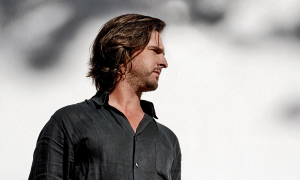
Robert Levin: The War is Over - A Conversation About Jazz

Eleanor Brietel: You've published fiction and you also write essays on a variety of subjects. I want, however, to confine this discussion to your thoughts about jazz, a special interest of yours that has resulted in a couple of books, a lot of liner notes and numerous articles in places like Down Beat, Rolling Stone, Metronome, Jazz & Pop Magazine (where you were the Jazz Editor) and The Village Voice (where you earned a reputation as an avid—some would say, zealous—supporter of the so-called "jazz revolution" in the '60s). What got you into jazz in the first place? Who were your guides and teachers?
Robert Levin: Working at Sam Goody's record store got me into it. My father, Abner Levin, a classical music critic—he wrote a much-praised book, The Disc Book, with David Hall—was Sam Goody's partner from the early 1950s, when the Long Playing Record was introduced, into the mid-1960s. In 1954, when I was fifteen, I started working part-time at the main store (on West 49th Street, midway between the old Madison Square Garden on Eighth Avenue and the Brill Building and Colony Records on Broadway) and it was there that I met George Sprung and Joe Goldberg. George, who was the head jazz salesman, played a recording of Bix Beiderbecke's for me on my very first day and, upon noting my enthusiastic response, suggested that I check out albums by Louis Armstrong, Sidney Bechet, Coleman Hawkins, Lester Young, Johnny Hodges and Erroll Garner, among others.
I did, and I was fully hooked in a matter of weeks. Then Joe Goldberg, who came to work as a salesman at Goody's a year or two later, expanded the field of what I was listening to by turning me on to people like Charlie Parker, Dizzy Gillespie, Miles, Monk, Sonny Rollins and Milt Jackson. Joe—who'd later write Jazz Masters of the Fifties—was six years older than me and a big influence. He was writing plays then and Frank Perry wanted to direct one of them—a marvelously poetic three-act play called Mexican Blues. It got as far as a backers' audition, which Joe invited me to. Zero Mostel, who was still unknown then, read one of the parts. (Joe was rooming with Jerry Orbach around that time and I remember Orbach joining us for coffee next door to Goody's just moments after he'd auditioned, unsuccessfully it turned out, for West Side Story.) Someone else who worked at Goody's, a trumpet player named Dick Schwartz—he'd recorded an album with Steve Lacy called Progressive Dixieland—also made valuable recommendations and he played an important role in how I listened.
Other guides and teachers were visitors to the store. Goody's location and enormous inventory (it stocked virtually every LP in existence and sold them at deep discounts) made it a kind of mecca, and besides all of the celebrities who came in—I recall an entrance by Marilyn Monroe very vividly—a lot of musicians and people in the jazz business showed up. I met Sidney Finkelstein, who wrote Jazz, A People's Music, Harry Lim, Martin Williams and Marshall Stearns there. And Nat Hentoff, as well. The Farmer brothers, Art and Addison, were regulars and Tony Scott, known then as the "first bebop clarinetist," would stop by often. He took a liking to me for some reason and brought me with him to a couple of his recording sessions. Lee Konitz had worked at Goody's before I did and he'd come back to buy records from time to time.
And it was at Goody's, where he was paying a call on Joe Goldberg, that I met Cecil Taylor.
EB: I want to ask you about Taylor, of course, but first: Are you musical yourself? Do you play an instrument?
RL: No. I tried to play the saxophone when I was in my teens but I realized fairly quickly that I had no aptitude for it. I am on a record though. I was part of a chorus on Ornette Coleman's Friends and Neighbors album, which was recorded by Bob Thiele for his pre-Impulse Flying Dutchman label. On the title track, it was the chorus's job to shout, "Friends and neighbors, that's where it's at!" That line (and my reading of it) notwithstanding, Friends & Neighbors is actually a pretty good album.
EB: Was it when you realized you weren't going to be a musician that you decided to become a writer and critic instead?
RL: Ha. Maybe that's the way it worked. But I was never a "critic" in any true sense of the word. Martin Williams was a critic. I played at being one occasionally and—it's been gnawing at me for forty years—I'd like to take this opportunity to publicly apologize to Shorty Rogers, Shirley Scott and Mal Waldron for the unconscionable bullshit I spouted about them in that role. Basically I thought of myself as an advocate, particularly when the "new music" came along.
EB: For the record: You're talking about the emergence of "free jazz" in the late '50s and early '60s.
RL: Yeah. And if we're going to use that term—"free jazz"—let's make sure we're clear about what it was intended to convey. To play "free" didn't mean to play anything that came into your head. What "free" meant was to be working within systems—many of them highly structured and complex—that were at a remove from traditional or conventional systems; systems that, in the parlance of the time, were "liberated" from the perceived constraints and limitations of established systems.
EB: Your tone, if I may say so, is a little bit defensive.
RL: I suppose that I am defensive. Too many people have said to me: "But that's just anarchy."
EB: OK. But not questioning its legitimacy as music, wasn't "free jazz" ultimately destructive? Didn't it cost jazz its audience? It definitely turned a lot of people off.
RL: Yes, it did turn a lot of people off. The intention of the "free" players wasn't to entertain but to enlighten. Animated as they were by the Black Cultural Nationalism and Civil Rights movements, a goal of many of those men, in addition to reaffirming the hegemony of jazz's African strain, was to restore black music to its original function as a music of spiritual utility. Resurrecting, in some instances, ancient African methodologies, they wanted, in the high fevers of their self-assertion—with the sense of infinite possibility that accompanied those fevers—to affect a spiritual awakening, a spiritual revolution that would transform nothing less than the way that we lived. Those who were conservatory trained (a relatively new phenomenon) and with an intellectual bent, were also employing elements of the European avant-garde, concepts and system they felt they owned now as much as whites did. (Their avowed purpose was, of course, to incorporate them into a black aesthetic.)
So if you looked to "free jazz" for familiar and agreeable harmonies and melodies you were missing the point. At its inception there was a moment, at least in certain quarters, when "free jazz" was very much welcomed. But finally the broader audience didn't want to go where it had gone. As Eldridge Cleaver, taking stock of developments in his province, the social and political sphere, put it later in that period, "America didn't want a revolution." Did you know, by the way, that Cleaver went on to become a designer of men's pants? They were pants that, to more comfortably accommodate the natural inclination of one's genitals, offered a choice of extra material on the left or right sides of the crotch. But apparently America didn't want his pants either.
EB: I didn't know that. Thanks for sharing.
RL: But there's more to say about this—no, not about the pants. If "free jazz" cost jazz a large portion of its audience, support for jazz was also diminished by the advent of rock—the first hip white popular music. Those young and counter-cultural white people who'd always been drawn to jazz because they identified with the outsider image of blacks, gravitated to rock instead.
EB: So where has this left jazz as a music? It's hard for me to get a handle on what's happening right now. Is jazz finished as an evolving music? Has it become the museum music that Wynton Marsalis seems to think it is? There've been no major movements or innovations in almost fifty years—seventy years if you don't count "free jazz," which Marsalis and the Lincoln Center people apparently don't regard as jazz.
RL: Wynton Marsalis? You mean Wynton Marsalis the "jazz great," as I heard him introduced recently? Yeah, he's right up there with Louis Armstrong and Charlie Parker, isn't he?
Look, it's entirely possible that Marsalis is right and that jazz is indeed finished as an evolving music. What I'd emphatically disagree with is the judgment that jazz culminated with bebop and that the "new thing" wasn't really jazz. If jazz and the changes within it can be said to have served as a document of the African-American's evolution—if that's, in fact, one definition of jazz—then "free jazz," as a reflection of where African-American musicians had arrived in the late '50s and early '60s, was no less a part of the jazz continuum than bebop was. Actually, coming from this definition, and from the assumption that jazz is no longer an advancing art, you could say that "free jazz," implicitly—and appropriately—completed jazz.
EB: Then what now?
RL: We can't know with any certainty. In the future, the underlying dynamics of American art music will be different. Changing ethnic demographics figure to engender all manner of new musics. Will jazz systems have their place in them? I can't see how they wouldn't. But frankly, Eleanor, I'm not as interested in issues like that as I once was—no more than I'm interested in participating in the war between jazz factions or arguments about whether or not black jazz musicians are innately superior to white jazz musicians. After years of listening to and occasionally writing about only one species of jazz, I find that I'm refocused now on musicianship and artistry on their own terms and that it makes no difference what style a musician is playing in or what color he is. If a talented musician is emotionally connecting to the discipline he's chosen to work within, I can be moved by what he's doing.
EB: Wait. Are you saying that, contrary to some very strong opinions you came to hold, you believe now that white jazz musicians can be the equal of black jazz musicians?
RL: Yes, of course white jazz musicians can be the equal of black jazz musicians. And yes, they can be great jazz musicians. In the past, white musicians who wanted to play jazz had to break with certain of their own cultural precepts in order to open themselves to black perspectives and methodologies. They had to be rebels of sorts. At this point in time, given the sweep and depth of the Afro-American's influence on American culture and the fact that most everyone has assimilated that influence, the African-derived elements of jazz have become as ingrained in white musicians as they are in black musicians. I think that any white musician who's disposed to play jazz is now as innately qualified to play it as a black musician is.
But again, issues like that no longer preoccupy me. I'm into jazz now purely for the music. At the moment there are still a lot of people playing what we call "jazz," and in literally every idiom, and I'm listening to as much of what's going on as I can. In New York, representations of the entire spectrum of jazz, from Ragtime to Dixieland to swing to bebop and beyond—or in various combinations—can, on a given night, all be found within a several-mile radius. Most of these idioms are still attracting new recruits and can still claim a following, however meager. If it's true that some of the musicians playing these musics are essentially mimics and functioning largely as custodians, others are infusing the genres they're choosing to play in with new energy and ideas and are actually expanding those genres.
In the case of "free jazz," the musics of a number of people have not only survived the passing of the movement in which they originated but are also wielding an influence on a significant percentage of the younger musicians. I'm thinking, for just a few examples, of the work of the recently deceased Bill Dixon (who I regarded as a great American composer), Ornette, Anthony Braxton and Cecil, of course.
EB: Taylor. You go back a long way with him.
RL: Yeah. More than half a century, since right after he made his first album, Jazz Advance. He's ten years ahead of me, but, it's amazing, we both got to be senior citizens.
EB: Fifty-plus years later, how would you assess him?
RL: Cecil hasn't realized all of his ambitions. He'd wanted at one time to achieve the stature and influence of an Ellington. But I think enough people would agree that if he's fallen short on that count he's still taken his place alongside the masters. Certainly as a pianist.
I admire Cecil for all kinds of reasons, not the least of them being his belief in himself. He had his ambivalent periods and he made his mistakes, but he held to his vision. George Wein, who'd wanted to exploit Cecil's enormous talent for its potential commercial possibilities and whose ideas about how to do it Cecil steadfastly resisted, actually said to Cecil not too long ago: "Well, you did it, and you did it your way." Cecil did do it his way and, initially, with very little support. But if Cecil didn't require approval to pursue and accomplish what he has, he certainly wanted it. Wein's remark was a source of immense satisfaction to him.
Of course the man whose approval Cecil really wanted but never got was Miles Davis. Miles had exclaimed in a Down Beat "Blindfold Test": "Who's that motherfucker? He can't play shit!" And Cecil was deeply wounded by that. Cecil and Miles were on several concert bills together and they would get into verbal exchanges backstage, but Miles refused to acknowledge what Cecil was doing as legitimate. I would try to cool Cecil out by telling him that it was precisely because Miles "got it" that he was so hostile to it, and that if Cecil's aesthetic took hold it would, in Miles's mind, diminish his accomplishment. But Cecil wouldn't accept that argument. Achieving Miles's validation became a minor obsession for him and when he answered Miles's "So What" with "D Trad, That's What," I think he really believed that Miles would come around.
EB: I know that Miles reacted in a similar fashion to Ornette Coleman.
RL: Yes, that's true, he did. "[Coleman] must be screwed up inside to play like that," he said. But I've just now reminded myself of another of Cecil's disappointments. This one involved a nasty reaction to his music at a black bebop club on a summer night back in the early '60s. Don't ask me to remember the name of the club—it was somewhere deep in the bowels of Brooklyn—or how Cecil got booked there. Cecil, [alto saxophonist] Jimmy Lyons and [drummer] Sunny Murray, none of whom had played this place before, were scheduled to do a weekend and Jeanne Phillips, a long-time friend of Cecil's, and I went with them on opening night. Cecil was excited about working at this club. The people there were precisely the people he wanted to reach. He wanted to demonstrate to them what was possible in the music now. Well, it was a Friday night and the place was jammed—every table was occupied and people were standing three-deep at the bar. It was also very hot; what passed for air-conditioning was thoroughly neutralized by the quantity of bodies in the room. The band was assigned to a small pit behind a railing opposite the bar and things started to get seriously tense just a couple of minutes into the opening number.
If Cecil still had one leg in bebop, the other was dangling well outside of it, and what the band was playing wasn't exactly what the folks there were expecting or ready to hear. Men at the tables began standing up, shouting obscenities and making threatening gestures. Women, too. It was quite a scene. But the band, lost in the music, was oblivious to what was going on. If they heard the noise at all they probably assumed they were being cheered. A year before a drunk had waved a gun at me in a bar, but I wasn't nearly as alarmed by that as I was when two men approached the pit and, with their arms folded, stared at the band in a very menacing way. It didn't help that the bartender, a giant of a man—I thought of him years later when I heard the Billy Crystal joke, "The guy was so big his crucifix had a real person on it"—looked so panicked himself.
I was standing near the door with Jeanne (who, every bit as fearful as I was at that point, had grabbed my arm and wouldn't let go), when I saw him frantically motioning to us. I managed to get over to him and he said, "You need to take them out of here. And right now!" So while Jeanne was focusing on Cecil and Jimmy, I was leaning into the pit trying to get Sunny's attention. But neither of us was having any success. Sunny, who was dripping with sweat, had his head way back and his eyes tight shut and all he was hearing was the music. Finally the bartender came out from behind the bar and yelled at the band: "That's enough! Goddammit, that's enough!" That worked—or maybe it was the long and heavy shadow he'd cast over the pit that did the trick. A couple of minutes later we were on the sidewalk. Jimmy's alto was still hanging from his neck. He'd left the case inside and no way was he going back to get it. I'd never seen Cecil quite so crestfallen.
EB: Wow! How did he handle that?
RL: He absorbed the experience and went forward. And in a more determined way. Adversity doesn't defeat Cecil, it energizes and extends him. He makes creative fuel out of adversity—adversity and the experience of an affront, real or perceived. I think he sometimes goes out of his way to place himself in situations that will result in making him angry. Being pissed off focuses and centers him. In this respect I take personal credit for a couple of his best sets.
EB: Am I correct about this? Didn't he approach you at one point about writing his biography?
RL: Where did you hear that?
EB: I don't remember now.
RL: Yeah, in 2005. I did mention it to a couple of people. I wasn't sure that I'd made the right decision. We'd gone to hear [pianist] John Hicks at Sweet Rhythm when that came up. (John was dying—he had just months to live—and he played one of the most exquisitely beautiful sets I've ever heard.) I don't want to dwell too much on why I declined to do the book. It's still something of a sensitive issue for me that involves a lot of stuff I'd rather not get into here. What I will say is that I thought such a book needed a first-rate musicologist and that I didn't feel qualified to do it justice. (I told Cecil this and he said he'd "take care of that part." I said, "Yeah, you'll write a hermetic poem that'll only turn more people off.") But that's as far as I want to go about the biography.
EB: Okay. Let's bring this into the present. Who exactly have you been listening to these days?
RL: As I said, I've been listening to a lot of different people. I had a chance to hear the Trio 3 plus Geri Allen band, with Oliver Lake, Andrew Cyrille and Reggie Workman at Birdland a while back and I was blown away by it. Of course any band that has Andrew Cyrille playing drums is automatically elevated. I've also been making all the gigs I can by two reed players, Peter and Will Anderson. Identical twins, they're still in their early twenties and I can't say enough about them.
They're Julliard graduates and still doing postgraduate work at Julliard, but there's nothing studied about the way that, as instrumentalists, arrangers and composers, they make music. They're naturals and while essentially into bebop—which they play with a passion, unpredictability and sense of discovery that can make you feel like you're back at the beginning of it at Minton's or Monroe's Uptown House—they can claim an astonishing affinity for the full range of jazz forms and styles, at least up to the "new thing." I've listened to them play all kinds of jazz now and have yet to hear an inauthentic note. They easily hold their own with the best of the Dixieland players. They interpret Monk compositions in a way that I'm sure Monk would have appreciated. They have a solid grip not only on what Miles and Gil Evans were after in the Birth of the Cool period, but on the work of a John Kirby as well.
Along with the depth of knowledge they demonstrate about saxophone players as diverse as Johnny Hodges, Stan Getz, Hank Mobley and Gigi Gryce, to name just a few, they understand Ellington and—they play ballads with an emotional sophistication that's way beyond their years—they know what to do with a Billy Strayhorn song. Have I mentioned that they also command their principle instruments, the clarinet and alto and tenor saxophones, with a stunning authority? I could go on and on about the Andersons. Right now the distinctions between them as musicians are as subtle as the differences in their appearances. It will be fascinating to see how they progress, how they diverge from one another and what they make of their prodigious talents, once they've become centered in their individual identities. But what they're presenting at this point in their development is already substantial and compelling enough to be worthy of preservation. I'm surprised that there's no big-label album yet. I should think that their marketing potential—the twin thing, their age—would be considerable.
EB: I've got to check them out.
RL: Yeah, you do.
EB: Who else?
RL: Actually, a lot of traditionalists. For the past year or so I've been hanging a lot with traditionalists.
EB: You've been hanging with Republicans?!
RL: I don't think they're all Republicans. Most of them give the appearance of being highly evolved and decent human beings. No, what happened was that my wife, Marianne Mangan, was into this music and she got me to pay attention to it.
EB: Marianne Mangan. I've read some of her stuff. She's good. I knew there was a relationship. I didn't realize you were married.
RL: Much to my irritation, Marianne declined to take my last name. I've been trying to persuade her to at least take my first name, which I think is a perfectly reasonable compromise.
In any event, Marianne, who's frighteningly knowledgeable about this music, got me to listen to it. Yeah, like a lot of people I regarded modern manifestations of traditional and swing era jazz as reactionary and pretty much ignored them. But stripped of that extra-musical baggage there's some extraordinary music being played in these categories by a body of serious, dedicated and very good musicians, and I regret that long-held biases prevented me from finding that out sooner.
EB: Anybody in particular you want to mention?
RL: I've been especially impressed by the trumpeter, cornetist and flugelhornist Peter Ecklund. As we used to put it, he's "saying something" when he plays. I've heard Ecklund now in a number of different contexts. He can remind you, at times, of a host of people from Armstrong to Beiderbecke to Harry James to Harry Edison to Art Farmer, but his approach, including a sound that's multi-textured and rich with contrasts, is totally individuated. Just a few notes and you know that it's him. His solos, consistently crafted with wit and intelligence—unerringly musical- can be powerfully dynamic and emotive, and his presence in an ensemble always serves to extend the musicians he's working with. In his own group, Blue Suitcase, which has been playing occasionally at the Greenwich Village Bistro on Carmine Street, he draws not only on jazz but on a classical training, extensive experience with rock and pop bands, outstanding song writing and arranging skills, computer technology and a droll sense of humor, to produce music that's inventive, edgy and immediately seductive. He's a genuine artist. The real thing.
EB: OK! Go on.
RL: I haven't heard everyone, not nearly, but of the players and groups I've caught thus far I've been consistently dazzled by The Louis Armstrong Centennial Band, a group of shifting, but invariably first-rate personnel (the estimable trumpeter Jon-Erik Kellso is frequently featured), that David Ostwald, who plays tuba, leads at Birdland on Wednesday evenings. I heard Little Willie Anderson, on clarinet, get into an electrifying exchange with Ed Polcer, a magnificent Chicago-school cornetist, there. And the pianist Bill Dunham runs an always stirring group, the Grove Street Stompers, at Arthur's Tavern on Monday nights with Peter Balance on trombone, Skip Muller on bass, Giampaola Biagi on drums, revolving and stellar trumpet or cornet players like Ecklund, Polcer and John Bucher (a wonderfully subtle and lyrical musician), and Joe Licari on clarinet. Joe Licari. There are a lot of excellent clarinetists playing classic jazz—the brilliant Dan Block, of course, and Joe Muranyi and Dan Levinson—but, and I'm talking about his unfailing exuberance, his touch with a ballad and the marvelous symmetry of his solos, no one reaches me quite the way Licari does.
Someone else I've come to admire is Herb Gardner. He's an exceptional trombonist, accomplished pianist and terrific bandleader—he leads the Stan Rubin big band at Swing 46 on Wednesday nights in addition to small groups at venues like Charley O's—and I always get a major lift when I go to hear him.
And each of them owning his own particular strengths and virtues, there are others that I'm glad I've gotten to hear. I'm thinking of pianists like Peter Socolow, Terry Waldo, Ehud Asherie, Steve Elmer, Don Edmonds, Jesse Gelber} and Dick Voigt}; saxophonists like Jim Perry, Chuck Wilson and Bob Curtis; trumpeters like John Eckert and Barry Bryson; the trombonists Dan Barrett, Vincent Gardner, Dick Dreiwitz and Jim Fryer, and the guitarist/banjoist Howard Alden. I've also discovered that along with a lot of stand-out percussionists like Biagi, Jackie Williams, Fred Stoll, Arnie Kinsella, Steve Little, Ed Bonoffand Kevin Dorn (who's an especially bright and gifted younger drummer), more than a few superb bassists—Brian Nalepka, Mike Weatherly, Murray Wall, Steve Alcott, Dave Winograd, Muller and Andrew Hall among them—are devoting themselves to this music.
EB: Your thinking about jazz has clearly undergone a significant transformation, Robert.
RL: Well, I do continue to play the hell out of my John Coltrane CDs.
EB: Still, what happened that enabled you to expand the range of what you listen to?
RL: You mean besides Marianne? I got older.
EB: You got older.
RL: As you get older a lot of the illusions you've lived with become transparent and they evaporate. You're left with reality. I believed, back in the '60s, in the possibility of a fundamental change in human consciousness and behavior. Hanging tight with like-minded musicians and others, I was convinced that the "new black music" was the embodiment of that possibility. I may have smiled at the hyperbole of a remark [the "free jazz" bassist and composer] Alan Silva made to me after coming off a high energy set—"Man, in another ten years we won't even need traffic lights we're gonna be so spiritually tuned to one another"—but I have to confess that I didn't think the remark was entirely off the wall. So I developed an agenda when I wrote about jazz that limited what I could appreciate and made me less than objective. I wanted to promote the revolution the "new black music" was leading. I didn't understood yet that the black musicians I revered weren't necessarily in possession of a special wisdom, or that the changes I envisioned were, for reasons I've tried to explain elsewhere, beyond the realm of the possible. [Ed. Note: See "Free Jazz: The Jazz Revolution of the '60s."]
EB: But what you said about being "left with reality." That does sound almost...grim.
RL: It's deflating, but it's hardly all that grim. Not when I can still be mesmerized by the interactions within a finely-tuned group, or thrilled by hearing a superior improviser challenge himself and then rise to the challenge. Not when what's left is the gift that, each in his way, George Sprung and Joe Goldberg gave me. The treasure that jazz is in all of its manifestations.
< Previous
American Dreams
Next >
Canyon Cove
Comments
Tags
Interview
AAJ Staff
United States
Bix Beiderbecke
Louis Armstrong
Sidney Bechet
Coleman Hawkins
Lester Young
Johnny Hodges
Errol Garner
Charlie Parker
Dizzy Gillespie
Sonny Rollins
Milt Jackson
Steve Lacy
Nat Hentoff
Tony Scott
Lee Konitz
Cecil Taylor
Ornette Coleman
Shorty Rogers
Shirley Scott
Mal Waldron
wynton marsalis
anthony braxton
Jimmy Lyons
Sunny Murray
Geri Allen
Oliver Lake
Reggie Workman
Gil Evans
Stan Getz
Hank Mobley
Gigi Gryce
Billy Strayhorn
Peter Ecklund
Harry James
Harry Edison
Art Farmer
Jon-Erik Kellso
David Ostwald
Will Anderson
Ed Polcer
Skip Muller
Joe Licari
Joe Muranyi
Dan Levinson
Terry Waldo
Ehud Asherie
Steve Elmer
Don Edmonds
Jesse Gelber
Dan Barrett
Vincent Gardner
Dick Dreiwitz
Howard Alden
Ed Bonoff
Kevin Dorn
For the Love of Jazz
 All About Jazz has been a pillar of jazz since 1995, championing it as an art form and, more importantly, supporting the musicians who create it. Our enduring commitment has made "AAJ" one of the most culturally important websites of its kind, read by hundreds of thousands of fans, musicians and industry figures every month.
You Can Help
To expand our coverage even further and develop new means to foster jazz discovery and connectivity we need your help. You can become a sustaining member for a modest $20 and in return, we'll immediately hide those pesky ads plus provide access to future articles for a full year. This winning combination will vastly improve your AAJ experience and allow us to vigorously build on the pioneering work we first started in 1995. So enjoy an ad-free AAJ experience and help us remain a positive beacon for jazz by making a donation today.

Giveaway

Eligible winners: 15
Days remaining: 4
Days remaining: 4