Home » Jazz Articles » Profile » Relentless Groove: The Life of Jymie Merritt
Relentless Groove: The Life of Jymie Merritt
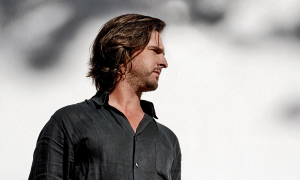
 Over the past fifty years there have been many stalwarts who've directed the course of jazz, but none is more deserving of tribute than Jymie Merritt. Although he has been unjustly under-recognized, his muscular bass playing has anchored many of this music's most prestigious ensembles, and in the process, he has helped to shape the genre as it has evolved.
Born in Philadelphia in 1926, Jymie began his musical journey playing the tenor saxophone while a teenager. However, this was interrupted in 1943 when he entered the fray of World War II by enlisting in the Army. Due to sinus complications, which he developed during the three years he spent in the service, Merritt had to quit playing the saxophone. Dejected, he began working construction jobs for his father, but close to a year later, Jymie's mother surprised him with his first upright bass.
Merritt devoted himself to his resurrected musical career with fervor, so much so that he auditioned and was accepted at the Philadelphia Conservatory of Music (now The University of the Arts) only a year after he began playing the bass. He later went on to the Ornstein School of Music and he also studied with Carl Torello, bassist with the Philadelphia Orchestra.
During this time, Jymie also pursued his love of jazz, albeit separately and in secret from his classical studies. Soon he began hosting regular jam sessions at his home, and through these gatherings he met and became friends with many future Philly jazz stars, such as John Coltrane and Jimmy Heath.
By 1949, Jymie was performing professionally with many of these same musicians, and he quickly landed a position as bassist with Bull Moose Jackson's R&B band. While on tour, band mate Benny Golson introduced Jymie to the recently invented electric bass. Merritt became one of the first to switch to the new instrument, and he used it throughout the rest of his time with Jackson and while he toured for five years with rock 'n' roll predecessor Chris Powell (whose ensemble included a young Clifford Brown for some time), and for three years with the burgeoning blues star B.B. King.
Merritt's time with these groups reinforced his strong groove, and he also continued his musical education at the Hamilton School of Music before he eventually settled in New York City. It was there in 1958 that Jymie was asked by Art Blakey to sign up with the drummer's hard-working Jazz Messengers. The bassist, then 32, joined a month later. In the meantime, he reacquired an upright bass and prepared for the new ensemble.
Merritt stood, and still stands, as the quintessential hard bop bassist, and his brawny bass work drove the Jazz Messengers for four years. In fact, apart from the leader himself, Merritt made more recordings as a Jazz Messenger than any of its other esteemed members. He flawlessly adapted to each new twist that the band's prolific and exploratory composer/arrangers like Benny Golson and Wayne Shorter brought to the stage and, at the same time, Merritt appeared on albums led by Golson, Shorter, Curtis Fuller, and Sonny Clark.
 Unfortunately, Jymie was forced to discontinue his touring with Blakey in 1962 because of debilitating health issues. Supported and cared for by his friends, family, and fellow musicians, Merritt continued performing off and on while he struggled with the unknown ailment for almost ten years. Max Roach was especially supportive; he would pick up and drive Jymie to gigs when he was unable to do it himself, and the bassist was able to record and perform with Roach and Dizzy Gillespie. Merritt also appeared on records with Jimmy Witherspoon, Jack McDuff, Jimmy Smith, and Chet Baker during his battle with poor health.
Jymie's health improved and he soon became an integral part of Lee Morgan's ensemble in 1970. It was a reunion of sorts as the two had played together often with the Jazz Messengers. The trumpet star's new group plied aggressive modal jazz at its best, and several of Merritt's compositions were part of their working repertoire. Tragically, the band was shattered apart two years later when Morgan was shot and killed in the middle of a performance. After that event, Jymie never returned to New York to live.
In Philadelphia, Jymie increased his involvement with the Forerunner performance collective, which he had founded in the 1960's and which he remained a part of throughout his years touring with Blakey, Max Roach, and others. The Forerunner bandfeatured an original musical language and used a polymeter system developed by Merritt himself, and this system, in turn, was a significant influence on Steve Coleman and his M-Base Collective, among other groups.
In the 1980's, Jymie was diagnosed as having cancer, which was on the brink of being terminal. After radiation therapy, he was able not only to keep living, but also to keep playing. In recent years one could find him performing regularly in and around Philadelphia. He hasn't ceased exploring new ideas either; Jymie has spent much of his time of late composing music for a six-string electric bass.
Jymie Merritt is truly a legend. He's a survivor, an originator, a relentless pursuer of his passions, and he's the bulwark of any ensemble that he graces. And no matter what the situation, his bass playing grooves, and grooves hard.
Photo Credit
Francis Wolfe/Mosaic Images
Comments

Tags
Jymie Merrit
Profiles
Jymie Merritt
Christopher Slone
United States
John Coltrane
Jimmy Heath
benny golson
Clifford Brown
Art Blakey
Wayne Shorter
Curtis Fuller
Sonny Clark
Max Roach
Dizzy Gillespie
Jimmy Witherspoon
Jack McDuff
Jimmy Smith
Chet Baker
Steve Coleman
For the Love of Jazz
 All About Jazz has been a pillar of jazz since 1995, championing it as an art form and, more importantly, supporting the musicians who create it. Our enduring commitment has made "AAJ" one of the most culturally important websites of its kind, read by hundreds of thousands of fans, musicians and industry figures every month.
You Can Help
To expand our coverage even further and develop new means to foster jazz discovery and connectivity we need your help. You can become a sustaining member for a modest $20 and in return, we'll immediately hide those pesky ads plus provide access to future articles for a full year. This winning combination will vastly improve your AAJ experience and allow us to vigorously build on the pioneering work we first started in 1995. So enjoy an ad-free AAJ experience and help us remain a positive beacon for jazz by making a donation today.

Giveaway

Eligible winners: 15
Days remaining: 3
Days remaining: 3