Home » Jazz Articles » Interview » J.D. Walter: Being a Verb
J.D. Walter: Being a Verb

It's curious to me that the highest compliment you can give a singer is that he or she sounds like an instrument, while the highest compliment you can give an instrumentalist is that he or she sounds like a voice.
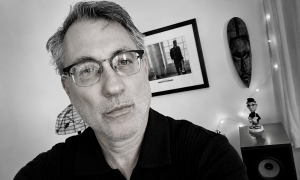
 J.D. Walter is a jazz singers' singer—a purist and an innovator. Although his style has been compared to many vocal titans, it is in the same breath, uniquely his own, and he has become a singular phenomenon on the music scene.
Respected and lauded by the great musicians of the contemporary circuit, Walter has shared the stage with many legendary artists including: saxophonists Dave Liebman, Bill Evans - Saxophone and Tim Warfield; singer and songwriter Bob Dorough, drummers Billy Hart, Gregory Hutchinson, Ari Hoenig and Bill Goodwin; trumpeters Nicholas Payton, John Swana, and Randy Brecker; pianists Jean-Michel Pilc, Jim Ridl, Orrin Evans and Andre Kondokov; bassists John Benitez and Taurus Mateen; and singers Mark Murphy and Miles Griffith; and poet Sonia Sanchez.
Walter has thus far recorded five CDs as a leader and co-leader and has attracted an international audience from the shores of America to Europe, Russia, and the Far East. He is also a featured member of pianist Orrin Evans' Luv Park Band (Imani Records, 2004), as well as making guest appearances on numerous other recordings.
A vocal coach for many emerging artists, Walter is in demand as a clinician at schools, conservatories and universities. He has mentored and inspired many emerging singers.
Since Walter is that rare innovative singer who is completely true to the jazz tradition while, at the same time, continually stretching himself and pushing the envelope, it's important to understand his musical development and approach. Warm and accessible, Walter is also articulate and forthright about the issues and controversies that concern him, other musicians and fans today.
- Biography and Early Influences
- Influence of Other Jazz Singers
- Singing Style and Technique
- Teaching and Mentoring
- Current and Future Interests
- Influence of Other Jazz Singers
AAJ: If you were to go to the desert island, which five or six recordings would you take with you?
JDW: I would say, Betty Carter's Social Call (Columbia, 1956) and Dropping Things (Verve, 1990). And then, some Count Basie—Basie at the Sands (Reprise, 1966)—maybe Benjamin Britten's Missa Brevis, and a record I frequently listen to, Vladimir Horowitz Plays Liszt (RCA Victor Red Label, 1993).
AAJ: That's a piano album—did you study a musical instrument?
JDW: My mother was a music teacher. She started us kids on piano and voice, but frankly, I never took to the piano as an instrument to play, but for compositional purposes. I played poorly, but composed, even as a child, but I wasn't that interested in playing piano. I played drums at a very early age, and that was a huge foundation for me. I frequently call jazz "African-American classical music." Jazz is a rhythmically based art form, so having that background in percussion really helped me get in touch with the rhythmic sensibilities endemic to that art form.
I also briefly played cello and saxophone, and trumpet. I could try these instruments because my mother had access to them. But what I really followed through with were singing and percussion. I studied mallets, drum sets, tympani, snare drum, and so on.
 AAJ: The reason I asked that question was because your singing involves the sort of precision typically associated with the best instrumentalists.
JDW: Sometimes people will say, "You have really great ears. You must have played an instrument." To be honest, my harmonic understanding did not come from playing an instrument at a performance level, but from transcribing and learning solos vocally. Nothing has come from an instrumental perspective, except understanding harmony on the keyboard. Why I'm adept at what I do is not from an instrumental vantage point. Chet Baker, of course, sang and played trumpet, Curtis Stigers sings and plays well, and there are some others, but what I do I learned from home base in college—chords, harmony and learning and memorizing solos.
AAJ: Dave Liebman says that you uniquely use your voice as an instrument, but it may be a bit deferential to say you need to learn an instrument in order to sing because the voice is really the most special instrument of all.
JDW: Well, it's curious to me that the highest compliment you can give a singer is that he or she sounds like an instrument, while the highest compliment you can give an instrumentalist is that he or she sounds like a voice. While I'm not aspiring to sound like a horn, improvisation is coming from my head and my heart. I'm looking for emotional transference. If people want to make that distinction it's their deal. For me, it's all the same. The special thing about the voice is that we have text, so we vocalists have that wonderful ability to combine drama and the text with the notes.
class="f-right">
Biography and Early Influences
AAJ: We'll come back to that later, but I was wondering what your childhood and adolescence was like in terms of your exposure to music. Am I right that you were born in a Philadelphia suburb, Abington, Penn.?
JDW: Yes. I was adopted. My folks moved out to the Lebanon-Lancaster area of Pennsylvania. I spent most of my childhood there, until the middle of seventh grade, when I went to the American Boy Choir School in New Jersey. As I said, my mother was a music school teacher. She was a fine pianist and contralto. I also had an older sister who was a fine pianist. It was a natural thing to compete for the attention she was getting. So I tried to excel at singing. Actually, my first paid gig was six years old. I got $17 to $20 a month for singing in my family's Episcopal church men and boy choir. For a kid in the early 1970s, it was nice to have that.
As far as musical tastes and what was played at home, my parents were classical fans, but they also had some big band music, and Dave Brubeck, Miles Davis and some Bing Crosby, Dean Martin, Nat King Cole, and Ella Fitzgerald. So I was exposed to these things on the periphery, but I was a classical geek. The early '70s pop music didn't appeal to me, and listening to the radio actually made me sad. I was a sensitive child, and the music all seemed depressing to me. My refuge was to sit in my room with my little portable turntable, listening with my headphones on to King's College Men and Boy's Choir, or Berlioz' Symphony Fantastique.
There was one rock group I enjoyed, Queen, with vocals which I loved. Friends would come over, and I'd put on Switched On Bach (CBS Records, 1968) with Walter Carlos. I thought it was cool that Bach was played on a synthesizer, but my friends didn't understand. I liked Maria Callas, Pavarotti, and that kind of thing.
AAJ: If you were so into classical music, how and when did your passion for jazz develop?
JDW: Part of it was rebellion, and part of it was circumstances. My voice changed in puberty, and so I was no longer the golden boy soloist. I studied drums, because it took a couple of years before my voice became decent again. In my ninth grade, I couldn't return to the American Boy Choir School because my voice had changed. That was quite a school—we recorded Handel's Messiah with the Smithsonian Institution, among other recordings, traveled the world, worked with Giancarlo Menotti and sang presidential inaugurations. It's an unbelievable institution that is America's answer to the Vienna Boy Choir. It was a boarding school. We had uniforms. Heavily music theory-oriented. Six hours of rehearsal a day.
But when my voice changed, I got into percussion, and I started to get together with some local kids who were interested in jazz. A family moved into the house next door to mine, and their father was an amazing musical educator and saxophonist who pointed us in the right direction. We'd play out of the fake book. He'd give us pointers and things to listen to, and we'd sometimes play through composed things like the Claude Bolling suites for flute. I started playing with this jazz trio, and then, once my voice came back, I started singing and playing drums with the trio. We stuck together all through high school.
AAJ: So that's when you started tuning into jazz music as a focus. According to your biography, you then went to the University of North Texas in Denton, Texas, in the Dallas area.
JDW:In high school, I continued studying classical voice, and I studied at a local liberal arts college and participated in competitions. I was interested in a college that had classical and jazz, and North Texas offered that. Ray Brinker, who now plays drums with Tierney Sutton, told me about The University of North Texas, that Stan Kenton had a huge influence in the development of the school. They had 12 big bands, as well as numerous other jazz-related ensembles, and it was a jazz Mecca. It was the first school in the world to have a jazz degree.
class="f-right">
Influence of Other Jazz Singers
AAJ: So you're refining your musical abilities there. And then at some time thereafter you go to Amsterdam to study with Deborah Brown.
JDW: At North Texas University, I was talented and had a scholarship. But at a music school, you get a reality check and find out there are many just like you, and many even better. There were so many great drummers there, but I started getting attention in their vocal jazz ensembles, and they asked me to pilot their new vocal jazz degree. But they had no vocal instructors. So I was studying with instrumentalists, so that's where I got the whole instrumental approach. But I thought, "I have to study with a singer." And I heard Deborah Brown in New Orleans at an IAJE (International Association of Jazz Education) Convention, and I contacted her and said, "I want to study with you," and she said, "I'm located in Amsterdam." So I sold everything I had, moved there, and studied with her for about a year.
She's the "real deal." She's one of those rare singers who hasn't been tainted by the music industry telling them what to do. She was following her own musical desires and instincts. And also, I was interested in her vocal method. She studied with George Peckham in Seattle, who taught what is called a "one voice" method, which instead of labeling the singer as a tenor, soprano and so on, lets one use their own voice well into the upper register, or "head voice," as women call it, or falsetto for men.
Deborah was studying with her teacher at the same time as Diane Schuur and Abbey Lincoln, if I recall correctly, among other jazz greats. Peckham was a guru, and lots of jazz singers were going out to study with him, as well as pop singers like Rod Stewart, and a rock group called Heart. He helped them get their voices back in shape, because a lot of the methods he was using are those that laryngologist physicians use to rehabilitate voices. So you could use his instruction for rehabilitation or as a regular vocal method.
AAJ: I notice two things about your singing that are wonderful and may derive from this method. One is your range, and even the very highest notes don't sound like falsetto. And the other is how clear your voice is throughout the register. It's pure and unspoiled.
JDW: I got that absolutely from Peckham's "one voice" method through Deborah. For him, there's no such thing as falsetto or head voice. You're using only one voice. Making the connection between the two areas—they are one voice. Most people damage their voice by singing or speaking improperly, or by drinking or smoking. Peckham's method has been a godsend to me. Even in the middle of a gig if I find my voice tired, I'll go do some of these warm-ups and I get my voice back again.
AAJ: Getting back to Deborah Brown, what did you learn from her?
JDW: At the time, she was singing with a great group: Horace Parlan, Red Mitchell and Ed Thigpen. She would say, "I'm having a rehearsal today. I'd like you to come and sit there and not say a word, and listen and watch the rehearsal." So first of all, I got to hear great music. And I observed the way she rehearsed a band. And she clued me into people historically I should have known but didn't know, so I listened to some singers who were unfamiliar to me at the time, such as Babs Gonzales, the Mills Brothers, King Pleasure and others. I knew Eddie Jefferson, of course, and some others. Sometimes Deborah could say things that would crush me, but she was always right.
First of all, I was instrumentally oriented, and I didn't know how to deliver a song. One time she said to me, "You should listen to Chet Baker." I was a musical snob, and I considered Chet Baker to have a wimpy voice, and I was interested in singers who had obviously good voices, and she said to me, "Well, you should listen to Chet Baker because he means what he says, and you don't." She was very gentle with me, but very firm about many things. So I started listening to Chet, and it changed my biases.
One thing about jazz is that it is very forgiving as far as the instrument is concerned. Jazz is more concerned about the particular intention, rather than the sound coming out. For example, Bob Dorough does not have a beautiful voice. But he has more intention and meaning than I'll ever hope to have. Blossom Dearie is another example of a voice whose intention shines through the quirky voice. There are singers out there who don't have pretty voices, but it doesn't matter, because the intention and feel is the value, and that was a big lesson for me to learn.
 AAJ: Louis Armstrong is, perhaps, the prime example of that.
JDW: I've often pointed out to students, that Maya Angelou, or any great poet can say "I love you" in so many complex ways. But a three-year-old child comes into the room and says to his parents, "I love you," and it's just as deep and strong as any poet. Because simplicity and intention can be just as effective as loquaciousness.
AAJ: Billie Holiday is a strong example of that kind of simplicity.
JDW: Absolutely. And I'm not a big fan of the quality of her voice, but I am a huge fan of her intention. It was a unique voice, of course, but it was the sorrow, the underlying emotional content that drew me to her as much as anything else. She's a beautiful case in point. And sometimes people will say that a jazz singer is one who improvises (scat). Well, not necessarily. But they may be improvising with rhythm, with phrasing, with other elements that are involved. Billie certainly knew where to take liberties. But you must be able to understand what's underneath what we're doing. You must understand the landscape underneath, because this is an interactive, conversational art form.
AAJ: That underlying emotion and intent really comes through in your own singing. Holiday also had an incredible sense of timing, and the same applies to you. You're right on the money with the rhythm—many of even the finest singers have trouble keeping time. To continue with your biography, could you give us a quick fast-forward as to what ensued after you left Amsterdam?
JDW: I came back to Texas, and I was tapped out on jazz, and started singing with a rock group called Worlds Above. I had a great time—heavy harmonies, very intricate almost fusion rock. We had some success and toured in the South, and then there were various hardships, and I had an offer to play with a famous guitarist in Dallas, Giampiero Scuderi, a prodigy Italian jazz guitarist. And I sang with him five nights a week for about a year, was making money and living somewhat of a more normal life, and getting back into jazz.
Then, in 1993, my father had a stroke, and I moved back to Pennsylvania and got a cottage near my folks in Mt. Gretna. I started playing in Reading, Lancaster, Harrisburg, Baltimore, Philly and Washington, D.C. I ultimately wanted to move to New York, and with that in mind, I started to network the New York scene, by bringing players down from there to play at the clubs that I booked. And I would book them to play in my area, and got to know a lot of the New York players before I even moved there. That was a good move on my part—it helped me to move to New York in the fall of 1998.
AAJ: Who were some of the New York musicians who especially inspired you while you were in Pennsylvania?
JDW: Jean-Michel Pilc. He had just moved to the United States, and I would bring him down for a few days at a time. When I was living in Pennsylvania, I would drive to New York late at night and hear the jam sessions. Then I'd leave New York around six in the morning. I was living on a thoroughbred horse farm and was required to work four hours a day and didn't have to pay rent, so I could go to my gigs at night. I did that for about three years, from 1994 to 1997. It gave me an opportunity to practice a lot.
One great thing was the people I was bringing down from New York would love to stay on a hundred-acre farm in Lancaster County—it was like a vacation for them. I met Jim Ridl during that period. A guitarist from Ohio, Cal Collins, Philadelphia area pianist Ron Thomas, Ari Honig, Francois Moutin, David Liebman, Bob Dorough, Jeff Lee Johnson—I met them all during that period. I was just looking to perform with great players.
I moved to New York and then was offered a job at the University of the Arts in Philadelphia. At first, I commuted, then moved to Philly for a couple of years. Then Liebman said to me, "You gotta get out of Philly! Get back to New York!" We made a recording together. We were playing some gigs in promotion of the record. And I started wondering what I was going to do—starving all those years to settle into a teaching job, which wasn't bad in itself but that wasn't what I had set out to do. Currently, I teach adjunct at three universities in New York—but teaching isn't my main interest. I was just recently offered a position in NYC with more hours and I turned it down. The deal I now have is that the students work around my hours and they come to my house. What I'm saying is that performing is the main thing in my life. Teaching has to be done around my schedule.
AAJ: Now, getting back to the music itself, Betty Carter has been a major influence on you. I heard Betty Carter of course on that fabulous album with Ray Charles.
JDW: She never got paid for that, by the way.
AAJ: Unbelievable. But then she matured and became very avant-garde. I heard her in person in the latter part of her career, and she was so far out, it was a bit hard to keep track of what she was doing. Was it the early or later Betty Carter who had an impact on you, and how did she influence you?
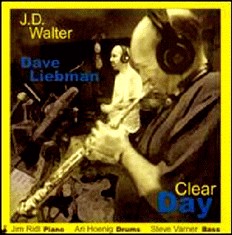 JDW: There are a number of reasons why she's been an iconic figure for me. Actually, I've been strongly influenced by a number of figures. One of the first, in bebop, was Babs Gonzales. He was one of the first vocal improvisers. On one of his records, he was predominantly singing without words. He was singing as part of the instrumental ensemble. That greatly influenced me. I was then performing with a lot of the older bebop musicians. I asked them a lot of questions, and then, when I became interested in Betty Carter, I set out to perform with as many players from her bands as I possibly could. I've played with over 35 musicians who have been in her bands, partly because I respect them as musicians, but also because I wanted to know what Betty's methodology was, how she dealt with the band, and so on.
But the greatest impact she's had on me is that I consider her a verb, in the sense that if you listen to her, before she sang with Ray Charles she sang with the Lionel Hampton, and then she worked with Ray Charles and also King Pleasure. Then in 1956, her album Meet Betty Carter and Ray Bryant (Columbia, 1955) came out, later released as Social Call. And that record fits right in with what Sarah Vaughan and others were doing at the time, but then she kept evolving, and I think that's a very important thing.
She was always growing. She was kind of the Art Blakey of jazz singers in the sense that so many people from her band—like Blakey's—went on to great success. And why is that? Did she just have an ear to pick out great players? Yes, but also she had a lot to teach them.
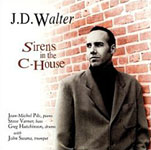
I remember riding in the car with [drummer] Gregory Hutchinson, going off to record my first album, Sirens in the C-House (Encounter/Dreambox Media Records, 2000) in 1997, and I put on a Betty Carter recording, and I had questions. I asked Greg, "Why did you do that here—why did you do that there?" Invariably, he answered, "Betty told me to." Some of the phrases were peculiar to me or repetitive, but she had things she wanted done a certain way. I respect and admire her as somebody who to her dying day pushed the envelope. And I think she also sacrificed a chance for great popularity by doing that, because people didn't get it. People would say, "She sang out of tune." Well, the truth is that she got in touch with African music and scales that are not the tempered like the western musical tunings. She knew what she was doing.
AAJ: Another influence for you has been the Brazilian singer Milton Nascimento. Could you comment on him?
JDW: I'm very interested in the South American singers, like those who have sung with Pat Metheny. My first introduction to Milton was with Egberto Gismonti. I love the purity of their sounds, especially in their upper registers, and it still had an edge to it, along with their wordless style of singing. Other singers: Pedro Aznar from Chile, and Brazilian singers like Airto Moreira and Flora Purim, and Rosa Pasos. These singers do something to me, and I enjoy singing in that style.
class="f-right">
AAJ: Now let's talk about your own music. For me, you're the most innovative jazz singer today, period. For example, the critics call what you do scat, but it seems to me you strive for something far more than that. You use sounds in a whole fresh variety of ways. From your own perspective, what are you seeking, what is your thing, that you're trying to create and develop in your singing?
JDW: I've always had problems with the word scat. All we're doing as musicians, and I like to consider myself a musician who happens to sing, and I'm trying to find my own voice improvisationally. At some point in his career, a musician says, "Well, I've copied the music and vocabulary of, say, Lester Young, Coleman Hawkins, Clifford Brown, Lee Morgan, Sonny Rollins, Herbie Hancock, and so on. But who am I? What do I want to do?"
As Miles Davis said, "It's simple—all you have to do is find out who you are and be that." And what I'm trying to do is find out who I am, and, as I said, for me a part of that is being a verb, so I'm always going to be changing and evolving. I suppose what I'm trying to do is continue in Betty's footsteps of pushing the envelope of singing. If you think about it, scat itself wasn't always accepted. In modern times, Bobby McFerrin is someone who developed his own approach. Bobby, and Al Jarreau, in particular, made it possible for me to do what I do in more of a modern way.
These days, I'd like to get more involved in writing and composing, explore electronica. Already 50 to 60 percent of what I perform is original. I'd like to write more, and find a still more solidified voice in that. And try to do it in a way that hasn't been done before or in a way that is just uniquely me. For that reason, I almost had to stop listening to other singers for a while. My mind can be like a sponge sometimes, and I pick up on their nuances. I don't want to do that. I want to find my own nuances and voice, a continual journey.
AAJ: I've been told by a number of musicians that they stop listening to their peers and mentors as much, so they can discover who they themselves are. Now, I also like to know what musicians are doing from the "inside" so to speak, in two respects: First, how you take a tune from the time you learn it to the live performance or recording; and second, once you've mastered the notes themselves, what's going on inside you when you're singing? For example, pianist Fred Hersch's teacher said that "Fred doesn't play the notes; he plays what's between the notes." And you too seem to going for something beyond the tune itself. So, what are you experiencing in your mind, your heart, your body when you are singing?
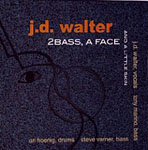 JDW: That's a good point about playing beyond what's on the page, and something I stress to my students as well. The map is not the territory, as it were. What's on the paper is not music, and while we may want to remain faithful to the tune, we have to add our own personality to it. Depending on where we are in our career and development, we could stray very far from that tune or not. I'm interested in psychology, and there's a book by Colin Wilson called Maslow and the Post-Freudian Revolution (Littlehampton, 1972), and I find Maslow's concept of the peak experience to be what I'm looking for. I'm looking to dig deep within the smithy of my soul, as it were, and get it out. It's a very cathartic experience for me to perform. There are very emotional things for me to get out, and I'm looking for that peak experience, I'm endeavoring to do what Maslow said, that we can actually create peak experiences.
Some think we need a drug to do that, but I don't agree. Our brains are chemical factories, and we can make our own chemicals. We can have these epiphanic experiences. We can search, and I'm searching when I'm singing, I'm looking to squeeze out the emotions, whatever they may be at the time, whatever's affecting me in my life at the time, or my memories, and bring the band along with me on that peak experience, and with the best players, they're inspiring me to go to those places inside me.
Also, I want to make the band happy—if they're happy, then I'm happy. "Happy" just means that something is happening for us, the emerging and divulging of these emotions. I want to affect people, let them know what I'm going through. I want them to identify and empathize with me: "Yeah, I've felt that way, too." That's the relationship between the performers and the audience—we're a conduit for the emotions all human beings have. And jazz specifically allows us a further vantage point for those emotions because we are not trying to repeat predetermined musical ideas—maybe we can go a little deeper. Through deeper melodic, harmonic, and rhythmic expressions, we can say something more. We can use our entire vocabulary, our arsenal of expression, to say something more.
AAJ: I do think that many of the pop and rock musicians would give a nod to jazz in that respect. For example, [Carlos] Carlos Santana acknowledges the influence of Pat Martino and John Coltrane in pushing the envelope of his music. Your own recording of "It Never Entered My Mind" on Live in Portugal exemplifies what you just said about using the jazz vocabulary to provide a peak experience of emotional expression. I've rarely heard a ballad sung in a way that brings out so many expressions and nuances of emotion as you do on that tune. What were you thinking and feeling at that concert in Portugal?
JDW: Jaco Pastorius said, "If you think, then you stink." The fact is that I was so distracted by so many things when I was doing that number in a beautiful outdoor setting, it being the first tune of the set, finding the sweet spot on stage with the monitors, etc., that I wasn't thinking about the music, the emotions came out almost in spite of myself.
AAJ: It's as if you're in an altered state of consciousness.
JDW: The Spanish have a word for it: duende the summoning of the spirit. Someone once asked me what would be my ideal situation for performing. It's basically about the audience. It's a doctor-patient relationship with the audience, a symbiotic relationship. If I can get the audience emotionally involved, then we're feeding off each other. In some countries, the audience doesn't clap after solos, and you're puzzled—it feels like a great performance and they're not responding. And then you get a standing ovation and an encore.
But later you realize how much you needed that affirmation during the performance itself. However, the audience in Portugal was very receptive, clapping a lot after solos, and I think that drives us. I'm not ego-driven, but I'm "happy-driven," and I want that connection with the audience.
AAJ: It sounds like you're very engaged with the audience, while some musicians try to exclude the audience from their consciousness in order to focus on the music itself.
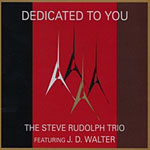 JDW: It varies depending on my state of mind. Sometimes I feel like the proverbial turning my back on the audience. A number of singers have said to me, "Why aren't you smiling more? Your turning those buttons on your amplifier all the time, it's distracting." Well, I've never heard someone say to a bassist, "You don't smile enough." And nobody criticizes a guitarist for adjusting his gear while he's playing. And so on. What's so different about a singer?
AAJ: Those critics may have a stereotyped conception of a singer, as one who stands there facing them and singing directly to them.
JDW: I sang at the Deer Head Inn the other night and I talked a lot to the audience. Someone said afterwards, "We love the stories; we love that you told those stories." And there is a valid point in opening yourself to the audience and letting them get to know you. But on the other hand, you've got someone like Pat Martino, who talks very little to the audience, and then you have a mystique going on. It varies with the musicians, the audience, and the particular night. There are so many factors involved. All we can do is what we do, and hope someone gets it. I hope it touches somebody.
AAJ: I did hear you at the Deer Head in the past, and I felt there was intense communication in that kind of intimate setting just from the music, and also because you had Jim Ridl at the piano, who communicates musically on many levels.
class="f-right">
AAJ: You're often called upon as a teacher and mentor. I know some singers in Philadelphia who feel they owe a lot to you that way. Let's say you have some competent, talented vocalists in a master class situation. Where are you trying to get them to go, where are you trying to push them?
JDW: I want them to get the underlying landscape of the music, what they're trying to paint. Ultimately, I'm trying to get them to find out who they are as performers. I'll have them either sing or improvise over a song, and I'll say, "I don't believe you." And they'll look at me like I'm out of my mind, and I'll almost get down to the point where I'll say, "I want you to improvise over this song. If you don't have anything to say, don't sing anything. Sing only if you feel compelled, and there's something you really mean and feel compelled to say, even if it's only one note." It's like the way Miles Davis used the fewest notes possible—minimalism. That's what I'm going for, to encourage intention, like any artist, to say something meaningful. And I frequently find with this exercise that they'll break down crying afterwards, realizing how much was stirred up in them.
AAJ: It's as if you have an emotional encounter with them. The truly great singers come from somewhere deep in their hearts, and that's what really moves an audience. So that's what you're trying to get them to do.
JDW: I'm trying to get past the superficial—the cute phrase or whatever. I want them to be really searching in their emotional recesses for what triggers something. I want them to have peak experiences. I have students from around the world—Korean, Swiss, Norwegian, Russian, Greek, Japanese and so on—plus I want them to bring their own experience to the table wherever it comes from. To a Japanese student, for example, I'll say, "I'd like you to improvise over this song using a childhood story that you would read to a nephew or a niece, in your language. And beautiful music comes out of this. I want them to utilize their own cultural sensibilities, because, after all jazz is an international art form but more importantly a story.
AAJ: It's truly world music, with so many different influences, and even more so now. And with your own multiple influences and your dedication to the art form, you must be a fabulous teacher. I really appreciate your approach. You evoke something from within the student, rather than imparting a formula.
JDW: I think any teacher should not hand out the fish, but teach how to fish. And I don't believe in cranking out students on a hourly basis. I limit the number of students I have because I spend as much time as I need with each student, and expect a lot from them as well.
AAJ: Of which of your students or former students are you especially proud?
JDW: There's Venissa Santi, who was a very prodigious student of mine. I encouraged her to get back in touch with her Cuban roots, which led her to visit Cuba several times and contact master percussionists and singers there. She's now combined Cuban music with straight ahead jazz, and just came out with her first CD, Bienvenida (Sunnyside Records, 2009).
There's Meg Clifton in Philly. She's terrific with the standards. I have students from other regions and countries as well. I just want them to be happy and to do what they really want for themselves. There's a great already established singer named Roseanna Vitro, who works with Kenny Werner. She studied with me for improvisation. I also had a singer who was a runner up on American Idol. This is not an easy business, and I'm always concerned about the music world that is always looking for that "new, young sensation," whereas the average age of gestation of jazz musicians coming into their own is 35 to 40 or later, like Cassandra Wilson and Bob Dorough.
About JD Walter

Tags
PREVIOUS / NEXT

Become a Sustaining Member

Since 1995, All About Jazz has championed jazz as an art form and supported the musicians who create it. Over three decades, it has grown into one of the world's leading jazz resources, serving hundreds of thousands of readers, musicians, presenters and industry professionals each month.
Help Build the Future of All About Jazz
Your support helps us continue building All About Jazz for the next generation—expanding our editorial coverage, preserving jazz history, developing new community features and creating better ways to discover the music and the people behind it.
Become a sustaining member for as little as $20 per year and you'll immediately enjoy an ad-free experience along with access to subscriber features and future articles for a full year.
Together, we're not simply sustaining All About Jazz—we're building its future. Thank you for being part of the journey.