Home » Jazz Articles » Live Review » Icons Among Us: Jazz in the Present Tense - World Premiere
Icons Among Us: Jazz in the Present Tense - World Premiere

The end of the Jazz Wars means the "J-word" has lost much of its politically divisive power as both sides seem to have realized that they can't simply define their enemy out of existence.
World Premiere
The Allen Room at Jazz at Lincoln Center
New York, NY
April 15, 2009
The Jazz Wars are over. Now what? A new documentary asks.
Since the early 1980s, jazz has been engaged in its own nonviolent, low-intensity civil war. Decentralized and often unrelated bands of avant-gardists, fusionistas, and other dissidents have struggled to defend their territory against the fast encroaching empire of the Young Lions—those hard swinging, neo-traditionalist post-boppers who stormed the scene, gobbled up the money, and wrote their own victor's history. In 1996, when the Lincoln Center Board voted to install Jazz at Lincoln Center as a permanent part of the institution's programming, the Young Lions' victory seemed complete. Five years later, documentarian Ken Burns codified the Young Lions' take on jazz history for the public-television-watching masses: jazz died in the 70s, Wynton Marsalis—the mightiest of all Young Lions—and his minions resurrected it in the 80s, Jazz at Lincoln Center solidified those gains in the 90s, the future of jazz will sound a lot like its past.

In the years since Burns' documentary, however, things haven't gone according to script. The Jazz Wars, it turns out, didn't end with the Young Lions' foundation of the imperial city of Jazz at Lincoln Center, nor did they see the avant-garde launch a massive counteroffensive that deposed King Wynton from his throne. No, the jazz wars have ended with an armistice accord after a series of high profile gestures of peace and reconciliation, from Jazz at Lincoln Center inviting Cecil Taylor and John Zorn to headline Rose Hall to The Bad Plus' Ethan Iverson writing a series of largely laudatory essays on the Young Lions. A consensus may not have emerged yet, but the relationship between the sides has changed from pitched conflict to open debate.
Icons Among Us: Jazz in the Present Tense—a new, four-part documentary produced by John Comerford, which premiered its first episode, "A Quiet Revolution," at Jazz at Lincoln Center's Allen Room last Wednesday—focuses on the deceptively simple question that launched a thousand ships: "what is jazz?" Interviewing dozens of musicians on the contemporary scene, the filmmakers craft a mosaic of musings, from old Jazz Warriors Donald Harrison (for the Young Lions) and Medeski Martin & Wood (for Team Other) still sniping at the enemy, to younger players such as drummer Dave King suggesting that the Jazz Wars may have been a critics' invention far more than a musicians' reality.
If there's a common thread tying this vast array of opinions together, it's "J-word" fatigue. During the Jazz Wars, whether you were with Wynton or against him, nothing fired you up like the word "jazz." The Young Lions defined the word with their particular semantic politics and then used it excessively: jazz trumpeter Wynton Marsalis of the Lincoln Center Jazz Orchestra at Jazz at Lincoln Center. The avant-gardists conceded "jazz" entirely, referring to that thing they played simply as "the music." The end of the Jazz Wars means the "J-word" has lost much of its politically divisive power as both sides seem to have realized that they can't simply define their enemy out of existence.
So if the Jazz Wars have ended on a note of compromise—with the Young Lions opening up their halls of power to the avant-gardists (and mildly contrarian documentary films) and avant-gardists recognizing many of the Young Lions' musical achievements (if not their rhetoric) as beneficial to the art—then what lies ahead for the form and its cultural relevance? No one, it seems, has any idea.
Jazz's great struggle now, Icons Among Us tell us, is not with itself over its identity, but with the outside world over its perceived irrelevance. Pianist Robert Glasper compares Ben Franklin's apocryphal discovery of electricity to Coltrane's modal innovations, asking why electricity has made massive leaps since Franklin but jazz is stuck in Coltrane's giant steps. Dave King asserts that jazz is healthiest when it's part of the cultural conversation: musicians "have to be able to feel like they're contributing," he says. Critic Paul de Barros, serving as a wild-eyed foil to the filmmakers, tells us that, culturally, the current jazz scene "has nothing to say." "We don't know what the connection is between the society and Bill Frisell," De Barros says to underscore his point.

After De Barros' remark, the filmmakers cut to footage of Frisell playing Bob Dylan's "Masters of War" with his trio. Is this supposed to illustrate the connection between "the society" and Bill Frisell that De Barros missed? Frisell appears frequently throughout the first episode, telling us that "jazz is infinite" and that jazz represents a kind of better, safer world. Are we being asked to interpret Frisell's jazz as an anti-war statement of love and peace? And if this represents Bill Frisell's connection to the society, what does it mean that he's playing a song that was written 46 years ago?
At least in its first episode, Icons Among Us steers clear of answering such questions. On the one hand, raising questions without answering them is a wise move where jazz is concerned: drawing a direct link between music and society is bound to result in oversimplification and forced connections. (De Barros gives a great example of this when he says that jazz in the era of Ornette Coleman and Charles Mingus was "about black liberation." If that's what jazz was about, were Bill Evans, Lee Konitz, and the very popular Stan Getz just as disconnected from the zeitgeist as Bill Frisell? And how does "black liberation" account for the differences between John Coltrane, Herbie Nichols, Sarah Vaughan, and Sun Ra?)
On the other hand, by avoiding answers, the first episode of Icons Among Us isn't left with all that much to say. Ken Burns' Jazz created a history of the music that may have been flawed, but had the courage to assert a narrative. Icons Among Us is a historiography of the J-word debate the shies away from taking a well-defined position on jazz present and future. The documentary's contribution is as a corrective to Burns' one-sided history, but doesn't go much beyond that. At the end of the first episode, our picture of "jazz in the present tense" is of a music that wants to be current, isn't quite sure how to get there, doesn't quite know what to do with its history, and is beginning to look for something to do beside infighting. That's not much of a rallying cry for a revolution, quiet or otherwise.
Photo Credit
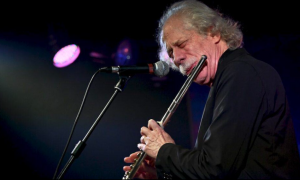
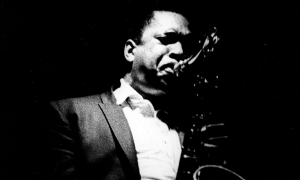
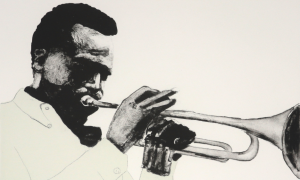
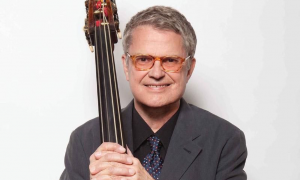
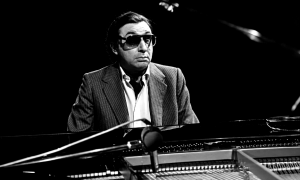
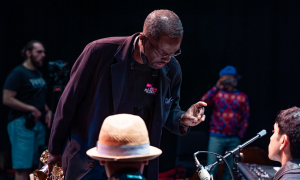
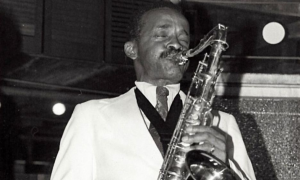
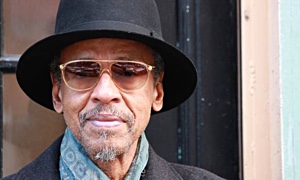
Stills taken from Icons Among Us: Jazz in the Present Tense - Episode One: The Quiet Revolution, courtesy of Paradigm Studio and The Documentary Channel.
Tags
PREVIOUS / NEXT

Become a Sustaining Member

Since 1995, All About Jazz has championed jazz as an art form and supported the musicians who create it. Over three decades, it has grown into one of the world's leading jazz resources, serving hundreds of thousands of readers, musicians, presenters and industry professionals each month.
Help Build the Future of All About Jazz
Your support helps us continue building All About Jazz for the next generation—expanding our editorial coverage, preserving jazz history, developing new community features and creating better ways to discover the music and the people behind it.
Become a sustaining member for as little as $20 per year and you'll immediately enjoy an ad-free experience along with access to subscriber features and future articles for a full year.
Together, we're not simply sustaining All About Jazz—we're building its future. Thank you for being part of the journey.