Home » Jazz Articles » New York Beat » Queens: Home of Jazz and Flushing Town Hall
Queens: Home of Jazz and Flushing Town Hall

Queens has the special distinction of having been home to the largest collection of famous jazz artists anywhere at any time.
Nonetheless, each borough of New York City can stake a claim to its own parcel of ownership of the real estate of jazz history. The Bronx was home to the bygone Club 845 and Blue Morocco venues, where Latin and swing rhythms percolated and Dizzy Gillespie, Elmo Hope, Tina Brooks, and Thelonious Monk hung out and played. The Brooklyn neighborhood of Bedford Stuyvesant was home to Randy Weston, Duke Jordan, Tommy Potter, and Max Roach; the latter three were at one point Charlie Parker's rhythm section. (In more current times, Steve Coleman's M-Base Collective began in Brooklyn.) Staten Island, the so-called "forgotten borough," had a thriving club scene, and Jimmy Knepper, Don Joseph, Caesar DiMauro, Don Hahn, Chuck Wayne, and siblings Kenny and Reggie Washington lived and performed there.
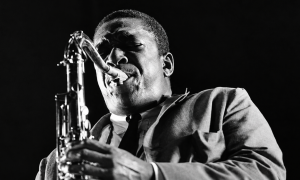
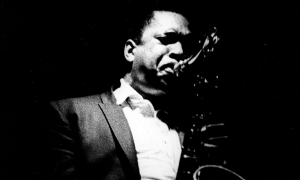
Yet Queens has the special distinction of having been home to the largest collection of famous jazz artists anywhere at any time. That's right: Queens, New York, where, since the 1920s, jazz artists have chosen as a comfortable place to live. In fact, Queens has been dubbed "the home of jazz." A sampling will suffice: Bix Beiderbecke, the Heath Brothers, Fats Waller, Slam Stewart, Illinois Jacquet, Billie Holiday, Milt Hinton, Ella Fitzgerald, Earl Bostic, Count Basie, Lester Young, Frank Wess, Eddie "Lockjaw" Davis, John Coltrane, Ben Webster, Charles Mingus, James P. Johnson, Glenn Miller, Woody Herman, Benny Goodman, Milt Jackson, Roy Haynes, Clark Terry, Chick Corea, Cannonball Adderley, and Jimmy Rushing all lived in Queens at some point in their careers. Most famously, Louis Armstrong's residence in Corona, Queens today serves as a museum open to the public. Armstrong's archives are available at Queens College, Flushing campus.
Flushing, Queens was home to Dizzy Gillespie, Billie Holiday and Bill Doggett in years past, and today is home to the Flushing Council of Culture and the Arts (FCCA), which preserves, reflects, and perpetuates the cultural legacy of Queens, especially jazz, at its presenting venue Flushing Town Hall.
This writer visited Flushing Town Hall by way of a short trip from Grand Central Station on the #7 train, passing by the new Mets stadium along the way. I spoke with FCCA Executive Director Ellen Kodadek and Jazz Producer Clyde Bullard, a professional bassist who has produced jazz events at Flushing Town Hall since 1998. "Jimmy Heath has referred to this institution as the 'cultural crossroads.' That's absolutely reflected in the kind of programming we do here," said Kodadek. "It's extraordinary to have someone of his caliber, expertise and experience to refer to us and think of us in that way."
Cultural crossroads is an apt description of Queens also. According to Kodadek, "Queens is the most diverse county in the country. There are over 138 languages spoken here. We're in downtown Flushing, which is mostly Chinese and Korean. As you spread out further into Flushing and further into Queens, you get this amazing cultural mix: Chinese, Korean, Columbian, Peruvian, Puerto Rican, East Asian and East Indian communities, and African-American."
The foundation of Flushing's cultural diversity was cemented over 300 years ago. "In 1657 the inhabitants of Flushing wrote the Flushing Remonstrance, a petition declaring religious freedom," said Bullard. Dutch settlers first came to America in the 1620s as a colony of Holland. Governor Peter Stuyvesant didn't tolerate religious freedom and decreed that Quakers be banished from Flushing. Flushing residents protested that ordinance in writing; this formal protest was a precursor to the U.S. Constitution's provision on freedom of religion in the Bill of Rights. "That set the stage for everything that has happened in Flushing," Bullard declared.
In the 19th century, Flushing was a major center of the abolitionist movement, and a major stop on the Underground Railroad for the formerly enslaved. Throughout the 20th century Flushing's population grew to include thousands of European immigrants and black American artists migrating from the South. In the 1970s, East Asian immigrants began settling in Flushing.
"Probably a third of our programming has an Asian context to it," Kodadek explains. "Particularly at the end of January, beginning of February, we do a month-long Lunar celebration, which is observed by the Chinese, the Korean, and the Vietnamese. We tend to do a mixed bag of visual and performing arts programs at that time."
Celebrating its 30th anniversary, the FCCA presents jazz, world and classical music, puppetry, theatre, dance, visual arts, and houses school programs and interactive workshops at Flushing Town Hall, whose city-owned Romanesque Revival Building was renovated in 1999. Since 1993 the "Jazz Alive" series has been held in Flushing Town Hall's 308-seat concert theater. A permanent exhibition of photos of jazz artists who have performed in "Jazz Alive" is available to the public on weekends from noon-5pm.
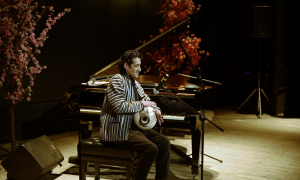
Jazz programs at the Town Hall reflect not only ethnic diversity—since January 2009 there have been "intimate jazz" shows by pianist Ayako Shirasaki, trumpeter Gabriel Alegria's Afro-Peruvian Sextet, Alva Nelson (a black American pianist from Texas), jazz drummer Pheeroan akLaff in collaboration with Japanese taiko drummers, and vocalist Giacomo Gates—but generational range too. Bullard arranged for WBGO's Jazz for Kids concert series, featuring drummer Winard Harper, to give a free performance for children on May 2, 2009. (Adults must be accompanied by a child to gain admission).
A day after the concert for kids, jazz and cabaret singer Rosemary Loar, a veteran of Broadway productions such as "Cats," "42nd Street," and "Sunset Boulevard," will perform numbers from the American songbook.
On May 29th, the Queens Jazz Orchestra (QJO) will be conducted by NEA Jazz Master Jimmy Heath. "Last year was the first year of the QJO," Heath recalls. "We played compositions by Pops, Dizzy, Billie Holiday, Illinois Jacquet, John Coltrane and other greats with roots in Queens. Each year we will feature different artists—there's a wealth of material." This year, along with songs by or associated with celebrated Queens musicians such as Woody Herman, Ella Fitzgerald, Clark Terry, Ernie Wilkins, and Frank Wess, trombonist Wycliffe Gordon will premiere a composition commissioned by the FCCA, "Cyberswing—Jazz in the Digital Age."
Bullard describes Gordon's "Cyberswing" composition as "a conceptual piece that takes the listener from early jazz, such as 1890s ragtime into the swing era, bebop, and cool jazz. Then it morphs, with the orchestra, into playing synthesizers, samplers, and digital drum machines. Wycliffe will be playing an EWI, a synthesized wind instrument which can create almost any kind of sound."
Such rich jazz programming is being presented in spite of the economic downturn, which caused the FCCA to "lay off staff, trim programs, trim hours, and take pay cuts," Kodadek revealed sadly. The Queens Jazz Trail, a trolley tour of homes of jazz legends in various sections of Queens, is not in operation currently because the organization isn't able to pay the $10,000 for insurance. As one of the Cultural Institutions Group (CIG), the FCCA is awarded general operating support from New York City. This year, the FCCA take from the city was cut by 41%. "The challenge is that not only did New York City reduce funding but also that certain funding streams such as the Carnegie Corporation and the New York State Music Fund ceased their overall grantmaking," said Kodadek.
Jazz music is inspirited with a persevering attitude derived from the cultural strength of its founders and innovators; jazz says "Yes, We Can Keep Swingin'" in spite of obstacles, fickle pop culture tastes, and economic travails. That's why Kodadek is optimistic, and sees a bright future for jazz at Flushing Town Hall: "When times are hard, people gravitate to the arts. And in an economy like this, people and organizations really look for ways that they can support each other. For fiscal 2010, we're looking at how jazz in New York City is being influenced by cultural diversity, by immigrant artists who may be first or second generation musicians who moved here with all kinds of different sounds and beats and instrumentation; how are they incorporating that into jazz, how is jazz being influenced by these oral traditions that are now making up the city, particularly Queens, more and more.
"We want to continue to commission new work, continue supporting the legacy of the tradition of jazz but also look at what's the future, what's changing, what's happening now? What are some of the new takes on traditional jazz music?"
Like jazz music, the Flushing Council on Culture and the Arts and Flushing Town Hall intends to keep swingin.'
Tags
PREVIOUS / NEXT

Become a Sustaining Member

Since 1995, All About Jazz has championed jazz as an art form and supported the musicians who create it. Over three decades, it has grown into one of the world's leading jazz resources, serving hundreds of thousands of readers, musicians, presenters and industry professionals each month.
Help Build the Future of All About Jazz
Your support helps us continue building All About Jazz for the next generation—expanding our editorial coverage, preserving jazz history, developing new community features and creating better ways to discover the music and the people behind it.
Become a sustaining member for as little as $20 per year and you'll immediately enjoy an ad-free experience along with access to subscriber features and future articles for a full year.
Together, we're not simply sustaining All About Jazz—we're building its future. Thank you for being part of the journey.