Home » Jazz Articles » Live Review » Scott Hamilton & Harry Allen: Swing Is Good Medicine for Jazz
Scott Hamilton & Harry Allen: Swing Is Good Medicine for Jazz

Ray McMahon explained that
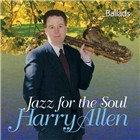 His first evening, dubbed "The Two Tenors, took place at McMahon Publishing Group, 545 West 45th Street in New York City, and lasted more than three hours. The night began informally with both his finds, Harry Allen and Scott Hamilton, taking questions about themselves and about their music. Scott's recent Concord CD, Back in New York, prompted me to ask him to describe when he first came to New York City and how he became a Sunday night bandleader at Eddie Condon's at age 21? (I admit that I was at the bar on the night he walked into the 54th Street Condon's.) Scott told how he came to ask famous jazz artists to guest with him, just to attract an audience, first at Ryan's (Jimmy Ryan's, where trumpeter Roy Eldridge played on 54th Street) and Condon's next door (named for Eddie Condon and bankrolled by raconteur Red Balaban in 1975). The list of tenors was impressive—beginning with Buddy Tate, Bud Johnson, Arnett Cobb, Al Cohn or pianists John Bunch, Jimmy Rowles and Norman Simmons.
Scott and Harry bantered about when they first met each other through bassist Major Holley. "Somewhere on Cape Cod," but neither were certain. "What instruments did they play first," an audience member asked? Scott replied, "Drums, then the harmonica, to which Harry responded,"Accordion!
Tonight's band included Chuck Riggs on drum kit, who came to New York to play with Scott at Condon's, and Harry's Monday night gig mates from Zuni: amplified acoustic guitarist Joe Cohn, and bassist Joel Forbes. Scott, always a neat dresser, was all decked out in a gray-tan striped three-button suit, pink shirt with a black and pink diamond-patterned tie, all of which complemented his graying hair—remember, he played Condon's as a kid in 1975, and that was thirty years ago!
Running through a few standards demonstrated that they've both matured, so their trading four bars was always right. It didn't take long for me to notice that WBGO announcer Bob Porter and Ira Gitler, coauthor of Oxford's Biographical Encyclopedia of Jazz, were sitting next to each other kibitzing with big grins and others were doing a lot of foot-tapping, hand-on-knee slapping, or head nodding to this swing jazz, much of it because of Chuck Riggs' insistent backbeat, accomplished by reversing the drumstick against the snare drum's rim.
Some highlights were "Polka Dots and Moon Beams, featuring Scott, and "Apple Honey, performed very fast at Woody Herman's tempo. Together they chased the head, Harry first, Scott next, and then Joe Cohn showed off by running through all the changes, single picking interspersed with chords only as accents. The only noticeable differences in these thirty years are the better suits and no display of nervousness. Playing in unison, Harry and Scott's horns resemble Woody's famous four-man sax session. "All right guys, I whispered to Bob and Ira, "when's the last time you heard something swing like this? Ira replied, "when they were at the Vanguard, referring to their September 2003 week at New York's premier Village gig.
The tunes continued to flow, until host Ray McMahon announced "Open bar with plenty of snacks left, initiating an intermission. Upon the tenors' return, many recognize that they were playing Lester Young's intro to "Tickle Toe, as recorded with Count Basie's Orchestra in 1939. While Harry moved the time up a notch, I noticed Scott had wandered off stage to read the McMahon Publishing covers framed on the back wall, returning just in time to apply a more subdued Ben Webster buzz to Lester's runs, with Chuck right with him on the cymbal as Joe Cohn supplied melodic chords and Joel Forbes maintained an unadorned rhythmic pulse.
On "Lonesome Road, Joe Cohn attracted attention running the lonesome melody by adding layers of interpretation upon layers of dramatic and difficult playing, but consistently making it come out right on time! "We're going to play a ballad, Scott announced to the audience, then asked, "what do you want to hear? Loudly a voice shouted, "Laura, and without hesitation Scott blew in his low register that famous name in notes.
 By now it was 10:50 p.m. as they began Sonny Stitt's "Blues Up and Down (A reprise from their 2004 Concord CD, Heavy Juice). They were cookin', fast and furious, fours one after another, together, separately, until the only distinction was they were running the blues, up and down. As if that were not enough, McMahon asked, "How about one more? Immediately Scott blew the root of "Flyin' Home as Harry fell in unison on Illinois Jacquet's improvised solo with Lionel Hampton's band. It was exciting to hear two tenors, two powerful saxophones blowing what they felt. Real "musicianers, as Sidney Bechet called those that blew from their hearts. They obviously felt good and it made us feel great!
A live DVD recording of this delightful night is to be available on www.mcmahonjazzmedicine.com. Add Harry Allen's and Scott Hamilton's CDs along with other jazz greats—both old and new—and you can also learn that the next event couples Harry Allen with jazz legend Frank Wess, in order to discover what's happening next.
Visit Harry Allen on the web.
Tags
PREVIOUS / NEXT
Become a Sustaining Member

Since 1995, All About Jazz has championed jazz as an art form and supported the musicians who create it. Over three decades, it has grown into one of the world's leading jazz resources, serving hundreds of thousands of readers, musicians, presenters and industry professionals each month.
Help Build the Future of All About Jazz
Your support helps us continue building All About Jazz for the next generation—expanding our editorial coverage, preserving jazz history, developing new community features and creating better ways to discover the music and the people behind it.
Become a sustaining member for as little as $20 per year and you'll immediately enjoy an ad-free experience along with access to subscriber features and future articles for a full year.
Together, we're not simply sustaining All About Jazz—we're building its future. Thank you for being part of the journey.