Home » Jazz Articles » Building a Jazz Library » Jimmy Smith: Master of the Hammond B-3
Jimmy Smith: Master of the Hammond B-3

His legendary multi-part technique on the Hammond B-3 organ, playing bass with the foot pedals and Charlie Parker-like single-line passages with his right hand, shook up the traditional trio as co-players could explore new roles. Yet, while the consensus is Smith's playing is a jazz landmark, his recordings fall short of such acclaim.
Not a single album is listed among the 200 most important recordings in the book Essential Jazz Library by New York Times critic Ben Ratcliff. The Penguin Guide To Jazz On CD notes "it was disappointing... to hear how quickly Smith's albums become formulaic." Rolling Stone calls much of his late career work "substandard."
The joy in building a Smith collection is one can almost always count on his worthwhile albums being fun, fast, and spiritual blues romps with lots of his patented tonal color.
The drawback is... pretty much the same thing.
There's a sameness to much of his work, and many of his "outside the box" efforts into genres such as fusion and soundtracks are less than stellar. Adding to this discouragement is a number of his best early albums are out of print.
Still, it's hard to dispute the more than 100 albums in Smith's discography feature not only a rich collection of commercially popular music, but works of exceptional artistry.
Other players such as Count Basie experimented with the organ as far back as the 1930s, but Smith pioneered the fusion of R&B, gospel and jazz in addition to his unique playing style. He was an enormous success almost immediately and, following a commercial and critical lull during the 1970s and '80s, rebounded with several quality late-career recordings and saw his work influence artists from organist Joey DeFrancesco to hip-hop and jam bands incorporating digital samples of Smith's playing into their performances.
He died February 8, 2005, in his sleep at the age of 76 at his Scottsdale, Arizona, home.
"Jimmy was one of the greatest and most innovative musicians of our time," wrote DeFrancesco in a message at his Web site dated February 9, 2005, six days before the release of Legacy, his second album recorded with Smith. "I loved the man and I love the music. He was my idol, my mentor and my friend."
Smith was born in 1928 in Norristown, Pa., near Philadelphia, to a musically inclined family that saw him playing piano and bass as a youth. This combination proved an essential element of his one-man-band approach on the organ. He joined the Navy at age 15 to escape his hometown and after World War II studied at several Philadelphia music schools. He subsequently played piano for local R&B groups during the 1940s and 50s.
He explains his development on the organ in an oft-quoted interview:
"I got my organ from a loan shark and had it shipped to the warehouse," he said. "I stayed in that warehouse, I would say, six months to a year. I would do just like the guys do—take my lunch, then I'd go and set down at this beast. Nobody showed my anything, man, so I had to fiddle around with my stops."
His New York debut came in 1956 with Art Blakey's Jazz Messengers and the organist was an almost immediate hit.
Smith's early recordings were so successful Blue Note set up a special division to develop the genre he formed. He typically recorded numerous projects every year for the label between the late 1950s and his departure in 1962, including career highlights such as 1957s Groovin At Small's Paradise and 1960s Back At The Chicken Shack, perhaps his best-known album. Many are also noteworthy for all-star rosters of co-players such as guitarist Kenny Burrell, trumpeter Blue Mitchell, and saxophonists Stanley Turrentine and Jackie McLean.
His association with Verve Records beginning in 1962 saw both an expansion and limitation of his work. Among the most successful were a pair of albums recorded with guitarist Wes Montgomery and 1962's Bashin': The Unpredictable Jimmy Smith, with "Walk On The Wild Side" from the latter album making pop charts as a single.
However, new formats such as big bands often featured something other than the lengthy blowing sessions best suited to his strength of building up passages over time. Many also sought crossover audiences—toying, for instance, with show tunes and hard rock—and are frequently considered weak points of his discography.
Smith's struggles continued during the 1970s as synthesizers caused the B-3 to fall out of audience favor. He toured regularly until 1975, when he opened a Los Angeles jazz club with his wife, Lola. Recordings and appearances became infrequent and undistinguished until the early 1980s and, while many subsequent recordings are quality dates, the frequency of new albums continued to be sparse. Later-career highlights include two albums from a 1990 live reunion with Burrell and Turrentine (Fourmost and Fourmost Return), and the live 1999 Incredible! collaboration with DeFrancesco.
A revival of interest in the B-3 sound also resulted in Smith's music influencing and being performed by a wide range of players such as John Medeski and the Beastie Boys (noteworthy for their use of "Root Down"). The elder organist, who Miles Davis once proclaimed the "eighth wonder of the world," also reemerged as a popular performer, including weekly jam sessions with DeFrancesco during the years preceding his death.
"He had a spirit and a sound that comes across, and there was nothing like it," DeFrancesco said in a newspaper interview. "He was full of fire and soul, just the complete musician."
Albums
New listeners looking for a single get-acquainted album can't go wrong with the 1960 "classic? Back At The Chicken Shack , although some consider 1958's The Sermon and 1960's Crazy! Baby superior. Best of all may be 1957's live Groovin' At Small's Paradise if the budget allows for a double-disc.Those looking for a good career retrospective might first consider the four-disc Retrospective featuring Blue Note highlights from the 1950s and '60s. A supplemental, or less expensive alternative, is the two-disc Walk On The Wild Side: The Best Of The Verve Years. An in-depth career-spanning boxed set remains elusive.
 Groovin' At Small's Paradise (1957)
 Perhaps the best of his initial albums currently in release, this live double-CD Blue Note collection with guitarist Eddie McFadden and drummer Donald Bailey plays heavily to Smith's strengths. There's a mix of standards, jazz and blues, mostly extended enough in length to allow the organist sufficient room for development. Some early pieces such as "My Funny Valentine" are more restrained than subsequent romps such as the widely acclaimed "After Hours."
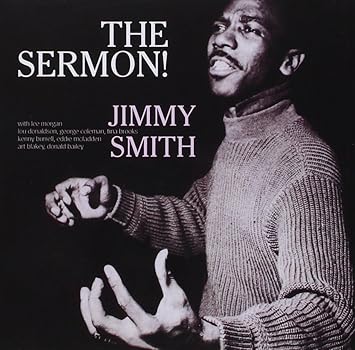 The Sermon (1958)
 Another strong early effort in a relatively straight-ahead vein, especially for those looking to hear Smith with a variety of players outside his familiar trio format. Among those on the all-star list are trumpeter Lee Morgan, guitarists Kenny Burrell and Eddie McFadden, alto saxophonists George Coleman and Lou Donaldson, and drummer Art Blakey. A reissued disc adds five tracks to the original three extended-length songs.
 Crazy! Baby (1960)
 There are two solid positives on this album: 1) he plays with his regular trio of guitarist Quentin Warren and drummer Donald Bailey instead of "name? players and 2) the opportunity, especially for newcomers to his music, to hear him play accessibly and yet with classic flair on familiar tunes such as "When Johnny Comes Marching Home" and "Makin' Whoopie." Not all agree: the Penguin guide calls it "discouragingly rational" and ranks it one of his two worst Blue Note recordings.
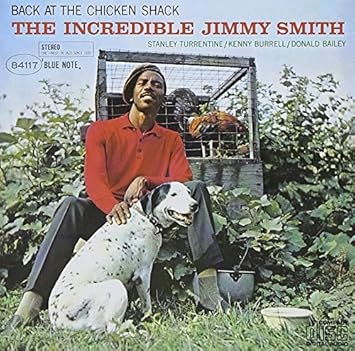 Back At The Chicken Shack (1960)
 A stellar album, although its rank as the pinnacle of Smith's discography can be disputed. Smith is in high form on the roaring title track as well as standards such as "On The Sunny Side Of The Street," but his co-players score some of the most notable accomplishments. Tenor saxophonist Stanley Turrentine delivers what many consider the breakthrough performance of his career and guitarist Kenny Burrell provides a smooth counterpresence to the organist's madness. Both would still be playing with him decades later on some of his best late-career work.
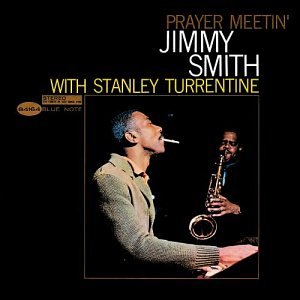 Prayer Meetin' (1963)
 This was Smith's final Blue Note recording until 1986. It was also the fourth album he recorded in a week as, eager to move to the Verve label, he put out a rush of albums to fulfill his existing contract. Even so, this is a quality work highlighted by Turrentine's tenor. Items of note include the rare inclusion of a bassist (Sam Jones) and two bonus tracks from the Chicken Shack era ("Lonesome Road" and "Smith Walk").
 Jimmy And Wes: The Dynamic Duo (1966)
 Interestingly, a number of critics refer to Smith's best musical partners providing a subtle ying to his intense yang. This big band-aided collaboration is among his most notable, as he and guitarist Wes Montgomery are as mismatched and yet strangely compatible as The Odd Couple, although a few apparent "crowd pleasers" are real clunkers ("Baby It's Cold Outside" is frequently cited). A second album from the session is The Further Adventures Of Jimmy And Wes.
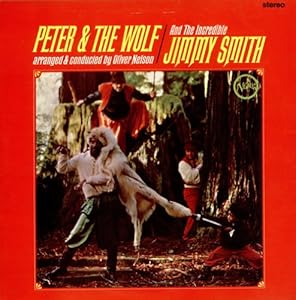 Peter And The Wolf (1966)
 Included with the disclaimer some critics rank this among the least of Smith's works ( All Music Guide's Scott Yanow is a notable exception) and it's probably accurate to say the playing is hardly his best. But since many of those same critics attack the sameness of his work and the concept of a jazz interpretation of these children's compositions is intriguing, this is as good a way as any to experience him "outside the box." Smith keeps the compositions recognizable, but with liberal doses of his own accent which are easy to distinguish given the simple and widely-known frame of reference.
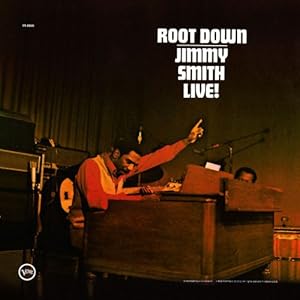 Root Down (1972)
 This Verve release is perhaps best-known for the Beastie Boys' cover of the title track in 1994, but also ranks as one of the strongest entries in Smith's work for the label. This live performance in Los Angeles is heavy on funk, supported by younger players such as Steve Williams on harmonica, Arthur Adams on guitar and Wilton Felder on bass. Smith's playing is generally raw and energetic—a refreshing change from arranged big band—especially on cuts such as "For Everyone Under The Sun."
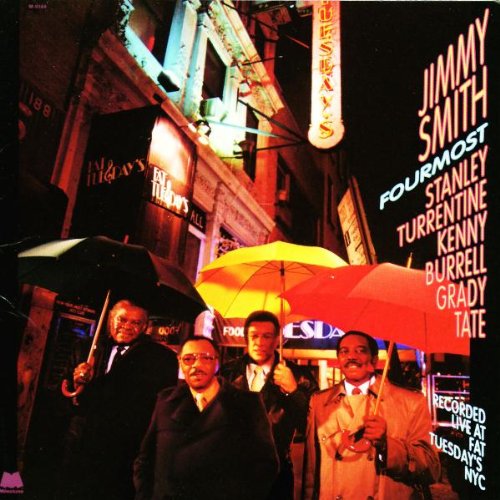 Fourmost and Fourmost Return (1990)
 Some of Smith's best late-career playing comes on this pair of discs recorded live with Turrentine, Burrell and drummer Grady Tate. The long-form arrangements ranging from standard ballads such as "My Funny Valentine" to the storming of a revived "Back At The Chicken Shack" suit the players well. Smith also contributes some scratchy vocals on "Ain't She Sweet" which, if accepted as the audience-pleaser they are, make for an entertaining extra.
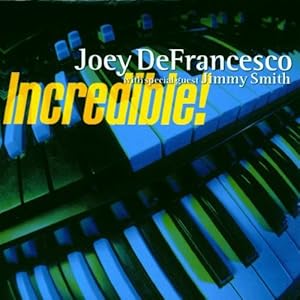 Incredible! (1999)
 This live performance is really more of a Joey DeFrancesco album, with Smith joining the younger organist for the final half of the hour-long set. But hearing the evolution of Smith's influence through DeFrancesco is reason enough to make this worthwhile, and it's intriguing to hear their two extended duets evolve into differing compositions (the titles, such as "Medley, No. 1: The Reverend/Yesterdays/ My Romance" are self-explanatory). The results may be audience-pleasing than artistic, but there's no denying both sound like they're having fun and generally complimenting each other well while doing so.
Boxed Sets/Compilations
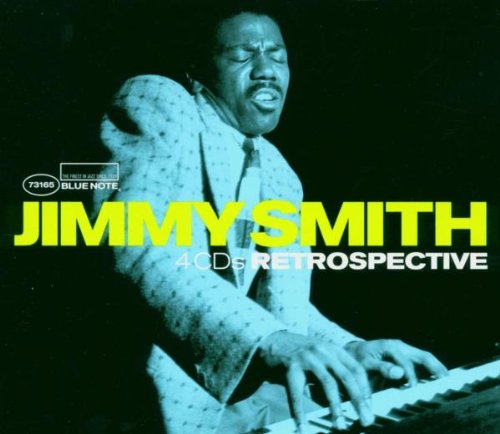 Retrospective
 This four-disc, 38-song collection representing Smith's Blue Note work from 1956 to 1963 is an excellent overview for listeners not attached to individual albums. Highlights include his 1956 performance of Dizzy Gillespie's "The Champ," the emerging freeform with Art Blakey on "The Duel," and a number of famous pieces such as "The Sermon? and "Incredible." Expanding the collection to include some of his "comeback" Blue Note work during the 1980s and '90s would be welcome, but they didn't reach the peaks Smith achieved during the earliest parts of his career.
 Walk On The Wild Side: The Best Of The Verve Years (1962-73)
 This 25-song, two-disc collection features many of his most popular songs, including the title track and some works with Wes Montgomery. It also features a range of small and large ensembles, making it more varied than the Blue Note collection. But the overall level of playing is less accomplished and it's a much less satisfactory listen for those seeking a truly representative overview of Smith's highlights and career. Still, it's a far superior choice to single-disc Verve compilations such as Ultimate Jimmy Smith and Jimmy Smith's Finest Hour, which contain too many overlapping tracks and lack significant depth.
DVD
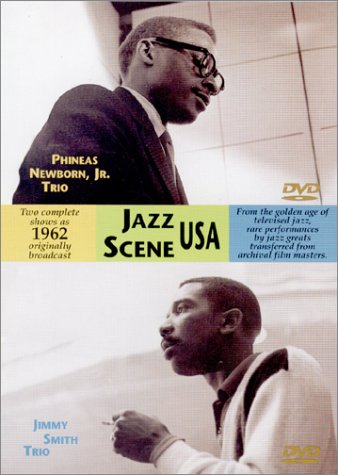 Jazz Scene USA—Phineas Newborn Jr. and Jimmy Smith (1962)
 There aren't a lot of Smith performances on DVD, but he puts on an impressive three-song trio performance with Quentin Warren and Donald Bailey during their half of this 60-minute Jazz Scene USA program. The casual, short-lived TV series does a fine job capturing Smith's technique on camera and the rendition of "Walk On The Wild Side" builds to a frenzy worthy of its title. Pianist Phineas Newborn Jr.'s performance on the other half of the disc came during a peak time in his career, a nice bonus.
About Jimmy Smith

Tags
PREVIOUS / NEXT

Become a Sustaining Member

Since 1995, All About Jazz has championed jazz as an art form and supported the musicians who create it. Over three decades, it has grown into one of the world's leading jazz resources, serving hundreds of thousands of readers, musicians, presenters and industry professionals each month.
Help Build the Future of All About Jazz
Your support helps us continue building All About Jazz for the next generation—expanding our editorial coverage, preserving jazz history, developing new community features and creating better ways to discover the music and the people behind it.
Become a sustaining member for as little as $20 per year and you'll immediately enjoy an ad-free experience along with access to subscriber features and future articles for a full year.
Together, we're not simply sustaining All About Jazz—we're building its future. Thank you for being part of the journey.