Home » Jazz Musicians » Johnny Hodges
Johnny Hodges
"Never the world's most highly animated showman orgreatest stage personality, but a tone so beautiful itsometimes brought tears to the eyes, this was JohnnyHodges. Because of this great loss, our band will never sound the same. Johnny Hodges sometimes sounded beautiful, sometimes romantic, and sometimes peoplespoke of his tone as being sensuous. With the exception of a year or so, almost his entire career was with us. So faras our wonderful listening audience was concerned, therewas a great feeling of expectancy when they looked up andsaw Johnny Hodges sitting in the middle of the saxophonesection, in the front row.I am glad and thankful that I had the privilege of presenting ohnny Hodges for forty years, night after night. I imagine I have been much envied, but thanks to God...” Duke Ellington eulogy.
John Cornelius Hodges was born on the 25th July 1907 in Cambridge, Mass. He started his musical career playingdrums and piano before taking up the saxophone at the ageof 14, beginning on the soprano and later the alto. Originallyself-taught he was given lessons by Sydney Bechet, whomhe got to know through his sister. He followed Bechet intoWillie 'The Lion' Smith's quartet at the Rhythm Club (around1924), then played in the house band with Bechet's Club‘Basha’ in Harlem. He continued to live in Boston andtraveled to New York at weekends playing with suchmusicians as Bobby Sawyer (1925), Lloyd Scott (1926),then from late 1926 with the great Chick Webb at ThePaddock Club and The Savoy Ballroom, etc. followed by ashort stint with Luckey Roberts.
In May 1928 Johnny joined Duke Ellington's orchestra andhe remained a mainstay of the group for the next 40 years.From his first recording in 1928 he revealed his authorityand technical mastery of the saxophone, playing with abroad, sweeping tone and producing impressive, cascadingruns. In the opinion of many people, he soon became Duke's most valuable soloist. He made hundreds ofrecordings with Duke and from 1937 led his own smallstudio group drawn from the orchestra which made manysuccessful series of recordings for Victor and other labels.Titles included “Jeep's Blues,” “Hodge Podge,” “The Jeepis Jumpin” all of which were co-written with Duke. Also in thisperiod of great creativity he played in many other smallgroups with musicians such as Lionel Hampton, TeddyWilson, etc., producing classics of the period.
Johnny was one of the many stars of the Ellington band ofthe 40s producing solos of immense authority on songssuch as “Things Ain't What They Used To Be,” “Don't GetAround Much Any More,” “Passion Flower,” etc. From the40s he concentrated on the alto leaving the soprano alonecompletely and in this period he regularly won the popularitypolls run by magazines such as Downbeat, Metronome, andEsquire.
Read moreTags
Ella Fitzgerald: Ella Fitzgerald Live at Falkoner Theatre Copnhagen 1966
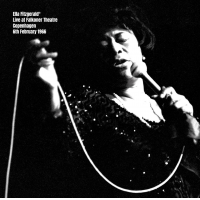
by Jack Kenny
The night before Ella Fitzgerald's historic concert with Duke Ellington in Stockholm, she played two concerts in Copenhagen. For Ella Fitzgerald, this was like playing at home because she had an apartment in the city. It was one place where she felt relaxed and it shows in the music. It is Fitzgerald at her most at ease. In fact, she sings more at this concert than she did in Stockholm The tape emanates from a Danmarks Radio broadcast, ...
Continue ReadingDuke Ellington: Copenhagen 1964
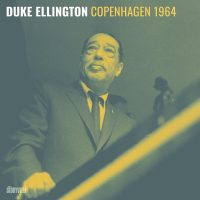
by Jack Kenny
All Duke Ellington concerts offered music of substance. Audiences listened patiently through the medleys and Tony Watkins' vocals. Some performances, however, stood apart because they contained material that was fresh--music not yet worn thin by repetition, where both the thinking and playing could still surprise. Ellington, Billy Strayhorn, and the orchestra toured Asia (the “Far East") in 1963. Rather than immediately writing new compositions, they deliberately allowed the impressions of the journey to settle, preferring that the process ...
Continue ReadingDuke Ellington's Concert of Sacred Music
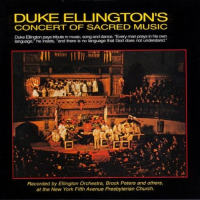
by Chuck Lenatti
In 1964, Dean D.J. Bartlett and the Reverend John S. Yaryan invited Duke Ellington and his orchestra to present a concert to consecrate the renovated Grace Cathedral on Nob Hill in San Francisco during a year-long festival of Grace. At first, Duke demurred. In his autobiography, Music Is My Mistress (Da Capo, 1976), Ellington explained why he changed his mind: It has been said once that a man who could not play the organ or any ...
Continue ReadingThe Duke Ellington Carnegie Hall Concerts: January 1943

by Chuck Lenatti
Duke Ellington was one of the most popular and successful jazz musicians of the first half of the 20th century and according to composer Gunther Schuller and musicologist and historian Barry Kernfeld, “the most significant composer of the genre." Radio broadcasts from his residency at New York's Cotton Club beginning in 1927 extended Ellington's orchestra's national exposure and a parade of hit records, from “East St. Louis Toodle-Oo" in 1926 to “C Jam Blues" in 1942, among many ...
Continue ReadingDuke Ellington: Copenhagen 1958

by Ken Dryden
Duke Ellington left a formidable discography at his death at the age of 75 in 1974, and it has expanded greatly with the number of concerts that have been uncovered and issued since then. This CD is drawn from two 1958 concerts at KB Hallen in Copenhagen, though they are not sourced from the original, long lost broadcast tapes, but dubs evidently made by a fan. What makes this a valuable find is that the band is in top form ...
Continue ReadingDuke Ellington: Copenhagen 1958
by Jack Kenny
Duke Ellington hated flying so, in 1958, Ellington and Co sailed into Southampton UK to prepare for a tour of Europe. Before going on to Copenhagen, Ellington completed a tour of the UK, taking in Leeds where he met Queen Elizabeth, an event which eventually resulted in the “Queen's Suite." Earlier in the year, his strange obsession with royalty had produced a piece for Princess Margaret, “Princess Blue'" The band was particularly strong in this part of its ...
Continue ReadingI Heart The Jazz With Strings Genre + Porgy & Bess

by David Brown
I heart the jazz with strings genre. Tonight, the most bizarre of these records, the great Johnny Hodges with Lawrence Welk's Orchestra. We then check our coats at the famed Chicago supper club Mr. Kelly's for some vocals from Sarah Vaughan and Anita O'Day. Then, after a set of new releases including Chicago's Natural Information Society and South Africa's Ahser Gamedze, we will check out a set of jazz interpretations of songs from “Porgy and Bess." Enjoy. Playlist ...
Continue ReadingJohnny Hodges: 3 Shades of Blue (1970)

Source:
JazzWax by Marc Myers
Yesterday, I posted on Webster's Dictionary, a rare late-career album by tenor saxophonist Ben Webster and arranged by Stan Tracey that is virtually unknown by even ardent jazz fans. To continue my series on great saxophonists and little-known gems in their final years, today I'm looking at Johnny Hodges's 3 Shades of Blue, arranged and conducted by Oliver Nelson. Recorded in 1970 over two dates in March for the Flying Dutchman label, the album showcased the alto saxophonist with a ...
read more
Backgrounder: Johnny Hodges and Ben Webster

Source:
JazzWax by Marc Myers
Alto saxophonist Johnny Hodges and tenor saxophonist Ben Webster were a perfect pair. Hodges played with a smooth, bluesy sweetness while Webster offset that with his breathy, husky tone. Both recorded together in the Duke Ellington Orchestra in the 1930s and '40s, and they paired off again in the 1950s on small-group dates. My favorite sessions featuring them in tandem is the so-called Jazz Cellar session of November 1960. It was recorded at a San Francisco club without an audience. ...
read more

Wild Bill Davis & Johnny Hodges
Source:
JazzWax by Marc Myers
Before Jimmy Smith, Shirley Scott, Big John Patton, Jimmy McGriff, Brother Jack McDuff, Groove Holmes and all the other organists you know, there was Wild Bill Davis. Born in Missouri, Davis started his recording career in 1945 as organist and arranger for Louis Jordan and His Tympani Five, one of the leading pioneers of rhythm and blues. When Davis left Jordan in 1951, he led a trio and began recording for Okeh. Perhaps his best known recording today is April ...
read more
Ben Webster and Johnny Hodges

Source:
JazzWax by Marc Myers
In the fall of 1960, Ben Webster was on the West Coast freelancing and recording. Johnny Hodges was out there as well with the Duke Ellington Orchestra to perform at the Monterey Jazz Festival. On Nov. 22, two days before Thanksgiving, Webster and Hodges were in San Francisco to record an album for the Verve label that was never released. The CD should be added to any list of jazz albums that will instantly convert non-believers into life-long fans. The ...
read more
Johnny Hodges and Will Bill

Source:
JazzWax by Marc Myers
Exceptional jazz musicians win us over with a warm tone, lyrical lines, a feel for the blues, respect for space, sheer speed or stamina—to name just a handful of winning traits. But not all exceptional jazz musicians work well together and only a bunch of couplings have produced dazzling results. Perfect partnerships that come to mind include Charlie Parker and Dizzy Gillespie, Billie Holiday and Lester Young, Max Roach and Clifford Brown, John Coltrane and McCoy Tyner, Blue Mitchell and ...
read more
Video: Johnny Hodges, 1969
Source:
JazzWax by Marc Myers
Johnny Hodges was an alto saxophonist who joined Duke Ellington in 1928 and developed a sweet, high-vibrato sound popularized in the 1930s by Benny Carter. He also was one of the smoothest swing improvisers on the instrument, praised by reed masters from Benny Goodman to Charlie Parker. Yesterday, I spent a few hours listening to “Rabbit," as Hodges was known, so I thought I'd share a few terrific video clips from 1969 with you... Here's Hodges with Ellington in Berlin ...
read more
Jazz Musician of the Day: Johnny Hodges
Source:
Michael Ricci
All About Jazz is celebrating Johnny Hodges' birthday today!
JAZZ MUSICIAN OF THE DAY Johnny Hodges
Johnny Hodges - alto saxophone, (1907-1970) “Never the world\'s most highly animated showman or greatest stage personality, but a tone so beautiful it sometimes brought tears to the eyes, this was Johnny Hodges. Because of this great loss... more
Website | Videos | Articles
Follow Johnny Hodges
Put AAJ's Musician of the Day box ...
read more
Gwen Sampé
vocals
Keith Pray
saxophone
Patrick Cornelius
saxophone, alto
Tobias Hughes
saxophone
Paul Cosentino
clarinet
Dan Wilensky
saxophone
Enric Peidro
saxophone, tenor
Andy Page
guitar, electric
Levi Saelua
saxophone
Joan Hutton
saxophone
Joey "G-Clef" Cavaseno
saxophone, alto
Will Boyd
saxophone
Ed Harlow
saxophone
Zack Varner
saxophone
Langston Hughes II
saxophone
Gavin Halloran
saxophone
Chuck Currie
woodwinds
Tomas Martinez
saxophone, altoPhotos
Music


Videos
Similar

Duke Ellington
piano
Charlie Parker
saxophone, alto
Billie Holiday
vocals
Lester Young
saxophone
Stan Getz
saxophone, tenor
Sonny Stitt
saxophone
Sidney Bechet
saxophone, soprano
Art Pepper
saxophone, alto
Ben Webster
saxophone, tenor
Coleman Hawkins
saxophone, tenor
Gerry Mulligan
saxophone, baritone
Benny Carter
saxophone, alto
Woody Herman
band / ensemble / orchestra
Billy Eckstine
vocals
Gene Ammons
saxophone, tenor
Illinois Jacquet
saxophone, tenor
Don Byas
saxophone, tenor
Earl Bostic
saxophone, alto
Johnny Hodges
Instrument: Saxophone, alto
Born: July 25, 1907
Died: May 11, 1970