Home » Jazz Musicians » Dexter Gordon
Dexter Gordon

Dexter Gordon is considered to be the first musician to translate the language of Bebop to the tenor saxophone.
Dexter Keith Gordon was born on February 27, 1923 in Los Angeles, California. His father, Dr. Frank Gordon, was one of the first African American doctors in Los Angeles who arrived in 1918 after graduating from Howard Medical School in Washington, D.C. Among his patients were Duke Ellington and Lionel Hampton. Dexter's mother, Gwendolyn Baker, was the daughter of Captain Edward Baker, one of the five African American Medal of Honor recipients in the Spanish-American War.
He began his study of music with the clarinet at age 13, then switched to the alto saxophone at 15, and finally to the tenor saxophone at 17. He studied music with Lloyd Reese and at Jefferson High School with Sam Browne. In his last year of high school, he received a call from alto saxophonist Marshall Royal asking him to join the Lionel Hampton Band. He left Los Angeles with the band, traveling down south and learning to play from fellow band members Illinois Jacquet and Joe Newman. In January 1941, the band played at the Grand Terrace in Chicago for six months and the radio broadcasts made there were Dexter’s first recordings.
It was in 1943, while in New York City with the Hampton band, that Dexter sat in at Minton’s Playhouse with Ben Webster and Lester Young. This was to be one of the most important moments in his long musical career as, as he put it, “people started to take notice.”
Back in Los Angeles in 1943, Dexter played mainly with Lee Young (Lester Young’s brother) and with Jesse Price plus a few weeks with the Fletcher Henderson Orchestra. In 1944, he worked with Louis Armstrong ‘s orchestra which was one of the highlights of his careers. Being in the company of the great trumpet master was inspiring and gave him insight into the world of music that he never forgot. It was during this period that Gordon made his first lengthy solo recordings as the leader of a quintet session with Nat "King" Cole as a sideman.
In 1944, Dexter joined the Billy Eckstine band, the source of many of the Bebop innovators of the time and many of the most prominent bandleaders in the future. He was surrounded nightly by Sarah Vaughan, Dizzy Gillespie, Fats Navarro, Sonny Stitt, Gene Ammons, Leo Parker, John Malachi, and other architects of the new music.
Read moreTags
Album Review
Dexter Gordon: More Than You Know
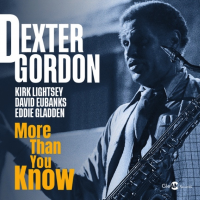
by Alberto Bazzurro
Intitolato come un 33 giri orchestrale del lontano 1975 dello stesso Dexter Gordon, questo doppio album, uscito prima in CD e da poco più di un mese anche in vinile (poco meno di ottanta minuti totali, parlati compresi), documenta il passaggio del grande tenorsassofonista al festival genovese di Villa Imperiale del 1981, in un'edizione che ospitò anche, fra gli altri, Art Pepper, Lee Konitz con Art Farmer e, in chiusura, un piano solo di Borah Bergman. Il gruppo ...
Continue ReadingDexter Gordon: More Than You Know (1981)
by Neil Duggan
More Than You Know is a previously unreleased live recording by jazz legend Dexter Gordon. It is the first in the GleAM Records series dedicated to the giants of jazz. The recording features saxophonist Gordon performing with his early 1980s quartet: Kirk Lightsey on piano, David Eubanks on bass and Eddie Gladden on drums. Dating from July 1981, it was recorded at the Villa Imperiale, Genoa, Italy and has the full backing of Gordon's estate. Having played with ...
Continue ReadingGravity and Resurgence: The Many Dimensions of Dexter Gordon

by Arthur R George
Long Tall Dexter; swinger, bebopper, saxophone balladeer; acting the dissipated genius expatriate who was not unlike himself in the movie Round Midnight; his dressed-up persona “Society Red;" the laconic elder statesman of his later years. Dexter Gordon is all those things, but more than a kaleidoscope of caricatures. Those who trace their lineages through Sonny Rollins or John Coltrane and beyond contain within them the earlier influence of Dexter Gordon. Joshua Redman, among contemporary players, attributes his robust ...
Continue ReadingOur Man in Paris: An American Travelogue

by David Brown
For this week's show, let's travel to Europe with a variety of American artists performing in France, recording for French film soundtracks, and collaborating with French artists. Etes-vous prêt? Co-hosted by Lisa Jo Epstein. Playlist Thelonious Monk “Esistrophy (Theme)" from Live at the It Club-Complete (Columbia) 06:10 Sidney Bechet “Ooh Boogie!" from Sidney Bechet and his New Orleans Feetwarmers (Esquire) 03:00 Les Double Six “Naima" from Les Double Six (RCA Victor) 05:55 Dexter Gordon “Scraple from the Apple" ...
Continue ReadingVarious Artists: The Birth of Bop

by Richard J Salvucci
Someone famously called jazz the sound of surprise, but all too often, what is on offer is the dull hum of routine. Or something like that. This historic reissue is, however, anything but routine. This is not the first time that Teddy Reig's Savoy sides have been reissued (was he also the mysterious Buck Ram listed as producing one track?), but Craft Recordings took a lot of trouble to produce this very fine selection. If a listener were, ...
Continue ReadingDexter Gordon - Sophisticated Giant. La biografia del grande sassofonista

by Angelo Leonardi
Dexter Gordon—Sophisticated Giant Maxine Gordon 294 pagine ISBN: # 9788859257523 EDT 2019 Questa splendida biografia di Dexter Gordon è in circolazione da un po' ma resta attuale come ogni classico: è infatti uno dei migliori (e appassionanti) esempi di letteratura jazzistica. Nessuno, meglio dell'ultima moglie Maxine, poteva delineare la figura artistica e le vicende umane (spesso ignote) del grande sassofonista inserendole nel grande affresco storico e sociale del jazz moderno.
Continue ReadingThe Return of Dexter Gordon (1961 - 1963)
by Russell Perry
After spending most of the 1950s in jail for two different drug busts, Dexter Gordon was paroled in 1960 and preceded to record a legendary series of records for Blue Note Records. Several of these records included rhythm sections led by the light-fingered but short-lived pianist, Sonny Clark. Playlist Host Intro 0:00 Dexter Gordon Quintet. “I Was Doing All Right" from Doin' Allright (Blue Note) 3:40 Dexter Gordon Quintet. “You've Changed" from Doin' Allright (Blue Note) 12:57 Host ...
Continue Reading
Jazz Musician of the Day: Dexter Gordon
Source:
Michael Ricci
All About Jazz is celebrating Dexter Gordon's birthday today!
Dexter Gordon is considered to be the first musician to translate the language of Bebop to the tenor saxophone. Dexter Keith Gordon was born on February 27, 1923 in Los Angeles, California. His father, Dr. Frank Gordon, was one of the first African American doctors in Los Angeles who arrived in 1918 after graduating from Howard Medical School in Washington, D.C. Among his patients were Duke Ellington and Lionel Hampton. Dexter's ...
read more
Dexter Gordon: 'Soul Sister'

Source:
JazzWax by Marc Myers
When Dexter Gordon moved to Europe alone in 1962, he hoped his then wife, Jodi, and his daughters would join him. But once there, he created a new life in Europe and the couple divorced mid-decade, writes Maxine Gordon, the tenor saxophonist's road manager and widow, in her moving and well researched memoir, Sophisticated Giant. Gordon had a lot to forget, but those sad memories had nothing to do with his family and everything to do with California. The state ...
read more
Jazz Musician of the Day: Dexter Gordon
Source:
Michael Ricci
All About Jazz is celebrating Dexter Gordon's birthday today!
Dexter Gordon is considered to be the first musician to translate the language of Bebop to the tenor saxophone. Dexter Keith Gordon was born on February 27, 1923 in Los Angeles, California. His father, Dr. Frank Gordon, was one of the first African American doctors in Los Angeles who arrived in 1918 after graduating from Howard Medical School in Washington, D.C. Among his patients were Duke Ellington and Lionel Hampton. Dexter's ...
read more
Jazz Musician of the Day: Dexter Gordon
Source:
Michael Ricci
All About Jazz is celebrating Dexter Gordon's birthday today!
Dexter Gordon is considered to be the first musician to translate the language of Bebop to the tenor saxophone. Dexter Keith Gordon was born on February 27, 1923 in Los Angeles, California. His father, Dr. Frank Gordon, was one of the first African American doctors in Los Angeles who arrived in 1918 after graduating from Howard Medical School in Washington, D.C. Among his patients were Duke Ellington and Lionel Hampton. Dexter's ...
read more
Maxine Gordon on Dexter Gordon
Source:
JazzWax by Marc Myers
Dexter Gordon was a remarkable tenor saxophonist. A towering, dashing figure with an embracing smile and a wry sense of humor, Gordon was a powerful player whose bebop approach was equally assertive and romantic. [Photo above of Maxine Gordon by Fiona Ross, courtesy of Maxine Gordon] A bebop star in Los Angeles in the late 1940s, Gordon didn't tour or record for much of the 1950s due to incarceration for heroin use. Nevertheless, Gordon made up for lost time in ...
read more
Jazz Musician of the Day: Dexter Gordon
Source:
Michael Ricci
All About Jazz is celebrating Dexter Gordon's birthday today!
Dexter Gordon is considered to be the first musician to translate the language of Bebop to the tenor saxophone. Dexter Keith Gordon was born on February 27, 1923 in Los Angeles, California. His father, Dr. Frank Gordon, was one of the first African American doctors in Los Angeles who arrived in 1918 after graduating from Howard Medical School in Washington, D.C. Among his patients were Duke Ellington and Lionel Hampton. Dexter's ...
read more
Dexter in Denmark, 1962

Source:
JazzWax by Marc Myers
At a New York bar In 1962, Dexter Gordon ran into saxophonist Ronnie Scott, the co-owner of Ronnie Scott's Jazz Club in London. Scott asked Gordon if he wanted to work there. Gorden, as his wife, Maxine, notes in her 2018 book, The Life and Legacy of Dexter Gordon, had never been out of the country except for a brief visit to Mexico just over the border. Gordon surely asked Scott about pay and any other incentives he wanted. Then ...
read more
Jazz Musician of the Day: Dexter Gordon
Source:
Michael Ricci
All About Jazz is celebrating Dexter Gordon's birthday today!
Dexter Gordon is considered to be the first musician to translate the language of Bebop to the tenor saxophone. Dexter Keith Gordon was born on February 27, 1923 in Los Angeles, California. His father, Dr. Frank Gordon, was one of the first African American doctors in Los Angeles who arrived in 1918 after graduating from Howard Medical School in Washington, D.C. Among his patients were Duke Ellington and Lionel Hampton. Dexter\'s ...
read more
Dexter Gordon: Live, '63 + '77

Source:
JazzWax by Marc Myers
In 1962, tenor saxophonist Dexter Gordon moved his base of operations to Copenhagen, Denmark, returning to the U.S. in 1976. Shortly after his move abroad, Gordon was recorded live at the Modern Jazz Club Persepolis in Utrecht, the Netherlands, on January 20, 1963. And shortly after his move back to the States, he was recorded at Espace Cardin, in Paris, on September 25, 1977. Both recordings have just been released and both are superb, capturing Gordon at the start of ...
read more

Matthew Steckler
saxophone
Mike Turk
harmonica
Noah Peterson
saxophone
Dave Wilson
saxophone
Don Braden
saxophone
Niels Lan Doky
piano
Jackie McLean
saxophone, alto
Rufus Reid
bass, acoustic
Paul Vornhagen
saxophone
Grover Washington, Jr.
saxophone
Russ Spiegel
guitar
Ted Hogarth
saxophone, baritone
Dave Mullen
saxophone, tenorMatt Snyder
clarinet
David Jones
saxophone
Aidan Dempsey
saxophone
Eric Siereveld
trumpet
Andrea Claburn
vocals
Ryan Anselmi
saxophone, tenor
Martin Uherek
saxophone, tenor
Ruud de Vries
saxophone, tenor
Gregory Dudzienski
saxophone, tenor
Libor Smoldas
guitar
Dennis Skerrett
saxophone
Lynn Ligammari
saxophone
Dan Wilensky
saxophone
Tim Wolfe, Jr.
bass
Iman Spaargaren
saxophone, tenor
Perry Thoorsell
bass, acoustic
Louise Dodds
vocals
Charlie Jennison
saxophone, alto
Leigh Pilzer
saxophone, baritone
Larry Tamanini
guitar
Milton Arias
bass
Don Hanson
saxophone
Steve Lambert
trumpet
Carl Clements
saxophone
Susie Hansen
violin
Dominik Schürmann
bass, acoustic
Aldo Salvent
saxophone, tenor
Christopher Balk
saxophone, tenor
Nick Rosario
trombone
Mario Duenas
guitar
Borys Janczarski
saxophone
Stephanie Lottermoser
saxophone, tenor
Milo Lombardi
saxophone
Anibal Seminario
producer
Joey "G-Clef" Cavaseno
saxophone, alto
Sarah James
vocals
Paul Silbergleit
guitar
Sweet Lu Olutosin
vocals
Johannes Gammelgaard Lauritsen
saxophone, tenor
Oleksandr Kolosii
saxophone, tenor
The Cafe Society
band / ensemble / orchestra
Sarah Hanahan
saxophone, alto
Michael Moody
vocals
Marshal Herridge
bass
BrandonLee Cierley
saxophone
Angela Verbrugge
vocals
Eugene Shapiro
guitar
Thomas Hamilton
saxophone, tenor
Jamile
vocals
Charles Gordon
trumpet
John Donegan
piano
Alex Clarke
saxophone
The Jazz Bastards
band / ensemble / orchestra
Patricia López
saxophone
Anderson Quevedo Farias
saxophone
CHYKE MARTINS
saxophone
Jens Bunge
harmonica
Jérôme Masco
saxophone
Dave Coules
saxophone
Andres Hayes
saxophone, tenor
Reginald Lewis
saxophone
Gabriel Judet-Weinshel
composer / conductor
Willie D
saxophone, tenor
Larry Gelberg
saxophone
Alessandro Di Liberto
piano
Brian Sacco
saxophone
Angelina Kolobukhova
vocals
Rohan Buch
saxophone
Rob Ames
saxophone, soprano
Steve Britt
saxophone
Andrew Robertson
saxophone
April Varner
vocals
Zock Organ Trio
band / ensemble / orchestra
Shannon Chief Cherry
vocals
Jeremy Terry
saxophone
Julie O'Hara
vocals
Tyler Levy
saxophone, tenor
Chuck Currie
woodwindsSea Greene Miller
saxophone
Egor Tokarev
saxophone, tenor
Gus Leighton
saxophone
Anirudh Chakravarthy
saxophone, tenor
Karan Khosla
guitar, electric
Joe Robson
guitar
Ryan Huston
saxophone, tenor
Lucious Crawford
saxophone
Jazzmosax
saxophone
Alina Zalozna
vocals
Jeremy Gold
saxophone
Brandon W. Mejia
saxophone
Adam Chmaj
saxophone, tenor
Davide Sgarra
clarinet
Valerio Marino
vocalsJulian Banks
saxophone
Barbara Hubers Drake
saxophone
Thomas Franke Jazz Trio
saxophone
Thomas Franke
saxophonePhotos
Music


Videos
Similar

Thelonious Monk
piano
John Coltrane
saxophone
Dizzy Gillespie
trumpet
Sonny Rollins
saxophone
Freddie Hubbard
trumpet
Wayne Shorter
saxophone
Cannonball Adderley
saxophone
Sonny Stitt
saxophone
Joe Henderson
saxophone
Benny Golson
saxophone, tenor
Grover Washington, Jr.
saxophone
Johnny Griffin
saxophone, tenor
Hank Mobley
saxophone, tenor
Eddie "Lockjaw" Davis
saxophone, tenor
Roy Haynes
drums
Gene Ammons
saxophone, tenor
Wardell Gray
saxophone, tenor
Booker Ervin
saxophone, tenor
Dexter Gordon
Instrument: Saxophone, tenor
Born: February 27, 1923
Died: April 25, 1990