Home » Jazz Musicians » John Beasley
John Beasley
Pianist • Composer • Arranger • Producer • Music Director
Two-time GRAMMY® Award winner and 14-time GRAMMY nominee (with two Latin GRAMMY nominations and an Emmy nomination), John Beasley is one of contemporary music’s most versatile and sought-after pianists, composers, and arrangers.
Launching his professional career in his early 20s with jazz legends Miles Davis and Freddie Hubbard, Beasley quickly established himself as a dynamic force at the keyboard. Over the decades, he has collaborated with a wide range of artists, including Dianne Reeves, Sergio Mendes, John Patitucci, Chaka Khan, Christian McBride, and Carly Simon.
As a music director, Beasley has helmed international tours for Steely Dan, A. R. Rahman (Slumdog Millionaire), and Queen Latifah, and served as co–music director/arranger for Chucho Valdés' La Creación tour.
Recording Artist
Beasley’s discography spans more than 20 albums, earning him two GRAMMY Awards and 14 nominations across jazz categories. His acclaimed big band project, MONK'estra, reimagines the music of Thelonious Monk and garnered six consecutive GRAMMY nominations, including a win.
In 2024, Beasley released three albums, earning two GRAMMY nominations:
Returning to Forever with the Frankfurt Radio Big Band (Best Large Jazz Ensemble)
El Trio: Live in Italy (Best Latin Jazz Album)
Butterfly Effect, a piano–saxophone collaboration with Magnus Lindgren
His ambitious Bird Lives project — a reimagining of Charlie Parker’s music with the SWR Big Band and string ensemble — earned a 2023 GRAMMY Award for his arrangement of “Scrapple from the Apple,” along with three additional nominations.
Beasley also ventured into Fado-jazz collaborations with Portuguese vocalist Maria Mendes, arranging and conducting the Metropole Orkest on Close to Me and Saudade: Colours of Love. Both albums received Latin GRAMMY and GRAMMY nominations, with Close to Me winning the Dutch Edison Award for Best Jazz Vocal Album (2021).
In 2026, Beasley releases two major projects:
Invisible Piano with the SWR Big Band, a commision of 5 originals and 2 familiar songs
Unlimited Miles, a powerhouse sextet recording featuring Sean Jones, Kurt Rosenwinkel, Mark Turner, Ben Williams, and Terreon Gully — reimagining four decades of the music of Miles Davis.
Music Director – International Jazz Day
When UNESCO declared April 30 as International Jazz Day in 2011, Beasley was appointed Music Director for the annual global gala concerts presented by the Herbie Hancock Institute of Jazz. Since 2012, he has led all-star concerts in cities including Paris, Istanbul, Osaka, Havana, St Petersburg Melbourne, New Orleans, New York, Los Angeles, and Washington, D.C., and Tangiers, Abu Dhabi, with broadcasts on PBS.
The 2016 “Jazz at the White House” gala hosted by President Barack Obama and First Lady Michelle Obama earned Beasley an Emmy nomination for Outstanding Musical Direction. The 2026 International Jazz Day celebration will be held in Chicago.
Film & Television
Read moreTags
Robyn Spangler: Robyn Spangler
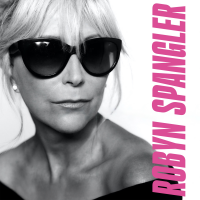
by C. Michael Bailey
Award-winning vocal stylist, songwriter, and actress Robyn Spangler is a fourth-generation performer whose deep musical roots trace back to an Indiana childhood of circus musicians, military band players, and a mother who sang in big bands. After taking piano lessons from former Steve Miller Band keyboardist Jim Peterman and fronting professional cover bands at age 17, Spangler moved to Los Angeles to study theater and music. She quickly built a diverse bi-coastal career working both behind the scenes and in ...
Continue ReadingJohn Beasley Sextet at Presidio Theatre

by Steven Roby
John Beasley Sextet Presidio Theatre Miles Davis at 100 San Francisco, CA May 14, 2026 Spanning a 90-minute set from Birth of the Cool to Amandla, John Beasley's sextet anchors the centennial with Miles's most influential band--the 1965--68 quintet featuring Wayne Shorter. Last September at San Francisco's Presidio Theatre, percussionist and former Miles Davis collaborator Mino Cinelu marked the trumpeter's centennial by lighting 100 candles across the stage and performing four Davis ...
Continue ReadingFour New Jazz Releases from John Beasley, Mike Clement, Catherine Russell and Joe Syrian
by George Graham
George Graham presents four new jazz releases from John Beasley and the SWR Big Band, Guitarist Mike Clement, vocalist Catherine Russell and drummer Joe Syrian and the Motor City Octet. Playlist John Beasley and the SWR Big Band “Invisible Piano" from Invisible Piano (o-tone) 7:26 John Beasley and the SWR Big Band “Galaha" from Invisible Piano (o-tone) 5:17 Mike Clement “Access Granted" from Polka Dots and Ray Bans (Cellar) 4:14 Mike Clement “The Tempo" from Polka Dots and ...
Continue ReadingCatherine Russell, Nat Reeves, Bobby Broom & John Beasley
by Joe Dimino
We kick off Episode 957 of Neon Jazz with a true living legend--John Beasley--a masterful bridge between jazz's rich past and its ever-evolving present. Teaming up with the powerhouse SWR Big Band, he sets the tone with his stunning 2026 release Invisible Piano. From there, the journey rolls through a lineup of modern greats and enduring voices, featuring fresh sounds from Bobby Broom, Catherine Russell, Nat Reeves, and the timeless spirit of Mal Waldron. Along the way, we spotlight a ...
Continue ReadingMark Winkler: Hold On
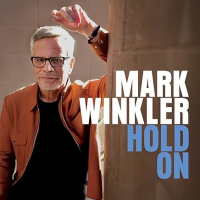
by Pierre Giroux
Throughout his extensive career, Mark Winkler has been a steadfast presence on the Los Angeles jazz scene, earning a reputation as one of the most versatile and captivating vocalists in contemporary jazz. With Hold On, his 22nd album, Winkler continues to demonstrate that artistic growth and creative curiosity remain central to his work. While many artists with such a prolific discography might be tempted to rest on their laurels, Winkler continues to push forward, creating new material and thoughtfully reimagining ...
Continue ReadingJohn Beasley: A Man of Many Hats
by David Bixler
2024 has been a productive year for LA-based pianist and composer John Beasley. He released three new recordings, two of which are up for GRAMMY awards. Nominated in the category of “Best Latin Jazz Album" is El Trio on Challenge Records which features bassist Jose Gola and drummer Horacio “El Negro" Hernandez. The second nomination in the category of “Best Large Ensemble Album" is for the recording Returning to Forever, a reimagining of Chick Corea's Return to Forever with the ...
Continue ReadingJohn Beasley, Jose Gola & Horacio "El Negro" Hernandez: El Trio Live in Italy

by Glenn Astarita
El Trio Live in Italy features the impressive line-up of Grammy Award-winner John Beasley on keyboards and synthesizers, José Gola on electric bass, and Horacio “El Negro" Hernandez on drums. Described as a “dream threesome" of renowned musicians, this album is a product of their summer tour of Italy in 2022. The album's essence is a journey of three friends allowing the music to guide them. All three artists have a rich history, having toured with the maestro of Afro-Cuban ...
Continue ReadingParamax Films Announces Global Premiere Of Concert Film: John Beasley's 'Unlimited Miles: Live From Blue Note Tokyo,' May 26 Miles Davis's Centennial Birthday
Source:
AMT Public Relations
Landmark Concert Film Premieres May 26, 2026‚ Miles Davis's Centennial Birthday Available Worldwide on Mezzo TV and Medici.tv Streaming Platform Paramax Films today announced the global release of John Beasley's Unlimited Miles: Live from Blue Note Tokyo, a concert film capturing an electrifying performance at the iconic Blue Note Tokyo. The film premieres on May 26, 2026, the 100th birthday of Miles Davis. How to watch Unlimited Miles: Live From Blue Note Tokyo: Subscribe to Mezzo TV (airing in 70 ...
read more
Now Available: 'Invisible Piano' Featuring Grammy Winning Artists John Beasley And SWR Big Band (O-Tone Music)
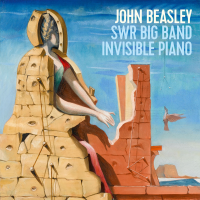
Source:
AMT Public Relations
Invisible Piano (Release Date: 05.08.26) is a bold, behind-the-scenes journey into the creative mind of GRAMMY-winning pianist, composer, and arranger John Beasley. Commissioned by the SWR Big Band, Beasley was given a rare invitation: begin at the piano, improvise without boundaries, and transform those raw sparks into sweeping, orchestrated works. The first musical sketches emerged in an unexpected place: the Staatsgalerie Stuttgart Museum. Moved by the visual art surrounding him, Beasley began quietly singing melodic ideas into his iPhone—capturing inspiration ...
read more
'El Trio - Live In Italy' with John Beasley, José Armando Gola, Horacio El Negro Hernández available on January 19, 2024 on Challenge Records
Source:
Vivo Musique Internationale
El Trio Live in Italy featuring John Beasley on piano, José Armando Gola on double bass and Horacio El Negro Hernández on drums. “El Trio touring in Italy in the summer of 2022 is about ‘eat, music, love’.” Three friends on stage letting the music play them. “To our godfather Chucho Valdés who has inspired each of us, given us a helping hand along the way, and put us up on stage alongside him. We are eternally grateful.” Street Date: ...
read more
SiriusXM's New, Original jazz radio show on Jazz Arranging "Flipped" with Host John Beasley
Source:
All About Jazz
To mark Jazz Appreciation Month, this April 2019, SiriusXM is launching a 4-part series on ‘arranging’. “Flipped” will explore what happens musically when jazz musicians rearrange or ‘flip’ songs from the Great American Songbook and make it their own. On SiriusXM Ch.67 “Flipped” Fridays, April 5, 12, 19, 26 @ 5-7:00pm ET / 2-4:00pm PT Rebroadcasts: Saturdays, April 6, 13, 20, 27 @ 6-8:00pm ET / 3-5:00 pm PT About John Beasley In the course of three decades, ...
read more
UNESCO Director-General Irina Bokova And UNESCO Goodwill Ambassador Herbie Hancock Announce Fourth Annual International Jazz Day
Source:
All About Jazz
PERFORMANCES & OUTREACH PROGRAMS TO TAKE PLACE WORLDWIDE ON APRIL 30, RECOGNIZING JAZZ MUSIC AS A UNIVERSAL LANGUAGE OF FREEDOM International Jazz Day All-Star Global Concert in Global Host City Paris, France will be a highlight of UNESCO’s 70th Anniversary Celebration Paris and Washington, D.C. – United Nations Educational, Scientific and Cultural Organization (UNESCO) Director-General Irina Bokova and UNESCO Goodwill Ambassador Herbie Hancock are pleased to announce the fourth annual International Jazz Day, which will be celebrated around the world ...
read more
EastWest JazzScene Concert: Carl Allen, John Beasley, Eric Revis, Ralph Moore and Marquis Hill at Blue Whale
Source:
John Beasley
Sunday, February 22, 9:00pm and 10:30pm sets. $20. New York drummer Carl Allen brings his scene to Los Angeles to join pianist John Beasley to lead a quintent for some east-west action. Joining this prospect are east/west coasters bassist Eric Revis, saxophonist Ralph Moore and trumpeter Marquis Hill. Carl Allen’s profound and propulsive percolations provided soulful and syncopated playing with Michael Brecker, Randy Brecker, Benny Golson, Jennifer Holliday, J.J. Johnson, Rickie Lee Jones, Sammy Davis Jr., Branford Marsalis, Kenny Garrett, ...
read more
3 Generations Of Freddie Hubbard Alumni at Blue Whale on October 11-12
Source:
John Beasley
A spontaneous Hub reunion of Freddie Hubbard’s band members. From the 70s, Henry Franklin on bass. Carrying the rhythm section in the 80s and 90s, Carl Allen on drums with John Beasley on keyboards, and standing out front on sax was Bob Sheppard. Joining the band in the 90s was Ralph Moore on sax. On the reunion stage, Ambrose Akinmusire join this alumni band. 2 nights, 4 sets in the spirit of Freddie! “I was changing the style of the ...
read more
John Beasley Sept-Oct Gig Calendar
Source:
John Beasley
WHAT'S ON with JOHN BEASLEY—September-October 2011 SUPPORT LIVE MUSIC! September 12 (Monday) Washington, DC Thelonious Monk Institute of Jazz 25th Anniversary Gala Concert @ Kennedy Center John Beasley—Music Director All-Star Gala Concert will honor Aretha Franklin with the Founder's Award. Performers include: Herbie Hancock, Ellis Marsalis, Jason Moran, Danilo Perez, Marcus Roberts, Jacky Terrasson, Ron Carter, Christian McBride, John Patitucci, Carl Allen, Terri Lyne Carrington, TS Monk, Jimmy Heath, Joe Lovano, Wayne Shorter, Ambrose ...
read more
Concert: Jan 8 - John Beasley Positootly! Jazz Circle @ Blue Whale
Source:
Michael Ricci
John Beasley Positootly! Jazz Circle @ The Blue Whale GRAMMY NOMINATION: BEST JAZZ INSTRUMENTAL ALBUM Positootly! (Resonance Records) John is truly an amazing pianist, imaginative composer, creative improviser and arranger. And with Positootly he created an album that people will look back as one of the first Jazz classic albums of the 21th century. WHEN: Saturday, January 8, 2011 BAND: Bennie Maupin (sax), Oscar Seaton (drums), Kevin Brandon (bass), John Beasley MUSIC: John Beasley Poistootly! Jazz Circle will feature music ...
read more
John Beasley Jazz Circle Concert: Live Webcast
Source:
Michael Ricci
On Thursday, Jan 28, 8pm to 10pm you can watch the John Beasley Jazz Circle Concert via the new LIVE web-TV Jazz Concert series at networksconcerts.com. Available for fans and music lovers from all over the world, this is a unique performance and event! Featuring ORIGINAL music spanning John Beasley's solo recording career from his critically acclaimed first release, Cauldron, to his latest release, Positootly, which has been on the Jazz Charts for five consecutive months since its release in ...
read more
John Beasley is one of the best pianists and improvisers on the jazz scene today. Beasley is a master musician, with total command of the jazz language, and his playing is always intense in both emotion and technique. —All About Jazz (Wilbert Sostre)
"The pianist and composer John Beasley has one of the most formidable tasks of anyone associated with today's International Jazz Day, the celebration produced by UNESCO and the Thelonious Monk Institute of Jazz. He's music director of the centerpiece concert to be live-streamed from Istanbul ...That means Beasley put together the lineups from a star-studded international cast, with a set list meant to charm the world
Primary Instrument
Piano
Location
Los Angeles
Willing to teach
Advanced only
Credentials/Background
Beasley has led music/jazz/piano clinics and workshops worldwide over the past 25 years across the U.S., Europe, Asia, and Latin America, including The Grammy Foundation's camps, Frost School of Music, U of Miami Manhattan School of Music Julliard Rutgers University The Music School (Utah), ASCAP (I Create Music) Politrius Music School (Guatemala), CoDarts, Rotterdam Conservatory Maastricht Conservatory Amsterdam Conservatory... to name a few Private lessons - rates are negotiable Hours - when not on tour
Clinic/Workshop Information

Rovanio Rovnny Assis
vocalsPhotos
Music

Fire And Rain
From: Invisible PianoBy John Beasley

Hermeto's Fado for Maria
From: Saudade, Colours of LoveBy John Beasley

Small Hotel
From: In2uitionBy John Beasley

So Tired
From: Positootly!By John Beasley

4AM
From: Letter To HerbieBy John Beasley
Videos
Similar

Cedar Walton
piano
McCoy Tyner
piano
Jaleel Shaw
saxophone
Kenny Barron
piano
Gordon Goodwin
composer / conductor
Gonzalo Rubalcaba
piano
Richie Beirach
piano
Cyrus Chestnut
piano
Alan Pasqua
piano
Taylor Eigsti
piano
Marcin Wasilewski
piano
JoAnne Brackeen
piano
Makoto Ozone
piano
Roger Kellaway
piano
Rave Tesar
piano
Knoxville Jazz Orchestra
band / ensemble / orchestra
Eugene Maslov
piano
Elio Villafranca
piano
Dan Cray
piano
Paul McCandless
woodwinds
John Beasley
Location: Los Angeles
Instrument: Piano
Born: October 10
Management: Unlimited Myles
Publicist: DL Media