Orbit | Updated: October 27, 2025
Born: February 18, 1960
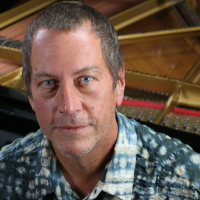
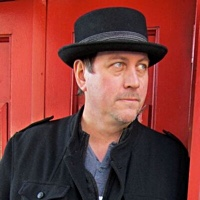
Pianist, composer and improviser Russ Lossing, based in New York City for over 35 years, is at the forefront of creative jazz performing and recording with Paul Motian, Mark Helias, Billy Hart, Dave Liebman, Samuel Blaser, Michael Formanek, Eric McPherson, Tim Berne, Billy Mintz, Cameron Brown, Gerry Hemingway, Ralph Alessi, Mat Maneri, Drew Gress, Oliver Lake, Kirk Knuffke, Gerald Cleaver, Gordon Grdina and many others. Lossing played with master drummer Paul Motian over a period of 12 years performing and recording including week-long stints at the Village Vanguard as a member of Motian's Quintet. He has toured world-wide playing major jazz clubs and festivals both as leader and side-man.
A master of the moment, pianist, composer and improviser Russ Lossing electrifies audiences worldwide. A deeply intellectual and emotional improviser, he casts a spell over the room and gives audiences an unforgettable musical experience. Equally at home playing “time and changes' as well as freely improvised music, Lossing's imagination knows no bounds; drawing from a seemingly bottomless well of ideas and expression. All About Jazz hails him as:"…an iconoclast in the best sense of the word, a true innovator."
Russ Lossing has 23 albums as leader on European and American record labels hatOLOGY, Ezz-Thetics, Sunnyside, Cleanfeed, Fresh Sound, Double Time, Steeplechase and OmniTone labels. and has composed over 500 pieces of music. In 2015, he founded his record label Aqua Piazza Records. Lossing was named “Rising Star” in the Down Beat Magazine Critics Poll from 2015-2022.
Tags
All About Jazz Articles
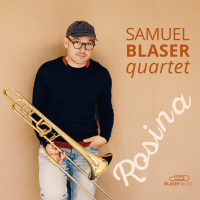
Samuel Blaser Quartet: Rosina
by Glenn Astarita
Samuel Blaser has established himself as one of Europe's most compelling trombonists, a Swiss musician whose artistic identity has been shaped as much by formal study as by the Italian folk traditions that surrounded him in childhood. In recent years, he has spoken openly about reconnecting with those roots, particularly the songs his grandmother sang, simple melodies carrying equal measures of tenderness and resilience. Rosina, named in her honor, reflects that personal journey while filtering those influences through a contemporary ...
Continue ReadingRuss Lossing: Proximity Alert
by Mark Corroto
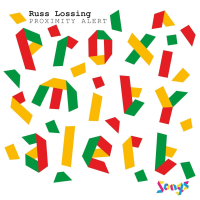
Is Russ Lossing's Proximity Alert more like football or baseball? The analogy works like this: Baseball is fathers and sons tossing a ball in the backyard, measured and casual; Football is a scrimmage, brothers running, grappling and tackling in the same yard. Throughout his career, Lossing has captained several exceptional trios. With bassist Ed Schuller, he had the rare honor of performing and recording alongside the legendary drummer Paul Motian. In the years that followed, he formed groups ...
Continue ReadingRuss Lossing: Alternative Side Parking Music

by Maurizio Zerbo
Oltre a riflettere la musica del proprio tempo, i progetti dei jazzisti sono direttamente collegati alla quotidianità delle loro esistenze. Paradigmatica è in tal senso la scrittura per questo CD, pensata durante le ore impiegate da Russ Lossing per parcheggiare la propria automobile nei giorni in cui la sosta è consentita in un solo lato della strada. E non è un caso se lo spigoloso brano d'apertura, quasi monkiano, evoca con il suo andamento asimmetrico la strada percorsa ...
Continue ReadingRuss Lossing, Artemis, Rudy Royston and More

by Jerome Wilson
This show features newer and older jazz from a great variety of players, such as Russ Lossing, Rudy Royston, the group Artemis, and the Frankfurt Radio Big Band which is heard in two contexts, with Julian Arguelles and with Jim McNeely. Playlist Henry Threadgill Sextett “I Can't Wait Till I Get Home" from The Complete Novus & Columbia Recordings of Henry Threadgill & Air (Mosaic) 00:00 Anne Mette Iversen Quartet +1 “Triangular Waves" from Racing A Butterfly (Brooklyn ...
Continue ReadingRuss Lossing: Alternate Side Parking Music
by Dan McClenaghan
Pianist Russ Lossing is not one to let imposed downtime go to waste. The imposition comes from New York City's regulations concerning alternate side parking which requires, only one day per week, that cars park on one side of the street, for street cleaning purposes. The evening car-moving causes jostling. Sometimes open spots are not readily available. Parallel parking is often required, as is (temporary, we can assume) double parking. Time in the driver's seat results. Lossing put this time ...
Continue ReadingRuss Lossing, Loren Stillman: Canto.

by Hrayr Attarian
Although pianist Russ Lossing and saxophonist Loren Stillman have collaborated on a handful of superlative releases in the past, the stimulating Canto is their first duo recording. The introspective and intriguing release consists entirely of originals which are at times mesmerizingly dark and, at others, warmly vibrant. The music is sublimely balanced between the emotive and the cerebral. Lossing opens Stillman's “Her Love Was Like Kryptonite ” with resonant plucking of the strings followed by sparse and hypnotic ...
Continue ReadingLena Bloch & Feathery: Rose Of Lifta

by Dan McClenaghan
Saxophonist Lena Bloch knows something about the pain of separation from one's homeland. Born in Russia, she emigrated to Israel in 1990, then to Europe and, finally, in 2008, to the United States, setting up shop in New York City's fertile jazz ground. In 2014, Feathery, (Thirteen Note Records), the album and her quartet of that name, came into being. The group's second album, Heart Knows (Fresh Sound New Talent, 2007), cemented her distinctive horn-and-rhythm-section approach, with bassist ...
Continue ReadingLoren Stillman/Russ Lossing Duo Live at the Rubin Museum in New York City on June 18th, 2010.

Source:
Two for the Show Media
Loren Stillman/Russ Lossing DuoHarlem in the Himalayas
Friday June 18, 2010 @ 7:00 PM $18.00 in advance / $20.00 day of Member Price: $16.20
Rubin Museum of Art 150 West 17th Street, New York, NY 10011 212.620.5000
The music of Brooklyn-based saxophonist and composer Loren Stillman has found acclaimed reviews in such publications as the New York Times, Downbeat Magazine, Jazziz, and Jazz Times, marking him as an innovative voice in modern jazz.
With his training stemming from Lee Konitz ...
read more
Russ Lossing - John Hebert : Line up on Hatology 651
Source:
All About Jazz
Russ Lossing - John Hebert : Line Up on Hatology 651 Russ Lossing -piano & John Hebert -double bass Total Time DDD 55:43
It's a rich and varied tradition in which Lossing and Hebert locate themselves, and their duets are both an incidental celebration of the tradition and a commemoration of their working partnership. John Hebert remarks of these duos, “This was a project that we put together as a document of years of playing together ...
read more
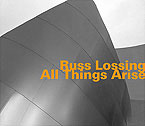
Russ Lossing : All Things Arise on hatOLOGY 629

Source:
All About Jazz
Russ Lossing : piano solo : All Things Arise
performing “Alabama Song" by Kurt Weil, “Azure" by Duke Ellington, “Kathelin Gray" by Ornette Coleman, “Pent-Up House" by Sonny Rollins and his own compositions.
For Lossing, improvisation is clearly a special act, a study in transparence and transformation, a creative exchange amongthe elements. One hears fresh relations of time and space. His acute sense of time connects inevitably to its absence. Space is heard in his sense of density, the room ...
read more
"...an iconoclast in the best sense of the word, a true innovator." - All About Jazz
- “Lossing shines as brightly as any of the jazz pioneers who preceded him in mapping out their own musical journeys.” - Downbeat Magazine
ICON Magazine says, "Stylistically, Lossing is, simply, a 'space man' – like Thelonious Monk and Paul Bley, letting the spaces between notes do the talking."[ All About Jazz Says; "Listening to jazz music, we often hear the influence of the masters filtered through the hearts and minds of new artists
Artists who share similar musical characteristics to Russ Lossing.

Anthony Braxton
woodwinds
Rudresh Mahanthappa
saxophone, alto
William Parker
bass
Thomas Chapin
saxophone
Fred Anderson
saxophone
Satoko Fujii
piano
Herb Robertson
trumpet
Marc Copland
piano
David S. Ware
saxophone, tenor
Bobby Previte
drums
Eri Yamamoto
piano
Marilyn Crispell
piano
Marc Ducret
guitar
Mark Feldman
violin
Elliott Sharp
guitar, electric
Borah Bergman
piano
Ned Rothenberg
saxophone
Mike LeDonne
piano
Ivo Perelman
saxophone, tenor