Home » Jazz Musicians » Nat Pierce
Nat Pierce
Nat Pierce had a long, distinguished, somewhat low-profile career as a champion of latter-day big-band swing, serving as the co-leader of Los Angeles' crack Frank Capp-Nat Pierce Juggernaut and an arranger for several well-known big bands and solo artists. His scores created an irresistible force when allied with a swinging, pushing drummer like Capp, often hewing tightly to the loping drive and tight ensemble of the post-1950s Count Basie orchestra. Likewise, Pierce's spare, tasty piano style not only has been compared to that of Basie, he also subbed very capably — indeed, almost indistinguishably — for the great man off and on from the late 1950s until Basie's death in 1984. Pierce studied music at the New England Conservatory of Music back home in Massachusetts, worked with local Boston bands, and ran his own part-time big band featuring Charlie Mariano from 1949 to 1951. Having already started shopping arrangements to Basie and Woody Herman, he joined Herman's Third Herd in 1951 as pianist/arranger, remaining until 1955. Afterwards, Pierce settled in New York City, where he became a busy freelance arranger, recording pianist, and occasional leader of bands, working with Ruby Braff, Lester Young, Ella Fitzgerald, Quincy Jones, Coleman Hawkins, Pee Wee Russell and Lester Young. Two of his most famous projects took place in 1957 — writing the arrangements for The Sound of Jazz television show, and playing piano with the Basie rhythm section on the first ear-opening Lambert, Hendricks and Ross album, Sing a Song of Basie. In 1961, Pierce rejoined Herman and played a major role in lifting the band into one of its peak periods, serving as chief arranger, road manager and talent scout until 1966. Afterwards, he resumed his freelancing ways, arranging for Anita O'Day, Carmen McRae, Earl Hines and others, working with the bands of Louie Bellson and Bill Berry, reuniting with Herman, and substituting for Basie and Stan Kenton on occasion. In 1975, four years after a move to Los Angeles, Pierce joined forces with Capp to form the Capp-Pierce Juggernaut, which drew its personnel from the best Los Angeles session players out to decompress from their studio gigs. The band recorded a number of swinging albums for the Concord Jazz label, sometimes with guest vocalists like Joe Williams and Ernestine Anderson. Pierce continued to co-lead the Juggernaut off and on until his death, while also making a brief appearance in the 1977 film New York, New York, touring Europe in 1980 and 1984 as a member of the Countsmen, and recording frequently for Concord as a sideman for Scott Hamilton, Jake Hanna and others.
Read moreTags
Paul Quinichette: Like Basie

by C. Andrew Hovan
Like any business concerned with making a profit, the record industry has often resorted to questionable concepts, tributes, or other hooks to lure more costumers to their product. Currently we find ourselves in an era where the quality of original music is arguably on the decline, thus it has become even more prevalent to use nostalgia as a selling point. While ghost bands and one-off tributes may be a way to bring a new audience to the music of some ...
Continue ReadingBasie All Stars: Live At Fabrik Vol. 1

by Chris May
Such are the glories of his band's recorded legacy from the 1930s through the 1950s, that the mere mention of Count Basie's name will trigger a Pavlovian response from his fan base. Like no other, the Count Basie Orchestra epitomised big-band swing at its most sublime; reefer fuelled, riff based, loose and louche Kansas City jazz that is irresistible even in 2023, a life-affirming antidote to the barbarity of DL-only albums, generative music and social media. Seasoned ...
Continue ReadingPaul Quinichette & His Basie-ites: Like Basie
by Nic Jones
Like Basie has already seen the light of day in the CD era as an OJC release, but given its qualities, its reappearance here is welcome anyway. Paul Quinichette's career was perhaps more dogged than aided by the lazy “Vice-Pres" tag that was placed upon him because of his stylistic allegiance to Lester Young. As ever the details of the matter were somewhat different. His work was in fact rhythmically far less oblique, whilst the timbre of his playing was ...
Continue ReadingNat Pierce, Dick Collins, Ralph Burns and the Herdsmen: Play Paris

by Jack Bowers
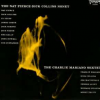
In early 1954, while Woody Herman’s Third Herd was touring Europe, a number of Woody’s sidemen took the opportunity to pick up some spare change by collaborating on a couple of sessions in Paris for French record executive Charles Delaunay. The results of the Paris dates are documented on tracks 1–8 of this reissue on Fantasy; tracks 9–16 were recorded in January ’54 in San Francisco. The core group of pianists Ralph Burns (1–8) and Nat Pierce (9–16), trumpeter Dick ...
Continue Reading_______________The Birth of Juggernaut_____________________ Capp then went back to the owner of King Arthur’s. “I said, ‘Neal is throwing the band away.’ So he said, ‘Well, I need a band for that night. Have you got any suggestions?’," he continued. "And I said, ‘Yeah, it just so happens I’ve got a lot of Neal Hefti arrangements and Nat Pierce has got a lot of Count Basie arrangements. We’ll put a band together for one night and do a concert for you.’ And that was the beginning of the Juggernaut. We just called it the Capp-Pierce Orchestra and after we made our first album, Concord Records tagged us with the name ‘Juggernaut.’ Because Leonard Feather, the critic and writer, reviewed our band because we had continued out there at King Arthur’s and his first review said something like ‘a Juggernaut on Basie Street.’ And so Carl Jefferson from Concord liked that term so he christened us the ‘Juggernaut’ and it’s been our name ever since
Photos
Music

Videos
Similar

Duke Ellington
piano
Count Basie
piano
Johnny Hodges
saxophone, alto
Buddy Rich
drums
Charlie Christian
guitar, electric
Stan Kenton
piano
John Lewis
piano
Eddie Higgins
piano
Gil Evans
composer / conductor
Woody Herman
band / ensemble / orchestra
Phil Woods
saxophone, alto
Bob Mintzer
saxophone
George Russell
composer / conductor
Lionel Hampton
vibraphone
Bob Brookmeyer
trombone
Gerald Wilson
composer / conductor
Bill Holman
composer / conductor
Charles Tolliver
trumpet
Terry Gibbs
vibraphone
Shorty Rogers
trumpet
Nat Pierce
Instrument: Piano
Born: July 16, 1925
Died: June 10, 1992