
Building a Jazz Library
There's more to jazz than Kenny G and Wynton Marsalis. That's why we created Building A Jazz Library. With this resource, you can home in on the players and styles essential to the past and future of jazz. Each section in this series features a brief introduction which provides some background and biographical information to shed light on each particular artist or style.
Then we list the discs. You'll find landmark material here, true high-water marks worthy of respect and attention. We recruited a special enthusiast to assemble each section in this series. These people have spent a lot of time with the subject (and probably bought way too many records to back it up). We assure you that the nuggets listed here are carefully considered and on-target. If you're new to Jazz -- or new to an artist or style -- treat Building A Jazz Library as a primer of sorts. It will provide you with enough information to step confidently into the store (or the library) and find something tasty. Or if you're a serious collector, you might just find that a few of these recommendations may fill some gaping holes on your shelf. Building A Jazz Library throws its doors wide open to all different kinds of Jazz fans and interests. Certain sounds may mesh with your particular tastes, and this series aims to bring you and the music together in perfect harmony.
So dig in, and enjoy!
Related: Essential Buying Tips for Building a Jazz Collection on a Budget.
Ronnie Cuber: Baritone Boss

by Mark McKergow
Ronnie Cuber (1941-2022) made his mark on the jazz world as a versatile and muscular baritone saxophonist. Born in New York on Christmas Day 1941, he started on tenor saxophone but switched to baritone at 17, attracted by the vacant chair in Marshall Brown's Newport Jazz Youth Band (which also featured lifelong colleagues Eddie Gomez and Michael Abene). He grew from sideman to leader to icon over half a century of hard-blowing hard work. Cuber always gave full value ...
Continue Reading...The Top 25 Songs Featuring Clarinet

by Dean Nardi
As Ian Dury might have sung had he played the clarinet, “Hit me with your licorice stick." (That is “rhythm stick" for those not fluent in punk rock.) From the intricacies of classical music to the smooth swing of jazz to Klezmer--the folk music of the Eastern European Jewish population--the instrument resonates throughout a good portion of the civilized world. From slow and melancholy to gliding to blasting, to fingers flying and holes and valves opening and closing, this instrument ...
Continue Reading...Henry Mancini: The Architect of Sound
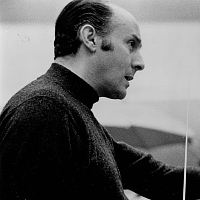
by Nazareno Bicocchi
Henry Mancini was not merely Hollywood's most celebrated composer; he was the vital bridge between the Golden Age of Big Bands and cinematic modernism. His genius lay in his ability to be a “melodic tailor," capable of dressing every scene with an unprecedented sonic palette. Born to Abruzzese immigrants--his father, Quinto, played the flute in a local steel mill band--Mancini carried within him a Mediterranean lyricism that he masterfully fused with the precision of American jazz. This selection for “Building ...
Continue Reading...Mal Waldron: His Journey Across 12 Albums
by Carl Medsker
Mal Waldron's life story is compelling, and to mark his 2025 centenary, this article aims to introduce his work to those less familiar with it by tracing his journey across 12 distinctive recordings. Max Roach once singled him out, along with Thelonious Monk, Herbie Nichols, Hasaan Ibn Ali and Randy Weston, as uniquely original composer-pianists. Matthew Shipp later expanded this pantheon1, adding Cecil Taylor, Andrew Hill, Sun Ra, Horace Tapscott and Ran Blake for forging personal languages and ...
Continue Reading...A Jazz Reading List

by Karl Ackermann
From 2015 through 2020, a personal research project included my reading dozens of jazz books and related media. They included mainstays such as the massive reference The Penguin Guide to Jazz Recordings (Penguin Books, 2006), Ben Ratliff's excellent interview collection The Jazz Ear: Conversations Over Music (Times Books, 2008), the off-shore perspectives of Circular Breathing: The Cultural Politics of Jazz in Britain (Duke University Press, 2005) and Blue Nippon: Authenticating Jazz in Japan (Duke University Press, 2001) and the underrecognized ...
Continue Reading...Jazz Dogs: Ten Essential Dog-Eared Tunes

by Ian Patterson
Everybody's best friend. Okay, so not everyone loves dogs. But find yourself buried in an avalanche and it will be a dog that sniffs you out. The last person found alive after the World Trade Center collapsed on 9/11 was sniffed out by a rescue dog. Guide dogs helped lead their blind owners to safety from the Twin Towers following the terrorist attack. How many blind or partially sighted people around the world could manage without their trusty guide dog? ...
Continue Reading...Ornette Coleman's and Horace Silver's "Lonely Woman" — A Disambiguation
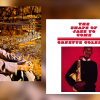
by Artur Moral
Reality is filled with confusion and misunderstandings; some are suggestive or creative, while others are disappointing or, worse, malicious. The jazz world is no stranger to the first type: specific compositions are often confused or misidentified as if they were the same. Usually, this happens because of similar melodies or titles that are sometimes identical. This last case applies to the two themes discussed here, which are homonymous but musically quite different. The first, desolate and raw, is by Ornette ...
Continue Reading...Brian Wilson Jazzed: Ten Essential Wilson Covers

by Ian Patterson
Brian Wilson is widely hailed as one of the most significant songwriters of the 20th century--the master craftsman behind The Beach Boys' music. Inspired by rock 'n' roll, doo-wop, George Gershwin, vocal quartet The Four Freshmen and Burt Bacharach, he developed sophisticated harmonies and a signature sound that sold millions of records. His singular use of jazz-inflected harmonies, inventive chords and memorable melodies made his songs ripe for interpretation. His compositions have been covered by hundreds of pop ...
Continue Reading...Prescribing Jazz: A Top Ten

by Artur Moral
National Doctors' Day is celebrated unevenly across our mistreated planet. It is absent in most countries, while it is observed as a holiday in a few. Coinciding (in the United States and Australia) with this day of recognition for a vital profession, this article is especially directed to the entire jazz-loving medical community, focusing on six compositions related to this sector. The first four pieces will be balanced between two different renditions, while also attempting to maintain some stylistic chronology; ...
Continue Reading...Grateful Dead: Idiosyncratic Improvisationalists

by Doug Collette
As the Grateful Dead morphed from an eccentric folk-blues group into an eclectic jam juggernaut, the band adopted an idiosyncratic approach to improvisation they would then hone over three decades. Regular shifts of personnel nurtured an ongoing alteration of the Dead's musicianship, as did the growing wealth of original material the group interspersed with a wide range of cover songs. The following selections taken from the arc of the iconic unit's history illustrate how their distinctive means of playing together ...
Continue Reading...Album Showcase



Trending
 In Tribute To...
John Coltrane At 100: A Global Perspective
 Jazz Raconteurs
Julius Hemphill: Marty Ehrlich and Tim Berne Remember a...
 History of Jazz
John Coltrane in Detroit: A Brief History
 Live Review
Detroit Jazz Festival 2026: A Gathering in a Great Jazz City
 Profile
Sequoia Snyder: Growing in the Light of the Masters
 Interview
Jasur Khalilov: From Falak to Fusion
 Profile
The Discreet Charm of Tete Montoliu
VOTE!



