Reassessing
Spectrum
by Dean Nardi
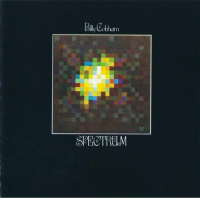
Was it jazz or rock? This was (is) the eternal question about fusion. Back in the 1970s when the Mahavishnu Orchestra pioneered the genre, the electric and chaotic unpredictability of the John McLaughlin-led outfit cut across what was thought to be basic jazz concepts by displaying loud electric guitar riffing over what could stand for prog rock organ, bass and drum. And shockingly, none of the original players blew into their instruments. But Mahavishnu McLaughlin was as cruel ...
Continue ReadingRed Garland Revisited!
by C. Michael Bailey
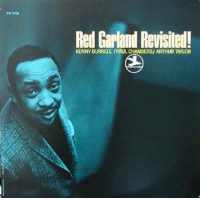
Prestige Records released Red Garland Revisited in 1969. However, Rudy Van Gelder recorded the eight selections comprising the album 12 years earlier at his Hackensack, New Jersey studio. Using bassist Paul Chambers and drummer Art Taylor as his rhythm section, adding guitarist Kenny Burrell on two pieces--Miles Davis's “Four" and “Walkin.'" Recorded May 24, 1957, this session took place during a busy period for Garland, between a date for trombonist Curtis Fuller on May 14 resulting in Curtis Fuller with ...
Continue ReadingKelly Blue
by C. Michael Bailey
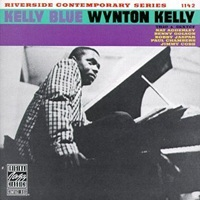
The classic Wynton Kelly Trio comprised Kelly on piano, bassist Paul Chambers, and drummer Jimmy Cobb. Besides being Kelly's most stable trio, this rhythm section provided the underpinning for several important recordings and tours for Miles Davis in the late '50s and early '60s. These include Kind of Blue (Columbia Records, 1959) and Davis' 1960 European Tours, Someday My Prince Will Come (Columbia Records, 1961), In Person, Vol. 1--Friday Night at the Blackhawk (Columbia Records, 1961), In Person, Vol. 2--Saturday ...
Continue ReadingTrio and Quintet

by C. Michael Bailey
Pianist and composer Elmo Hope has more in common with Tadd Dameron than most of his other jazz peers. Both men were primarily composers and arrangers who concentrated on their own music rather than standards. Both men spent their professional lives in New York City during the twilight of bebop and the flourishing of hard bop. Neither man boasted large discographies as leaders, but appeared on a significant number of recordings as sidemen. Their careers were both shortened dramatically by ...
Continue ReadingThe Cry!

by Richard J Salvucci
This recording is, at first glance, a bit of an unusual choice by Craft Recording for its Contemporary Records Acoustic Sound Series audiophile vinyl series. Neither Prince Lasha (pronounced Lashay) nor Sonny Simmons make an appearance in Bill Kirchner's The Oxford Companion to Jazz (Oxford University Press, 2000). An earlier reviewer for AAJ allowed as how both players were talented, but probably understood no more about Ornette Coleman's theory of “harmolodics" than the average listener did. Skepticism or, indeed, lack ...
Continue ReadingRollin' With Leo

by Richard J Salvucci
Leo Parker may not be a name that instantly springs to mind in the world of late 1940s bebop. There was one point, in 1948, however, when serious people, like Barry Ulanov, regarded Parker as the best baritone saxophonist around--in company with Charlie Parker and Fats Navarro. That is fancy company, so it is worth asking why he is so little remembered today? Parker was a contemporary of the now better known (or at least remembered) ...
Continue ReadingThe Fox

by Richard J Salvucci
There was once a legendary trumpet player named Jack Purvis who was a disciple of Louis Armstrong. Purvis was an excellent player, but he was in and out of trouble for most of his life. So he spent some time in jail. In fact, so much time that Purvis once led (documented in the Fort-Worth Star Telegram, March 30, 1938) a broadcast from a Texas prison in Huntsville. Purvis led many lives, and was sometimes spotted in odd places like ...
Continue ReadingSahib Shihab and the Danish Radio Jazz Group

by Joshua Weiner
Many jazz fans will know saxophonist and flautist Sahib Shihab primarily for his stint in the 1940s with Thelonious Monk, and his playing captured on Monk's Genius of Modern Music Blue Note sets. Keen-eyed perusers of liner notes, however, will know him as an able sideman on classic albums by John Coltrane, Quincy Jones, Art Blakey, Benny Golson, Milt Jackson and others. Shihab also recorded as a leader in the 1950s and 1960s with Savoy, Debut and Argo, before moving ...
Continue ReadingThe Time Is Now!

by Joshua Weiner
The early '70s were difficult times in the United States, not least for the jazz community. The optimism of the flower-power and peace movements had given way to political radicalism, conflict and paranoia, and the excitement of the initial free jazz and jazz-fusion eras had begun to wane. John Coltrane and Albert Ayler were dead. Miles Davis was playing thick, unrelenting funk. Important record labels such as Columbia and Atlantic were largely pursuing multiplatinum rock acts rather than jazz. Some ...
Continue ReadingShelly Manne and His Men at the Black Hawk 1

by Richard J Salvucci
For many years, but certainly for most of the '50s and '60s, the top jazz drummer--by public opinion--was Shelly Manne. Although he was typically associated with West Coast Jazz, (a term he disliked), Manne had come West from New York City in the '50s and settled in Los Angeles in the halcyon days of the post-war boom. He was a guy of many parts; he raised horses, had married an ex-Rockette, and become part-owner of what was to become the ...
Continue ReadingAlbum Showcase




Trending
 Interview
Lou Marini: A Solo Career Starting At The Age Of 80
 History of Jazz
John Coltrane in Detroit: A Brief History
 Live Review
The Tension Is Where the Music Lives: Miles Davis at 100,...
 Chats with Cats
Michael Ricci: Still Building a Home for Jazz
 Radio & Podcasts
Sullivan Fortner, Jim Rotondi & Dena DeRose, Ardeshir,...
 Reanimating Conversations Past
Charlie Haden: Anatomy of a Jazz Classic
 Radio & Podcasts
Miki Yamanaka, Stefon Harris, Paul Yonemura, Amber Weeks...
VOTE!