Home » Jazz Articles » Profile » Billy Taylor: The Keys to Jazz Education
Billy Taylor: The Keys to Jazz Education
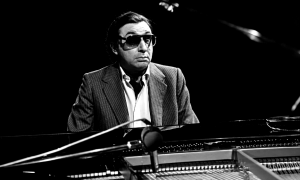
Taylor has spent the better part of his 81 years blurring the lines in the jazz world between the musician and the teacher. In 1964, he started the Jazzmobile, a project where he basically dressed up a beer float that drove through Harlem and carried musicians who blew bebop at passersby.

If you drop by the mythology section of your local bookstore, you will probably find at least one version of the epic of Sundiata next to Homer's Odyssey and Virgil's Aeneid. But the story of Sundiata, who founded the ancient kingdom of Mali, was not written down thousands of years ago for safe keeping. Instead, the epic was passed down orally, sung by one generation to the next, sung by Mali's griots.
Dr. Billy Taylor learned about griots, the advisors to kings and singers of history, when he travelled through Senegal (which was once a part of the kingdom of Mali). Immediately, he saw the parallels to his own life as a jazz musician and educator in the United States. "I think of myself in some ways as an urban griot," he says, "because the griot was someone who was a minstrel; he was a teacher, a healer, kind of a part of the collective memory of the people that he related to and served."
Taylor has spent the better part of his 81 years blurring the lines in the jazz world between the musician and the teacher. In 1964, he started the Jazzmobile, a project where he basically dressed up a beer float that drove through Harlem and carried musicians who blew bebop at passersby. "We would take anybody off the street and say 'Listen, here are some things about what's going on in New York, what music is being played, and how it's being used, and you should know about that.'" That people should know about it became his purpose, and he found himself drifting out of performing and into teaching.
He became more heavily involved in radio and television, presenting jazz through stints at W-LIB, W-NEW, and the David Frost Show, not to mention the fact that he had already served as the musical director of television's first ever jazz series, NET's "The Subject is Jazz". And after Willis Conover asked him to play in the White House's celebration of Duke Ellington's birthday, President Nixon appointed Taylor to the National Council on the Arts. He then went on to get his Combined Masters and Doctorate in Music Education in 1975 at the University of Massachusetts. Then came his work as the host of the NPR show, "Jazz Alive", and then his role as the arts correspondent for "CBS Sunday Morning".
His post on the National Council on the Arts brought him to Senegal, where he learned about griots, and to South America, the Middle East, Pakistan, and the former USSR, among other places. In addition to learning about griots, he began to see that the world viewed jazz as a deeply American phenomenon. He explains that "one of the exciting things about jazz, one of the lessons that people learn who come from outside the United States, is that jazz expresses a kind of freedom, a personal freedom, that is not present in many cultures. And so whether you're talking about any number of people from various countries, from South American countries, from Western Europe or Asia or places like that, what they're attracted to in many cases, is that, 'Hey, if I use this language that has been created by jazz musicians, it helps me say something which is unique to me. I don't sound like my father or my brother or my sister or somebody like that; I sound like me.' And what does that mean? It means something different from each one of us. That's a tremendous gift for anyone who aspires to be an artist."
Today, Taylor is on the Board of Advisors of the International Association of Jazz Educators (IAJE), and makes annual appearances at their conferences. The association helps to spread the discourse on jazz to educators from over 40 countries, and its international scope has Dr. Taylor excited. "Those are the guys that are making all the noise - teachers, for the most part, and players. It's really wonderful movement that's taking place...It's the largest organization in the music business right now," and its next meeting (its 30th) is coming up soon, January 8th-11th in Toronto. At the conference, the educators "will get a chance to compare notes with one another. We'll get to see what other people are doing in the technical phase of the business, in teaching, in recording, in broadcasting, in every phase of jazz as it is currently practiced."
The conferences also give Taylor the chance to return to his own music. Two years ago at the conference, Taylor recorded a live album with Chip Jackson on bass and Winard Harper on drums. He believes that Jackson and Harper are "among the best that I've ever played with, and I've played with a lot of good musicians." Try Art Tatum, Charlie Parker, Miles Davis, Coleman Hawkins, Dizzy Gillespie, Art Blakey, Milt Jackson, Zoot Sims, Philly Joe Jones, Roy Eldridge and Roy Haynes. "But these two right now are two of the best I've ever had. You can't find two more musical musicians than these guys." Though he does concede that "I'm biased at the moment. These are two musicians that I have great affection for and great respect for, and that just comes out whenever we play. They push me. They are really so supportive that it makes me play better all the time."
On the disc, he plays quick staccato runs over a driving bass line on his tune "Impromptu", though the song soon finds itself settling into a swing that feels as comfortable as an old shoe. He pads through "Body and Soul" and coasts over the Latin groove "Titoro". You can hear in his articulation that he wants to get the most out of each moment, hit every note. And when he talks about his playing, there is a sense of unfinished business, "If I could meet me as another person," he says, "I would say don't waste all that time that you've wasted. You should have written more, you should have done a lot more writing. Many of the things that I think about now, I wish I had put down in another form. I still may be able to do that; I'm in the process of getting some of my music shaped up. But I wish I had done it earlier."
The sense of urgency may owe itself in part to the fact that several months after recording the album, Taylor suffered a stroke. "My short term memory was one of the things affected, and I can't remember some of the things I wanted to. It all comes back to me if I talk long enough, but it takes a while...It's coming back slowly, and I've got almost 80 years of work that I'm trying to recover here." But as a testament to his resilience, Taylor refuses to let the after-effects of his stroke slow him down. He occasionally pauses to remember a last name, but for the most part you would never know it to talk to him; he thinks too quickly. "One of the things that is most frustrating for me is that I tend to talk very rapidly when I get excited. And I stumble over the words and everything else because I'm anxious to get this thought out to whoever I'm speaking to."
A lifetime of trying to do just that is increasingly paying off. After all, Juilliard is officially teaching jazz now, record sales of rereleased jazz are on the rise and international audiences are listening in. And be lukewarm about it or hate it, but Ken Burns made a big documentary on jazz (although Dr. Taylor was noticeably absent). But do not try to tell Billy Taylor that this progress is a recent development. He says he and the rest of the jazz world have been learning and teaching all along.
"I really feel that I want to give back to the music things that I was taught. I'd like to share them with young people. I've tried for most of my career to do that, so that I can say, 'Well here's some things I learned from Art Tatum; here's some things I learned from Duke Ellington; here's something I learned from some other master that maybe you haven't had personal access to.' This really gives me an opportunity to share in the first person some of the lessons that I learned at the feet of some of the greatest musicians on the planet." The griots who came before him would approve.
Related Article
The First Time I Saw Dr. Billy Taylor
Tags
PREVIOUS / NEXT
Become a Sustaining Member

Since 1995, All About Jazz has championed jazz as an art form and supported the musicians who create it. Over three decades, it has grown into one of the world's leading jazz resources, serving hundreds of thousands of readers, musicians, presenters and industry professionals each month.
Help Build the Future of All About Jazz
Your support helps us continue building All About Jazz for the next generation—expanding our editorial coverage, preserving jazz history, developing new community features and creating better ways to discover the music and the people behind it.
Become a sustaining member for as little as $20 per year and you'll immediately enjoy an ad-free experience along with access to subscriber features and future articles for a full year.
Together, we're not simply sustaining All About Jazz—we're building its future. Thank you for being part of the journey.