Home » Jazz Articles » Profile » Mario Pavone
Mario Pavone

I think I have a grasp on how to reach people. The balance of forward thinking, and groundedness is what I'm after.
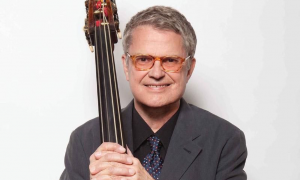
Pavone creates his album covers with photos he takes on tour. He cuts them, blows them up so an extreme close up renders the image indiscernible, and combines them. The surrealistic element of his visual art parallels his music. With vast exploration and playful productivity, his new album Orange , his 11th as a leader, transforms itself with each track. Featuring pianist Peter Madsen, drummer Gerald Cleaver, tenor saxophonist Tony Malaby, and trumpet player Steven Bernstein, Pavone's compositions philander with time, rhythm, and conventional jazz structure, an extraordinary talent for one who hadn't even thought of becoming a professional musician until college.
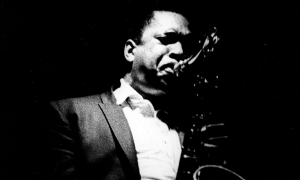
A series of chance encounters led Pavone to the bass. While pursuing an engineering degree at the University of Connecticut, he made a friend whose extended record collection kept him riveted to the speaker. Then one night during his honeymoon, he and his wife ventured to the Village Vanguard to see John Coltrane. The evening enhanced his craving. "God it was an experience. That just added to the impetus for me to continue on this path," Pavone said.
Finally, one summer weekend in 1964, Pavone traveled to Chicago to visit the guitarist Joe Diorio. Diorio recognized the passion within him. "I was encouraged by him saying 'you seem to have music in you,'" Pavone said. When he got home he rented an upright bass. "I thought maybe the bass would be an easy instrument. I was wrong of course."
He pecks out melodies on the bass and builds on them creating little sonic universes. The sounds conjure colors in his head, usually bleached strokes, or pointillistic dots. Accidents occur and Pavone's individuality emerges. "Things happen, like I slip and my hand comes off the bass and a certain sound occurs, and I incorporate that in," he explained. "I want to make surprises in the writing. Changes of texture, changes of time."
Pavone graduated from college, got a job as an industrial engineer, and took some lessons with new music bassist Bertram Turetzky. In 1967 he attended Coltrane's funeral after which he immediately abandoned his job, and began a full time pursuit of music. "That was it, I would never look back. I would never return to that field [of engineering] at all."
Pavone quickly found himself in the midst of New York's downtown jazz scene. He discovered The Orchestra of the Streets, an organization trumpet player Bill Dixon ran out of a second story storefront. "I met an incredible amount of players from all the ranges of the music. I remember Kenny Dorham being there and Reggie Workman. It was like a Saturday morning workshop."
It was a pivotal time for jazz. Avant-garde musicians, unable to play in the traditional clubs, held nightly sessions in their own loft spaces. Pavone's foundation and beliefs began to grow and solidify. "I was a non-musician, I think it had an advantage. Starting out so late has many disadvantages, but it had one good advantage. I didn't have any preconceptions, and had not invested in a big music education, that I might have to go against and refute, because the music was really starting to open up in the late '60s."
He developed an acute understanding of composition versus improvisation. "To make the relationship between the two not be that apparent is a key goal," he explained. "Where the writing lets off and where the improvisation begins, it's nice when it's not so clear. When you're writing you're trying to capture some spontaneity in the compositions; when you're improvising you're trying to have a focused statement. I like when they're a little ambiguous."
In 1975, he, Leo Smith, and Gerry Hemingway founded the Creative Musicians Improvising Forum in New Haven, an offshoot of Chicago's Association for the Advancement of Creative Musicians. Players were starting to organize and take control of their work, a lesson Pavone learned from pianist Paul Bley.
Bley asked Pavone to join him on a European tour in 1968. "I was just thrilled. That was it, that was the beginning of my international, professional career," he exclaimed. "Paul was a master, I loved his music, and it was a big opportunity. It was like a dream come true for me. He was very instructive, great to play with, taught me a lot about thinking independently with the music, and about business, documenting everything you do, and being cautious of the music business."
The group based itself out of Amsterdam and traveled around Holland and Germany. "The world opened up to me then. I was 28. It was a big thing. Playing the music in Europe is wonderful. They love the music more. I think it's because they grew up on Mozart and classical music was their popular music. I don't know, but it sure is fun to play there, and you sure are appreciated there."
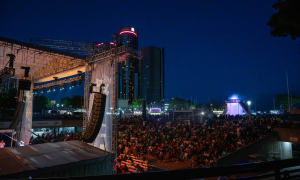
One of Pavone's favorite gigs was during a jazz festival in Verona, Italy with saxophonist Thomas Chapin's trio in an ancient, open-air amphitheater. "Things happen on stage," he explained. "Some kind of special electric feeling goes on with the music and it's transferred to the people, who are in a perfect place acoustically and spiritually. It could happen with 20 people in a club. The electricity between the music and the players, there's nothing like it."
Pavone met Chapin in Hartford at a tribute concert to Charles Mingus in 1980. His playing blew him away, and the two became friends. Ten years later Chapin started his trio with Pavone and drummer Michael Sarin. Chapin and Pavone played in each other's groups, recording albums on New World and Knitting Factory Records. "Those years were great years," Pavone recalled. "We were hitting hard, playing everywhere in New York, everywhere in Europe. We had quite a bit of success with that group. He was quite a musician."
In 1998 Chapin died of leukemia. Pavone lost a close friend, and stopped playing for eight months. He concentrated on rebuilding a house for his parents. "I banged away with a hammer. It was great to get aggression out. It was a really therapeutic thing for me." When he returned to music he recorded Remembering Thomas. "I knew the first thing that I'd do would be a tribute to him, and capture his spirit. It was still very much with me, it still is to this day," he said.
Pavone shares close relationships with most of the musicians he plays with. He cites Bley, Dixon, and Anthony Braxton as his mentors. Madsen played on Pavone's last six records, and he said the two have an intense musical telepathy. And most recently he formed great friendships with Malaby and Bernstein, who arranged the music on Orange. "This new era of the jazz musician is so different from the '50s and '60s. It's a healthy environment, and a really earnest and sincere one," he said.
Pavone aims to make the new era physically different as well. He thinks the bass should play a more central role. "Right now the innovations in music are coming from the rhythm section," he stated. "We had a period of Charlie Parker, and Dizzy Gillespie, and John Coltrane, and Ornette Coleman. They made major, quantum leaps. Right now I don't hear a lot of horn players going much further than Trane or Ornette. They are, but not in great leaps. The rhythm section is doing things now and that's where I think the new innovations are coming from."
So Pavone is breaking down the structure, and reinterpreting roles. Traditionally horn players lead the group from the front, and bass players are stuck in the back. This is an issue for Pavone. "It's not easy leading a group from behind, and that's one of the reasons why I try to step forward on stage. I'm trying to do it through the notes I play, through directions, through gesture...I think I have a grasp on how to reach people. The balance of forward thinking, and groundedness is what I'm after."
About Mario Pavone

Tags
PREVIOUS / NEXT

Become a Sustaining Member

Since 1995, All About Jazz has championed jazz as an art form and supported the musicians who create it. Over three decades, it has grown into one of the world's leading jazz resources, serving hundreds of thousands of readers, musicians, presenters and industry professionals each month.
Help Build the Future of All About Jazz
Your support helps us continue building All About Jazz for the next generation—expanding our editorial coverage, preserving jazz history, developing new community features and creating better ways to discover the music and the people behind it.
Become a sustaining member for as little as $20 per year and you'll immediately enjoy an ad-free experience along with access to subscriber features and future articles for a full year.
Together, we're not simply sustaining All About Jazz—we're building its future. Thank you for being part of the journey.