Home » Jazz Articles » Roads Less Travelled » Joe Harriott: Free Form and Abstract
Joe Harriott: Free Form and Abstract

As early as the late 1930s European players were making innovations of their own...
 A certain view of jazz history has us believe that responsibility for the evolution of the music lies exclusively in American hands. This is both too deterministic and a slight upon the music's power to move and to influence. As early as the late 1930s European players were making innovations of their own at the same time as some Europeans were regarding jazz as akin to the spawn of Satan; the guitarist Django Reinhardt for example was contributing greatly to the jazz vocabulary of his chosen instrument. The same is true of bop, hard bop and the 'cool school', all of which had their fluent and capable European acolytes in the 1950s; the Swedish baritone saxophonist Lars Gullin made a name for himself in the last of these.
 The West Indian-born alto saxophonist Joe Harriott was one of the most convincing boppers outside of the USA at a time when the music was still fresh, though by the end of the 1950s he was exploring freer musical pastures, and the quintet with which he undertook the exploration was an outgrowth of the hard bop band with which he'd made a name on the British scene. As the 1960s progressed, Harriott also proved himself to be something of a pioneer in the fusion field, in the way he fused jazz and classical Indian music in collaboration with the violinist John Mayer.
Often in the past the group's music, in which trumpet and flugelhorn player Shake Keane figured alongside Harriott in the front line, has been compared with that of the early Ornette Coleman quartets. Such labelling does justice to neither group's work, and also overlooks the fact that Harriott's band included a pianist, Pat Smythe, who proved himself highly conversant with Harriott's different methodology.
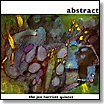 Coleridge Goode, the bassist in Harriott's band, has written of how much headway the band made with the new music once drummer Phil Seaman arrived on the scene(1) The music the group produced on both the Free Form and Abstract albums has little in common with Coleman's. Here it's far more interactive, a fact borne out most obviously by the lack of soloists. This makes for a far more organic music than anything Coleman's group was putting out at the time. This is most pronounced on Calypso from the Free Form album, where the rhythm of that indigenously West Indian form is extraordinarily maintained in the midst of characteristic group exchanges.
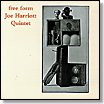 From a present day perspective it seems odd that the lack of record sales might have put an end to Harriott's work in this idiom, though certainly it's the case that the two albums referred to above amount to the sum total of it on record. By the later 1960s Harriott was producing world music long before the term became fashionable, as Richard Cook has pointed out(2) and Harriott's collaborations with John Mayer are not only trailblazing, but also notable for the fact that neither genre suffers in the fusion, and the resulting music, though obviously something of a hybrid, is neither bland nor innocuous in the way that so much present day fusion of a similar variety can be.
Joe Harriott was never wanting for a questing spirit when it came to making music, as the discs discussed here confirm. With his passing and that of some of the musicians he worked with the Britisn jazz scene lost not only some distinguished instrumentalists, but also an element of musical inquisitiveness that was very much of its time.
- Bass Lines. A Life In Jazz (p. 135) - Coleridge Goode & Roger Cotterrell (Northway Publications, 2002)
- Booklet notes for Indo-Jazz Fusions 1 & 2 1998 reissue
DISCOGRAPHY
- Abstract - Joe Harriott Quintet (Polygram/Redial, 1998 538183)
- Free Form - Joe Harriott Quintet (538184-2)
- Indo-Jazz Fusions 1 & 2 - Joe Harriott/John Mayer Double Quintet (5380468-2)
Related Article
Joe Harriott: A Restless Soul
About Joe Harriott

Tags
PREVIOUS / NEXT

Become a Sustaining Member

Since 1995, All About Jazz has championed jazz as an art form and supported the musicians who create it. Over three decades, it has grown into one of the world's leading jazz resources, serving hundreds of thousands of readers, musicians, presenters and industry professionals each month.
Help Build the Future of All About Jazz
Your support helps us continue building All About Jazz for the next generation—expanding our editorial coverage, preserving jazz history, developing new community features and creating better ways to discover the music and the people behind it.
Become a sustaining member for as little as $20 per year and you'll immediately enjoy an ad-free experience along with access to subscriber features and future articles for a full year.
Together, we're not simply sustaining All About Jazz—we're building its future. Thank you for being part of the journey.