Home » Jazz Articles » Highly Opinionated » Vocalistics: Cascades From The First Instrument
Vocalistics: Cascades From The First Instrument

Now the search ought to be on for the
Jazz, more by accident than design, has become almost exclusively an ‘instrumental’ music, its standards and criteria deriving from the realm of ‘the instrumental’, rather than the art’s vocal, blues-based roots. So, you have the jazz instrumentalist trying to sound like the human voice, while – conversely – you find that many a jazz vocalist continues to try and handle his/her voice like a trumpet, a trombone, or – especially today – a saxophone!
When did we forget the seduction of the vocalist? Perhaps we didn’t. We just got lazy and forgot what the Pied Pipers to the human soul sounded like. Or perhaps we have simply been steamrolled by the commerce of the music industry, and have found little time to hyperventilate and be swept away by a vocal set. Time was when the great voices of our music would not let this happen... When, spurred on by their epiphanies, the great vocalists stepped up and delivered their poignant jazz psalms, like arrows shot straight from the heart. We listened in awe. We were entranced. It was almost as if we were mesmerized... just like watching a sunlight dust dance. As if each word has its own special and secret music egging it on. A unique rhythmic play... an invisible kinetic energy that simply leaped out from a hidden world, caressing the voice that was wrenched from – or burst forth – from deep within the singer’s heart, and definitely not from his or her throat or lungs!
Go ahead and spin any of the discs containing the entire legacy of the Empress, Bessie Smith on Columbia. Feel the volume and sheer majesty of her voice capture the space in your heart; destroy the false sense of what you may have thought to be fictions past. For sure, the joy and pain bursts out as from an ancient well. You almost feel the soul wrenching itself away from a skin it dreads to inhabit. You can feel the hurt that many of her generation and those that continued to follow, carried like a great badge of courage through the ages, and also held up as a mirror to our societies as we went on to plunder the dignity from each other’s lives.
 Then we heard it in the small, supple and sensitive vocalistics of Billie Holliday. There was no other interpreter of the cascading human emotions of the dispossessed, as Billie Holliday. Her cornerstone of protest against racial discrimination – "Strange Fruit" – a great wailing, allegorical tale of ‘strange fruit’ hanging from a tree, i.e., the body of the African American – an almost indelible image of our cruel past. She ‘cried’ the song – yes Billie Holliday did! In her plaintive understatement, we wept in our mind’s mind more bitterly than we would if we were assaulted by a grand passionate unrestrained expression in an operatic ambience! In Billie Holliday’s classic understatement the weight of life was almost always an internal avalanche that was set in motion by a ‘little girl’ voice. Yet we were somehow forced to feel the full weight of its emotional assault on our senses. Always the elemental sadness of the voice, juxtaposed by the visage of that big beautiful woman, who – it appeared – had carried the burden of history in her heart too long. Suddenly the scars of her life leapt out at you. And the joy at being released from this weight through the art of the song... As suddenly as you were assaulted, were you set free by a voice so pure that everything else – including the physical presence of the singer seemed to vanish, leaving behind just the song and the multiplicity of its emotions. There was also pathos in Billie Holliday’s voice. You hear it in "Tell Me More", which she recorded in 1940, with Roy Eldridge and Teddy Wilson. But it was also the charm and urbane elegance, the suppleness and sophistication in the understatement of her vocals. That was the greatness of the musician that is Billie Holliday. It also speaks of the greatness of her singing; the vocalistics with which she was able to transform life itself...
 The baton was also held fast by Ella Fitzgerald, who right from the 30s on until this day, reigned in the domain of the art of vocal music. Miss Fitzgerald was also the mistress of the ‘blues-line’ in jazz singing, yet she was also the great diva. She innovated; it’s true – especially when, with Chick Webb’s band, she swung through "A Tisket, a Tasket". In the 40s, when Bird and Diz blazed through the skies like comets, fashioning the pain of the day into bebop, Ella scatted her way through "How High the Moon" and "Lady Be Good". There was talk of ‘bop’ vocals then. Yet Ella Fitzgerald continued to ‘change’ remaining unharmed by passing fashions and trends. Her interpretations of the ‘songbooks’ of the great American songwriters – Gershwin, Kern, Berlin and Porter – belong to the greatest documents of modern American music. Indeed, in assuming the role of Bess to the great Louis Armstrong’s Porgy, I believe that Ella (and Louis, of course) has given us one of the finest lessons in the art of rendering story in song. No other singer – with the possibly exception of Abbey Lincoln today – has been able to tell a compelling story with just the use of human voice.
When she undertook the challenge of interpreting Max Roach’s tour de force, Freedom Now Suite Abbey Lincoln gave notice of ‘taking over’ the mantle of becoming the urban griot of African-America. Today she is the queen of vocalistics. Whether she is singing wordlessly – on Roach’s "Garvey’s Ghost", on the classic album, Percussion Bitter Sweet, or telling the story of "When Malindy Sings" on the same album, Abbey Lincoln brings together both the sophistication and plaintiveness of Billie Holliday as well as the raw power of Bessie Smith, and takes vocal music to a new level. In the 2000 set Over the Years Abbey Lincoln has surpassed the highest standards of vocal art. Her joyful discovery of life, "When the lights go on again" warms the heart and stirs the soul as it fills us with hope that all may yet be well someday ‘all over the world’. You hear the echoes of the end of apartheid, the joyful union of Mandela and his people and even a simple love story between man and woman come alive in that song. Lest we forget the hurt of a woman mistreated listen to "I could sing it for a song" and the tragic "Tender as a Rose". Sure in this set alone, there is evidence of who rules the empire of vocal music today – especially in the art of interpreting a story in song.
 Of course it would be a stretch to suggest that Ms. Lincoln is alone at the top of the art. I write, of course, only of music written and sung in the English language. Who can ignore the magnificent contribution to vocalistics, made by many musicians who have skirted jazz for decades? I speak of some of my favorite Brazilians – Elis Regina, who embodied the art of ‘chorinho’, a vocal music not so much sung as it is ‘cried’. And there are others from that great South American contributor to the development of jazz itself. Even now my head echoes with the voice of Nana Caymmi, as she ‘weeps’ her way through a song aptly entitled (in English, of course) "No More Tears"! I hear Flora Purim too, in her interplay with Airto Moriera and that brings back memories of the memorable collaborations between Abbey Lincoln and Max Roach, Ella and Duke and so many others that this cup runneth over!
This is a feeling of absolute ecstasy that only jazz can bring. And it is because the music can elicit this feeling and fuel this belief that I believe that the music that was born of the pain and joys of a dispossessed people has always belonged to the whole world. Our insularity prevented us from reaching out and discovering. The music industry has not helped otherwise either. We are too obsessed by labeling and cataloging everything. We have forgotten that we came from the same source somewhere in the Great Rift Valley. We migrated and were variously shielded or burned by the sun – in shades that may take a million new Ansel Adams to see! And, as with seeing and perceiving – with discernment – so also with hearing... And there is really only one way to do both. It is with the heart!
Then you will hear the jazz of rap. In the rhythms and rhymes, and in the apocalyptic shouts of The Last Poets – Umar Bin Hassan and Abiodun Oyewole – as they streak across the skies of urban America. The poetry of Langston Hughes, Amiri Baraka and Gil Scott-Heron is also music and it’s also jazz... Grandmaster Melle Mel, Killah Priest and Nas... their rhymes to are jazz – bebop to hip-hop – as we saw and have memorized when Quincy Jones brought a super constellation of stars on stage in Montreux some years ago... This was vocalistics par excellence. But there is a deeper meaning to the direction that jazz has taken since its heartbeat changed to fibrillation and the irregularity of its rhythm actually breathed new life into its soul!
 There is a great album – Madman of God, by Sussan Deyhim, that extraordinary Persian-born vocalist produced in 1999. The album is an all-too-short interpretation of the poetry of the ecstatic poetry of Rumi, Saadi and Hafez. The music, while Oriental in its rhythmic centre vibrates with the swinging freedom of jazz, as Deyhim appropriates the poetry of the mystic-poets who straddled 11th to the 19th century Persia like colossi to the landscape of music. It is probably true that when the Sufi’s wrote their ecstatic verse, contemplating the mysteries of man’s relationship with man, God and the universe of His creation, it was probably sung too. (Rumi definitely did and is credited with the origin of the ‘dance of the dervishes’). And this, to is jazz. Deyhim says: ‘I have sought to evoke and live the vibration, (of the Sufi material) for I believe the vibration is the essence of the Sufi way of traveling through time, in cosmic space, which transcends all other parameters.’
The phrase, ‘transcends all other parameters’ is key to the very heart of jazz. It is an artistic, musical expression of the trails and tribulations of modern man, who seems to have got virtually everything wrong. More importantly it is a musical expression that originates in the heart and the soul, to be given breath by the lips. This is the song that is sung with unbridled feeling that cannot be suppressed or put down. This is true vocalistics. And nobody today understands that better than Bobby McFerrin.

His incredible expedition into the realm of vocalistics began, he said somewhere in liner notes to one of his many joyous albums, when he heard a voice calling him to channel his talent where the voice has never gone before, as he was playing the piano. And he seemingly hasn’t paused for breath ever since! McFerrin brings a spirit of deep trust and joyful spontaneity to music – especially in his spectacular album, Circlesongs. Here is where McFerrin’s gift for teasing the sublime out of silence is most evident. The eight songs on the set spring from sounds improvised on the spot. McFerrin is assisted by twelve singers on the album. The rhythmic repetition of the sounds is what gives the songs their circular shape and chant like structure. ‘It’s primal, unadorned singing,’ McFerrin explains in the liner notes to the record. ‘I have always felt,’ he adds, ‘that singing a song without words makes one song a thousand songs because the people who hear it can bring their own stories to it.’ And this is exactly the impact of the music.
You hear creation – birth and life as it moves inexorably to death and renewal. You hear the pain and joy of existence of man’s journey on earth. And you hear it sung with a vital energy that you have never heard before.
In McFerrin’s vocalistics you hear something ancient and yet truly new. It is not a matter of form – although the music is defined by a nominal form – the circle. The circles occur not only in space, but in sound. There is the creation of circles of sound – one of the most intuitive ways to make music. While musical notation allows for epic genres – such as the symphony, opera and concerto, which unfold in linear measures of time, oral tradition music has always favored circular and cyclical forms. Rounds and canons are a venerable form of western music. In the great musical traditions of the East, rhythm and melody are often conceived in circular periods. Breathing is circular: inhale, exhale, inhale, exhale! Awareness of the circular rhythm of breathing is one of the cornerstones of daily practice in many spiritual disciplines. Chanting gives voice to the rhythm of breath and synchronizes the breathing of the singer into a collective rhythm that can – and does – invoke considerable power. On the right conditions, this power of collectivity may overcome the power of ego and create an opening through which the human being can link himself to forces greater than himself. When those forces are imbued with the spirit of the Divine, chanting takes on the quality of a sacred music.
This is where the art of vocal music is headed – or ought to be headed – from this seminal work by Bobby McFerrin. This is the state of the art of vocalistics. This is music that comes directly from the spirit. Now the search ought to be on for the ‘perfect note’, as we dig deeper into the soul. And the discovery will come: when the cry that is provoked by the fear of death colliding with the ecstasy of liberation. This is, after all, the true spirit of vocalistics. This is jazz!
Photo Credit
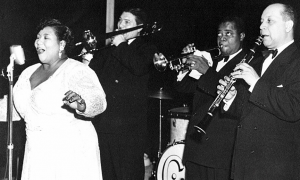
Billie Holliday and Ella Fitzgerald by William P. Gottlieb
Abbey Lincoln by Sue Story
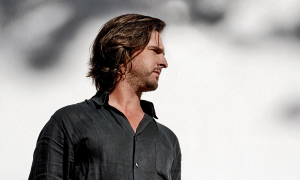
Bobby McFerrin by Jimmy Katz
< Previous
The Telarc Blues Project
Next >
November 2003
Comments
Tags
For the Love of Jazz
 All About Jazz has been a pillar of jazz since 1995, championing it as an art form and, more importantly, supporting the musicians who create it. Our enduring commitment has made "AAJ" one of the most culturally important websites of its kind, read by hundreds of thousands of fans, musicians and industry figures every month.
You Can Help
To expand our coverage even further and develop new means to foster jazz discovery and connectivity we need your help. You can become a sustaining member for a modest $20 and in return, we'll immediately hide those pesky ads plus provide access to future articles for a full year. This winning combination will vastly improve your AAJ experience and allow us to vigorously build on the pioneering work we first started in 1995. So enjoy an ad-free AAJ experience and help us remain a positive beacon for jazz by making a donation today.

Giveaway

Days remaining: 6