Home » Jazz Articles » Opinion » Is There Freedom in the Groove?
Is There Freedom in the Groove?

What we are witnessing, and in many instances are rejecting, is a perversion of the traditional swing sound and feel that we identify with from our own experience.
Fast-forward to the present: We have gone through a whirlwind of transitions since the Swing Era ended in the 1940s, from bebop to hard bop, then post-bop, free-jazz, jazz-rock fusion with lots of electronics, funk, acid-jazz, and a host of even more useless genre-bending names for music that is basically jazz to some of us. If we cannot agree on the name, so much the better, I say! It is interesting that the same type of criticism exists today from writers, and enthusiasts, whining about what happened to real jazz.
Most of us who grew up with a particular jazz style remain loyal to that style even while venturing into less certain music forms. What has happened in jazz over the past 60 years (the Modern Era) is a natural evolution that should be anticipated when the new performers arrive from a musically unprejudiced background. Many did not grow up on jazz, but rather, they have listened to and played rock, gospel, R&B, hip-hop, and funk. A major artist today might cite James Brown or Ray Charles as his primary influence and he is more likely to have played on a recording with Steely Dan, Sting or Joni Mitchell than with Miles, Horace Silver, or Art Blakey.
What we are witnessing, and in many instances are rejecting (just like in 1957!), is a perversion of the traditional swing sound and feel that we identify with from our own experience. Some of today’s major artists that play jazz that is more conventional to some of our ears, are experimenting with a fresh “fusion” sound based on their contact with other genres. Many listeners, however, regard these efforts as alien to the jazz tradition. Stars such as John Scofield, Roy Hargrove, Kenny Garrett, Joshua Redman, Christian McBride, and even the deeply cerebral pianist, Brad Mehldau, are unapologetically venturing into unfamiliar territory for us more mature (yes, older) listeners. They have met resistance in some quarters, but they also are recruiting a cadre of enthusiasts from the other element of the fusion (e.g. hip-hop, funk, etc.).
Is it good for jazz, you ask? I firmly believe that jazz will be a much better influence on hip-hop, for example, than the reverse. The improvisatory rhythmic nature of jazz seems antithetical to the droning and repetitive rhythmic loops of hip-hop; but for some reason it is not stifling the jazz part. I am not sure if I like much of this stuff yet, but I am terrified that if I do not give it a chance then I am no better than that writer from Escapade in 1957. That said, while I write this piece I am listening to the Power Trio CD with John Hicks, Cecil McBee, and Elvin Jones. They are swinging so hard I can barely control my mouse (hey, we are talking computers now!). This sounds like real jazz, but then I am old, dude.
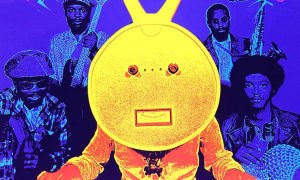
Freedom in the Groove is the name of a very fine 2-CD set by Joshua Redman. It is a catchy title that has more to do with this editorial than Josh's music and was too appropriate to ignore. Thanks, Warner Bros.
Tags
PREVIOUS / NEXT

Become a Sustaining Member

Since 1995, All About Jazz has championed jazz as an art form and supported the musicians who create it. Over three decades, it has grown into one of the world's leading jazz resources, serving hundreds of thousands of readers, musicians, presenters and industry professionals each month.
Help Build the Future of All About Jazz
Your support helps us continue building All About Jazz for the next generation—expanding our editorial coverage, preserving jazz history, developing new community features and creating better ways to discover the music and the people behind it.
Become a sustaining member for as little as $20 per year and you'll immediately enjoy an ad-free experience along with access to subscriber features and future articles for a full year.
Together, we're not simply sustaining All About Jazz—we're building its future. Thank you for being part of the journey.