Home » Jazz Articles » Interview » T.S. Monk Speaks Out
T.S. Monk Speaks Out

I'm the next generation. I'm mixed up. I'm schizophrenic. I want to do it all at the same time.
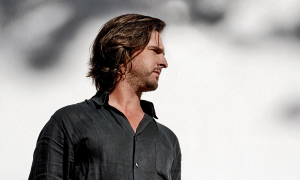
 T.S. Monk is a voluble speaker. Which stands to reason since he is also an exceptionally engaged man. Not only does Monk have a new release due this August, Higher Ground , he will also launch his own label, Thelonious Records, open his father's archives, continue in his capacity as chairman of the Thelonious Monk Institute, and proceed with his work on a Broadway play.
 T.S. Monk has been on the scene for quite some time, working first within the straight ahead jazz environment. He then spent several years in the Funk and R & B arena before returning to jazz where he made an immediate splash with the tribute recording Monk on Monk. In addition, he has kept a touring band together for over a decade.
T.S. not only has a lot to say, he says it freely, with great humor, excitement, and joy. It is a rare treat to speak with someone as forthcoming, insightful, and exuberant. The long conversation we had via cell phone covered many topics including his current projects, his childhood, jazz history, various anecdotes, and much more. Having taken place over a week ago now, the conversation still has me thinking, smiling'and laughing.
All About Jazz: You've got a lot going on. There's the new album, the Thelonious Monk archives, the new label, and I've just heard about a Broadway play?
T.S. Monk: The Broadway thing! Well, it actually started two years ago. I've been working with some people for about two years on a musical featuring Thelonious's music and the working title is 'Brilliant Corners'. In the process of doing that we've become a little bogged down with the writer. Not the musical writer, the scriptwriter. Broadway's difficult man! And with an artist like Thelonious, it's not quite as simple as'it's not quite the Benny Goodman Story'so it's been difficult. But in the process, I ran into a gentleman by the name of Hinton Battle. If you're not familiar with him, he won a Tony for Tap Dance Kid , and Little Miss Saigon.
In fact, I think not only is he the only African-American to win three Tonys, he's the only male to win three Tonys on Broadway. The third one is for something years ago, I'm not sure which. I ran into him because he's a friend of one of my cousin's and we got to talking. He always had an interest in Thelonious's music, and we talked some more, and next thing I know we we're putting together a production. So right now we're in the early stages of a production called, 'Monk and Battles' Hinton is doing the choreography and this guy who just won a Tony himself for Swing, Harold Wheeler'he just might be the most successful musical director over the last decade in Broadway'I think he's gotten two or three in a row'he's doing the music. It's going to be a collaboration of Monk and dance'A lot of people are not familiar with early Thelonious Monk.
They don't know that Thelonious grew up in the era when if you were a young musician'it didn't matter if you were a jazz musician or not'how did you earn a living? You played dances. I think that to a great degree that is the reason that the music which came out of the Be-boppers and the modern jazz players has always been so rhythmically'swinging! It's because it was all dance music, initially, and the grooves, the general ambience of the music was centered on dance until the dance floors were closed-off in the late forties and early fifties and we all started sitting and drinking and listening to the music instead of dancing. So this has become a lot of fun. There's a great deal of interest among the dancers because they don't get an opportunity to interact with music, particularly music as stylized as Thelonious's. He's a rare artist, period. So this is a great opportunity, Hinton feels'and I feel'he's coming up with some great stuff! I think it's going to be a whole lot of fun. Father would never believe it! But then, he would never believe his face is on a stamp...[or that] he's got a star on the Hollywood walk along with Bob Hope and all those people. You know, the skies the limit for Thelonious and I'm very excited about this particular project.
AAJ: That's very interesting. Just like you said, there seem to be so many myths about Monk's career'probably many more which you could tell me about than I can image'but particularly that early period. There's always this idea that he was totally obscure and unknown until Be-bop came along, that all the music took place alone in the dark at the back of Minton's.
TM: No, no, it's funny because I was looking at some pictures the other day of my father at a fund raiser with Ed Sullivan in a tuxedo, things like that. A lot of things that all artists do in the early parts of their careers that no one pays attention to'for anybody'you know?(laughing) We tend to lock into people when they come up on our radar and assume that's who they are. So for most people Thelonious is this austere, somewhat aloof figure. That unapproachable, irascible, and all that kind of stuff. Hey, man, he was a young guy out there trying to get over for a lot of years, man, and that involves doing a whole lot of things that every jazz musician today whose in the position to have a gig knows they had to do too' Jackie McLean was telling me about when he was sixteen years old. He had met Thelonious the year before when he was fifteen years old and he had a wedding to do, and he didn't have a pianist so he called his best friend at the time, a young drummer who was playing with Thelonious'Arthur Taylor'so he called AT and says, 'Man, I really need a pianist for this gig. I'm really stuck, stuckstuckstuck' and AT says, 'Well, call Monk!' And Jackie looks at him and says, 'What are you crazy? Whaddya mean call Monk? Call Thelonious Monk? This is a wedding.' And AT said, 'You know what, man? Thelonious is a musician who loves to play the music, and if he digs you it doesn't matter what kind of gig it is. It's music, right? Call him.' And Jackie McLean called him and they did that wedding.
AAJ: The They-Come-Out-of-Nowhere phenomenon. That's what I call it. Every artist has to come out of nowhere. That's the way Americans like it. You bust your ass for years, and you're doing this and that, and finally you get some recognition and suddenly it's 'First Time Writer' or whatever. No, no, you've been doing this all your life.
(Laughing)
TM: It's amazing.
AAJ: You're obviously very involved with your father's music. Some people would have gone a very different way, tried to distance themselves from it and I'm wondering'
TM: How did that happen? Well, I'll tell you. First of all, Thelonious'as were all of his friends, despite this very, very, gloomy, dark sort of gothic reality that has been created by back issues of down beat magazine, critics, and writers who couldn't get near any of these guys'all I remember my friends doing when he was with Miles, or Dizzy or Art, do you know what they were doing when they weren't playing? They were laughing and joking just like all the musicians you know. When they ain't playing, they're like children! Cracking jokes and laughing at each other, and talking about all kinds of silly shit. So it was a lot of fun for me.
Maybe that's what's unusual because Thelonious had me and my sister around all the time. See he liked me to be with him when he was with his boys. He liked to have the crew and his family together at the same time. So I didn't have anything but a good time. For me, remembering my father whether I'm remembering him musically'from playing with him'or just as dad, I always remember a lot of fun. A lot of laughing. A lot of joking. I don't remember a whole lot of downtime. This serious guy that people talk about, 'Well you don't say anything to Monk.' I don't even know who people are talking about. So for me, this is a ridiculous continuation of a story that's so much fun! Nobody has the right to have a story like this to talk about for an entire lifetime. I do! It's a great gift. For me, demystifying him for people, telling people what he was really like, that shit is a whole lot of fun because Thelonious has been elevated to the highest level you can be on this planet. I mean, when people say, 'This guy, we want to hear him for the next who knows how many hundred years.' That's reserved for the Beethovens, the Duke Ellingtons, maybe for the Stevie Wonders and Paul McCartneys, and the Thelonious Monks. It's a very small group of people. And even right now, some of the people that I mentioned that are my contemporaries, I don't really know for sure if people will be listening to the Beatles two hundred years from now. But I'm pretty sure they'll be listening to Thelonious Monk because he got into people's bones, man. It's really freaky.
I watched the whole process. I can still clearly remember when although within the industry the musicians treated him like god, I remember the ugly, almost vicious reviews he used to get. I remember one said he couldn't play, that he had no piano technique. I remember one said his songs were infantile. I remember all the ugly stuff. To watch it turn around, absolutely and completely, to the point where I'm hard pressed to find anybody over sixty years old and a jazz listener—anywhere'who'll say, 'You know, I didn't dig Thelonious in 1950' As a matter of fact, if every person at this juncture in my life who has told me that they were at the Five Spot Caf' when it all turned around for Monk'the Five Spot Caf' would have had to be the size of Giant's Stadium. Because I can't find nobody now who says they weren't there, you know?
(Laughing)
I remember those times. This is wonderful stuff. It's storybook stuff. To watch it happen, to watch your father go from what some people could describe as ridicule and disgrace to almost classic adulation, and to be designated one of the most important musical figure of Western Culture, period. Forget about it, that's it. I'm having a ball! I happen to be the one guy on the planet that can say, 'I lived with this guy for 33 years of my life. Oh yeah, I know what he ate for breakfast and how he acted. What kind of jokes he liked'. I can tell you honestly, that's very, very special. Very few people get the opportunity to spend ten seconds around real genius. I mean the real thing. Certified by everybody, everywhere. I did. That's an honor and a fuckin' privilege.
AAJ: I think what your saying is so important. There's a terrible propensity for myth building. How often do people get around genius? We get such a one-sided view and I think it has a very negative effect on people.
TM: Sure!
AAJ: If you never think about the fact that Monk had a family, and was a father, and laughed and played, then you get a real twisted vision of what you have to be to be a genius.
TM: Yeah. Exactly. I tell people, musicians all over. 'All that weird shit you hear about my father, don't believe that shit.' You see the kind of person I am. I'm Monk's son. I lived with him. He stayed home, so I'm his son. You see what kind of person I am. You see how I talk? Non-stop. He was a non-stop talker. That's how I became a non-stop talker. Listening to my father I'd say, 'God, is he ever going to shut-up?' When I read about 'Monk didn't like to talk' I've been laughing at that since I was twelve years old. What they don't write in that sentence is 'Monk did not talk. To me.' You know?
(Laughing)
TM: He certainly talked to John Coltrane. He certainly talked to Miles Davis, and Dizzy Gillespie. A whole list of players have written, and rewritten, and interviewed and re-interviewed about what a major influence Monk was in their life. Well, it's because he talked a lot. People think that jazz musicians spend a lot of time talking about music. But they don't really. They play the music. You talk about life. Then you try to tell the story of your life through the music. It's just a vehicle
AAJ: I think another element was that the environment was so different.
TM: Oh yes.
AAJ: The separation between the players and the writers, the critics, and the audience was much vaster in a lot of ways.
TM: Oh, humongous'just remember, there was the same political dynamic we saw raise it's head when Punk Rock came out. Even when Rock n'Roll came out. Be-bop was almost like anti-jazz when it came about.
 AAJ: Weren't there even people who suggested it shouldn't even be labeled jazz anymore?
TM: Oh definitely. The only major artist they ever got to speak negatively about it was'unfortunately'Louis Armstrong. But that was a political thing. And even to this day the jazz community doesn't hold that against Louis. Louis opened the door for all of us. That was at the end of his career'it doesn't count for me. It doesn't count for a lot of musicians. But there was a political dynamic to the music. These guys were anti-establishment, that's why the music got driven into holes in the ground.
AAJ: And it was anti-establishment before anti-establishment was cool.
TM: Yeah, exactly. It really didn't get cool until the sixties. And then all of those so-called Be-boppers ended up being the artistic sustenance of the intellectual youth that came up in the sixties and changed the whole god damn world!
AAJ: That's right. I have to ask this. Have you thought of doing your own biography?
TM: No, man, I'm only fifty-three. I ain't lived long enough'.There's more to know, more to learn. Just since I started this label. Come on! The original goal of the label, my mantra was 'I'm going to get the cottage industry of Thelonious Monk under Thelonious Monk's umbrella'. I was looking around at all the records, the T-shirts, pins, buttons, hats, all these things that I don't get paid for. And Dizzy don't get paid for. And Miles. There are a couple of people we deal with that are legit, but for the most part jazz has been free pickings for merchandizing, for piracy, all that kind of stuff. There's only one way to go for the records, you can't sue these people. But you can compete with them. And if the word is out there that this is the guy, this is the real thing. You know where the people are going to go because the loyalty of the jazz community is absolutely phenomenal. So in the process of the last few years, collecting pictures, videos, live tapes, legal tapes, all this stuff, I've learned even more about my dad that I didn't know. ..So I'm saying, man, these genius guys are really, really busy. There's a lot to know.
So I'm having a ball right now because I'm at a juncture in my life where I've garnered enough respect that a different level of people are talking to me about my father. Whether it's writers or journalists, they're talking to me about him in a different way. Other than, 'What was it like to grow up in a house of music?' So this has been a lot of fun. I'm still a couple years away from a biography. But I will do that. I'll do it simply because there's no one else to do it, so I gotta do it. I remember when Bird died all of a sudden there was a Charlie Parker society, but there weren't no Charlie Parker people involved in it. Just a bunch of people who liked Charlie Parker'When my father died my sister said, 'We're going to have to be the caretakers of the actual legacy of Thelonious Monk in every way right down to the things that are written about him from this point forward.' The whole process for me began with my involvement in Straight No Chaser and it's been me ever since. There's a lot to talk about. But I will do it, because it needs to be done. At this point still'but for the movie'Charlie Parker is a sound. All these millions of people who love Charlie Parker know him as a sound coming out of a horn. They don't know he was probably the most articulate jazz musician that ever lived. He sounded like a Harvard graduate. They don't really know about his whole history with Jay McShann and how he really became Bird. They just know he was this wonderful player, and he was a junky.
AAJ: And even the things that have been done, that are available, have been packaged in a certain way.
TM: They've been packaged in a certain way by certain kinds of people with certain agendas.
AAJ: Even the real hardcore academic stories may have it a little more accurate, but it doesn't have the life in it.
TM: Exactly. It doesn't have the life in it. I'm involved with a biographer. A family biographer that I'm happy to say I became involved with before my mother's passing a year ago because it was very important to me that she approve of something like that. So between all these things that I'm doing I'm still discovering this guy. And more from an artistic perspective as opposed to a father figure. That's been a lot of fun because as an artistic figure'he was a whole lot of fun as a father'but I see more and more why he was so important to so many people. It gets into questions of character and commitment and dedication. It gets into the bedrock of what every jazz musician wants to be. And he was that. When we first started the Monk Institute of Jazz, which'is based in Washington, D.C.'now Washington, D.C. is Duke Ellington-ville'the very first question of the very first interview I ever did for the Institute'was, 'How come this is the Monk Institute and not the Duke Ellington Institute?' That was the very first question I ever got. And you know what I said? I said, 'The reason is because Thelonious represents the quintessential ideal of what every jazz musician ever born wants to be including Duke Ellington.' And that is absolutely unique. Absolutely focused. Never let the bright lights blind you. Stay right on the nitty-gritty tip of the cutting edge of whatever is going on. That's what all of us want to do. And that's what none of us can do. Dizzy can do it now and then. Chick can do it now and then. Two or three cats can do it. Everybody's struggling to do it and we can't do it at all! But Thelonious did it with such ease and grace and dignity that cats like Miles and Max and Bird and Dizzy and everybody gave it up for Monk.
You never heard anybody say anything about Monk but, 'Damn! That's Monk'. That's what we all want to be. That's what I want people to say, 'That's T.S. Monk' Put on my records and walk by and say, 'That's T.S. Monk' That's what we all dream of as jazz musicians and Thelonious did it. And he did it through thick and thin. He did it when the money was there and when the money wasn't there. He did it when it was the thing to do and he did it when it wasn't the thing to do, by the end of the late sixties. In retrospect'and I saw it the day he died'everybody said, 'Oh shit. Monk died.' It cut right to the core of everybody in a different way than Dizzy. In a different way from Miles. In a different way from all these people, because when he died it fucked them up while they were alive. I know it. I used to see it when I was a little kid. All these guys were around then. They were just young musicians. What I did notice is they all had their own little universe walking around. You know, Miles used to come over to the house and used to knock on the door like a child. I would open the door, and I'd be looking up and (imitates a nervous voice) 'uh,uh,uh, is Thelonious in. Can I come inside? Tell him I'm out here' And he would come in the house, man. My father might be lying on the bed and he'd sit there tinkling on the piano for four hours if it took four hours for Thelonious to come out of the room. And I said, 'this guy that came through the door is weird. There's some special stuff going on with him. But there's really some special stuff going on with daddy. Because all these guys, when they get around daddy they start acting funny'. This is how a little kid sees it. I remember seeing it like that. 'These guys act really funny all the time. But then when they get in a room with daddy, they act a different kind of funny, and it's like he's the only one that's funny.' It was really, really weird. So I saw this early on. It's some special, special stuff. I see why he's held on high.
Now, at this juncture, having had my own jazz group for ten years and spun around the jazz world several times'both figuratively and literally'and seeing the exact same response to the name Thelonious Monk in South Africa, down in Rio, that I get in Tokyo and San Francisco, or that I get in Paris or Saskatoon, or Sidney. I mean, man, this is over the top.
AAJ: You hear it every day, so I might as well add my voice to it. I think it was Monk that brought me into jazz. Along with Tony Williams.
TM: A lot of people say that. And by the way, thank you for mentioning my man who is the master of the fifth house of jazz drumming which people don't talk about yet. I don't know why, although his disciples are everywhere'.yet people do not talk about the importance, the magnitude, or the influence of Tony Williams. He's unbelievable! There's an entire generation of imitators. But you know, imitation is the most sincere form of flattery, so what the hell. I just absolutely adore Tony. He's one of those cats where I say, 'I ain't never going to play like that, but I sure do now exactly what he's playing. He's playing some very special stuff.' I'think it was a great tragedy that we lost Tony Williams all of a sudden the way we did because he was just about to make a come back. People don't know what a great writer, and arranger and all the other things Tony was. When Miles broke up that band, Herbie was grown, Wayne was grown, Ron was grown, but Tony was still a kid. It took him thirty years to figure it all out'man, he was a baby when that band broke up. I'm surprised he didn't commit suicide.
I don't know if I would have known what to do, or had the wherewithal to figure out what to do at the end of the day. But he figured it out. I think it was only a month or two before his death'you know at the Institute we did a'T.V. special where we were able to bring Tony, Wayne, Ron and Herbie together for the last time. We didn't know that at the time. We thought it was the beginning'and they were groovin' on it'and for him to be taken from us like that, what a drag, man. What a drag. I'm sorry, I didn't mean to get side-tracked like that.
AAJ: No problem. It was really Williams that got me started. I even remember the album. Filles des Killamanjaro. I bought it just to hear Tony, actually. And that led me to all the rest. To Monk. It was Monk for a long, long time.
TM:Aren't you lucky, man! Do you realize how lucky you are to have run into those two guys? For your ears to actually get it from those two artists initially? That sets you up to hear all kinds of shit! And to recognize bullshit when you hear it. A lot of groovy shit comes from starting in the right places. I tell people all the time that if you start in the wrong place you can be fucked up for a lifetime listening to some wrong stuff, but if you start in the right place and your ears get tweaked properly on day one, man, skies the limit!
AAJ: I want to take some time to talk about your upcoming release, Higher Ground. This is a very interesting album. Is the band the same you've had throughout the past ten years?
TM: Parts of it. The vibe is the same. The only really new player is the trumpet player Winston Byrd. Byrd joined the band maybe two years ago. He was playing with the Ellington Orchestra and the Stylistics. Dig that double! A great young player. But the other guys, Willie Williams and Porcelli have been with me eleven years, Ray [Gallon] has been around about 4 years, and the bassist about 3 years. I'm a big believer in trying to hold a working ensemble together as long as possible, for any given working ensemble. It's rare that you're going to see me make a record with a new face that hasn't been working with me because I think you have to get to know each other'.I did Monk on Monk in '98. Now Monk on Monk for me'I'm not talking about the audience'for me was like the culmination of almost twenty years of being out here and being Thelonious Monk, Jr.
From the first day I started playing the drums, the first time people heard me play, they all asked, 'Did you play with your father? Do you play your father's music?' Bada-bing-bada-boom. I played with my father for five years. Then I went on and got involved with R & B for damn near 15 years, and that whole time it's still, 'What do you think of your father?' So I came back to jazz. I was surprisingly welcomed back to jazz, and all of a sudden not only do I have a little band going, but I'm actually popular and I'm working and my albums are selling. I got one of the hottest bands and I'm running around the world and still it's, 'You know he's a real fun kid. You should have seen him with his daddy. He's really fun. He did dance albums in the '70s. Great talker, you know he's a good speaker. And he's a good drummer, cat can play, cat can swing but, um, so what are you doing with your father's music?'
(Laughing)
TM(continued): What people didn't realize is, I'm a jazz musician. This is a heavy intellectual endeavor. You ain't got no dummies playing on the level that we play at. So I don't know why people wouldn't think that I know who Thelonious Monk is just like they know who Thelonious Monk is. I ain't seen no rush of musicians running to do no treatments of Monk's music. I do see hordes of musicians rushing away from Thelonious's music 'cause it's too difficult. And I'm just a god damn drummer what the hell do people expect from me? (laughing). I knew that at the end of the day, sooner or later, I was going to have to deal with my father. Just as a bandleader I had to be almost flawless because of who I was, I also knew that when I made a record featuring'not just putting one or two of my father's tunes on it'a record of my father's music it was going to have to be untouchable by the critics. It was going to have to be something that would slap the critics back; No fuckin' discussion, nothing to talk about, muthafuckas this shit is swinging like hell and everybody's playing their ass off. This is Monk and there's no doubt about it.
AAJ: You can't just wake up one morning and do that.
TM: No. It took me from '92 when I started the band to 1994 to get up enough courage and to get the credibility under my belt to even entertain the idea to the kind of people I wanted involved. Then it took me another four years to sort of figure out what the hell am I going to do? I mean, everybody's been doing this that and the other for years and years and years. I ain't the first guy to do a tribute to Thelonious Monk I gotta do one that's special. So to make a long story short when I did Monk on Monk and I had the help of Don Siegler and all the wonderful musicians that were involved that made it a success, for me it was like, O.K. everybody, I've dealt with daddy. Now you all know that I know who daddy is. I said, O.K. I've done the keeper of the gate thing, too. In '92 with a super-duper straight ahead band. We had just lost Art Blakey and that's what I jumped on, was that opening and everybody said, 'You gotta hear Monk. They're like the Jazz Messengers. It's like an old time band. They're swingin'' So I said, I've done the can he play thing. Now that I'd done the 'Can he play' thing and the 'here's to daddy' thing, both had been successful, and I did 'I wanna dance' thing in the eighties'and was successful at that'it's time now for me to be what I was taught to be by my father and I was taught to be a jazz musician.
The bottom line is you've got to be yourself. You can't give a god damn what the critics are going to say, and for that matter you can't really care'as you're creating'what your fans are going to say. What you have to do, you have to be who you are, you have throw yourself out, and let the chips fall where they may. I watched my daddy do that. I watched John Coltrane do that. I watched Herbie Hancock and Wayne Shorter do that, and I'm going to do that. What is a T.S. Monk really? Who are you really? And I said, you're a guy that grew up with Duke Ellington John Coltrane, Miles Davis, Charlie Parker, Max Roach, the Temptations, Elvis Presley, Little Richard, Fats Domino, the Beatles, and Jimi Hendrix. I said, you're a baby boomer, man. You got them crazy years that the baby boomers got. Now what do you like to do, Thelonious? Well, I like to play funk, and I like to sing a song, I like to tell a joke, I like to tell a story, I like to swing like hell, and I like to cool it, and I like all these things and that's what I'm going to do from this point on.
I'm going to be true to what my daddy always said, 'Be true to yourself. Do your own thing.' And I'm gonna let the chips fall where they may. Because what the world has told me. The world has told me, 'T.S. Monk, we like your dance music a little bit. And T.S. Monk we like your jazz music. T.S. Monk, we like the way you deal with your daddy, and T.S. Monk we like to hear you give speeches and tell stories,' and I said, 'I'm a cross talker'. That's what I am. It's not about fusion. I'm not a fusion guy. I'm a crosstalker. I talk in different languages, musically. If I play you funk, it sounds funky. If I play straight ahead, there's no doubt that this is a badass straight ahead drummer. And that's crosstalking. And I'm doing it all the time. It's not crossing over. You see crossing over'like and the guy I like most in the music is Herbie, he's a very close friend'Herbie has crossed over. Herbie can cross back and forth whenever he wants to'he does one now, then a couple years something else. Whatever he feels like.
A few years ago he was into the standards. But I'm the next generation. I'm mixed up. I'm schizophrenic. I want to do it all at the same time. Then I thought about it a little more and I thought, 'I know a lot of people like me that really, really love John Coltrane. And they really actually dig Kenny G. They really, really, really love Leon Thomas and Sarah Vaughn, and they really, really, really love Stevie Wonder and Paul McCartney. What's going on? Whose actually addressing that very, very real ear in the marketplace? I said, 'No one's got the guts to do that. Because no one wants to be honest enough to say, 'You know what? I like it all!' We are so accustomed now to the pigeonholes that you're shit better fit into a pigeonhole too. You better like a rock, or a funk, or a this or a that. It's not only the artist that has to be this or that, but the listener also has to be a this-listener or a that-listener.
AAJ: Identity formation. Exactly the opposite of the jazz mentality.
< Previous
Van Morrison: What's Wrong With This ...
Next >
Night Sounds
Comments

Tags
For the Love of Jazz
 All About Jazz has been a pillar of jazz since 1995, championing it as an art form and, more importantly, supporting the musicians who create it. Our enduring commitment has made "AAJ" one of the most culturally important websites of its kind, read by hundreds of thousands of fans, musicians and industry figures every month.
You Can Help
To expand our coverage even further and develop new means to foster jazz discovery and connectivity we need your help. You can become a sustaining member for a modest $20 and in return, we'll immediately hide those pesky ads plus provide access to future articles for a full year. This winning combination will vastly improve your AAJ experience and allow us to vigorously build on the pioneering work we first started in 1995. So enjoy an ad-free AAJ experience and help us remain a positive beacon for jazz by making a donation today.

Giveaway

Days remaining: 7