Home » Jazz Articles » Interview » Conversation with Avishai Cohen
Conversation with Avishai Cohen

usually what happens with me if I?m affected by something, by anyone, I take it and I absorb it and it goes to my own world.
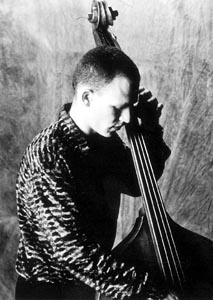 Avishai Cohen has already had a stellar musical career. Playing on bass, electric bass, and piano, Cohen has worked with Chick Corea, recorded solo, and founded his own rock group. He has proven himself both as instrumentalist and composer. With his latest release, Lyla Cohen has taken on the next challenge of label owner by founding Razdaz Records.
 Though Razdaz Record's only release to date is Cohen's recording, Cohen plans to expand the label in the future. With no specific plans, Cohen hopes the label will become home to a large diversity of music. Diversity is Cohen's modus operandi, as can be heard not only the current album, but also on his previous releases.
Cohen and I spoke a short while ago about his plans, politics, the definition of jazz, and, of course, his current work.
All About Jazz: Why did you start the new label?
Avishai Cohen: The label is something that I've wanted to do for a few years because I think artists should be more independent and not rely on record companies that don't always see or understand exactly where the artists is coming from. Even though I've had a nice relationship with Stretch Records, it's just that for me and my associations with so many great artists here in New York and everything I'd like to have not only the ability to record myself but in the future to record talented musicians that I believe in and just go anywhere any where I want to go, not to be confined to one style of music or my musical horizons are so broad and I'm involved in so many things that I've found the best way for me is to have my own label. So that is mainly why I did it.
AAJ: This release is the perfect launch for that kind of label. That is what intrigued me about the album, it's incredibly eclectic.
AC: Exactly.
AAJ: And not just eclectic from one track to the next, but within each piece as well. There's a lot going on.
AC: Exactly.
AAJ: I can see the connection between this music and wanting a label like you described.
AC: For an eclectic artist like me I need that and I think this record is saying pretty much that the label can go anywhere. I don't want to say, 'This is a hip-hop label, or this is a jazz label, this is a rock label' This label could go anywhere.
AAJ: So you are planning on brining in a lot of different styles of musicians?
AC: I imagine yeah. At this point I'm really having my own home and then once I start rolling and things are more in place and it gets stronger, then anything could happen.
AAJ: There are a few pieces that I wanted to ask specifically about. The opening piece, Ascension. There's a strong West African rhythmic base.
AC: Yeah, sure.
AAJ: I'm curious, does it have any relation to the Coltrane piece?
AC: Not really. I didn't think of that at all! I just thought of the name because of what it does. It's ascending this thing. It's just a very passionate high energy thing that launches the record. So I thought of that name. And I think it sounds nice, the sound of the name. It's a great word.
AAJ: On the piece, the African background is that something you've used before?
AC: Well, not really. I mean, it's something I have in me. I love that type of West African kind of trance like feeling in music in general and I know that in the different connotations that I've heard it, or been exposed to it, I think it got inside of me and entered my compositional world. I was in Japan when I came up with the basic groove on the keyboards I was playing it since in my hotel room and it was a percussive type of almost marimba like sound I was using and it kind of created that atmosphere. The whole tune came from that.
AAJ: I'm really interested in the incorporation of African ideas of multiple percussive voices, and basing the development of a piece on percussive development instead of melodic development.
AC: Right.
AAJ: So I was very intrigued by this piece. I know there are people doing those kind of things, but I don't think it has happened quite as much as it could.
AC: Yeah, it's a good thing.
AAJ: How did you choose the piece "The Watcher"?
 AC: I've been a fan of Dre for the last few years. I love good hip-hop. I don't know, his music just took me by storm.
AAJ: There's a lot of strength in his music.
AC: Oh, totally. I'm just in love with his grooves. I think he's a genius with grooves. It just effected me in such a way. I come from funk and I love that seventies stuff, so he's got'it's almost like he's the next take on funk but in this environment right now he's got a real cutting edge thing going.
AAJ: I was also very interested in your approach to the piece as well as "Handsonit". The way you use sampling, the very different sonic feel you create from most jazz.
AC: Sure. Well, I've been associated with this drummer'Mark Guiliana'who introduced me to this instrument, Handsonic, with a 'c' on the end. And it's like a drum pad thing where you play the pads.
AAJ: Yeah, I've used it.
AC: So we kind of fooled around with a few things and we came up with this fast groove that brought the idea for me to write something around it, and that's "Handsonit" which brought this whole thing where I wrote a horn line to go with it and it becomes almost a Jungle thing.
AAJ: If you didn't know what album it came from, you might think it came off an Earache record.
AC: Exactly. And some of the samples that you hear on some tracks are just sounds that I dumped'I have an XP-30 Roland, I used a few sounds from there'or there's some sample of this comedian Jim Norton. There's different stuff that we dumped to Mark's computer and then Mark explored with it over the tracks, and we just liked a few things and did it that way.
AAJ: That's a very different method compared to so-called traditional jazz recording.
AC: Oh, forget traditional jazz. I've never done that. Not to say anything against it. I think I have a lot of roots in traditional jazz so then it comes out when I do anything else because there are roots in my music, but I never go by whatever.
AAJ: I also wanted to ask about "How Long?" I read the notes you sent that referenced your friend that was killed.
AC: Yeah.
AAJ: And considering all the things that are happening now in the Middle East, do you see that as a protest song of some kind?
AC: The song definitely has a political message to it. I don't find myself'I don't do that a lot it just happened where I was writing a tune and at the same time that thing happened and it effected me emotionally and I kind of derived it from that and the song became kind of a political message tune. I can't avoid the struggle, the suffering, the horrible situation that I'm a part of. Even though I live here I am from Israel. I'm hurting when they are hurting. It came about like that. Also, the last few years I've been exploring some songwriting with people and being involved with that also brought me to the song, you know? Or the decision to include it.
AAJ: What is your perspective on what has been going on in Israel?
AC: Pretty much what I say in the song. I don't believe that we are right. I don't think that they are right, actually. I would say it's better to blame yourself first'not even blame yourself'ask yourself are you maybe wrong in some things and correct your side, correct what you do and maybe hope for enlightenment from the other side. There's a deep hatred at this point. It's pretty obvious that each side should give up a lot. It's the only way. I always keep my hope. I believe it's gonna be all right, even thought it's very hard to believe that anymore, but I really do believe it's going to be O.K. I don't know anymore. It's very frustrating. It's a very painful situation.
AAJ: Yes it is. For everyone. Do you think politics and art can mix?
AC: Nothing necessarily mixes unless it's your decision. It's your vision that mixes. Everything is mixed'or not. It's really a very delicate and open situation. Music mixes with anything because it is so vague and so magical. So, yes, depending on how open you are as a listener or an absorber and how open you are as a writer and as a reflector.
AAJ: I also wanted to talk about "Structure in Emotion" which was really one of the highlights for me. To me, it starts of almost in a classical area'
AC: Sure.
AAJ:'and then develops into a more fragmentary style. I was wondering if you could talk about the origin of the composition.
AC: There's a pianist in New York named Harry Whitaker. He's an older guy that is an incredible pianist. He used to be Roberta Flack's musical director. He's a jazz/pop/R&B artist that plays in this place Arturo's, this little restaurant downtown three times a week. I've known him for awhile. He's an incredible musician. He's one of my favorite piano players. He has incredible chord knowledge and is just a tasty, tasty musician. So every one in awhile I go down there and check out his playing and ask him about some chords. About a year ago he showed me this chord that's like pretty much a mirror chord. You play [Cohen proceeded to key a chord while speaking] two fifths on the left hand like C G D and then you go half step above and do the same thing from E-flat. Which is an amazing sounding chord. The next day I messed around with that kind of thing, that kind of sound and then I came up with this whole thing that goes [Cohen played again]. I just took it'usually what happens with me if I'm affected by something, by anyone, I take it and I absorb it and it goes to my own world. That is what happened and the composition came out of that. The whole first part'the more classical part'evolved into this thing where it goes toward a more rhythmic place which is very specific to me, or stuff that I do on the piano that are very rhythmic and percussive. I really don't know how to explain these things. It just evolved.
AAJ: To me, it was so distinctive because it was almost a sound essay on the transformation of jazz piano playing from the almost straight classical influence all the way to the more avant-garde styles of Cecil Taylor etc. Which also seemed to reflect the album as a whole.
AC: That's very interesting.
AAJ: Incorporating all these different influences into one line of development.
AC: Sure.
AAJ: I want to ask you a little more about that. You already said it, that you don't do anything the traditional way. In the jazz world'maybe even more than in other areas'the term crossing over is used a lot. Some people would label this a cross-over album. What do you think about that kind of term?
AC: I never think too much about those things as a creator. I don't have concepts. I don't think about those things that actually come back to me from other people later on. I'm very respectful of [them]. It's very interesting. It's like you throw an idea out and then it causes this thing where people want to think about it and talk about it which is the best thing about what we do. But as the one conceiving of it doesn't really matter to me if it's cross-over or not. I mean, in the idea of it. If it's gonna reach more people rather than the straight ahead, than great. It was never an intention though to it that way, it just happens. I think all my records have that. It's just that this one really goes'it's like there is something for everyone. So in that sense I'm happy of course. If that's what's called cross over, then coool.
AAJ: I almost never ask these types of questions, but this album made me think about how we define jazz. In terms of now we're in the 2000s. Where are we now as jazz fans? What does it mean?
AC: Sure, sure,
AAJ: Stealy Dan is out there, there are electronica musicians who sample heavily from jazz, and jazz musicians that use sampling, and this album incorporates so many of these techniques, that I have to ask you where is jazz right now?
AC: Where is jazz? I don't know, I don't know where jazz is. Jazz to me, the sound of jazz is Monk and Mingus and Ellington, and jazz is anything that has something to do with that, but to me I'm just happy to big a part of music that's improvised'that's the connection to jazz for me. Musicians that can improvise. But at the same time, I really consider myself just a musician. Someone who loves music and is reflecting on anything. I don't know, maybe jazz is where and a few other people are, or maybe not. [Laughter] Sorry, it's really hard for me to say.
AAJ: It's an open-ended questions. There are so many responses. My two favorites are Duke Ellington's and Louis Armstrong. Ellington said there are only two kinds of music, good music and bad music.
AC: I love that. It's one of my favorite responses too. I think it's brilliant. It just shows how brilliant he was. You can call him whatever you want to call him, but he was simply a creative beautiful musician.
AAJ: The same with Louis Armstrong's answer. He was asked, "What's jazz?" he answered, "Jazz is what you are".
AC: Yeah. Exactly. Wow. Beautiful.
AAJ: Going back to the individual tracks, I wanted to ask about your relationship with Chick Corea. There's that incredible duet. How did you start playing together?
AC: Some of my music was handed over to him. One of my first endeavors. I had a band here in New York around '96, '97 and he loved it and called me one day in New York and was basically very excited about my music and asked me if I wanted to sign with him and play with him. It was a very exciting thing. That's basically how it started to make a very long story very short.
AAJ: Playing with him do you primarily play on bass?
AC: Yes. I play bass only with him. As he is the best pianist in the world, I'm not needed.
AAJ: Has that experience playing with him effected your music?
AC: Oh sure. It's shaped me as a musician like no other thing would. I mean, he's a genius of music I can only thank'I don't know who'the gods, the lord. I'm very, very grateful that he chose me, that he embraced me and continues to embrace me as a very inspiring entity for him. It's a very, very incredible relationship.
AAJ: Will you continue to play with him?
AC: Yeah, I'm touring with him in November in Europe. We're doing a few tours a year. I'm much more busy doing my own stuff now, which is great. He, of course, is always doing stuff. But it's a very deep connection that we have so we stay connected and we play. The reason I have him on the record is that I wanted to show the connection that we have musically which is very emotional. I don't know, it's a life connection.
AAJ: You can here in the interaction you have that it's more than just'I don't want to say just'but just musical. There's a lot going on there.
AC: Yeah.
AAJ: What's the next step for Razdaz?
AC: The next step for Razdaz at this point is just to support Lyla and go day by day. Razdaz is already scheduled to get in the studio for me in February to do my next record which when you called I was in the midst of writing.
AAJ: Sorry.
AC: No, it's cool. It's all right. That's how it is. I'm already finished'not completing'shaping the whole record.
AAJ: Is that going to be as diverse as Lyla.
AC: I don't think it's going to be as diverse as this one. I'm going for more, how can I say, more of a complete sound of a record. Some of the pieces are telling me I'm going back to my first record almost. I'm going back to the sounds of my first recording which are a little middle-eastern.
AAJ: That will be very interesting. I look forward to it. You'll be here in D.C. fairly soon right?
AC: Yes, I think that's right.
AAJ: I'm sure I'll be there.
AC: Great. Come and say hello.
AAJ: Thanks.
Website: http://www.avishaimusic.com
< Previous
A New Face - Make Mine an OliRockberg...
Next >
A Talk with Dr. Larry Ross
Comments

Tags
Concerts
For the Love of Jazz
 All About Jazz has been a pillar of jazz since 1995, championing it as an art form and, more importantly, supporting the musicians who create it. Our enduring commitment has made "AAJ" one of the most culturally important websites of its kind, read by hundreds of thousands of fans, musicians and industry figures every month.
You Can Help
To expand our coverage even further and develop new means to foster jazz discovery and connectivity we need your help. You can become a sustaining member for a modest $20 and in return, we'll immediately hide those pesky ads plus provide access to future articles for a full year. This winning combination will vastly improve your AAJ experience and allow us to vigorously build on the pioneering work we first started in 1995. So enjoy an ad-free AAJ experience and help us remain a positive beacon for jazz by making a donation today.

Giveaway

Days remaining: 4