Home » Jazz Articles » Meet the Staff » Meet Carl L. Hager
Meet Carl L. Hager
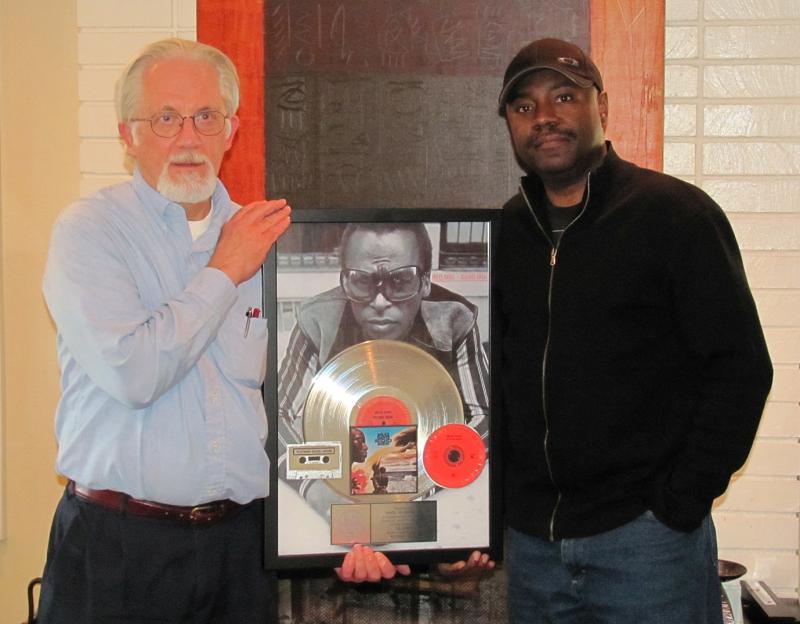

I joined All About Jazz in: 2009
What made you decide to contribute to All About Jazz? I've been a writer and editor most of my life, and I love jazz. One day after I'd been reading All About Jazz for a few months, I inquired to see what it would take to submit reviews. Magazines can be pretty closed shops, so I didn't know what to expect. But the publisher, Michael Ricci, got in touch with me right away, and I started by reviewing a recording of Chick Corea and Hiromi. I was a little stunned, frankly, at how easy he made it to get on board. A year or so after that I emailed again and asked if they could use a hand in the editorial department. Besides editing, I'd also spent quite a few years as an educator and knew how to coach people. Friends in the music community regarded All About Jazz highly, and I thought the magazine's mission deserved support.
How do you contribute to All About Jazz? Besides my own opinion pieces and reviews, I'm a Senior Editor and concentrate on our live reviews. We have contributors all around the world who attend jazz and blues shows, and then write reviews. Some are professional writers or have aspirations to be, some are doing it as a labor of love. I edit coverage of all the established festivals here in the U.S. and Canada and Europe, the new ones as well, plus now we are seeing more and more reviews of the newer Asian and Scandinavian festivals, ones that are booming along but largely ignored by other jazz publications.
What is your musical background? I studied some music theory and composition in school, sang, played clarinet and bassoon in the orchestra and band. But it was apparent by my late teens that my natural instrument was a QWERTY keyboard, and I've long since left performing music to the people who do it much better than I can. I still study the piano a bit.
What was the first record you bought that you would still listen to today? Interesting that you should ask... The first one I remember is Van Cliburn—who died just last week—playing Tchaikovsky's Piano Concerto No. 1. I've since replaced it with another one, a clean vinyl copy, and I still listen to it. When he won the 1958 International Tchaikovsky Competition in Moscow by performing that piece, the impact he had on U.S.-Soviet relations was fantastic. They loved him! His brilliance and passion won their hearts and had an immediate thawing effect on the Cold War, just like Duke Ellington's tour there a few years later. Music is a universal language and really can be used as a healing force.
What type of jazz do you enjoy listening to the most? It changes all the time. I go through phases when I listen to one kind exclusively for months at a time, like those early 1969-1970 ECM recordings, or 1964-1966 Miles Davis, but usually I move around. There isn't a single type that I listen to. I can enjoy listening to Glenn Miller as much as Charlie Parker. For the last few weeks I've been listening to a lot of traditional jazz and its contemporary derivatives.
Aside from jazz, what styles of music do you enjoy? All kinds. There's a quote attributed to both Louis Armstrong and Duke Ellington that says there are two kinds of music—good and bad. Lenny White [pictured above] told me once that he doesn't believe there is such a thing as bad music, only badly done music. There's no contradiction in those statements. Years ago at Roy Parnell's club in Seattle, I saw Max Roach take a solo, not on the drums themselves, but on the metal drum stand, and it was one of the most artfully creative musical performances I've ever seen, a drum stand played well. Musical expression is about the musician, not the instrument. It's easy enough to think that beat boxing is something less than musical, but then along comes Butterscotch, who blows the room away doing all three parts of a piano trio.
What are you listening to right now? A lot of "traditional jazz" as it's called, James P. Johnson, Louis Armstrong... Duke Ellington on the live recording in Stuttgart recently reissued by the new JazzHaus label. Lorraine Feather's Fourteen (Relarion, 2012), Dick Hyman's collaboration with Heather Masse—I wondered what would get the grand old master to do an entire album with a new female singer, and now I know. Damn, that girl can sing a lyric! There's a young jazz violinist working with Bruce Forman in USC's program here in L.A., Nora Germain, who hasn't done much recording yet, but she will—if you check her out on YouTube, she has moments when she swings like Stephane Grappelli.
Which five recent releases would you recommend to readers who share your musical taste? For those who share my taste in jazz/rock: Bitches Brew Live (Columbia Legacy, 2011), recorded at Newport a month before they went into the studio, a totally phenomenal set; Return to Forever: The Mothership Returns (Eagle Rock, 2012), a great recording, easily the best capture ever of those three guys, partly because of the sweet production values and partly due to the addition of Ponty and Gambale—the stylistic variables they brought to the table stretched the three principals way beyond the old meters and grooves, and helped to get those tunes to swing; and Mercy, Pity, Peace & Love (MoonJune, 2012). Leonardo Pavkovic is doing so much with his label to make a place for Jazz/Rock 2.0, to get people past the snobbery of "Is it jazz, or is it Jazz, or is it Jazz" arguments. Fourteen from Lorraine Feather and Stephanie Trick, a.k.a. Nouveau Stride, which will blow away the fans of Lorraine's "lyricizing" of trad jazz tunes and make them think they've died and gone to heaven... Stephanie Trick's stride piano technique and touch have advanced so far that in a blindfold test, you'd guess she was male and black, with hands the size of McCoy Tyner's. Big Bands Live: Duke Ellington Orchestra (JazzHaus, 2012), the live recording I mentioned earlier, a beautiful remastering of Duke's band like you've never heard it before. Really, because unless you were there in Germany—or even if you were—you never could have heard it with this fidelity. Toots Thielemans: Yesterday and Today (Out of Blue/NAXOS, 2012), a 2-CD compilation of rare and unreleased material. He's the world's reigning champion chromatic harmonica player, and a master guitarist; in his 91 years on Earth, Toots has played with Jaco Pastorius, Miles Davis, George Shearing, Quincy Jones... Billy Joel once flew to Paris just to talk him into playing on a single track on one of his albums. People sometimes loosely say a musician has "played with everybody," but Toots may have actually played...with...everybody.
What inspired you to write about jazz? Reading jazz criticism, good and bad both. The good ones like Leonard Feather, Nat Hentoff, Len Lyons, Will Friedwald, made me want to hear the music they reviewed, and also convinced me I could write about jazz, too. All the bad ones, the ones who inspired Thelonious Monk to say "Writing about jazz is like dancing about architecture," would always piss me off and inspire me to write something useful. It was fated.
What do you like to do in your free time? Any hobbies? Sleep, when I can arrange it... There's not a lot of free time lately, but I'm usually doing what I enjoy anyway, writing and editing, so that's okay. When I can, I like to do get out of town and do some traveling and hiking, and I carry a camera and tripod along. I do some drawing and painting. California's dramatic terrain makes short jaunts possible to the Mojave Desert, Pacific Ocean, the Sierra Nevada mountain range. The hard part is just getting into a car and leaving the city.
What role does jazz music play in your life? I'm usually listening to jazz wherever I am, certainly more jazz than any other musical genre. Classical European music is what I heard in school, and I still listen to it. I grew up with Jimi Hendrix, Cream, the Rolling Stones, so I'll always listen to rock and roll... the Beatles, and Bob Dylan, of course, who defy genre. My mother's big band record collection that included George Gershwin and Artie Shaw really flipped my switch, so when I eventually heard Return to Forever's 1974 recording Where Have I Known You Before (Polydor, 1974), that was it. It pretty much became "all jazz, all the time" after I backtracked to Bitches Brew (Columbia, 1970). That revolutionary recording may well be the most important in the last fifty years, not just because it emancipated jazz, but because in the process of embracing the current culture, jazz was likely brought back from the brink of extinction by becoming relevant and inviting again—people were finally getting up on their feet and dancing to the music, or at least dancing in their heads.
How does writing about jazz contribute to the music itself? Writing about jazz can help solve the biggest problem jazz has, which is that people haven't been exposed to it, or they don't really know what it is. They don't know that much of the music they hum along with as they watch television—the theme on sitcoms like Barney Miller in the 1970s or Moonlighting in the 1980s, or Two And A Half Men right now, is jazz, written and performed by jazz musicians. A little on the smooth side, true, made for television, but that's what it is. When jazz writing is done well, it opens doors and makes connections for people by encouraging the reader to listen to music he or she might not otherwise have heard. When it falls short and becomes a humorless search for adjectives that describe some intellectual abstraction, it's an annoying waste of time—except for those three or four devoted readers. Jazz appreciation has suffered from a clubbish eletism from the beginning. When a jazz musician has to support himself by driving a cab, there's a problem. My thought is that really good jazz writing ultimately serves the music and musicians by getting people to go out and hear it, or buy the CDs, and listen to it.
What do you like most about All About Jazz? The wide range of material. It feels more like entertainment than some other publications. I don't know any other magazines that publish humor, for example, which was part of the tradition in the beginning at publications like Esquire and Playboy, bastions of jazz writing back in the day. Jazz is serious enough. Reading about it shouldn't feel like a homework assignment.
What positives have come from your association with All About Jazz? As an editor, I've enjoyed supporting the open-door approach to publishing a large range of writers, and as a writer I've enjoyed being supported. For me as a reader, AAJ has meant exposure to music I never would have heard before. Invariably I find myself reading coverage of up-and-comers in a small festival around New York, or a CD by soon-to-be-legendary improvisational luthiers recorded in a Finnish train station. Working with AAJ has some nice perks, too—introducing yourself to a musician as a contributing writer or editor for AAJ will often get you backstage where you can talk some real music and learn something. More and more record labels send me CD promo copies as they get to know me, which I appreciate, and press credentials are nice for getting ticket comps if I need them. But probably the biggest positive is that I'm starting to really learn how to effectively support the music I love. It is a very competitive arena. Due to the relative ease nowadays of digital recording, the sheer numbers of people involved have increased dramatically. So the music industry has become more and more dependent on writers, publicists, web designers, media consultants, etc. for the exposure they need in order to compete for attention in the marketplace. Musicians all want 5-star reviews, certainly, but sometimes a critical review from someone who knows what he's talking about is more valuable—to both the musician and readers alike—than a complimentary review from someone who doesn't. Like the saying goes about opinions and alimentary orifices, everybody has at least one. Realizing this, the musicians I know don't concern themselves very much with a writer's piece, one way or the other, unless it contains some insight and strikes a chord. I'm learning to concentrate more on researching the music, and less on finding the perfect adjective or synonym to describe it. A writer needs to first have something useful to say.
Carl Hager at All About Jazz.
Photo Credit
(with Lenny White) Mike Rubio/Bluebird Imaging
< Previous
Carl Philipp Stamitz: Quartets for Cl...
Next >
City Mainstream
Comments
Tags
Meet the Staff
AAJ Staff
United States
California
Los Angeles
Michael Ricci
Chick Corea
Hiromi
duke ellington
Miles Davis
Glenn Miller
Charlie Parker
Louis Armstrong
Lenny White
Max Roach
James P. Johnson
Lorraine Feather
Dick Hyman
bruce forman
Stephane Grappelli
Stephanie Trick
McCoy Tyner
Jaco Pastorius
George Shearing
Quincy Jones
Thelonious Monk
Artie Shaw
For the Love of Jazz
 All About Jazz has been a pillar of jazz since 1995, championing it as an art form and, more importantly, supporting the musicians who create it. Our enduring commitment has made "AAJ" one of the most culturally important websites of its kind, read by hundreds of thousands of fans, musicians and industry figures every month.
You Can Help
To expand our coverage even further and develop new means to foster jazz discovery and connectivity we need your help. You can become a sustaining member for a modest $20 and in return, we'll immediately hide those pesky ads plus provide access to future articles for a full year. This winning combination will vastly improve your AAJ experience and allow us to vigorously build on the pioneering work we first started in 1995. So enjoy an ad-free AAJ experience and help us remain a positive beacon for jazz by making a donation today.Near


Giveaway

Eligible winners: 15
Days remaining: 5
Days remaining: 5