Home » Jazz Articles » Interview » Dick Hyman: The Beat Goes On
Dick Hyman: The Beat Goes On


A New York City native, Hyman served as pianist with a Dixieland band and with Lester Young at the December 1949 opening of Birdland. He served as pianist for Charlie Parker and Dizzy Gillespie when they blew through "Hot House" on network TV in 1952 (the only known surviving video with audio of Parker).
If you add up his own live and studio sessions, orchestral compositions, and movie soundtracks and scores, you will find more than 100 titles under Dick Hyman's name. Early recordings such as Dick Hyman & His Trio (1961, Command) featured impeccable jazz turns through showtunes and standards by Cole Porter, Fats Waller and Rodgers & Hammerstein, all of whom continue to inspire his piano playing. The Eclectic Electrics of Dick Hyman (1969, Varese) stood among the first albums to explore the Moog synthesizer, and even scored a Billboard hit single ("The Minotaur"). In 1977, he recorded A Child is Born (Chiaroscuro), a solo piano album that transfigured its title track into the styles of eleven different pianists. A subsequent series of solo albums brilliantly reflected upon the compositions of Porter, Irving Berlin, Harold Arlen, George Gershwin and other writers of the Great American Songbook.
Hyman's soundtrack work includes The Wiz (1997, MCA), A League of Their Own (1992, Columbia) and the shimmering Moonstruck (1988, Capitol). His music has helped shape twelve different Woody Allen films, and his taste and dexterity for classic jazz play essential parts in some of Allen's most evocative, New York-centered cinematic visions, such as Broadway Danny Rose (1984), Bullets Over Broadway (1994) and especially Radio Days (1987). You can even see Hyman in front of the camera, in his cameo as a bandleader in Allen's Curse of the Jade Scorpion (2001).
Even so, Hyman's own discography barely contains his lifetime of music. He served as arranger, conductor and pianist for Twyla Tharp's jazz-inspired dances Eight Jelly Rolls (1971), The Bix Pieces (1971) and Baker's Dozen (1979), and served in the same capacity for The Dance Theater of Dallas' choreographed production of Miles Davis: Porgy & Bess with the Dallas Symphony Orchestra (1983). He won an Emmy® Award for his musical direction of a PBS television special on Eubie Blake, and another for his score to the children's special Sunshine's on the Way.
Session credits include work with such legends as Tony Bennett (Snowfall [1994, Columbia]), Ella Fitzgerald (1954—'55 [2008, Classics]), Coleman Hawkins (Hawk Talk [1996, Tradition]), Antonio Carlos Jobim (A Certain Mr. Jobim [1967, Warner Bros.]), Quincy Jones (Smackwater Jack [1991, A&M]), Wes Montgomery (Fusion! Wes Montgomery with Strings [1999, Original Jazz Classics]) and Perez Prado (Voodoo Suite/The Exotic Suite of the Americas [1990, Bear Family]).
And the beat goes on: Hyman has celebrated and spent his 85th year by wrapping up four new projects spanning 2012-'13.
 Late Last Summer (2012, Left Ear Music) teams the pianist for the first time with his daughter Judy, on a series of original waltzes written by Judy and arranged by daughter and father to honor members and memories of their family and friends. Judy Hyman records and tours as violinist for The Horse Flies and for Natalie Merchant.
"Late last summer," Judy wrote in her liner notes, "my father and I spent a week in a studio recording some waltzes I've written over the past ten years or so. We had never recorded together before, despite his lengthy career as a jazz pianist, music director, and composer and my work as a violinist/fiddler, composer and teacher. With his 85th and my 60th birthdays approaching, this seemed like a beautiful way for us to connect and collaborate."
"The project turned out to be a deeply emotional experience for both of us."
Listening to this project turns out to be a deeply emotional experience, too. "Johnny's Gone" sings a haunting elegy for Horse Flies co-founder John Hayward in Dick's unmistakable, pristine yet soft solo piano voice. It is beautiful enough to make the hardest heart weep. "Julia" respectively celebrates their mother and wife; "Beth," for Judy's sister/ Dick's daughter, bounces on deeply rolling piano like she's surfboarding boogie woogie piano waves. And "Breathe" is splendidly if inscrutably notated: "For when you're not breathing, but ought to..."
Lock My Heart (2013, Red House) presents Hyman in another duet, with vocalist Heather Masse from the Canadian folk duo the Wailin' Jennys. The duo met when they appeared on the same episode of Garrison Keillor's radio show A Prarie Home Companion; Masse has also appeared with Mark O'Connor's Hot Swing ensemble and the Boston Pops Orchestra.
Folk and swing may be Masse's standard trade, but on Lock My Heart she rolls and tumbles with her pianist through the blues. Full of breathless reverence and wonder, her voice haunts this thoroughly mesmerizing, opening version of "Bewitched, Bothered and Bewildered." Masse rips into the closing verses of a slow-rolling "Since I Fell for You," and wistfully wonders why "I Got It Bad and That Ain't Good," while Hyman adorns her in twinkling blue ripples.
Hyman allows his fondness for jazz-related showtunes to shine through the Kurt Weill medley "September Song/Lost in the Stars," which Masse grounds in her lower register, as solid and warm and polished as elegant mahogany.
 Dick Hyman & Ken Peplowski...Live at the Kitano (2013, Victoria Records) captures the pianist's improvisatory duets with clarinet and saxophonist Ken Peplowski recorded live at the Kitano in New York City. This Peplowski live date echoes Hyman's series of duets with Dixieland/swing cornet player Ruby Braff, which includes Play Nice Tunes (1996, Arbors) and Music from My Fair Lady (1989, Concord Jazz) and Music from South Pacific (1991, Concord Jazz).
Hyman brings Peplowski back to the Richard Rodgers songbook for the opening "Blue Room," which steadily builds a lively monument to their joint taste, technique and telepathy. Hyman's rhythms lead the bluegrass traditional "Yellow Dog Blues" to roam through open fields of piano boogie, while Peplowski somehow finds space for his clarinet to thrive in between the pianist's quicksilver left and right hands.
The dynamic duo illuminates two Thelonious Monk tunes: Peplowski's playful clarinet sound energizes the whimsical, unique charm of "I Mean You," as Hyman dances through his unaccompanied break, and then they chase each other around angular circles until somehow arriving at the ending together. "Ugly Beauty" is more reflective and gentle, with clarinet and piano gently nuzzling, wandering off from and then returning to, Monk's melody.
Dick Hyman's Century of Jazz Piano—Transcribed! (2012, Hal Leonard Books), the fourth project, provides exact transcriptions and notations of Dick's commentary and playing that he first recorded on the CD-DVD Dick Hyman's Century of Jazz Piano for Arbors Records in 2009. It features thirteen theory and practice lessons that begin before Scott Joplin and culminate in modal post-bop; the DVD is filled with close-ups of Hyman's hands as he plays and dissects these tunes and techniques. Hyman's instruction and explanations are exquisite and profound (for example, using Tchaikovsky to introduce the lesson on Erroll Garner).
"In the 1990s, I recorded a history of jazz piano which eventually became the present book, Dick Hyman's Century of Jazz Piano—Transcribed!," he wrote in its Preface. "When I began playing professionally in New York in the 1950s, jazz morphed from swing to bebop almost overnight, and in the recording, radio and television studios where I most often found myself, I came to understand that this evolution was a natural part of history, and that a professional player should be aware of the distinctions among piano styles and be able to play appropriately in whatever situation he found himself."
Who could possibly be more qualified to teach this course?
A Yamaha artist, Dick Hyman has won seven Most Valuable Player Awards from the National Academy of Recording Arts & Sciences and is a member of the Jazz Hall of Fame of the Rutgers Institute of Jazz Studies.
All About Jazz: There's a great line in one of your online biographies: "Dick Hyman once recorded an album on which he played A Child Is Born in the styles of eleven different pianists, from Scott Joplin to Cecil Taylor." Please share some of your recollections about this album?
Dick Hyman: It was recorded for Chiaroscuro Records, 1977, and the producer was my friend Hank O'Neal. I will read you what I wrote for this release: "A few years ago, John Gensel, Doctor of Divinity and Associate Pastor of St. Peter's Church in New York, whose jazz ministry has helped and inspired countless musicians, encouraged me to work up a concert lecture on the history of jazz piano. I had been preparing this material, in effect, for most of my career but hadn't realized until John's generous offer to have me perform that I could actually put it together. Since the first trials at the church and at John's class at Wagner College, I've played the history many times, usually selecting specific pieces from the various periods that illustrate the evolution of jazz piano. Once, however, a little before one of John's classes was about to begin, it occurred to me to play all of the styles I explore as variations on one tune: 'A Child Is Born' by Thad Jones. This song, which has lyrics by Alex Wilder, proved surprisingly adaptable, and the present recording was an outgrowth of this occasion—not the concert lecture itself, but an unexpected dividend from it."
Since that time, I've continued to do my "History of Jazz Piano," and that culminated in the package of discs for Arbors Records which was called Dick Hyman's Century of Jazz Piano. And more recently, I transcribed the DVD that is part of that set of discs with text and everything I played on that disc; so, that's called Dick Hyman's Century of Jazz Piano Transcribed. It's in book form, with the DVD inserted and published by Hal Leonard Music.
AAJ: Not yet: Who were the eleven pianists?
DH: Scott Joplin, Jelly Roll Morton, James P. Johnson, Earl Hines, Fats Waller, Teddy Wilson, Erroll Garner, George Shearing, Cecil Taylor, Art Tatum, Bill Evans and myself. However, the record has never been reissued, even as a CD. I don't know the status of the company, whether it's still in business or not, but the recording remains only as a pretty obsolete LP.
AAJ: How did you get started? Did you take lessons as a child or was there a piano in your home or were your parents musicians or...?
DH: There was music in the family and my principal influences were two: When I got old enough to take lessons, I studied with my uncle, Anton Rovinsky, who had been a concert pianist. But more to the point, when I was a kid, I had a big brother, Arthur, six years older than me, and he actually showed me around the keyboard—and even more important than that, he began to bring home the reissues of all the classic jazz things from the 1920s and '30s. My brother has since passed. His middle name was Charlap (like Bill, who's actually a distant relative).
AAJ: You have created a tremendous body of work. Can you articulate verbally some of the principles to which you've been true artistically?
DH: Principles? Do the very best you can. Whatever the particular project is, try to get inside it, study how it's been done before, see how you might do it in some related way, and just do your best. And make sure that you practice a lot.
AAJ: I've seen your work without actually seeing you play: A friend has a player piano and last week we listened to your Dick Hyman Plays Blues & Boogie disc. Do you remember recording that?
DH: That was for Pianodisc. I've actually done several others for Sony in their Pianosoft catalog as well.
AAJ: Do you tend to approach the music differently when you're recording one of those player discs compared to "a regular" recording session?
DH: No, it's very much like a sound recording. It is a recording: You may do each tune in more than one take, probably at least two, maybe three, and you try it out in different ways. It is very much like recording a solo piano album. I can't think of a significant difference.
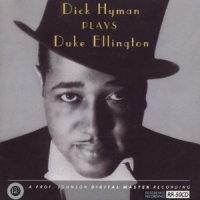 AAJ: You did a series of solo albums devoted to such composers as Cole Porter, George Gershwin and so on, including Duke Ellington. Would you share your thoughts on Ellington as a composer, and as a pianist?
 DH: Well, the Ellington project was a little bit different from the others, "the others" including Gershwin, Porter, Arlen, Rodgers, and Berlin. Ellington's tunes were ingenious, and more to the point, they came out of a jazz background. You can't say that for some of the others—you can make them into jazz, and they're wonderful vehicles for jazz playing, such as Richard Rodgers' earlier songs with Lorenz Hart—but Ellington was already there, in the jazz world, when he composed his pieces.
On that Ellington album I liked going back to some of the things he did in the 1920s, as well as his later standard songs. Some of the older ones are very much like the trial improvs that a jazzman would make in approaching a set of chords. Ellington has a certain catalog of devices he'll apply to a series of harmonies. Which is the jazz way: You take a set of chords and pretty soon, after you've tried them out a number of times and probably changed them a bit, you start to make up your own melody, as opposed to the other process of decorating and embellishing the original melody.
AAJ: Was there or is there anything about Ellington's technique that made him such a special pianist or is it something different?
DH: His background was that of a stride pianist, and if he had done nothing along the lines of being a bandleader, he would have been another one of the wonderful group of people like James P. Johnson, Fats Waller, and Willie "The Lion" Smith. But Ellington's piano style, I think, evolved from his band. He was always leading a band. Many of his piano solos were introductions or interludes or alerts to the band as to what was about to come. He was cueing the band.
Some of his arrangements were a little loose in that regard, so that they could be expanded here and there or have interludes put into the middle by piano. And of course the people in his orchestra, having played with him for so many years, were very responsive, and it was to a very interesting degree an improvising ensemble. Some of the things were not even arranged to begin with, I think. Later on, perhaps they were notated, but if you listen closely to some of those older records, they sound as though everybody is faking it, but with Ellington in charge, of course. They're not exactly following the well-thought out harmonies that an arranger might assign them. And sometimes that collective process is what we like the most.
AAJ: Ellington also famously composed specifically for and around members of his band.
DH: It's true that it went that way too: The musicians often brought him their compositions, which he added to or perhaps fleshed out with improved harmonies. I think that's the case with Johnny Hodges, Cootie Williams, Rex Stewart, Barney Bigard and all the other musicians with whom he collaborated.
AAJ: It comes up in various online biographies of you but it never seems fully explained: You played "on one remarkable occasion" with Igor Stravinsky?
DH: (Laughs) Oh, yes. Well. This was in the time when I was recording quite a few sessions every week—daily, two or three a day, even. One of these assignments was to be in a pickup orchestra that Columbia organized for Igor Stravinsky so that they could have "The Ebony Concerto" recorded. If you recall, Stravinsky had written that on commission for Woody Herman; this time, it would be recorded by, I believe, what they called the Columbia Jazz Combo—at any rate, with Benny Goodman. That's how it happened: Stravinsky indeed conducted and we even did a couple of additional small pieces to fill out the date, but basically it was for "The Ebony Concerto," with Benny playing the solo part.
AAJ: Who introduced you to Woody Allen and how?
DH: I think the first film that I was involved with was Everything You Always Wanted to Know About Sex, But Were Afraid to Ask (1972). I played organ in a group organized by guitarist Mundell Lowe, and that's the very first thing. I recall that the second one was when they needed a solo pianist for Stardust Memories, and then I got involved in whatever was required in the following films. Woody began to need bands and original music, and everything followed.
AAJ: Had you or have you played with him?
DH: I did only one time, when I was the musical director of Jazz in July at the 92nd Street Y, a position I held for twenty years. One time, we got Woody's band to be featured on the same program as The Preservation Hall Jazz Band, and at that point, and only that point, I did sit in with them on one number toward the end.
AAJ: Do you both share much musical taste?
DH: The way it developed, we realized that we both have had a healthy interest in old time, 1920s kind of jazz. And, you know, that's Woody's great passion, playing the clarinet in the style of George Lewis and Johnny Dodds.
AAJ: Were you involved at all with Radio Days? Because the sound of the music in Radio Days is very much the like sound that comes from listening to you play.
DH: Ah, I like that. I wrote the famous jingle that Mia sang, "Re-lax," on instructions from Woody, who gave me the title, and I just wrote a typical constipation jingle such as I had been recording for years. The interesting thing about that tune is that it was filmed live in the RCA recording studios in New York on 44th Street: The vocal wasn't overdubbed, the band was live, the recording was live, and the filming was live, and it's the only time I know of in modern film history where that all happened at once.
AAJ: You've just used a phrase I'd like to ask you about: "Old time, 1920s kind of jazz." The phrase "classic jazz" often comes up in discussion of your work. Is "old time, 1920s kind of jazz" classic jazz to you?
DH: First of all, I may be celebrated for that affection I have for the "old time" stuff but I hate to see my reputation limited to that because, after all, I considered myself a "bebop kid" for a while, when I played in the 1950s and '60s. And there have been some other achievements too. But classic jazz means a lot to me.
The jazz of the '20s and so forth is what I was initially introduced to by my big brother, whom I mentioned before, and I learned those records by heart. And in those days, I played clarinet along with the records. (Laughs) I learned every bit of every recording by Bix Beiderbecke and Louis Armstrong and Jelly Roll Morton and so forth. I'm also interested in the dance music of the 1920s, not only the jazz. That's kind of fun to hear: the popular dance music, which often contained jazz solos, is interesting in itself in its old-time way. And I like to download music from 20s Jazz, which supplies a new old recording from that period every two or three days.
AAJ: Did you work much with big bands that featured vocalists?
DH: Remember, I was in New York in the recording crowd in the 1950s, '60s and '70s, even into the '80s. So I probably recorded with anybody you might want to think of, and I did arrangements for quite a few of them: Tony Bennett. Perry Como, Patti Page, Bette Midler. I once did an album for Frank Sinatra on which his voice was added later, so I'm not sure whether I can say that I recorded exactly with him or not (Watertown, 1970, Reprise). Then there were Lena Horne, Ella Fitzgerald on one date, The Mills Brothers with Count Basie, Rosemary Clooney with Benny Goodman, Pearl Bailey, Lee Wiley, and I won't even get into the rockers or rhythm-and-blues people.
AAJ: You were also one of the first people to record an album on the Moog synthesizer?
DH: I think my album (Moog: The Electric Eclectics of Dick Hyman [1969, Command, reissued by Varese/Sarabande]) was the first jazz/pop album in that genre, and it came after Switched-On Bach (by Walter Carlos [1968, Columbia]) but before Fumi Tomita on RCA-Victor. I believe mine was the first to venture away from the classics. I did two albums and one or two tracks additionally, which are heard on some albums by Enoch Light, but the big number—and a fair-sized hit—was "The Minotaur."
AAJ: Do you see yourself ever returning to electronic or synthesizer music?
DH: No, I don't. I played it in those days, but then other people began to specialize in it. I was still basically a pianist. But what I played a lot of in those years was organ, first a Hammond, then a Lowery, then a Baldwin. Other people were turning to electronics and becoming Moog artists, but I was beginning to wind it down, and when my mini-Moog kept needing repair, I got rid of it, and that was the end of it.
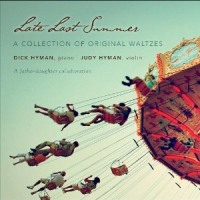
AAJ: Let's now turn to your 85th birthday celebration in 2012, which occasioned several releases of new music and even a book compilation. You will celebrate your 86th birthday on March 8. Let's begin with Late Last Summer: What's it like to create something that you know will endure artistically with someone you love as much as your daughter?
DH: It was wonderful. And since that time, which has been about a year since we recorded it, we've been closer in every way. We speak more often and I look forward to our getting together. We have a great deal more in common now having done this album and placing our hopes in having it heard. The collaboration was very sweet and healthy in that way. And it has already led to other performances.
AAJ: Why do you think the waltz form has endured for centuries?
DH: I don't know, but you're right to observe that. It certainly represents romance. It represents fun and gala occasions and all the images out of Vienna. Musically, waltzes have always been appealing. And they still work!
AAJ: It seems like you only need to pick up on its rhythm once, and you never lose it afterwards.
DH: Recently, when my daughter was visiting us, we happened to go through a book of old music that had quite a number of Strauss waltzes in it, and I played them for her and we analyzed and appreciated them. They're so well written, so nicely arranged for the piano.
AAJ: Is there anything you or your daughter learned about each other during its recording?
DH: You know, it was an interesting position for me to be in, because I was taking her compositions and in some cases adding some elements of harmony that hadn't occurred to her. So I was arranging them to some degree, and of course, she was rearranging them. It was good to work together, and I came to realize how professional she has become in her career. We were able to work together very well, even with occasional differences of opinion about certain things. We always came to a result we both liked.

AAJ: It seems safe to suggest that Lock My Heart with Heather Masse was also "a result we both liked."
DH: That happened so accidentally. I was a guest on Garrison Keillor's show—I was mainly there to play some piano solos and to do some two-piano duets with Rob Fisher. But Garrison had me accompany Heather with almost no notice and very little preparation. And it worked so well that when Heather had the idea about recording together, I was delighted.
AAJ: There's a lot of beautiful music on Lock My Heart, including and especially "Bewitched, Bothered & Bewildered." Whoever programmed the CD must also have liked it, because it's the very first tune.
DH: We both had a hand in it, but I think that was my immediate choice because the verse accompanied only by unison piano tones was so unusual, and we were so together on it, that it seemed like the perfect introduction.
AAJ: What is it about this tune, in her voice (and in your hands) that makes it sound so haunting and beautiful?
DH: It is a fine song. I recorded it on my previous solo piano album of Richard Rodgers songs, and I've played it many times throughout my career. I began playing it when I was doing club dates around New York City, playing what we used to call "society" affairs with Lester Lanin and that sort of orchestra. That's where a good deal of that old show tune repertoire comes from. You had to know those tunes and be ready to play them at a moment's notice.
AAJ: Is that one of your favorite moments on Lock My Heart too?
DH: Yes! That's why I wanted to put it first.
AAJ: Is it fair to say that Ken Peplowski is to jazz clarinet what you are to jazz piano?
DH: Ken is something else. I guess he cuts across genres as I do. I can't remember when I first met him. I know that, for one thing, he was in the Benny Goodman Orchestra on Benny's last television show, for which I was musical coordinator in 1982, I think. Ken was in the sax section—he plays excellent tenor, you know.
We have a common improvisational sense. There are many lucky moments on the new album we recorded together at Kitano, but when Ken and I play together, we assume those moments are going to be there because we tend to think alike. Usually, it's the pianist who's all over the place, supporting an instrument such as the clarinet when you have duets; but, in this case, Ken can do the same sort of all-over-the-place embellishment that I can. Without any preparation at all, we inject whole sections and interludes and long endings or delayed entrances and we follow each other. It's remarkable to play with him. We'll be together again, for the third time, at the Kitano in April 2013.
AAJ: You two sound so completely connected on that Kitano live album.
DH: Well, I think we know how to do it now. I think we were both surprised the first time we tried to do this kind of thing. I'm looking forward to the next time, in April, just to see what happens now.
AAJ: Will you also be recording that?
DH: We hadn't thought about that. Maybe we ought to.
AAJ: In addition to playing with Ken at Kitano in April, what else is on your upcoming performance schedule?
DH: I have some appearances here in Florida. I'll be at the Philharmonic Hall in Naples several times. I have an appearance in Sarasota shortly after that with a choral group called Gloria Musicae, for which I wrote a new piece that we'll premiere. Then in June, I'll be going out to Lincoln City, Oregon, for the Siletz Bay Music Festival, a chamber music affair where we'll be playing some of my pieces.
AAJ: What professional advice would you offer from six decades of experience?
DH: Whatever kind of music, whatever kind of job, you're being offered: Take it and expand your horizons. Don't confine yourself to only one path. That's my view, at any rate. I've always tried to do almost anything that came up. Looking back, I really am pleased and grateful that all those different opportunities came my way.
And also I would say to younger people: You have to get to a place where it's happening—New York City, still, and Los Angeles. Perhaps Chicago, I don't know. Maybe Nashville, for that kind of music. But you can't sit at home and assume that people will seek you out. You have to be there. You have to live there, it seems to me, in a place where there's a lot of music going on. It's true that there's less going on now, but that's a different matter, and wherever it is, you have to seek out the activity.
AAJ: Technology seems to be hurting just as much as it's helping. The era of downloads into personal players has killed music's communal listening experience. Some of my best college memories came from getting together with friends on a Saturday afternoon, walking into town to the record store, everybody picking something out and then going back to listen to everything together.
DH: And also, if I guess right, you listened to a track over and over again. I think there's something much more compelling about a physical record that you decide to play than there is just to summon down something or other from the universal mist. I'm in favor of records. I never got rid of my old collection. I just have good players and I still play LPs and 78s.
AAJ: You also lose a segment of the music's history: With liner notes, you could read who composed a tune, or arranged it, or played bass on it, but a digital download includes none of that information.
DH: That's exactly right, and there's a great deal of history and music appreciation to be discussed and learned from the old records. You can begin to understand peoples' careers from their appearances on various old records. You're able to study the music. Above all, you're able to hear it many times.
AAJ: What are some of things laying around that you've listened to in the past week or so?
DH: Well, I'm about to do a kind of concert which I've done a fair number of times before. I take an old musical film—in this case, films by Fred Astaire and Ginger Rogers—and have a scene from the film projected in the concert hall, and then I play that song in my own arrangement for a few minutes. Recently I've been watching those films and making notes of what numbers to select and exactly how to use the different scenes. That's been a considerable portion of this week's listening. Also, we have a couple of public radio stations down here, and I just turn them on and try to hear what they have of the classics. Now and then I listen to Keith Jarrett playing Shostakovitch.
Another thing I heard last week: I played a bunch of old Art Tatum recordings, which are most precious to me. And by God he still sounds wonderful!
Selected Discography
Dick Hyman with Ken Peplowski, Dick Hyman & Ken Peplowski...Live at the Kitano (Victoria Records, 2013)
Dick Hyman with Heather Masse, Lock My Heart (Red House Records, 2013)
Dick Hyman with Judy Hyman, Late Last Summer (Left Ear Music, 2012)
Dick Hyman, Dick Hyman's Century of Jazz Piano (Arbors Records, 2009)
Dick Hyman, Thinking About Bix (Reference Recordings, 2008)
Dick Hyman, Solo Piano Variations on the Great Songs of Rogers & Hart (Jazz Heritage Recordings, 2007)
Dick Hyman, Moog: The Electric Eclectics of Dick Hyman (Varese/Varese Vintage, 1997 [1969])
Dick Hyman, Elegies Mostly with Niels Pederson (Gemini, 1996)
Benny Goodman, Forever Gold: The Benny Goodman Story (Blue Note/Capitol, 1995)
Marian McPartland, Marian McPartland's Jazz Piano with Special Guest Dick Hyman (Jazz Alliance, 1995)
Dick Hyman, Dick Hyman Plays Duke Ellington (Reference Recordings, 1993)
Dick Hyman, Dick Hyman Plays Fats Waller (Reference Recordings, 1990)
Dick Hyman, Themes & Variations on 'A Child is Born' (Chiaroscuro, 1977)
Photo Credits:
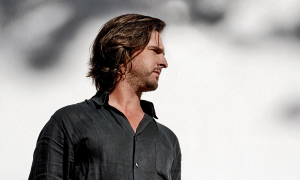
Page 1, Top: Jon Reis
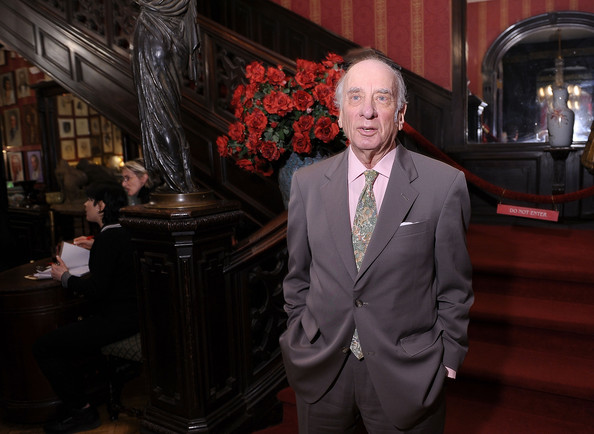
Page 4: Christopher Bunn
All Other Photos: Courtesy of Dick Hyman
< Previous
Meet Chris May
Next >
Flying Alone
Comments

Tags
Dick Hyman
Interview
Chris M. Slawecki
United States
New York
New York City
Lester Young
Charlie Parker
Dizzy Gillespie
Cole Porter
Fats Waller
Irving Berlin
Harold Arlen
George Gershwin
Miles Davis
Eubie Blake
Tony Bennett
Ella Fitzgerald
Coleman Hawkins
Antonio Carlos Jobim
Quincy Jones
Wes Montgomery
Perez Prado
The Horse Flies
Natalie Merchant
Garrison Keillor
Boston Pops
Ken Peplowski
Ruby Braff
Thelonious Monk
Erroll Garner
Scott Joplin
Cecil Taylor
Thad Jones
Jelly Roll Morton
James P. Johnson
Earl Hines
Teddy Wilson
Errol Garner
George Shearing
Art Tatum
Bill Evans
duke ellington
Willie the Lion Smith
Johnny Hodges
Cootie Williams
Rex Stewart
Barney Bigard
Woody Herman
Benny Goodman
Woody Allen
Mundell Lowe
George Lewis
Johnny Dodds
Bix Beiderbecke
Louis Armstrong
Patti Page
frank sinatra
Lena Horne
The Mills Brothers
Count Basie
Rosemary Clooney
Pearl Bailey
Lee Wiley
Tomita
Enoch Light
Rob Fisher
Lester Lanin
Keith Jarrett
For the Love of Jazz
 All About Jazz has been a pillar of jazz since 1995, championing it as an art form and, more importantly, supporting the musicians who create it. Our enduring commitment has made "AAJ" one of the most culturally important websites of its kind, read by hundreds of thousands of fans, musicians and industry figures every month.
You Can Help
To expand our coverage even further and develop new means to foster jazz discovery and connectivity we need your help. You can become a sustaining member for a modest $20 and in return, we'll immediately hide those pesky ads plus provide access to future articles for a full year. This winning combination will vastly improve your AAJ experience and allow us to vigorously build on the pioneering work we first started in 1995. So enjoy an ad-free AAJ experience and help us remain a positive beacon for jazz by making a donation today.Near


Giveaway

Eligible winners: 15
Days remaining: 4
Days remaining: 4