Home » Jazz Articles » Interview » Ithamara Koorax: Celestial Elegance
Ithamara Koorax: Celestial Elegance


Koorax's career highlights are numerous and diverse. She's recorded or performed with Antonio Carlos Jobim, Luiz Bonfa, Thiago de Mello, Hermeto Pascal and Eumir Deodato from her native Brazil, along with Dave Brubeck, Ron Carter, Larry Coryell, Claus Ogerman, John McLaughlin and stars from elsewhere in the jazz constellation. While Koorax was primarily introduced to international audiences through Serenade in Blue, licensed by Milestone Records for release in 2000, previous albums such as Ithamara Koorax Sings the Luiz Bonfa Songbook (King, 1996) were hits in her homeland and other countries.
Koorax and Azymuth soaked in the liquid warmth of Ivan Lins' title track for her Love Dance: The Ballad Album (Milestone, 2003) follow-up. On Autumn in New York (Jazz Station Records, 2005), she dedicated her stunning performance of "I Fall in Love Too Easily" to one of its most famous interpreters, Miles Davis, and dedicated "She Was Too Good to Me" to Chet Baker and Don Sebesky. In 2009, Koorax partnered with Brazilian guitarist Juarez Moreria for Bim Bom (Motéma), the first ever Joao Gilberto songbook. That same year, she collaborated with Swiss pianist Peter Schärli and his trio for the elegy Obrigado Dom Um Romao (TCB Music) upon the passing of the eponymous, illustrious Brazilian percussionist, followed with The Peter Schärli Trio featuring Ithamara Koorax: O Grande Amor (TCB Music) in 2010.
But like the enigmatic, exotic landscapes of her native Brazil, to many music fans Ithamara Koorax remains undiscovered beauty. Arranged and produced by Arnaldo DeSouteiro, Got to Be Real begins with several languid and lush interpretations of pop classics from the 1960s and '70s before moving into Brazilian and jazz colors. "Ithamara has been singing these songs for many, many years, and this trio has been touring with her since 2005, not only in Brazil, but also in Europe and Asia," explains DeSouteiro. "We've been doing little modifications all the time, experimenting with different tempos and details until we felt they were finished and ready to record." (Sadly, Mr. Bertrami passed away in July 2012.)
Most Koorax albums contain a moment when her throat opens and unleashes an impossible but perfectly rendered note. On Got to Be Real, it's her impossibly high and long sustained note that closes the first chorus of its title track, expertly rearranged into a simmering and luxurious Sade quiet storm. Wrapping "Going Out of My Head" in Koorax's passionate and colorful voice turns it into something much more than the original hit by Little Anthony & The Imperials, plaintive as a teenager in love.
"Toque de Cuica" lights up a Real Brazilian jazz manifesto, thundering with echoes of the groundbreaking vocal/percussion work by Brazil's Flora Purim and Airto Moreira while Koorax's voice, sharp as a whip, thrashes its melody forward. Rendered as a duet between Koorax's breathless voice and Bertrami's Fender Rhodes, "Can't Take My Eyes Off of You" illuminates the creative intimacy between these two musicians, as vocalist and keyboardist seem to each effortlessly know where the other will be.
What would Koorax say to jazz fans who think there's too much pop on Got to Be Real? "I didn't count if I was singing two or three or five 'pop' songs. I always choose songs that I like to sing and that I feel I can add something personal to," Koorax explains. "I don't care if they are jazz tunes, Great American Songbook standards, bossa anthems, pop hits, R & B songs, I really don't care. Brazilian Butterfly was an album of traditional Brazilian folk songs and got rave reviews in the jazz community as well as in the electronica and dance-music areas."
Jazz historian Ira Gitler once wrote about Ithamara Koorax: "Her range and technique are remarkable, but you don't necessarily take time out to marvel at her technique until later on because you are too absorbed in her musical message. Her powerful singing speaks for itself with celestial elegance."
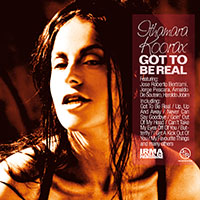 All About Jazz: You've done a lot of different types of albums, but even so, Got to Be Real is still a departure and a very different album for you. Does Got to Be Real sound different from your previous albums to you?
Ithamara Koorax: Each and every album in my 15-CD discography sounds different to me. I never tried or wanted to repeat myself. I always tried to, at first, please me and then please the listener. One of the best things written about me came from Fred Bouchard, when reviewing Brazilian Butterfly for DownBeat: "Koorax is delightfully unpredictable in her music." That was a big compliment for me.
And now that the business of recorded music has been ruined—I mean, now you don't have to feel the pressure from record companies because they are gone, they are past, and now 99 percent of the jazz artists produce and manufacture their own products without any interference—I feel more free than ever.
My first US album, Serenade in Blue, released in 2000 by Milestone, a very prestigious label with whom I was proud to be associated till 2003, was subtitled My Favorite Songs when released in Asia, Europe and Brazil. But, actually, all my albums should be subtitled My Favorite Songs because the songs I choose are always my favorite ones, at least during the period I was recording the album, or they belong to my big list of favorite songs, since I have a repertoire of 200-plus songs that I love to sing in my live performances. The songs from Got To Be Real, for example, have been in my heart for many, many years. I have been singing some of them since the beginning of my professional career in Brazil 22 years ago.
Others go even back to my childhood, because I used to dance to songs like "Never Can Say Goodbye," "Got To Be Real" and "Can't Take My Eyes Off of You" when I was in my teens, in parties at my school. It was a long and very pleasant process to find my personal way to sing them but at the same time let them keep their identity. I haven't destroyed the songs, they remain songs of love and happiness, but you don't need to shout about love and happiness. You can whisper words of love. They become more sensual to me. The song's impact is not diminished—it's even stronger. You don't need to scream, "I love you." There are other ways to say "I love you." Oh, that could be a good subtitle to this new CD—Other Ways To Say I Love You!
Some of my previous CDs were recorded during long periods of time, especially Red River (King, 1995), Serenade in Blue, Love Dance and Brazilian Butterfly. It took me two to three years to complete each of them because I had to deal with the schedules of people like Antonio Carlos Jobim, Luiz Bonfa, John McLaughlin, Larry Coryell, Claus Ogerman, Jay Berliner, Deodato, Gonzalo Rubalcaba, Raul De Souza and so on, to the point that Love Dance was recorded in five different countries: Brazil, USA, England, Germany and Monaco! But I'm glad I kept the spontaneity in all of them in terms of my vocal interpretations, because I rarely overdub. I hate to overdub vocals. On Got To Be Real, Autumn in New York, Bim Bom, O Grande Amor and many other albums, I recorded live in the studio, alongside the musicians. Percussion parts and some synth solos were overdubbed on Got To Be Real but not my voice.
This new CD is also my first one with my road trio, the group that toured all over the world with me from 2005 to 2011. These wonderful guys were supposed to make the Got To Be Real tour, of course, but my keyboardist for the past 22 years, Jose Roberto Bertrami, passed away last July 8. I'm still devastated by this terrible loss, and I'm auditioning some new guys to replace him. But it will be very difficult because he was a true genius—Brazil's best keyboardist ever, the founder of Azymuth, Brazil's top jazz group ever. He also recorded with Sarah Vaughan, Mark Murphy, Airto, Flora Purim. And we were very close, real friends. He played in most of my albums and concerts, so you can imagine how I'm feeling. Bassist Jorge Pescara has played with me since 2001, and drummer Haroldo Jobim joined the trio in 2005 when Dom Um Romao died.
 AAJ: Why do this album, and why do it right now?
 IK: I wanted to document the music that I was doing with my road band for the past seven years. Albums like Bim Bom, which was released in 2009 as the first Joao Gilberto Songbook ever recorded, and the two sessions recorded in Europe with the Peter Scharli Trio—Obrigado Dom Um Romao, a 2008 tribute to the legendary drummer/percussionist who recorded with Frank Sinatra, Tony Bennett, and was a member of Weather Report, and O Grande Amor—were conceptual albums, you know what I mean?
Got To Be Real documents a very happy and creative time in my career. Love Dance is beautiful, and I love it, but it was like a torch-song project. Autumn in New York was my standards album, my journey into the Great American Songbook. Got To Be Real mixes everything—jazz standards, pop songs, disco hits, bossa tunes—but all these elements are unified by the sonority we achieved and by the great job that Arnaldo DeSouteiro did arranging and producing the album. Actually, he arranged the songs for my live concerts and made just a few adjustments for these recording sessions. His idea of slowing down the tempo on the disco hits was awesome! He did an especially terrific job on the title track because he transferred the bass line [from the original Cheryl Lynn recording] to the keyboards and transferred the horn riffs to the bass!
Similar things happened on "Never Can Say Goodbye," and one day, during a concert at a jazz festival in Seoul, I added the quote of Bach's "Jesu, Joy of Man's Desiring" in the very ending, after the band had already stopped. I was so moved, felt so much joy, that this melody just came from my soul to my throat. The audience loved it, and since then I have incorporated that Bach quote to the song. Curiously, "Can't Take My Eyes Off of You" was also one of Elis Regina's favorite songs, and she recorded it on a live album [Show Elis & Miele in 1970] when Bertrami was her keyboardist and arranger. So it was Bertrami's suggestion that we should do this song, too, and then DeSouteiro said we should try it as a duo in a very loose way. Another first take.
AAJ: You had previously recorded "Ho Ba La La." Why did you re-record it for this new album?

IK: This is my favorite Joao Gilberto composition. I sang it in my first professional gig as a leader at the Rio Jazz Club, in January 1990. Bertarmi also loved that tune and had recorded it in one of his albums with Azymuth—Crazy Rhythm, released by Milestone in 1988. I kept singing it on my tours, and then I finally recorded it, in a vocal/guitar duo with Juarez Moreira, for the Joao Gilberto Songbook. But Arnaldo came up with a new arrangement for the trio that features our drummer, Haroldo Jobim, and we simply loved it. If I was under the pressure from a big record label or big management company, they certainly would not allow me to re-record the same song three years later. But since I have complete artistic freedom, complete control of my career, I can do whatever I want. If I like something, and my audience likes it, that's what matters for me.
AAJ: Your voice has a great relationship with the energetic rhythms of "Toque de Cuica" and "My Favorite Things." Would you share your thoughts about these two tracks?
IK: Great and visionary question, because these two songs are loved by crowds all over the world. Back in 2007, when we were playing as the opening act for the Joe Lovano-Dave Douglas super group, SF Jazz Collective, at the Funchal Jazz Festival, during a tour of Europe, we opened a concert with "My Favorite Things" and received a standing ovation! OK, maybe the audience was too excited, and the song was a very famous one, popularized among the jazz audience by John Coltrane and others. But then we played "Toque de Cuica" as the second number, sung in Portuguese and with a long intro full of subtle percussion effects before exploding in a samba beat—and we got another standing ovation! That was amazing.
"Toque de Cuica" was co-written in 1976 by Bertrami and bassist Alex Malheiros for Azymuth's 1977 album Aguia Nao Come Mosca. The original title was "Tamborim, Cuica, Ganza, Berimbau," which are the names of four Afro-Brazilian percussion instruments. Three years later, Airto recorded it in a much faster tempo for the Touching You, Touching Me album (Warner Bros., 1979) and used a new title, "Toque de Cuica." During the acid-jazz heyday in Europe and Japan back in the 90s, Airto's version became a huge dance-floor hit. I always loved that song and suggested it to Bertrami, especially because he had told me that his Azymuth colleagues were tired of "Toque de Cuica" because they had played it too many times in their early years. So once again Arnaldo DeSouteiro manifested his genius as an arranger and beautifully recreated the song.
 AAJ: You've performed all over the world. In what locations do you particularly enjoy performing?
 IK: Each place, each city, each venue, each country has its own charm and enchantment. And each audience reacts in a very different way. The Japanese are very quiet and take notice of all details. You can listen to the sound of silence in their concert halls (of course, open-air concerts lead to another mood). South Koreans are more enthusiastic. They scream when they recognize an intro. Jazz is a kind of pop music there, not a separate segment of the market—Chick Corea, Pat Metheny and Bob James are famous there like Madonna, Lady Gaga and Britney Spears. I know the Korean market very well. My albums have been released there since 1995, and many made the pop charts. I was the first Brazilian artist that ever toured Korea, in 2005—Sergio Mendes went there the following month and was second—so I developed a huge following there. I also did memorable concerts in jazz festivals in Serbia, Bulgaria, Switzerland, the UK, the Czech Republic and Finland.
There have been also some great concerts in Paris at the Carreau du Temple. The jazz clubs in Germany are great, too. There was a very moving concert in the USA: In 2008, I sang with Gaudencio Thiago de Mello's Amazon Big Band in a concert at CUNY University in New York, promoted by the United Nations to celebrate the 60th anniversary of the Universal Declaration of Human Rights. I was backed by musicians from all over the world. It was difficult to me to sing that concert because I was crying all the time.
AAJ: Was there music in your home as you grew up? Were either of your parents, or another close family member, musicians?
IK: My parents were Polish Jews who came to Brazil as fugitives from World War II. My father liked jazz. My mother was an operatic singer. We listened to a lot of music: jazz, classical, Brazilian folk music, pop music and singers like Sinatra, Bennett and my favorite, Barbra Streisand. But my father died when I was very young, and things changed. There were very tough times, economically speaking. I used to take a train and travel six hours to Sao Paulo twice a week for classical singing lessons and piano lessons with great teachers who believed in me and didn't charge my mother. Later on, I had to cook and sell cakes on campus to pay for my music course.
My family affairs were always very problematic. To escape from problems in my house, I married at a very early age, and one month later I found out he was an alcoholic, a very sensitive guy that loved music but who, after a single beer, could become very violent. It came to the point I had to run away from my own home, left him living there and rented my own small apartment in Rio. Finally I got a divorce in late 1989, and everything changed for better. In January 1990, I started my professional career, and my first engagement was an event—from writer Paulo Coelho to Formula One champion Airton Senna, everybody attended my concerts.
AAJ: There's a nice mix of pop, jazz and Brazilian music on Got to Be Real, which leads one to wonder how you tailor your approach based on the material you're singing. How do you approach all this different type of music—the same, or differently?
IK: There's just one rule: I sing it my way. And they need to be great tunes, no matter if they are labeled jazz, pop, fusion, samba, spaghetti or lasagna. But after the story of each song touches me, after they choose me, after they touch my heart and soul, I'm allowed to interpret them in my way.
AAJ: What are some of your own favorite songs to sing, and why?
 IK: Songs that I feel I can add something very personal to. Some years ago, a Japanese producer tried to convince me to record an album of songs that Flora Purim recorded during her Return to Forever days as well as her solo career. Of course I refused, and the guy became very angry and said I lost a great opportunity. I don't think so. I can occasionally sing "500 Miles High" or "Light As A Feather" in a special concert but never make them an essential part of my own book. That producer wanted to create a "hip competition," but I hate competition. I hate contests. Music is love, not competition.
There are also songs that I love to sing in concerts with symphony orchestras but have never recorded—especially Dave Brubeck's "Strange Meadowlark," Michele Colombier's "Emmanuel" and gems by Michel Legrand such as "How Do You Keep The Music Playing," "What Are You Doing the Rest of Your Life" and "Pieces of Dreams." I must also mention great songs by underrated composers like Rodgers Grant ("Morning Star"), Ross Schneider ("Apple of My Eye") and Chris Conway ("Science Fiction Eyes"). I would love to record them someday.
 AAJ: If we could put aside the considerable repertoire from Brazil, in what other ways has your Brazilian heritage shaped the way you sing?
 IK: The main influence was on the rhythmic thing and how that rhythmic impulse affected my phrasing, my vocal attack. When I started to work with drummer Dom Um Romao in 1997, I improved a lot as a singer because I began to listen even more to all the rhythmic nuances and subtle beat changes. Curiously, last week I watched a Ron Carter interview on Brazilian TV, and when asked which bassists influenced him most, he answered, "No bassist, just J.J. Johnson." My main influences were not singers, although I loved many of them, such as Flora, Urszula Dudziak, Elis, Stellinha Egg, Betty Carter and, for ballads, Shirley Horn. I learned how to phrase by mostly listening to trumpeters like Lew Soloff—I loved Blood, Sweat, Drum + Bass—Randy Brecker, Chet, Miles, Freddie Hubbard and, later on, drummers like Dom Um, Billy Cobham and Steve Gadd.
AAJ: We'd like to visit some of the best moments from some of your previous work. What do you like to remember about your Joao Gilberto Songbook with Juarez Moreira?
IK: A historic moment in my career. I'm forever grateful to Juarez, Joao Gilberto, Claus Ogerman and Arnaldo DeSouteiro for that project.
AAJ: You did two very different albums with Peter Scharli. What do you like to remember about the title track to O Grande Amor?
IK: A beautiful Jobim tune, which I learned by listening to the famous Getz/Gilberto album (Verve, 1963). It was a first take, but I could have done a better job. You must be very sad to sing that song. You need to be in real despair, and my only bad feeling when recording it was that I was frozen in the studio in Zurich. But Peter Scharli and the other guys did a great job, and critics all over the world loved it.
AAJ: And two questions about Obrigado Dom Um Romao: First, you and Scharli each previously did your own versions of "I Fall in Love Too Easily" and then did it together on Obrigado. What do you like to remember about the version on this album?
IK: I love both versions I did—I mean, the one for Autumn in New York and later on for Obrigado Dom Um Romao. The real story behind it: I have always loved that song, especially the Sinatra version, but it only conquered my heart after I listened to a live recording done by Keith Jarrett and his Standards Trio I had purchased during one of my Japanese tours in the '90s. I became obsessed by Jarrett's interpretation and found a way to copy that recording to a cassette tape and listened to it all the time on my walkman. No matter what I was doing—exercising, cooking, reading a book—I was listening to "I Fall in Love Too Easily." That's the difference between love and passion.
Then, during the Autumn in New York sessions, which we recorded in two nights with no overdubs, I asked the great German pianist Jurgen Friedrich to improvise an intro. I turned down all lights in the studio, felt the right moment to start singing, and the magic happened. Some years later, when I found out that Scharli also loved the song, I suggested that we should play it in our first tour together. People liked it, so we recorded it once again.
AAJ: And then, what do you like to remember about Dom Um Romao?
IK: A genius, a master, a mentor and a very special human being. God introduced us. I really believe he was put in my life by a divine touch. I learned so much by playing with him, and I know I was able to make him happy during his last years because he was considering retiring after a big tour he had done with Robert Palmer, and I said, "No way—you'll play with me!" Arnaldo booked a European tour for us, and we did unforgettable sold-out concerts at London's Jazz Café in 1998, with the audience dancing all the time in a nonstop trance. He then joined my band, and we recorded on each others' albums and made music together until he passed away in 2005.
AAJ: If we could listen closely enough, what instrumentalists could we hear come through your singing?
IK: I think that all the guys mentioned before. I have an extreme respect for them all. Besides the instrumentalists, there are also the arrangers. Claus Ogerman, Don Sebesky and Michel Colombier taught me a lot about space and silence and how to use them as musical elements. These lessons are priceless.
AAJ: What is something you can share with AAJ readers that might surprise them to learn about you?
IK: I'm facing some serious health issues, but I keep performing. It's very important therapy. In 2012, I've already done 77 concerts in Brazil and abroad. I did a great European tour with Peter Scharli in April and May, and I'll do another one with my group that celebrates the release of Got To Be Real. We'll also do our annual Asian tour and perform for the first time in countries like Turkey and Chipre in October. I've also been doing a lot of classical concerts, singing pieces like Rachmaninoff's "Vocalise," Ogerman's "Tagore Lieder" and Henry Purcell's "Music For a While." The audience response is fantastic!
I also would like to develop my activities in electronic music. Some of the world's best DJs, like the Austrian master Parov Stelar and the German wiz Tom Novy, have remixed my recordings, and all the experiments in this dance area have been extremely successful. Nothing excludes anything. Good music is what matters. More than ever, I try to live each day as if it was the last day of my existence.
Finally, I must say that it's a big honor for me to be interviewed for AAJ. For a third-world artist, it's something that I never dreamed of in my wildest dreams. I must also take this opportunity to give my heartfelt thanks to all the great AAJ staff for having supported my work throughout the years. I treasure the AAJ reviews about my albums, and they made me want to honor your generous words and become a better artist each day.
Selected Discography
Ithamara Koorax, Got to Be Real (Irma, 2012)
The Peter Schärli Trio featuring Ithamara Koorax: O Grande Amor (TCB, 2011,)
Ithamara Koorax and Juarez Moreira, Bim Bom: The Complete Joao Gilberto Songbook (Motéma, 2009)
Peter Schärli Trio, Obrigado Dom Um Romao (TCB, 2009)
Ithamara Koorax, Autumn in New York (Jazz Station, 2005)
Ithamara Koorax, Love Dance: The Ballad Album (Fantasy, 2003)
Dom Um Romao, Lake of Perseverance (Irma, 2001)
Ithamara Koorax, Serenade in Blue (Milestone, 2000)
Ithamara Koorax, Ithamara Koorax Sings the Luiz Bonfa Songbook (King, 1996)
Photo Credits
Page 1: Elcio Paraiso/Bendita
All Other Photos: Courtesy of Ithamara Koorax
< Previous
Triumph
Next >
Stellar Pulsations
Comments

Tags
Ithamara Koorax
Interview
Chris M. Slawecki
Brazil
Rio de Janeiro
Jorge Pescara
Antonio Carlos Jobim
Jose Roberto Bertrami
Azymuth
Herbie Hancock
Cole Porter
Luiz Bonfa
Thiago de Mello
Eumir Deodato
Dave Brubeck
Ron Carter
Larry Coryell
Claus Ogerman
john mclaughlin
Miles Davis
Chet Baker
Don Sebesky
Joao Gilberto
Sade
Flora Purim
Airto
Jay Berliner
Gonzalo Rubalcaba
Raul de Souza
Sarah Vaughan
Mark Murphy
Dom Um Romao
frank sinatra
Tony Bennett
Weather Report
Elis Regina
joe lovano
Dave Douglas
John Coltrane
Chick Corea
pat metheny
Bob James
Sergio Mendes
Barbra Streisand
Return To Forever
Michel Colombier
Michel Legrand
Ross Schneider
Chris Conway
J.J. Johnson
Urszula Dudziak
Betty Carter
Shirley Horn
Lew Soloff
Blood, Sweat & Tears
randy brecker
Freddie Hubbard
Billy Cobham
Steve Gadd
Keith Jarrett
Jurgen Friedrich
For the Love of Jazz
 All About Jazz has been a pillar of jazz since 1995, championing it as an art form and, more importantly, supporting the musicians who create it. Our enduring commitment has made "AAJ" one of the most culturally important websites of its kind, read by hundreds of thousands of fans, musicians and industry figures every month.
You Can Help
To expand our coverage even further and develop new means to foster jazz discovery and connectivity we need your help. You can become a sustaining member for a modest $20 and in return, we'll immediately hide those pesky ads plus provide access to future articles for a full year. This winning combination will vastly improve your AAJ experience and allow us to vigorously build on the pioneering work we first started in 1995. So enjoy an ad-free AAJ experience and help us remain a positive beacon for jazz by making a donation today.Near


Giveaway

Eligible winners: 3
Days remaining: 28
Days remaining: 28