Home » Jazz Articles » JazzLife UK » The Art Of The Song
The Art Of The Song


Ask most people to name a few great musical stars of the past 100 years and the chances are that the majority of those stars would be singers—Frank Sinatra, John Lennon, Elvis Presley, Michael Jackson—whether or not they are also instrumentalists. If I am ever called upon to name my 100 favorite tunes, around 97 of them are likely to feature singers. Without wishing to create too patriotic an atmosphere, I am also convinced that the UK's current crop of singers is exceptional. Norma Winstone, Ian Shaw, Liane Carroll and Claire Martin are all world-class vocalists and all were name-checked by the interviewees in this article as inspirational figures: Emma Smith, Fini Bearman, Georgia Mancio, Clare Teal and Gwyneth Herbert, among others, are developing their own distinctive styles.
Despite (or perhaps because) of this popularity, jazz has an uneasy relationship with vocalists. In the Golden Age of Swing singers were secondary, getting the occasional 8 or 16 bars in the occasional song. The advent of effective amplification helped to change the pecking order, to make stars of the people who "just" sang, but there are still some musicians who put the art of singing well below the art of blowing, hitting, plucking or bowing an instrument.
 So what's it like, trying to carve out a career as a singer in contemporary jazz? More specifically, given the title of this column, what's it like trying to develop a career as a singer on the British jazz scene? I asked three young vocalists, Theo Jackson, Kaz Simmons and Melissa James (pictured left), that very question. Jackson spoke to me over the phone, soon after returning from performing in New Zealand. Simmons and James met me in a Soho tea room.
Why those three? They are three of my personal favorites among a growing number of excellent young singers, they are all at or near the start of their careers and, most importantly, they have very different musical styles and very different approaches to career development. What they have in common is talent, enthusiasm and the ability to craft songs that are emotionally engaging and beautifully constructed.
Musician and educator Pete Churchill, Director of the London Vocal Project, provided another perspective. In his final year as a teacher at London's Guildhall School Of Music, in 2008, Churchill was responsible for, as he happily describes it, a "fantastic" group of vocalists enrolled on a post-graduate program. After graduating, group members asked Churchill to continue working with them and they started to meet every Monday night. Churchill's aim for this group, which became known as the London Vocal Project, was to create a meeting place and support network for singers from all the London jazz courses, both students and teachers.
Four or five years after its creation, the LVP now has around 24 members. Churchill calls it a "project choir" deliberately. A core repertoire, learned by ear and including "lots of groove stuff," is augmented by specific musical projects including Churchill's own compositions, work by other recognized composers including trumpeter Kenny Wheeler, folk music and an increasing amount of material written by the group's members (which include Bearman). At the start, says Churchill, "I didn't have a master plan; mostly we concentrated on making sure that we met every week." The LVP has since worked with leading musicians including bandleader Sir John Dankworth and singer Bobby McFerrin, but each member still pays a subscription of £5 (about $8) per week: their commitment to the LVP is strong.
The LVP's debut album, due in January 2013 on Edition Records, will be a recording of Wheeler's "Mirror Suite." Churchill has a long relationship with the Canadian musician and composer. He conducts the Kenny Wheeler Big Band and first sang the suite, with Winstone and Carroll, in Berlin in 1998.
The Singers
Jackson released his self-produced debut, Jericho, in early 2012 just four or five years after graduating from Durham University. James' first recording, Day Dawns (Slickersounds), also came out in 2012. Simmons is the most experienced of the trio, releasing her debut recording, Take Me Home (33 Jazz) in 2004. Her follow up CD, Different Smile (2007) and third album, Dandelions (2011), both appeared on her own label, Fast Awake Records.
Although the three singers have very different styles, they have all performed and recorded with some of the finest of Britain's young jazz players: Jackson, with saxophonists Nathaniel Facey of Empirical and Brandon Allen; James with saxophonist Tony Kofi and bassist Larry Bartley, Simmons with pianist Gwilym Simcock and drummer Dave Smith. Collaborators such as these might suggest that all three singers see themselves as firmly within the jazz genre, but things aren't that simple.
Becoming A Singer
Jackson, Simmons and James all started to sing at an early age, but followed different paths to their professional careers. Jackson studied music, but not on a specialist jazz course. "I think I was the first person to complete the course as a jazz performer" he says. After graduation he moved to London and earned his living playing piano in cocktail bars: "Which I still do. It pays the rent for me."
His attitude to singing is intriguing, as he doesn't see it as his primary activity. "I very rarely describe myself as a singer. The singing is part of the musicianship; I don't describe myself as a singer first and foremost. I feel like I'm a songwriter first. I play piano and sing to back that up."

Simmons (pictured above) grew up in Brighton, where she began to sing at the age of four, later studying classical guitar. She moved to London to further her studies on the instrument. "I went to Goldsmiths College to do a music degree but didn't know what I was going to do after it. I didn't get onto the classical guitar performance course—I was really gutted—but I did get into the jazz and pop module. It was amazing: Issie Barrett was teaching us and I fell in love with all her stories about Charlie Parker and people like that. I also took jazz singing lessons and then people started asking me to sing in their bands. A few years later I went to Trinity College to do a postgraduate jazz course; then, a little while after that, I recorded my first album. It just happened, no real master plan."
Despite her undoubted talents as a guitarist, at first Simmons didn't use the instrument while performing jazz. "I've only been singing and playing guitar together for the last few years. People would say 'Why don't you sing and play?' and I'd think 'No, don't be stupid.' I was singing standards for a long time but I started to get a bit bored, never thought about the songs. Then I discovered Rufus Wainwright. I wrote an arrangement of one of his songs and played it to my dad at Christmas. He really liked it so I did it at a gig and it went down really well. That inspired me to write songs."
James also went to university, but her chosen subject was media studies. Co-incidentally, James studied in Simmons home town, although the two didn't meet there—they actually met via Twitter.
"I did media studies at Sussex University. I was going to be a journalist or TV presenter because I had to be 'sensible.' My parents were always telling me to get a good pension!" James and Simmons both laugh at this before James continues: "When I was younger I sang when I was home on my own: my secret pleasure. Then at university I met a lot of music students and got really influenced by their enthusiasm. My first gig was actually an open mic night on campus. I got up and sang Sam Cooke's 'Wonderful World.' I thought I was terrible, thought I'd never do it again but I got the bug. That was a key moment: after a couple of weeks I made it a regular thing and started planning what I'd do. Once I came back to London I had to get serious, get a proper job, so I joined a magazine publisher. I still spent my evenings at the open mic nights."
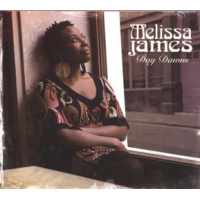 After a while James stopped singing for about a year. Then she began to visit the Half Moon pub in Putney, where she started singing again. When her partner's job took the couple to Paris James began to spend more time on her music, continuing to do so on her return to London. Finally, with the release of her debut album some 15 years after her graduation from Sussex University, James feels comfortable being referred to as a vocalist. "Now I finally feel like I can call myself a singer. It's been quite a long process singing all the while and not really calling myself a singer."
The Art Of The Songwriter
Many great jazz singers are interpreters of other people's songs, rather than composers in their own right. Contemporary singers are more likely to be songwriters as well, a reflection of the scene's changing expectations. Jackson, James and Simmons all write their own songs; but here, too, their approaches differ in some fascinating ways.
Jackson has the longest history of songwriting. "I get the impression that some singers think it's an obligation, that it's a chore. I've never felt like that. I've always enjoyed songwriting. The songwriting preceded everything including piano lessons. I've always preferred creating music to actually playing it. Also, I was obsessed when I was very young with Billy Joel and Stevie Wonder. I would listen to their songs and try to work out how they'd done certain things. Ultimately, everything came from the writing."
While Jackson clearly gives songwriting priority, he's not planning to stop performing. "No, I don't think so. I really enjoy playing in front of an audience. I much prefer it to recording. If it wasn't a necessary part of my career I'd happily stop recording tomorrow. The idea of other people performing my music is a real thrill. I really hope to get to that point—not just people covering my tunes, but writing with specific people in mind."
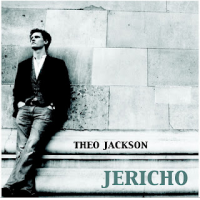 Lyric writing is Jackson's problem issue when writing. "I'm constantly on the search for good lyricists. I work with a couple already. I enjoy writing lyrics but I tend to ruin songs by doing so. Half the lyrics on the album are mine (half are by Molly Hollman) but it takes me ages. If I have lyrics in front of me the musical ideas tend to stream in at high velocity."
Simmons writes on her own and, like Jackson, finds lyric writing problematic. "I've never collaborated. I'd like to but I don't know what it would be like. I find it really hard to write lyrics." Simmons writes very personal lyrics, often very self-deprecating. "I can't really write in any other way: it is like my therapy." Despite their very personal nature, Simmons' lyrics do strike a chord in other people. "A girl once came up to me and said that the lyrics to 'Almost' were 'my life.' Another girl tattooed some of the lyrics from 'Whatever' on her back. She sent me a photo; they looked really nice."
James collaborates with keyboard player Ross Lorraine. "I met him through an ad I put on the Gumtree website. Ross lives just down the road from me: we just seemed to click pretty much straight away. I write the lyrics and melodies, form a lot of ideas in my head and he takes it on from there. I wanted to make an album for long time but the time never seemed right. I've got two children as well so everything has to be fitted in around them. After my daughter was born, she'll be five soon, my old vocal coach got back in touch and told me it was a good time to start writing. So that was the moment I started to write songs and realize that of course I'm a singer/songwriter."
The impact that songs can have is a source of obvious pride to all three singers. As James puts it, "I think there's always somebody who might connect with what we write. A lot of what we feel is shared human experience." As Simmons says, with James' enthusiastic agreement, "The best feeling in the world is when people love the songs you've written."
Master Plans or Letting It Roll
Making a career in a tenuous profession like music demands a single-mindedness and commitment—a long-term plan might also be seen as a pre-requisite. Of the three singers, Jackson is the one with the clearest long-term goals and the plan to achieve them. Simmons and James have a more laissez-faire approach although their determination is just as strong.
 So how far ahead is Jackson (pictured left) planning? "Basically, very far. There is a long-term game plan to reach an international audience and the festival circuit so I'm trying to maneuver myself into position for that. I don't consider myself to be anywhere near the final product. I feel I'm still learning a lot... But if I'm going to reach that level then I have to start thinking about it now."
Jackson's trip to New Zealand saw him supporting saxophonist/arranger Bob Mintzer and leading master classes. Some forward planning enabled him to capitalize even further on the visit. "I was invited to do two Festival appearances and a couple of radio shows. My manager Sandra Marcy set up some other things including a TV appearance on a significant New Zealand morning show. With her knowledge and PR strategy she could see that this would be a trip wasted if we didn't use every opportunity. I came away with the rights to use the TV interview as part of my PR. You send something like that to promoters and they see you in a different light."
Given such foresight, it seems strange that the tracks on Jericho are too long to fit the time constraints of most music radio. Jackson agrees with this, but he's already thinking of a solution. "That's true. My producer and I decided that the tunes were that long, that they needed that much time. That's my official answer but the truth is that there are a couple of tunes we probably will edit down. We're in the position to approach radio stations now and it would be a waste of opportunity if we didn't have something to send them."
It's a refreshingly honest appraisal and the willingness to review earlier plans suggests that Jackson's strategy is likely to reap benefits. "Your job as a jazz singer or bandleader is as an artistic director," he says, "but you're also a brand manager and sometimes advertising executive, even an accountant; so you have to have a strategy in place. But there's no point if you're not creating good music."
 Simmons' approach is looser, a project-by-project vision seems to be how she operates. The follow-up to Dandelion is now on her radar. "I'm thinking about the new album. I love projects, love the whole recording process. It's such fun. I know I had so much fun after I released Dandelions. I had the best gigs and I was really busy. But I don't really think about the process too much: the finished article is something to be proud of but I've never really desired to be famous even though I'd like to play the big clubs one day when the time is right."
James sits mid-way between Jackson's structured plans and Simmons' looser approach. "At this point I'm very definite about what I want to do, although I don't have it set out in stages. Someone did ask me recently what my marketing plan was," she pauses, thinks about it for a few seconds then laughs. "He sent me one; a very generic one, not related to the music business; and it frightened the life out of me. It made me think a bit more though. I've got some thoughts and at the age of 36 I'm more definite about things than I was. It's taken a long time to get to the point of being confident enough to say this is what I want. I've had a lot of jobs where I've watched people just float through life. That's not what I want to do but I'm not putting too much pressure on myself. I'm more focused on making the most of it."
A Changing Scene
The changing nature of the music scene, increasingly fluid genre definitions and the changing/worsening economic situation all impact on the opportunities for musicians and singers alike. Jackson, James and Simmons have all met with these issues.
Even the use of the "J" word itself is problematic. As James says "It's a four-letter word. My press person says that if I called Day Dawns jazz or send it to too many jazz reviewers then lots of other people just wouldn't consider it. I don't want to risk losing that wider exposure. It's very difficult to move away from being labeled as part of that jazz circle. But then I sent it to one person who wrote back to say 'I love it but it's not quite jazz.'"
Simmons' first two albums contained a selection of jazz standards, but Dandelions is all her own compositions. As a result, she says, "In one big store Dandelions was in the pop section, the others were labeled as 'Jazz.' It was a problem getting PR support too: when I was recording Dandelions I contacted one PR company but they said that it wasn't jazzy enough and they didn't have the right contacts."
Jackson extends the issue, discussing his experience of the live scene. "One of the difficulties I had when I first promoted myself in the UK scene was the clubs. The jazz clubs that liked singers didn't like me because I wasn't the typical sort of singer. And the ones that didn't like singers didn't like singers. So I was left in a kind of no man's land. It does worry me about the UK scene that the singers at the very top don't seem to have broken through to the next level, the bigger venues. That's something I'm trying to consider, how to bypass that."
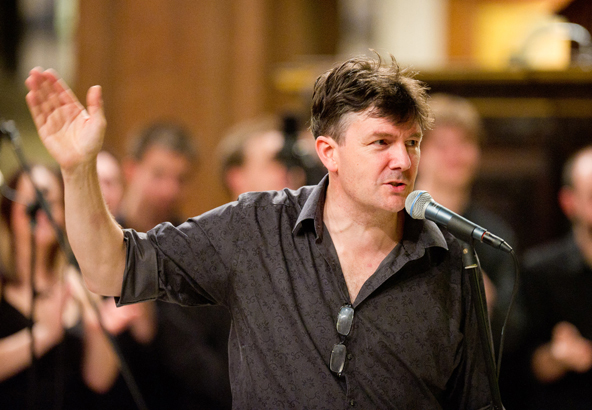
Churchill (pictured above) is pleased with the strength of UK talent, but expresses his concern about the issues facing the new generation. "There are some amazing voices coming up, but I think that they are under enormous pressure. They're not allowed time to really mature. They have to make major decisions at an early stage—what repertoire, for example. But that kind of thing takes a long time to mature into."
The economic situation creates its own problems. Neither James, Jackson, nor Simmons can yet make a living as singers: Simmons is a guitar teacher; James has a day job outside music; and Jackson has his cocktail bar piano gigs. The live scene's opportunities are also contracting, as Simmons has found. "A few years ago I used to play lots of Arts Centres, but now funding is being cut it's harder to get into them unless you're a big draw. Playing overseas would be good too, but those chances are few and far between."
Does the economic situation affect the way in which they approach their music? Jackson reflects on this point and concludes that it might, at an almost subconscious level. "That's an interesting point. I'd like to say no, but I think it probably does. At the moment I'm not making any money from my writing—the album is going to make a loss which is fine, that was always going to be the case—and there's no money for me yet from publishing. The live gig scene is still vitally important for me."
Churchill's position in the UK music scene enables him to comment on the wider situation. He, too, is somewhat pessimistic about the choices open to emerging talent. "The LVP singers are representative of singers in general. They need to record and gain experience, but they need to teach and play function gigs to make a living." Churchill uses the LVP to improve members' employability. He teaches workshop techniques, helps the singers to obtain the clearance documents necessary in Britain to work with children and other potentially vulnerable groups. "I see the LVP as a small College," he emphasizes, "teaching things that to be honest, the Colleges aren't offering. The Conservatories don't want to be known as teacher training institutions so they only pay lip service to it. They still see themselves as preparing students for 'platform careers,' but 90% of music graduates are going to end up teaching. That is the reality."
Churchill's rather downbeat assessment of the business end of music is rather depressing, but honest and pretty realistic. If times ever were easy for the newbie jazz singer in the UK —or anywhere else—they aren't now. There's plenty to be positive about on an artistic level, though. Becoming a professional singer is still a career goal for many, many people. James, Simmons, Jackson and the LVP share a commendable drive and enthusiasm as well as talent. It may be a tough time to be a singer, but it's a great time to be a fan.
Selected Discography
Melissa James, Day Dawns (Slickersounds, 2012)
Theo Jackson, Jericho (Self Produced, 2012)
Kaz Simmons, Dandelions (Fast Awake Records, 2011)
Kaz Simmons, Different Smile (Fast Awake Records, 2007)
Kaz Simmons, Take Me Home (33 Jazz, 2004)
Photo Credits
Page 1: Top, Courtesy of Theo Jackson
Page 1, Bottom: Courtesy of Melissa James
Page 2: Courtesy of Kaz Simmons
Page 3: Mark Bassett Page 4: Courtesy of Pete Churchill
< Previous
Dansere
Next >
Everything For Somebody
Comments

Tags
Theo Jackson
JazzLife UK
Bruce Lindsay
United Kingdom
London
frank sinatra
Michael Jackson
norma winstone
ian shaw
Liane Carroll
claire martin
Georgia Mancio
Gwyneth Herbert
Kaz Simmons
Melissa James
Pete Churchill
Kenny Wheeler
John Dankworth
Bobby McFerrin
Nathaniel Facey
Brandon Allen
Tony Kofi
Larry Bartley
Gwilym Simcock
Dave Smith
Charlie Parker
Stevie Wonder
bob mintzer
For the Love of Jazz
 All About Jazz has been a pillar of jazz since 1995, championing it as an art form and, more importantly, supporting the musicians who create it. Our enduring commitment has made "AAJ" one of the most culturally important websites of its kind, read by hundreds of thousands of fans, musicians and industry figures every month.
You Can Help
To expand our coverage even further and develop new means to foster jazz discovery and connectivity we need your help. You can become a sustaining member for a modest $20 and in return, we'll immediately hide those pesky ads plus provide access to future articles for a full year. This winning combination will vastly improve your AAJ experience and allow us to vigorously build on the pioneering work we first started in 1995. So enjoy an ad-free AAJ experience and help us remain a positive beacon for jazz by making a donation today.Near


Giveaway

Eligible winners: 15
Days remaining: 10
Days remaining: 10