Home » Jazz Articles » Interview » Gregory Porter: Sound & Vision
Gregory Porter: Sound & Vision


The success of these first two albums seems to fit Gregory Porter's broader pattern: he has spent his life spanning and connecting distances. He was born in California and got his start singing in small jazz clubs in San Diego while attending San Diego State University on a football scholarship, but he ultimately relocated to the Bedford- Stuyvesant neighborhood in Brooklyn, New York.
Porter was raised by a single mom and grew up without his father. He spanned this emotional gap by throwing himself into the music of Nat King Cole, whose legendary mellow baritone Porter's own voice resembled. Porter listened to Cole's music for so long and so deeply that he imaginatively created a deep emotional connection with him in the absence of his own father.
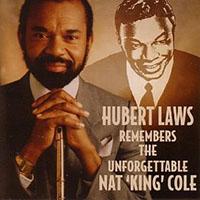
In 1998, several threads of Porter's life came together. Kenyatta had heard Porter sing and was aware of his fondness for Cole, so he invited the young vocalist to visit him in the studio where Kenyatta was helping to produce Hubert Laws Remembers the Unforgettable Nat King Cole (RKO/Unique Records, 1998). When the flutist heard Porter sing along to the tracking for "Smile," Laws adjusted the setlist to include a bonus version of this Chaplin classic that featured his vocal—Porter's first studio recording. This session also kicked off a series of events that culminated in Nat King Cole & Me, Porter's more-or-less autobiographical musical that he performed for several successful months at the Denver (Colorado) Center for the Performing Arts.
Porter's star has since continued to ascend and glow. His debut, Water, was nominated for a Best Jazz Vocal Grammy Award and was named the Jazz Album of the Year for 2011 by Jazzwise magazine in the UK. He has also appeared in the UK as a featured performer at the London Jazz Festival, as a special guest on BBC4's Carole King & Friends at Christmas 2011 holiday television special, and on several live dates and television broadcasts throughout 2012 with the Jools Holland Orchestra.
Released on Valentine's Day, 2012, Be Good furthers Porter's unique connectivity between soul and jazz, while its insistent imagery reveals personal experiences that profoundly connect the singer and listener. "Mother's Song" honors the internal and external beauty of the primary influence on Porter's life, "a mother who taught all her children to love and be loved by each other." His simple declaration of love in "Real Good Hands" provides this set's most direct tune, emotionally, lyrically and musically. The singer's voice seems to organically flow in and out of "Painted on Canvas" with a sound as natural as the whisper of waves kissing the shore. The title track shares an indelible sense of loss and wonder, with Porter subtly opening up his range from the first to the second verse to reveal more of his grief and yearning.
 But nothing that comes before is preparation for the last two tunes on Be Good. Porter's furious flight through lyrics about a prison chain gang in Nat Adderley's "Work Song" reveals the full range of his power and depth—and his band kicks this arrangement's ass. This might have explosively closed Be Good, but Porter's solitary a cappella rumination through "God Bless the Child," Billie Holiday's prayer of hunger and loss, lays it more gently to rest, swaddled in the profound and intimate sound of a man connecting his voice with his muse.
With Be Good, Gregory Porter continues to connect and span distances. "The more personal your story, the more universal it is—the more people connect," he suggests. "People know what it is because they feel like they're going through it with you or they've been there themselves."
All About Jazz: Not many male singers who have the type of instrument you have sing in the jazz context that you sing in, so that's where we'd like to start. How did the band behind you come together, and how did your relationship with them start?
Gregory Porter: St. Nick's Pub at 149th and Saint Nicholas in Harlem. We had all come to work there on Tuesday nights. All of us were brought together by a musician who had Monday and Tuesday nights there, Melvin Vines, a trumpet player. One thing led to another, and when it came to the point that I was going to record, I wanted to have the rhythm section that I was working with, that had played some of the songs that I was working on for Water at St. Nick's Pub. When it was time to record, those were the cats to do it.
AAJ: Wow, that's surprisingly logical.
GP: [Laughs] Yeah, you know, when I had the budget for the first album, there was some discussion about me getting this guy or getting that guy, and use half of my budget to have this person on the album. Those are dreams, but, quite frankly, for me, it just made sense to work with the guys who know me, who know the story why I would write a song about my mother, who maybe even know some of the relationships that I'm talking about in some of the songs.

AAJ: We're catching you in between performances in Europe—from where did you just return and where will you soon be heading?
GP: I was just in Europe for about seven weeks: many places in France, a couple of great performances in Paris, at a Blue Note in Milan and at some festivals. In the UK, I've been touring with Jools Holland. That's been great. I still have several dates to do with him. He invited me on his show, which is how we met; we had just an immediate camaraderie, and he had an immediate respect for what I was doing and my sound and my story. He invited me to sing with his orchestra, so I will play a total of about 15 concerts with him. I did half Jools Holland dates and half my own, and it's been great—we did festivals and concerts all over Europe in some great locations.
AAJ: Is the difference between a jazz singer and an R&B singer the single matter of material, or can you articulate something more?
GP: There are some harmonic differences in the things you would do in R&B and in jazz. In jazz, you can use a lot of notes, but you can also over-sing, which is something that you really don't want to do in that tradition of the music; you can over-sing in jazz, even though there's a whole bunch of notes that are at the disposal of the jazz singer.
But I don't like to put up these walls in between jazz, soul and R&B singers, because all that music is very close cousins birthed out of gospel and blues. It all depends upon the individual artist, but there are some things that are different. Yes, it is the material. And yes, there's an approach. There's that improvisational switch, that trigger, in jazz; it doesn't happen for every artist, and even some of the great artists sang everything the same way every time, which is perfectly acceptable. But in jazz, there's a freedom and a bounce and a swing that should happen, which is not really a requirement for R&B.
AAJ: Are there instrumentalists who you think sound similar to you?
GP: I think about that all the time. People talk to me all the time about, "Wow, your soulful approach to jazz; you're combining the genres of soul and jazz." I'm thinking, "Yeah, I listen to Cannonball Adderley"—I am not comparing myself at all to Cannonball Adderley—but his approach and his attack to the music is what I want to do. I think of Gary Bartz and I think of Les McCann, of those and other soulful instruments.
But then there's a situation like the song "Illusion" on my first album. When it's a ballad, I think of a record by Keith Jarrett where he's playing so simply and so beautifully. He has all this facility where he just destroys the piano, but he just plays so simply and so beautifully, and I think that's the approach that I took with "Illusion." I took out all this melisma and melodrama and just laid it out there. Just lay it out there simply and beautifully, and the notes and the tones will convey the message that you're trying to get across.
AAJ: How many people tried to talk you out of ending Be Good with that unaccompanied rendition of "God Bless the Child"?
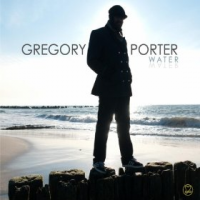 GP: I didn't ask anybody. Now, let me tell you why. This is the second day of recording. There's no band. Brian, our producer, was running late, and so I had about an hour-and-a-half of being in the studio by myself—just a perfect time for me to play around with the microphones, I thought. I had thoughts of doing an a cappella version of something; I didn't know what. I started singing this into the microphone, and it just felt good to me.
I'm not of the belief that songs can be over-sung, because every day, someone is born who has not yet heard it. With that in mind, I recorded it without anybody there. I told everyone afterwards, "Oh, by the way, track number 13 is me just doing whatever the hell I want to do."
AAJ: That's like painting a big bull's eye on the end of this set, though—you're putting yourself quite naked out there.
GP: Sometimes we've got to get out of ourselves and not try to be so impressive. I'm not trying to be impressive. I'm just kind of dealing with it like my mother used to pray. And in a way, not to sound too spiritual, but it really gets to that place for me sometimes: "Let me have a conversation with Billie Holiday," you know what I mean? "Let me consider those words from the best of my own understanding." They're her words. She wrote them. I understand that I can't meet her, I can't touch her, I can't have a conversation with her. I understand that. But I can close my eyes and consider her words as I'm singing her song in my way.
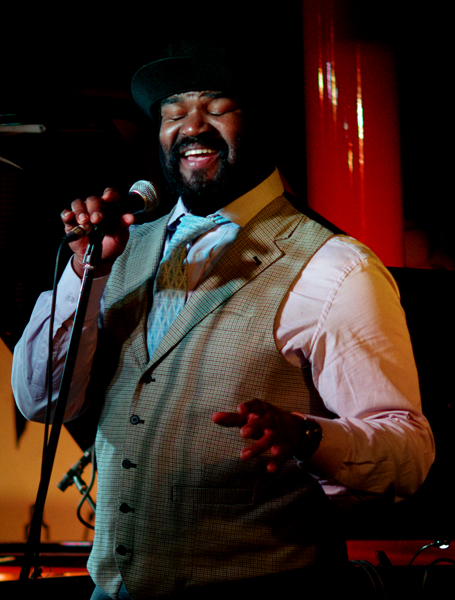 AAJ: The songs on Be Good tell great stories, but they also reveal the feeling that they're not revealing everything, that there are stories behind their stories. The opener, "Painted on Canvas," strongly suggests that you work in visual media— do you?
 GP: I love it. I would never show any of my paintings to anybody, but I'm attracted to that medium. I'm into photography as well. I'm very drawn to it, and in every city and country that I go to, I always find myself in a museum standing in front of some canvas. It is important to me.
But that song is really about letting people be who they are and allowing yourself to have the shape and color that you feel you should have. I think about this sometimes. When I walk into a room with people who don't know me, sometimes there's the unspoken undercurrent, "Who is this guy? What's he doing here? What's he all about?" Sometimes you can just see people throw a bucket of paint on you without being delicate. Other times, they use a fine brush. We often do it. Somebody walks through the door and we say, "Oh, young black guy, better watch my purse," or "Old white guy. He's got a bunch of money and he's racist," or, "Oh, there's a fat woman—she probably eats way too much." We do these things. But people are deeper than that, and we have to take a fine brush and take the time to figure out who and what they are. They have a right to some of these definitions that we make. I have the right to say who I am. It's not all up to you.
AAJ: Why is this song the title track, and what is the story behind the story told by "Be Good"?
GP: When you create music and you put it out there, you have no idea how it's going to come back to you. You never know how music is going to come back to you. That's the thing about communication within music: you send the song, the message, out there, it effects, and then it comes back. That's the extraordinary thing about music, to me—it's communication. I don't tell you how you should feel about the song—"You're supposed to remember a former girlfriend who locked you in the friendship cage or put you in a box"—I'm not supposed to tell you that. I perform the song, and you feel what you want to feel with the music.
This song is about a relationship I was in that didn't work out. Throughout the relationship, she liked me—marveled at me—but kind of kept me in a box. She kept me in a cage; she kept me in this confined space and didn't allow me to come out of it to love her, or to just kind of flex my muscles and be me. I always had to stay in control, contained in this cage. So, after the breakup, I remember riding home and saying to myself that I wanted a male song that was masculine but still soothing at the same time, like a grown man's lullaby. That's what it is. And she's a dancer, and she's from Austria, so that's why it's a kind of waltz.
AAJ: And this ended up being the title track?
GP: Yeah, I was performing it before we recorded it, and at the end of every set, people always asked me, "That lion song- - what's that all about, that lion song?" Pretty much every time I performed it, that's the song that they wanted to hear.
AAJ: Your spoken introduction to "Real Good Hands" sounds so much like Bill Withers, especially when you just walk right up to the microphone and simply open with "Well..." Those lyrics sound so real, too. How much of this one is a real true story?
 GP: Yeah, it's a true story. I'll tell you what happened: my girlfriend's father called and kind of rattled me a bit. He got to me before I could get to him, so his conversation to me was pretty much: "What are your intentions?" That was the conversation he gave me, so this song was my response to his worry. Her mother had some concerns as well. Basically, that was three days after this phone conversation, and I was pretty rattled. [Sings] "Mama, don't you worry 'bout your daughter, 'cause you're leaving her in real good hands." I just wanted to assure them that everything was going to be cool, that everything would follow its course, and that everything would be alright.
AAJ: That's another wonderfully but simply beautiful melody, too.
GP: The melody suggested the feel of the song. Sure, with jazz, I could have done Brazilia, I could have done anything, you know? Anything. But [sings] "Mama, don't you worry 'bout your daughter, 'cause you're leaving her in real good hands" felt like something soulful; it felt like something reminiscent of a '70s sound. That's what it suggested. Sometimes the song will write itself, and that's what was happening with that tune. But, yeah, true story. I married the girl, and we're in our first few months of marriage, so there you go.
AAJ: You really reveal, even if it's just through the imagery, a lot of yourself through many of these songs. "Mother's Song," for example—how do you go through that process of mining your own feelings about your own mother so deeply? How easy or difficult is that? Do you consider yourself a spiritual person?

GP: Yeah. I am a spiritual person. And I think this music is spiritual, when it's done right. All of the masters that I loved to listen to—from Miles Davis to John Coltrane to Charlie Parker to Sarah Vaughan to Nat King Cole to Carmen McRae to Joe Williams, and we could go on and on—when they're in it, when they're really in it, doing it and swinging hard. It sounds like—I think of Dinah Washington—and it sounds like an outdoor tent service. It sounds very spiritual. It didn't necessarily need to have a denomination. It doesn't necessarily have to be church. But it's definitely a spiritual and moving thing.
In terms of revealing things about myself, yes: "Real Good Hands" both suggests and provokes that question. When I do that song at gigs, people are constantly saying, "That's a true story! Who's the girl?" It's not a tricky device. That's just how it is for me—for me, I write best from personal experience or involvement. But it doesn't have to be: a songwriter should be a very empathetic person and should understand other situations that they're not in. That happens as well, but for me, I write best from personal situations.
Another thing I've realized in putting myself out there is that the more personal your story, the more universal it is—the more people connect. People know what it is because they feel like they're going through it with you or they've been there themselves. I think the more specific, in a way, the more universal it can be, because the listener understands that they feel these same things.
I learned this—this thing about the more personal something is, the more universal—I learned this in writing a musical called Nat King Cole & Me about how I came to Nat King Cole's music, in the absence of my father. It's not about Nat King Cole; it's about that relationship, about how I traversed life, and growing up into a young man without my father. I performed it at the Denver Center for two months, 800 people a night. After the shows, people would sometimes come up to me and give me their personal stories about their father. It seems like everybody has an issue with their father, whether he was in the house and absent or out of the house and completely absent. Those were some extraordinary conversations, and I realized, "Wow, this is about me, but this is not about me." One of the songs in the play asks the question "Was my father there when I was born?" I asked this question of my mother and never got an answer. So I asked the question, and I sang the song, but after the show people would tell me how much that song touched them: "I've asked that same question, too." Just when you think you're the only one going through something or thinking about something, you're not. You're really not.
Nat's voice came in, and I had to pick myself up, dust myself off, and get started all over again. [Sings] "Smile, though your heart is breaking..." It comforts you in a way; that's an unintended consequence of music sometimes. Nat didn't have any idea that in 1977, '78, some kid would be sitting next to a console stereo considering the lyrics of the songs he was singing, considering his voice and his persona and his album photos as some fatherly image. He couldn't imagine that, but that was the reality for me.
AAJ: He's justly famous for his vocals, but do you have any favorites from his instrumental piano trio?
GP: I am more partial to the vocals, but there's a lot of great stuff: the After Midnight (1957, Capitol) recording is amazing.
AAJ: When you're all alone, and you know nobody can hear you, and it's been a bad day, what songs do you sing to cheer yourself up?
GP: This is going to sound strange, but, like, the blues—things that are developed organically. The blues, before they were recorded, they were used; they were like emotional medicine for people. And, though you're singing about some sorrowful things, there can be an emotional cleansing from singing about something that's very sad. When I'm sad, I'm not necessarily walking around singing [sings] "Oh, what a beautiful morning!" In a way, that's inauthentic. Sometimes I will sing exactly what I'm feeling. I really do. I've come to the point where I do harvest my emotions because I know that something clever or interesting could come out of it.
Gospel, songs that my mother sang, and for me, just vocalizing like my mother and my grandmother used to do, really puts me at ease. They would just take a gospel blues chord and hum over that, and they could do that all day long. But if I do it for 15, 20 minutes, it really does take me to a place.
AAJ: The name that seems to come up the most with Be Good is someone else who started out singing jazz but made most of his headlines singing R&B. Do you hear any Lou Rawls in yourself?

GP: He was a very big part of my childhood, but when I'm given a list of people to talk about, I almost never mention him. But he's absolutely on the list—his rich sound and tone. There's definitely something about being around gospel music and being a preacher's kid, which I believe he was; I know he grew up singing gospel music. That can enrich your sound, definitely. My mother was from Shreveport, Louisiana, so there's some southern roots as well. Absolutely, I have listened to and owned Lou Rawls records, but he's always been in the music I listen to. I've heard that from that older crowd. Even Harold Mabern mentioned that to me: "Man, I wish Lou Rawls was here. He would come and hang out at your gigs."
AAJ: Not that you sing like him, but your music is very real like his. Was Bill Withers someone you listened to, growing up?
GP: Yes, absolutely—his album 'Justments (Reel Music, 1974). I felt like his writing and his approach to music were very much from his life, and that's appealing to me. His music always felt organic, like it was growing out of him. The music, the art, the words from my mother and my brothers and sisters— all of that comes together to make the full picture of the music that I'm singing. Yes, there's Lou Rawls and Nat King Cole and Mahalia Jackson and Marvin Gaye, but there's my mother as well.
The thing is, I think, that if music comes through a person, the best thing that person can do is make it their own. Music is personal charisma—musical charisma that has to have an individual standpoint, not in a narcissistic way, but if you're the person standing at the microphone, it has to sound like you. It has to have your footprint. And that footprint can be shaped by all the things that you've gone through, the things that you've heard and things in life that you need to consider in delivering your music. I'm a product of all the things that I've listened to—I'm my momma and a sprinkle of whatever my daddy put in, you know?
AAJ: What advice would you give to students who really wants to sing and think they can?
GP: People are constantly trying to adjust their voice to sound like somebody. When I have the opportunity to just talk to singers, or when somebody's taking a little lesson from me, I encourage them to first speak: to speak in their natural tone and then elongate that speech. Most times, when people get animated, their speech can be quite melodic. So I always try to get people to extend their melodic conversation and then see what happens. What does that voice sound like? Extend your whisper voice—what does that sound like? All of a sudden, out comes this beautiful voice that they had but they weren't using because they were trying to sound like Beyoncé. Only Beyoncé can sound like Beyoncé.
Go within yourself and try to find what it is in you, in your sound, that is unique. Eventually, you'll come to that place anyway, because if you try to sound like somebody for too long, you'll hurt your voice. What makes you unique? What was the music that your mom grew up listening to and she imparted to you? Does that sound make its way into your music? I just try to help people boil down and concentrate themselves.
Selected Discography
Gregory Porter, Be Good (Motéma, 2012)
Gregory Porter, Water (Motéma, 2010)
Hubert Laws, Hubert Laws Remembers the Unforgettable Nat King Cole (RKO/Unique Records, 1998)
Photo Credits:
Page 1: Vincent Soyez
Pages 2, 5: Courtesy of Gregory Porter
Page 3: Brian O'Connor
Page 4: Dave Kaufman
< Previous
Verdine White: Shining Star
Next >
Legs
Comments
Tags
Gregory Porter
Interview
Chris M. Slawecki
GoMedia PR
United States
Sam Cooke
Lou Rawls
Kamau Kenyatta
Emanuel Harrold
Yosuke Sato
Chip Crawford
Nat King Cole
Hubert Laws
Nat Adderley
Billie Holiday
Cannonball Adderley
Gary Bartz
Les McCann
Keith Jarrett
Miles Davis
John Coltrane
Charlie Parker
Sarah Vaughan
Carmen McRae
Joe Williams
Dinah Washington
Harold Mabern
Mahalia Jackson
Concerts
Apr
26
Fri

Apr
26
Fri
May
24
Fri
Jun
23
Sun

For the Love of Jazz
 All About Jazz has been a pillar of jazz since 1995, championing it as an art form and, more importantly, supporting the musicians who create it. Our enduring commitment has made "AAJ" one of the most culturally important websites of its kind, read by hundreds of thousands of fans, musicians and industry figures every month.
You Can Help
To expand our coverage even further and develop new means to foster jazz discovery and connectivity we need your help. You can become a sustaining member for a modest $20 and in return, we'll immediately hide those pesky ads plus provide access to future articles for a full year. This winning combination will vastly improve your AAJ experience and allow us to vigorously build on the pioneering work we first started in 1995. So enjoy an ad-free AAJ experience and help us remain a positive beacon for jazz by making a donation today.

Giveaway

Eligible winners: 15
Days remaining: 11
Days remaining: 11