Home » Jazz Articles » Future Jazz » Booking Jazz: A Subjective Guide
Booking Jazz: A Subjective Guide
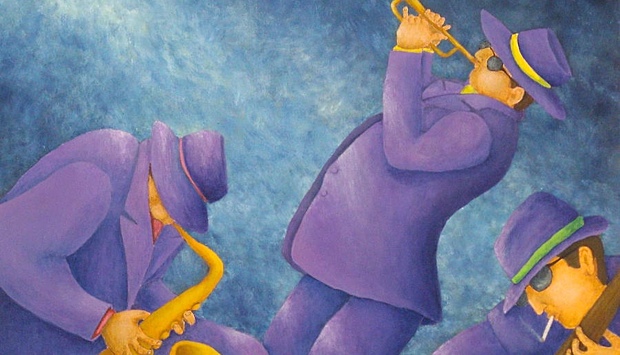
Courtesy Pamela Allegretto

According to a study called the Jazz Audiences Initiative, one-third of all Americans--over 100 million people--report that they like jazz.
There was a quasi-model of sorts in the 1930s, 1940s and 1950s, given the proliferation of cafés, boites, bistros, bars, ballrooms, and all types of nightspots that used live jazz, whether local or national. Whatever the template was back then, if there even was one, it no longer applies.
However, a rather singular era in jazz history, which lasted roughly from 1955 to 1965, is worth looking at today. Jazz—all kinds of jazz—was actually popular in those days. Thelonious Monk, Duke Ellington and Louis Armstrong made the cover of Time Magazine; jazz was regularly presented on national television and local radio; and artists like Dave Brubeck, Stan Getz, Herbie Mann, Cal Tjader, Ramsey Lewis, Eddie Harris, George Shearing, Count Basie with Joe Williams, and Maynard Ferguson were selling lots of records, many to those who may not have liked jazz before or since.
Bars and restaurants in big cities wanted to capitalize on what may or may not have been a fad. Rules for booking groups? Owners made them up as they went along, but from the outset, they did realize five things: A piano was needed, a "p.a. system," as it was called then, was needed; an appropriate space had to be set aside or a stage had to be built to present the music; talent had to be booked, and advertising had to be purchased.
As a youngster, I remember such a place in Philadelphia's Overbrook Park section. A restaurant/bar called, of all things, The Picasso, had been open for years before the owners decided to jump on the jazz bandwagon in the late 1950s. The proprietors did the obvious, outlined above: bought or rented a piano and sound gear, built a little stage, booked area talent like pianist Bernard Peiffer and his trio, and advertised same. The Picasso, like hundreds of other places like it throughout the country, did quite well.
These joints, if nothing else, became "the" places to go. Hey, it was the hip thing to do. But with the arrival of The Beatles, the very nature of the entertainment business changed. Some, like the venerable Metropole Café in New York city, hung on by making some concessions to rock that were, in retrospect, misguided. They booked go-go dancers to perform opposite mainstream jazz attractions like Gene Krupa. "I saw the progression from none, to a little, to a lot," Gene once said.
Indications are that we've come full circle. It would be a cliché and inaccurate to say "jazz is back," but the numbers say that it is. According to a study called the Jazz Audiences Initiative, one-third of all Americans—over 100 million people—report that they "like jazz," and an astounding 20 million people attended a jazz event last year, up from 9.6 million in 1982. That's growth. And that's a lot of tables and bar stools that could be filled in clubs, coffeehouses and restaurants by booking jazz.
Jazz Audiences Initiative, by the way, was a 21-month research project—funded in part with a $200,000 grant from the Doris Duke Charitable Foundation—commissioned by Columbus, Ohio's Jazz Arts Group.
Why Me?
Interested and prospective bookers of jazz may be asking at this juncture, "What qualifies this fellow to tell us how to book jazz?" I guess I know as much or as little as the next guy, but I worked my first club gig when I was 16 years of age, backing the legendary saxophonist Charlie Ventura. That was about 44 years ago, and since then, I've worked in hundreds of clubs all over the world, and have also had the luck and good fortune to work on the "other side of the counter" as a booker, public relations director, advertising coordinator and entertainment journalist. Still, whatever my qualifications may or may not be, the business of jazz—whether on a local, national or international level—is still a "seat of the pants"-type operation, made up as one goes along.The difference between "seat of the pants" methodology and the following, informal "guide"?
This one's in writing.
Why Jazz?
Enough already with the disc jockeys, rock cover bands and karaoke nights. Booking a jazz group, whatever the style, will make your venue—whatever your venue might be—stand out. Ideally, presenting jazz can enhance what you're already doing in line with your current customer base, help fulfill your mission and goals, gain more customers, attract those who spend and spend consistently, and return to your place again and again.Quite simply, whether you're a bistro, pub, gastropub, tavern, neighborhood bar, coffeehouse, boite or upscale restaurant, it's a given that you want your venue to stand for class and quality. A jazz group, properly chosen and presented, can only enhance your reputation. Fortunately, there are so many forms of jazz, from understated, tasteful and sophisticated music for listening; to rowdy and danceable (after the dinner hour, naturally); to non-rowdy but danceable. The choices are infinite.
The key is in hiring the appropriate band, i.e., a band that conveys the image you already have, or the image you want.
With all due respect, as they say, let's face it: "Sweet Caroline" on Karaoke night will only get you so far business-wise. It's been done.
What Kind of Jazz?
Again, this is a matter of knowing who you are and identifying what you want to be. If you're attracting a well-dressed, upscale, big spending group of customers—or want to attract them—consider a tight, tasty jazz trio or maybe a George Shearing-type combination with vibes and light vocals. If you want a venue where the night starts out that way, but gradually ups the energy and volume as the night goes on—via a stylistic mix—think about a group with a horn or two. Also think about whether or not you want dancing in your place. If so, there needs to be a space for it and the band needs to be capable of playing for that purpose.Playing for dancing, for at least a small part of the evening, does not mean a group has to sacrifice quality. Some of the best jazz in history was, is and will always be quite danceable.
Ideally, and the bands are out there in great, great numbers, consider hiring a band that can do it all. Establishments that present or want to present live music have never had more choices than they have today.
How Do I Find the Proper Jazz Group?
In all probability, several groups, in their unending quest to find a gig, have already found you. Hopefully, it's just the band for you. If not, and if no one has sought you out yet, finding the appropriate jazz group for your venue is easy, because live jazz is virtually everywhere. After all, those 20 million Americans who have been listening to live jazz found it somewhere.Check the newspaper listings, especially those in weekly or "alternative" newspapers, community publications, "shoppers," etc. Search the web, starting with All About Jazz, naturally, and see what groups are playing where. These listings can often lead you to the band's web site where sound samples are sometimes available, as are photos of the members and tour schedules.
If all you have are names of bands and places they work, intensify your search by going to the venue that's similar to yours, or is the type of venue that you'd like to be. Listings on the web or in the paper are great, as are sound samples, YouTube videos and photos, but there is no substitute for seeing and hearing the band in person.
The next checklist is obvious: Do you like the way the band sounds? The way they look? The way they conduct themselves on and off the bandstand? Are they flexible musically and willing, if necessary, to add—or subtract—players? Are they flexible in terms of their availability? And after you've met the leader and the band members, do you like them personally? This is important. I don't care how great they are musically. If you hire them, you've got to live with them. Once you've made your decision, it's time to talk about...
Paying the Piper
This section is completely subjective, though I'll say at the outset that I'm in total agreement with the late and great singer, Abbey Lincoln, who sang a tune called "You Gotta Pay the Band."Some folks don't agree. I've gotten a number of emails over the past several years, in response to columns I've written about the "lack of bread for jazz musicians" issue, which in essence said, "Music should be free for everyone."
I emailed one of these "free music folks" and asked him what he did for a living. He replied, "I'm a brick layer."
In my reply, I said, "Well, I've always believed that brick laying should be free for everyone."
Like it or not, it's happening, often in jam session settings, where the player or players running the jam does it for free. Those who do this presumably have their reasons. I think it's deplorable.
Working for the door is nothing new, either, and though it does have its place as, shall we say, an "honorarium" for an auditioning group, it should not serve as the primary method of payment. There is no denying the importance of a band's "fan base"—that used to be called "a following"—but the owner or manager of a venue can not and should not depend on that week after week.
The door? I'll work for the door only with one stipulation: That at the end of the night, I physically walk out of the place with the club's actual front door.
All kidding aside, the m.o. is simple: A person who is hired to do a job—whether bricklayer or drummer—should be paid fairly. There is no rule for the amount of payment, though factors to take into consideration are: number of nights per week the band will play, number of hours they play each evening, number of players in the group, just how "well known" the group may be, what the venue can afford and what the venue thinks is fair, what others in similar venues in your area are getting. The particulars of the hiring agreement—whether or not the group been hired for a month, a week or a night—also needs to be considered. And amounts vary depending on location. In southwest Florida, I received about $130 for a three-hour night, with the hours being an incredible 5 to 8 p.m. In Philadelphia, the average "going rate" for a four-hour gig is in the $100 range. While a hundred bucks isn't great, consider the fact that several groups making this amount for a four-hour evening have had the same gig in the same place for 15 years.
In line with the "how many nights" issue, if you're taking a serious plunge with jazz, I'd strongly urge that it be presented on at least one weeknight in addition to Fridays and Saturdays. Weekday business—no matter how popular the venue—could always use a shot in the arm.
Presenting: Live Entertainment Nightly
One of the first, steady, jazz club gigs I had was booked for six nights a week, Tuesday through Sunday. At one time, that was the norm for jazz and for live music in general. As years went on, nights were cut. A Wednesday, Friday and Saturday schedule lasted for a time, until the Wednesdays were cut and music became a weekend-only thing.I'm seeing a turnaround in some quarters today, particularly in bars located in larger cities. "Bar" is not a derogatory term. It just describes a facility where serving food is not a priority, and according to your local laws and type of liquor license you have, it may not be necessary to serve food at all. No matter. What a lot of these places are doing is presenting some kind of entertainment, six or seven nights a week, with each night's booking often entirely different. One or two nights may be jazz, another could be some kind of an open mike night or jam session, yet another might feature a disc jockey, the infamous "dueling pianos" show or the dreaded karioke night.
This policy has worked for many facilities and has provided another outlet for live jazz groups, often made up of younger players looking for a break. Or a gig.
Whatever the case, the hiring process should be a thoughtful one, and the band should be paid fairly.
Ensuring Success
Healthy and consistent business at the club is due to a combination of factors: The quality of the band; The quality of the food and/or beverage the club is selling; The ambiance of the facility itself; Quality of service and likability of the personnel (yes, bartenders and wait staffs have "followings," too); The proper physical presentation of the band via a stage and modest lighting. Many bands now carry their own sound systems, but if you want to do it right—piping the music, at reduced volume, into the dining room, for example—then investing in a house system is necessary.Sometimes, a club owner expects the band to work miracles. The reality is that, at least on the local level, they cannot do it alone. Ideally, when effectively combined, the factors detailed above all play an essential role in the success of a venue.
Just hiring a great jazz group is not enough. Certainly, the group that's been hired will use all the social media available and/or mailing lists to get the word out about their upcoming appearance. But the club must do its part in terms of promotion. This includes promoting the group's appearance on the club's website, through the club's social media outlets, to the press along with group photo (not high-res unless specifically requested), to the club's mailing list, etc. The band and venue owner(s) should cooperate on this, if only to avoid duplication of effort.
Special promotions help business, especially when there's something new and novel to announce, like the appearance of a great jazz group. Promo ideas are only limited by the imagination. Examples? Reduced prices on drinks, two-for-one drinks or meals, giveaways (free bottle of wine for each couple ordering dinner, as an example), tie-ins with the local radio station that plays jazz, jazz web sites, area charities, et al.
I am still a believer in print advertising to augment new media advertising opportunties. These days (in print), the free weeklies are usually the only sources to cover and list jazz, and a nicely designed ad will do wonders. Can't afford the cash outlay? A lot of these publications will be happy to work out a trade or barter deal.
The key to overall success: Consistency. The band needs time to build an audience beyond what they already have. New business for you, derived from the jazz booking, also needs time to grow. A one-time push won't do it. Promotion, publicity and advertising—paid and otherwise—must be attended to on a weekly basis.
Give the whole program at least a month. I'll bet you'll be swinging by then.
I invite venue owners and bands to offer comments, criticisms, ideas and examples of what has worked—and what has not worked—for you.
Tell us how you think we can improve jazz's economic vitality and cultural relevance. Contribute an article to our "Future Jazz" column.
Tags
PREVIOUS / NEXT

Become a Sustaining Member

Since 1995, All About Jazz has championed jazz as an art form and supported the musicians who create it. Over three decades, it has grown into one of the world's leading jazz resources, serving hundreds of thousands of readers, musicians, presenters and industry professionals each month.
Help Build the Future of All About Jazz
Your support helps us continue building All About Jazz for the next generation—expanding our editorial coverage, preserving jazz history, developing new community features and creating better ways to discover the music and the people behind it.
Become a sustaining member for as little as $20 per year and you'll immediately enjoy an ad-free experience along with access to subscriber features and future articles for a full year.
Together, we're not simply sustaining All About Jazz—we're building its future. Thank you for being part of the journey.