Home » Jazz Articles » What is Jazz? » Free Form Evolution
Free Form Evolution
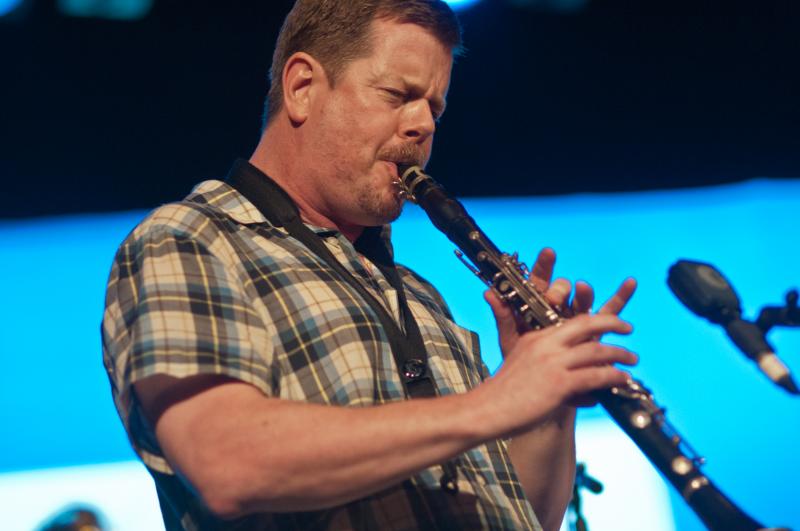

On this, saxophonist Ken Vandermark says, ''I think it's necessary to start by trying to define the terms and vocabulary being used. Personally, I don't think that labels like 'free form,' 'free improvisation,' or 'free jazz' are very helpful. In the case of free jazz, if the title was applied in a similar fashion to the category of music known as bebop, it might have some practical value, at least designating a period and style of music within a set of understandable parameters. Instead, the term 'free jazz' is used to 'define' everything from Ornette Coleman's music from the early 1960s to Joe Morris' music of 2012—more than half a century of varied activity by artists all over the globe. The term in this case defines nothing. The same is true for the way 'free form' and 'free improvisation' are generally utilized. Are they descriptions of a type of musical activity, or a style of music and, if a style, from what period? What does the word 'free' actually imply—freedom from structure, or the replacement of one kind of structure with another? [Music is organized sound. Its organization, whether spontaneous or pre-determined, indicates structural ramifications.] Until there are some specific definitions in terminology, the discussion about contemporary jazz and improvised music will remain hyper-subjective and confused. A clear set of vocabulary has to be developed; the term 'free form' is not clear."
Today, musicians have the freedom to develop free playing to a far greater extent than the pioneers of the'50s and '60s. Some play completely free, others improvise, whilst others still experiment with scales, rhythms and tempos—sometimes all in the same piece! Like Vandermark says, it is hard to define something which now transcends such a timeframe and range of styles.
Yet, just as it appears to have the chance to develop at a greater pace than ever before, free form is becoming limited by the grinding wheels of commercialism. Players have seen massive changes in their musical freedoms and our times have seen a huge drop in venues willing or able to support free form musicians playing to small but loyal audiences.
In these economy-driven times, some venues shy away from any form of improvised or experimental music-making, preferring instead to offer customers something they know, does what it says on the tin and gives them music they expect. This attitude stifles the evolution of music of any form but free playing most of all. A few venues remain supportive but in others, managers remain steadfastly indifferent to music which threatens their sense of what is established, what draws people in and they feel the need to offer people what they expect and know. The motivation is money, not the music.
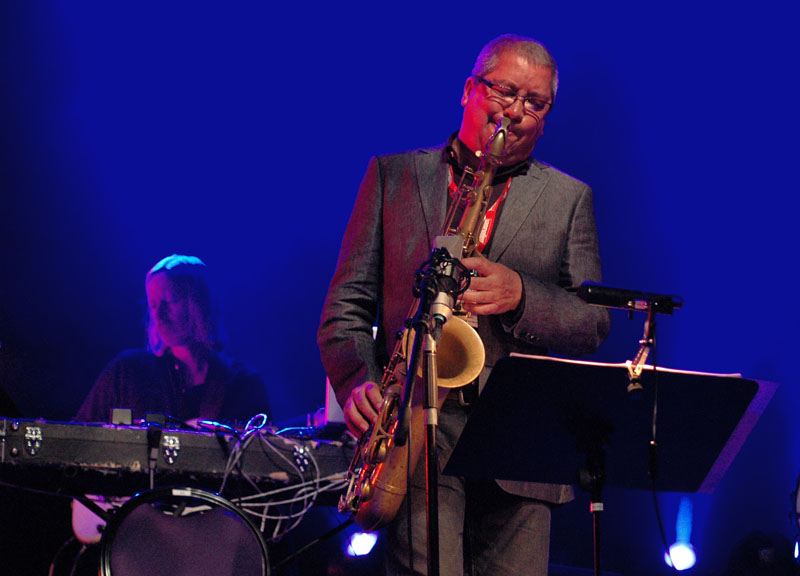
Andy Sheppard, of Trio Libero and Sax Massive comments, "Improvised jazz has always had a small audience and gigs are difficult to find. It is harder now than 20 years ago." Alan Wilkinson, of Flim Flam (Ryan's Bar) laments the reduction in the number of venues willing to offer a platform for free form players."There are definitely less places to play" he says."When I started playing this music in the late '70s/early '80s and until relatively recently, you could go to an improv gig every night of the week. There'd be nobody there but you could play and watch it. The fall off maybe coincided with the changes [the] Labour [Party] made to music licensing laws in the UK, making it harder for casual gigs to happen. Now venues have to abide by strict and expensive regulations and are much more conscious of needing to get people in. With Ryan's Bar, where Flim Flam happens, I'm very lucky because I have a long and good relationship with the owner and don't get thrown out because there's only three people in the audience. In order to grow, free form needs places where there's no pressure to fill the place."
Peter Brötzmann, a founding father of free form comments, "In the 1970s it was possible to spend weeks travelling north to south down Europe. There were small venues and radio stations which gave new players a chance. But then the small venues and radio stations that welcomed new players began to want known 'names,' larger audiences and nights when new players could play to a handful of customers disappeared."
Now the venues are scattered and disjointed in Europe with gigs in Lisbon, Oslo, London and Madrid perhaps. This is good in many ways but in order to work you have to be prepared to travel a long way from home. Brötzmann says, "This is not good for youngsters who miss the social experience of music. For young people, being on the road, playing to a different audience and maybe different musicians each night is important but this is missing so Europe needs more places for them to work and particularly smaller venues."
There are exceptions and a few enlightened managers realize the continued value of supporting free from music. Ian Storrer, promoter, Jazz At The Albert in Bristol, comments that," For me, this style is the contemporary form of jazz as much as modern art is to painting, installation art and sculpture. However, in order to make a living in jazz, the music is perceived to need a widespread audience to be successful and attract a following that is not readily available in the free movement." Luckily, Ian supports free gigs. Improvisation remains important in free playing because out of improvisation, has come different ways of playing. As Storrer says, "Many projects have emerged from new and improvised jazz, developing in different ways to end up within the mainstream of jazz.'' If we lose small venues willing to encourage free form players, music as a whole will be poorer.
There is acknowledgement among players and promoters that, while gigs remain small and less commercially attractive, free music offers an opportunity for great things to happen. Many promoters accept that if they are to be taken seriously they need to offer a varied and responsive repertoire and free playing is very much a part of this. Some compromise by offering free form gigs among ones which draw in the crowds to cover their license fees and realize that free form offers musicians a chance to continue developing and breath renewed life into jazz music.
Free drummer Terry Day says, ''One of the things about getting gigs and why it might be difficult for me is that when people book me they never know what I am going to do. Sometimes I play the drums, sometimes I might squeak my balloons or read poetry.'' Should musicians be willing to compromise to get regular work? Should they offer a branded product? Or should more venues be willing to take a chance on free players, knowing that often, something magical happens? When you speak to Terry, there is no arrogance. He just can't imagine playing anything other than what he feels like at the moment."It depends on the audience, the mood and the feelings,'' he says.
However, the changing economic situations mean commercialism has stormed in and stolen some of the freer sides of music making and, in order to have venues to play, players need to adapt in order to give something back to supportive venues. They need to attract clients who will stay, drink at the bars and listen. Many players, therefore, tailor their craft to suit a paying audience and intersperse free playing amongst more popular genres which keep them economically afloat.
In some ways, the very fact that free players have to adapt, play other genres perhaps and change how they play in order gig, has maybe even added to the evolution of the music. After all, the essence of free form is reaction to social changes, and economics is part of that.
Speaking to managers and promoters, they agree that free form should attract a far wider audience, given the fact it is peopled by musicians of great talent but there are some hangovers from the past which put some people off experiencing a free form gig. When they speak to customers, some consider it exclusive and too many have experienced gigs where "arses" of players have treated them to a workshop-like experience, completely forgetting about communication and playing in such an experimental and introverted way, the audience feels forgotten and completely outside the experience. There is a discernible difference between sitting in a bar listening to free players communicating with the audience and trying new ways of playing and sitting listening to players playing purely for themselves.
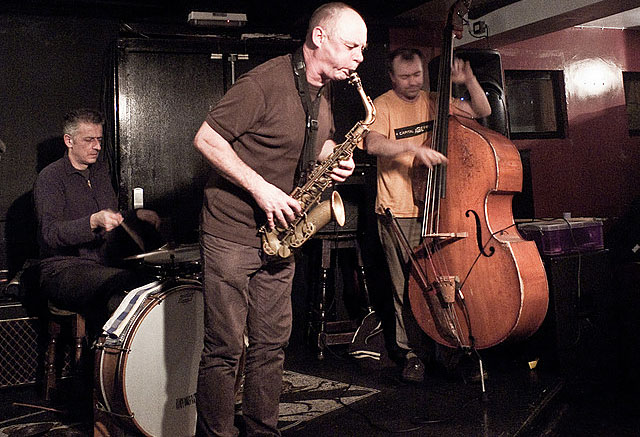
"Sometimes," Wilkinson says, "there is a problem with improvised music when it becomes a series of 'noises.' The problem with most 'noise' music is it doesn't tend to involve a lot of listening. I feel the music is of secondary importance to the activity. With the improv side of things the sound is still trying to be appropriate to the situation, to develop it in some way. It's very difficult to describe without sounding exclusive."
That sense of exclusivity is another factor which alienates some from free form. Many people feel the musicians are part of a separate philosophy, involved in a spiritualism which is hard for some to understand. Yet, whilst many players are interested in spiritual things and certainly early on, free from attracted players who were into different philosophies, it is only because this way of playing is about expression, seeking a greater sense of where we are in the cosmos and communication. The players are not out to create separatism but simply seeking understanding themselves.
Davey Payne, free form instrumentalist and People Band member comments, ''I don't believe that it is necessarily true that you have to learn the rules before you break them. Rules can and often restrict. An abstract painter scumbles and explores, takes chances and begins to learn how these more radical techniques work. Then, you could focus in and explore a more conventional way: another color to your palette, if you feel the need to. Obviously if you want to play like Stan Getz or Kenny G, or paint a Constable, you would need to, like, paint by numbers. Turner had a good balance. I think it's probably best to do both, stretch out, blast away, move your fingers fast, scream, growl, have fun, be angry, or sad, think about things that you know and express them with your playing, talk through your instrument, then maybe play a scale, but don't be a parrot; move on and let the subconscious rule. If people say that's not music, say that you are expressing and communicating through sound. All music as we know it was just made up. Mozart improvised at parties, and Liszt: 'wow!' And the Indian sitar, that's another story, not to mention the sound of the real cosmos. Was Pythagoras' music of the spheres any more valid that the Eastern harmonies? Both sides are guilty of 'crimes to humanity.'" There is a strong sense of communication and talking through the instrument.
Views like this are the essence of free form playing. It is the most humanist form of music there is, because of the communication element; the sense of linking with something greater than players or audiences.
A free form gig also requires input from the listener, which is new for many. A gig is on a different level than simply going to be entertained. It is not background, cocktail music. It requires involvement from the listener because it is about communication, the language and expression of music. Musicians take a feeling and make it a shared experience. It is possible to misunderstand free form musicians and mistake their humanist approach for one of self-absorption and introverted spiritual dictums.
Despite everything, however, it is an interesting scene at the moment. In some places, there is a resurgence of interest in free form and, in Europe, there are again venues in which to play. Musicians remain confident that free form will continue to gain audiences, to evolve and capture new listeners and players. Some managers have supported free music over the years, anyhow. Venues like Oto's, 660 and The New Vortex in London have continued to support free form players and now they are enjoying an influx of new listeners, and a younger and more mixed audience. Whether due to the influx of Europeans or that our own young people are finally realizing the best music has been right in front of them all along, it is not clear but it is a positive thing.
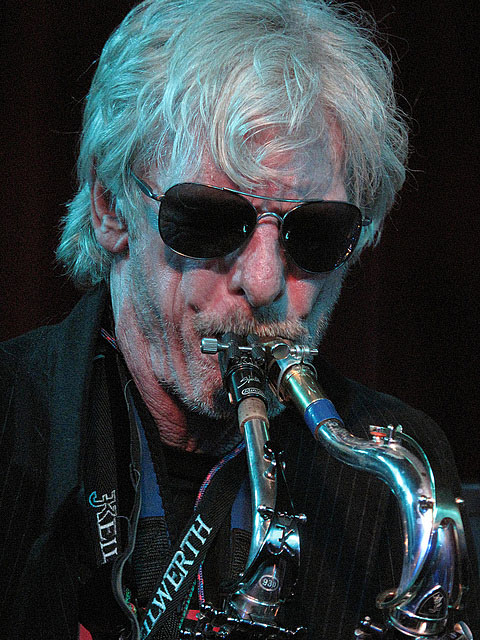 The advice to players remains the same. Even established musicians understand the changes recently, but the advice is still to play free whenever you can, play from the soul and speak with your instrument. Advice Storrer would give to an aspiring free form play today is, "Experiment with your instrument of choice, become a master of it. That allows the individual to go in any direction they wish. Only their own mind will confine them to where they can go. So, be proficient first, learn from listening to all previous music, learn by listening to your peers and then find your own voice and direction." Payne comments, "Play from the heart, find your divine light and be angry also"—angry, meaning the political frustration expressed in music.
 Wilkinson comments."If you are new in a town, try to get to gigs and meet players, put things together and go and play. Other than that, think about ways that you might go about making money but still have time to put stuff together. There is less pressure generally [in small venues], so although I believe you should always be prepared to play to your highest standard, you are more open to experiment and try new combinations. I like to use Flim Flam to play with people or combinations that I have never done before, and the fact there is an audience there helps to focus proceedings. I find it a very creative environment."
London is very special at the moment and, while musicians come from a different melting pot than in the rest of Europe, London venues like The New Vortex and Oto's remain key.
Payne comments, "New and free music needs to get into Ronnie Scott's and kick out all that nonsense that's being performed there at the moment; you know, middle of the road, easy listening, cocktail jazz." Scott's management might argue that they are under pressure to keep the place filled with drinking punters. However, Payne is right that venues need to change with the times if they are to continue to have the respect of jazz musicians and listeners. Venues have, to some extent, a responsibility for the continuing development of music, just as paying audiences and players do.
In Europe, like London, the scene is changing. When I spoke to Sheppard recently, he had just played Lisbon and he said there, the audience was younger and very interested in what they were doing.
Day believes there is currently a strong youth cohort interested in the genre. From 1997 to 2000, Day had to take a break from music and when he came back he found the audience had become younger. He comments, "There is a very healthy stock of improvising musicians in America, Australia, Asia, Europe and the UK. There are lots of great players coming up of mixed nationality like the Spanish and the French. The Malaga festival is for largely Spanish musicians, but they also welcome people like me with open arms. The musicians are really schooled so very adaptable. People like Javier Carmona can swap genres and try different styles and bands at festivals."
According to Mats Gustafsson, the scene right now is more interesting than ever. "There are so many more young players active now playing free and experimental music. You can't even compare to the '90s, '80s, '70s or '60s. The scene has never been so interesting and creative," he says. "More people are active with people arriving to free form playing from a huge variety of places and backgrounds [electronic, rock, folk, rock and pop]—not just from a straight jazz background. I have to say I look to the future in a very positive way."
Brötzmann's advice to young players is if you want to set up something different stick to it."Forget about fashion and be strong and keep doing it." Saxophonist Evan Parker comments, "Any aspiring jazz player will first have to decide what the word 'jazz' means in the 21st century. If you are so driven that you can accept the material consequences, you will not be stopped, you will find a way. Become part of the community where you live, if there isn't one, start one and if you have to live somewhere else, do that." Yet this is increasingly harder to do, if you want to pay the rent as well. The advice of many established players to aspiring ones is to set up something locally and if nothing exists, play with as many musicians and bands as you can, find venues, seek new ideas and just play, but the reality of this, unless you happen to live with a sympathetic place to gig around the corner, is that it's a difficult challenge.
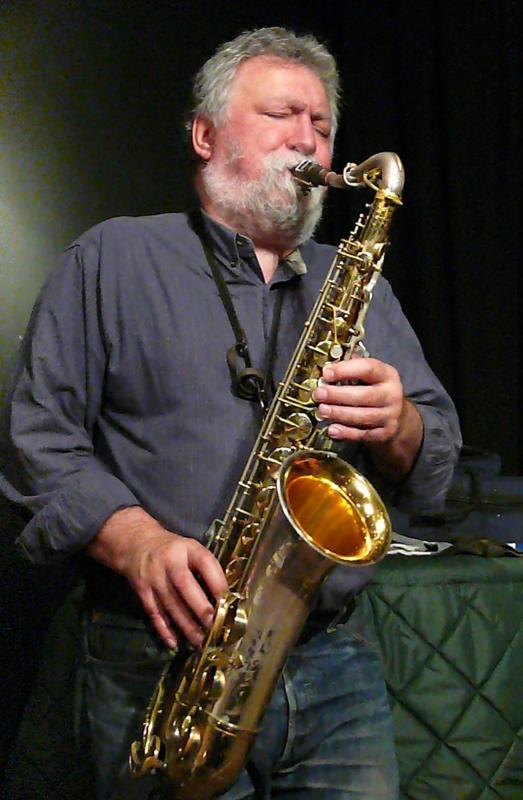 Day concedes that if you are an aspiring jazz player and perhaps more if you are free form, improvising or experimental, it is a hard game and not easy. He advocates, "Seize every opportunity. Get good tools when you see them, take gigs whatever else is offered to you. Play with as many musicians as you can and be polygamous. Everyone plays their own way but it is also important to play with others. There are few prima donnas in jazz, and you will find musicians support each other. Experiment in all kinds of genres. You will not know what your own creativity is until you join a group. Then your creativity will be drawn out. It is hard to get gigs but don't let it put you off if you want to do something.''
 Stephanie Portet of the Sunset-Sunside club in Paris, says that, in her opinion, the rising musicians play free form now—and it is the small venues which are the most important for this—but she does not believe a musician can live now by just playing jazz.
Parker notes, "There are always new faces arriving. The rewards of playing this way are too great for those hooked to be easily put off by the lack of interest or the lack of money."
Of the UK scene, Parker says it is, "amazingly strong and diverse and seems to thrive on adversity. The cultural authorities have been ignoring it for the past twenty years, hoping it would die of starvation, but they have not reckoned with the determination of people to follow their hearts."
So, are there younger players coming into the free form scene? Wilkinson believes there are."I would say there are definitely younger players coming to the scene on a regular basis, but age is a relative thing and I wouldn't describe any of them as youngsters. We are talking late twenties and thirties. Some of them are coming from jazz into free music. These tend not to be as 'free' as the less schooled players, carrying a lot of technical luggage with them. I wouldn't say it is a genre which is attractive to kids."
Sheppard echoes the thoughts of many when he says that musicians have a responsibility to make music for the world and it is important to take care of them. Players should play what they want but may have to compromise, sometimes, in order to take the audience with them."The listener is part of the equation," Sheppard says. "You may have a band but you have to play to people and relate to them. It is about being responsible. Put everything into it, whatever your style. Be truthful." He then adds playfully, "Play John Coltrane!"
Whatever happens to free form—however it develops and wherever it is played—it remains a small but remarkably resilient genre. Established players like Parker, Brötzmann, Gustafsson and others continue to draw good-sized audiences and there is always going to be a cohort of listeners willing to consider new ways of playing and new philosophies in music. Some are drawn to its differences, some to its lack convention and some—the majority perhaps—because music, whether jazz, free from or classical, even, is one way to speak, communicate and make links with people. It is a language which knows no boundaries, borders, colors or learned correctness. It unites, divides and makes inroads into the mind. Free form, in particular, aims at that innermost part of the mind, the subconscious, and does not need to be defined; yet it has more true definition than the world of material possessions can ever have.
Payne, perhaps, sums it up when he comments, "I believe there is a divine music. It goes on; it's automatic, without anger, greed, lust, attachment and egoism. I think I experienced this once with a free music blow at the Paradiso in Amsterdam, and I hadn't been taking drugs; just mu tea and brown rice.'' With reference to Kenny G, Payne adds, "Personally, I like Pharoah Sanders, Stan Getz , Albert Ayler and Lester Young. I also like a cream cake from time to time, but if I have too much I get a tummy ache. Now where's the alternative medicine?"
Free form players have that knack of producing—sometimes only fleetingly—a moment of sublime magic. I got hooked at Camden clubs by players whose names I cannot even remember now. I was young. For others, the moment comes later but when it does, it lifts the soul and does not let go. Suddenly you know how you want to play.
Free form is not limiting and you do not have to only play free form or have too much of a good thing, but however many small bites you take, you can always go back for more if the chances to listen to it remain. After all, it's a free world.
There is definitely a future—last night I listened to a saxophonist playing McGarry, Runswick and Rae. She played free, altering the tempos, timing and rhythms, and she mesmerized. This player—so small she needed a harness instead of a strap—was only 11!
With thanks to Terry Day, Peter Brötzmann, Ken Vandermark, Andy Sheppard, Mats Gustafsson, Davey Payne, Alan Wilkinson, Ian Storrer and Evan Parker.
Photo Credits
Page 1 (Ken Vandermark): Dave Kaufman
Page 2 (Andy Sheppard): John Kelman
Page 3 (Alan Wilkinson): Courtesy of glusmi
Page 4 (Davey Payne): Courtesy of Steve Speight
Page 5 (Evan Parker): John Sharpe
< Previous
Ryan Truesdell: Centennial - Newly Di...
Next >
The Noguchi Sessions
Comments
Tags
Fre-Formation
Sammy Stein
Ken Vandermark
Joe Morris
andy sheppard
Peter Brotzmann
Terry Day
Stan Getz
Kenny G
Mats Gustafsson
evan parker
[John] Coltrane
Pharoah Sanders
Albert Ayler
Lester Young
John Kelman
For the Love of Jazz
 All About Jazz has been a pillar of jazz since 1995, championing it as an art form and, more importantly, supporting the musicians who create it. Our enduring commitment has made "AAJ" one of the most culturally important websites of its kind, read by hundreds of thousands of fans, musicians and industry figures every month.
You Can Help
To expand our coverage even further and develop new means to foster jazz discovery and connectivity we need your help. You can become a sustaining member for a modest $20 and in return, we'll immediately hide those pesky ads plus provide access to future articles for a full year. This winning combination will vastly improve your AAJ experience and allow us to vigorously build on the pioneering work we first started in 1995. So enjoy an ad-free AAJ experience and help us remain a positive beacon for jazz by making a donation today.

Giveaway

Eligible winners: 15
Days remaining: 6
Days remaining: 6