Home » Jazz Articles » Interview » Romain Collin: Unearthing A Sound
Romain Collin: Unearthing A Sound


Despite all the hoopla, it was perhaps merely a case of the pianist living up to his potential. Collin had passed through both Berklee and the Thelonious Monk Institute of Jazz on scholarships, and pianist Herbie Hancock and saxophonist Wayne Shorter thought enough of Collin's talent to invite him to tour Vietnam and India while still a student. Collin hasn't let any of the fuss go his head, and maybe wisely, has taken his time to fully ferment a follow-up to his first CD.
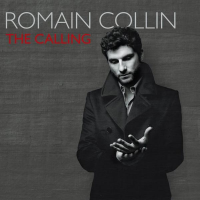
Three years on, Collin's second recording as leader, The Calling (Palmetto, 2012), offers another beguiling blend of highly melodic, modern jazz for piano trio, though with more edge than his debut recording. Collin has grown as a composer in the intervening years, and these 12 compositions are a subtle and compelling blend of composition, improvisation, and careful post-production sound design. Largely devoid of bebop vocabulary, Romain remains true to his roots, and the influence of classical music colors much of his exquisitely lyrical playing. "You have to play what you really hear and feel, and that's what I try to do," states Romain.
All About Jazz: Your new recording, The Calling, is receiving very positive reviews, as did your debut, The Rise and Fall Of Pipokhun (Fresh Sound New Talent, 2009); did the positive critical response to your debut give you confidence to follow up with the music that became The Calling or did it put a degree of pressure on you to live up to everybody's high expectations?
Romain Collin: The response to my first recording was very positive and I think it gave me confidence. It gave me more confidence, more belief in my approach that something was working.
AAJ: The title of the CD has a quasi-religious sense; could you tell us where the title sprang from?
RC: To find one's voice takes time and it takes courage. It takes a lot of unearthing. Creating music or art in general takes so much out of you. There's an obsessive aspect to it. The only explanation that I can find for any artist doing it for long enough, and taking all the risks that it entails on so many levels, is that they have a micro-universe where creativity needs to be expressed as part of our bigger universe. That's the main idea behind the title; that obsession that you can't get rid of and you just have to unearth it, face it and understand it and express it.
AAJ: Did you feel this obsession at an early age?
 RC: I absolutely did, but it took me along while to sit down at the piano and get into music 100%. I felt a profound need to express and create something, a reflection of how I feel about life and the world, and I think that's what art is. It's the material expression of an almost existential feeling that the creator of the work has. I definitely felt the longing when I was young but I wasn't sure how to approach it and go on to express it. In retrospect, it was pretty obvious that it had to be done through the creation of music and sounds.
 AAJ: You grew up very close to the site of the Antibes Jazz Festival; what are your earliest memories of the festival?
RC: It's not all jazz, and the funny thing is that the first concert I remember seeing there was a [singer/guitarist] Bob Dylan concert. I was probably seven or eight. I think that was my first introduction to the festival. Afterwards, I saw a lot of different artists: [pianist] Keith Jarrett, [guitarist] Pat Metheny and so on. The list is quite long. It's a great festival. They have such incredible artists at the festival; it's very inspiring.
AAJ: Have you ever played the Antibes Jazz Festival, and if not, do you have a special desire to do so?
RC: I've never played it but I do have the ambition to do so. I'd absolutely love to play there with my trio. It would be a great homecoming. It's such a beautiful setting, right by the ocean, and it's one of my goals to play there, absolutely.
AAJ: You're working with different musicians on The Calling, with drummer Kendrick Scott and bassist Luques Curtis; is this your regular working band in New York?
RC: I first met Luques at Berklee in 2001 so we've been playing together for about ten years. We did a demo in a very straight-ahead trio that was never released and we've played in various places throughout the world. He's such a great musician and a great person. He's very easy to work with and he always understands what I'm looking for in my music. I must say I love [bassist] Joe Sanders, he's one of the greatest, no question, just a different sound. Kendrick I also knew a little bit at Berklee, and we know each other from the New York scene. He brings so many shades and the textures and colors that I need. For me, Kendrick is the perfect drummer because he's so versatile and so sensitive. He can play anything and orchestrate anything, pretty much on the spot. He's incredible.
AAJ: On The Rise and Fall of Pipokhun, there were no covers, and on The Calling there are only two covers among the twelve compositions; how important was it for you to develop a personal compositional style or voice from the beginning?

RC: To be honest, it wasn't something that I was shooting for. It's just something that happened. I try to develop and create whatever it is that I hear in my head. On the first record I didn't feel that a cover would necessarily fit in. On The Calling I remember thinking that I'd never really arranged standards very much. It's a different compositional approach to arrange something you've already heard many times and to try to do something original and fresh with it. I remember sitting down at the piano and playing "Nica's Dream" and finding harmonic pathways that were really interesting, so I actually wrote this arrangement very quickly. I played it on a gig and it just felt right to me. It felt like it fitted in with the overall picture of the record
With the [singer/guitarist] John Mayer tune "Stop This Train," I really like pop music and great singer/songwriters—Joni Mitchell, Bob Dylan, Neil Young—and I always liked this John Mayer song. It works with a trio adaptation and fits in harmonically, melodically and form-wise. I'd made a note somewhere on my computer that maybe I could do an instrumental version of this song and then completely forgot about it. Then two days before we went in to the studio I was going through some files on my computer and found the note. We played it in the studio and after a few bars it felt right, and we thought we should do it. So I made a quick chart for the guys, we did one take and that's how it came out. We didn't veer too far away from the original. It's quite simple because that's the way I heard it.
AAJ: The combination of old standard and modern pop song works very well. Do you think that the American jazz standard has lost a little currency in Europe as more and more European jazz bands assert an ever-greater their individual identity? And is it also possibly of musicians true in New York to some degree?
RC: I think it's true of Europe. I have the same feeling, for sure. In New York everyone is striving for a sound and an identity and that's maybe a catalyst behind what's possibly a trend where standards are less and less at the forefront of the scene. But the American Songbook is such a rich heritage and that's really where the tradition comes from. I feel that here in the States, if you go to see a show and you hear a set of mainly original compositions I think it's put implicitly in the context of what came before historically. That's very present in the culture here and very present in this town. I see people playing standards all the time in New York.
I love standards myself, I really do. I would love to do a trio record of just standards, addressing the original essence and meaning of the song and work around that. I'm pretty sure I will in the future.
AAJ: Do you have any favorite interpreters of standards?
 RC: I love Ella Fitzgerald. When you listen to her sing a standard she had the ability to be absolutely true to who she was and what she did. She recorded so many, and they all sounded so effortless. You can really hear the essence of the tune as it was composed. She had this approach where she delivered the song first and then, on top of that, she would do her thing. It's really difficult to play the music that is written in the spirit of the composer and of the era and still bring freshness to it. Ella, on all those Songbook series, was true to the song and true to herself.
 It's hard to know if like the artist for their musical instrument and approach, or for the way they embody a song. It's difficult to tell. I love listening to the Count Basie big band. I love listening to [pianist] Erroll Garner, who played standards very much in the spirit of the era but sounding very much like himself. Then there are more modern approaches. I love Herbie [Hancock] because he always brings this freshness. I like listening to [pianist] Keith Jarrett playing ballads, because many times he'll just play the melody. And [trumpeter] Miles [Davis] would play melodies pretty much as they were written when he recorded.
AAJ: Obviously, there's a European sensibility in your playing, which is only natural, and it seems to embody a mixture of classical influences and a sort of post-Esbjorn Svensson modernist approach. Could you describe how you hear the sounds you produce?
RC: Sure. I left Europe when I was 16, and I think that most of my development as an improviser, and maybe as a pianist, happened here in the States. We are who we are. I was born and raised in France and classically trained as a kid. I didn't practice very much then, but you respond as a kid to what you grew up playing and it still remains a big part of what makes sense to you later. I really love classical music and I work on it every day. I record it for myself though I don't think I'll ever perform it in public. It's such great material to study and analyze.
From the technical aspect, I love working on my instrument, working on the sound. When people hear my classical influences they often talk about the writing, and they also mention the touch and the sound that I'm getting out of the piano, which is obviously very classically influenced. But it's funny, because in my mind I don't hear it that way at all. I never see it that I want to play like a classical musician. I'm just trying to get a sound on my instrument that feels right and makes sense to me. That has led me to work with classical music, rather than the other way round. I wanted to get to a certain sound on my instrument and I've found working with classical music extremely helpful, and enjoyable.
RC: As far as e.s.t. goes, to be honest I don't own much of their music and haven't listened to them very much, though what I've heard was great.
AAJ: You went to the Thelonious Monk Institute of Jazz in 2004 and you seem to have had an incredible array of teachers and mentors. For example, keyboard players Larry Goldings and Russell Ferrante; bassists Ron Carter and Charlie Haden; pianist Mulgrew Miller; trumpeter Wynton Marsalis; saxophonists Dave Liebman and Joe Lovano; the list goes on. And yet there seems to be little of the language of jazz that you might associate with these players—bebop, hard bop, straight-ahead, the American idiom—in your playing. Would you care to comment on that?

RC: Yeah, you know, what's interesting with the Monk Institute is that each and every one of these masters had something different to offer. Trumpeter Terence Blanchard was the Artistic Director and he pushed us to write all the time, to dig deep into our own heart and soul. Absorbing the history, absorbing the vocabulary was very important, because it's part of what we do and what we are a part of, but he pushed us to develop our own thing. To be quite frank, I don't think about it. When I sit down at the piano I just try to write what I hear in my head. I can't really put it any other way.
If I play a bebop line I play it's because I really hear it, but not because it's a bebop line and think it should be part of the piece. If I don't I don't. It's very important to be honest. Whatever comes out comes out. You have to play what you really hear and feel, and that's what I try to do. It's an interesting question. The New York tradition I really love; I have incredible respect for all the great bebop giants, for [pianists] Bud Powell and Tommy Flanagan, Oscar Peterson...but when I sit down at the piano that's not necessarily what comes out.
AAJ: When you graduated from the Monk Institute you went on a tour of Vietnam and India with Herbie Hancock and Wayne Shorter; what are your recollections of that trip? That's one to tell the grandchildren about, no?
RC: Sure. It was a tour of about three weeks and it wasn't just that you got to share the stage with them once in a while; it was getting to see them and understand them and know them a little better as people. They are obviously very intelligent and deep personalities with very strong energy. They're very interesting people. To learn from them and to be inspired by them was very special. Spending hours on a bus talking about just about everything, and visiting Agra and the Taj Mahal together was a pretty unique opportunity. It's an experience I shall certainly cherish and I feel very honored and privileged to have been part of.
AAJ: Coming back to The Calling, the CD opens with "Storm," which is short, punchy and devoid of soling; why did you choose to open with this track?
RC: The first record that I did had a much more mellow vibe to it and I wanted something which was opposite to that. I wanted something that as soon as you put it on you should get an idea of what is left to come. There's a bit of post-production, there's a little bit of guitar blended into the background and I felt it announced what was to come. I like honesty, and it was my way of saying this is what you're going to get.
AAJ: You've already talked about the Mayer composition "Stop this Train," but it's such a minimalist interpretation with just yourself and the faintest of percussive support from Scott that it begs the question whether you'd considered just doing it as a solo piece?
 RC: Yes, I had actually. That's a great question. It totally fits the solo piano context and I have played it solo. It's a great solo piece and I love doing it. It allows for even more freedom.
 AAJ: The CD has crystal-clear sound quality, it has a depth to it and it also has a warmth. It's a great job production-wise. Would you like to talk a little about the production team?
RC: Matt Pierson oversaw the whole making of the record—how to construct it, the choice of musicians, the order of the compositions, things like that. All the post-production and sound designing I did myself. The trio spent two or three days in the studio and then I spent about two weeks at home adding all the other textures that you hear and stuff that you can barely hear. I wanted the listener to be able to pinpoint what has been added. Then Nicolas Farmakalidis went on to mix the record after the post-production and refined some of the sounds and sonic moods that I was going for. As always, he did a great job. I'm really glad you described the overall sound of the record the way you did. I feel flattered that you've recognized all the elements that I was reaching out for—that warmth and clarity. The sound is very, very important.
 AAJ: There are a couple of tracks on the CD—"Greyshot" and "Aftermath"—that have an elegiac, almost hymnal quality, particularly on the latter. Has church music influenced you much?
 RC: I love church music, and when I say church music I'm not only talking about gospel music—which I absolutely love—but also church music in the baroque sense, which I also love. I love Bach's chorals. It has certainly been a great influence on my music and my writing. The sound really moves me and it's a very important part of what I do. I'm glad you asked me that because these are tunes that people don't mention too much, but those are sounds that I relate to strongly emotionally.
AAJ: The closing track, "One Last Try" is an absolutely gorgeous, melodic composition. Was that the obvious closing tune from the outset for you? How did this tune come to you? RC: It came to me very easily and quickly. I just sat down at the piano and I pretty much improvised it from beginning to end, about 90% of it. Then I just fine-tuned little things here and there but it worked out pretty organically. As for it being the last track on the record, yeah. It stops time a little bit and I felt that it would be strange to have this track followed by anything. I like records that tell a story and make you feel as though you've been on a journey and in that sense it's very important to program tunes the right way. It's an interesting contrast to the opener and I thought it was a nice way to end the journey.
AAJ: It's a great journey. Are you touring to support the The Calling? What are your upcoming plans?
RC: I've been touring for the record quite a bit in the States and in Europe and I'll be doing more touring in the States and again in Europe later in the year. It's a great privilege to be able to play to an audience. I always give it 100% and give it all my energy. It's really exciting to perform with the trio and I'll keep doing it.
Selected Discography
Romain Collin, The Calling (Palmetto Records, 2012)
Romain Collin, The Rise and Fall of Pipokhun (Fresh Sound New Talent, 2009)
Tony Grey, Unknown Angels (Obliqsound, 2009)
Robby Marshall Group, Living Electric (RMG,2008)
Thelonious Monk Institute Band, Nothing But Love (TMIJ,2007)
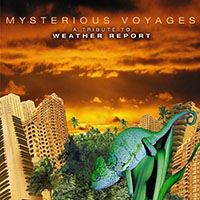
Various Artists, Mysterious Voyages—A Tribute to Weather Report (ESC Records, 2005)
Tony Grey, Moving (Self Produced, 2004)
Photo Credit
Page 1: Ingrid Hertfelder
Pages 2, 3: Simon Yu
Page 4: Ingrid Hertfelder
< Previous
Thomas Stronen: The Tin Drum
Next >
The Calling
Comments

Tags
Romain Collin
Interview
Ian Patterson
United States
Herbie Hancock
Wayne Shorter
Bob Dylan
Keith Jarrett
pat metheny
Kendrick Scott
Luques Curtis
Joe Sanders
Joni Mitchell
Neil Young
Ella [Fitzgerald]
Count Basie
Errol Garner
Esbjorn Svensson
Larry Goldings
Russel Ferrante
Ron Carter
Charlie Haden
Mulgrew Miller
wynton marsalis
Dave Liebman
joe lovano
Terence Blanchard
Bud Powell
Tommy Flanagan
oscar peterson
For the Love of Jazz
 All About Jazz has been a pillar of jazz since 1995, championing it as an art form and, more importantly, supporting the musicians who create it. Our enduring commitment has made "AAJ" one of the most culturally important websites of its kind, read by hundreds of thousands of fans, musicians and industry figures every month.
You Can Help
To expand our coverage even further and develop new means to foster jazz discovery and connectivity we need your help. You can become a sustaining member for a modest $20 and in return, we'll immediately hide those pesky ads plus provide access to future articles for a full year. This winning combination will vastly improve your AAJ experience and allow us to vigorously build on the pioneering work we first started in 1995. So enjoy an ad-free AAJ experience and help us remain a positive beacon for jazz by making a donation today.

Giveaway

Eligible winners: 15
Days remaining: 11
Days remaining: 11