Home » Jazz Articles » Interview » Christian McBride: Knocking on the Door
Christian McBride: Knocking on the Door
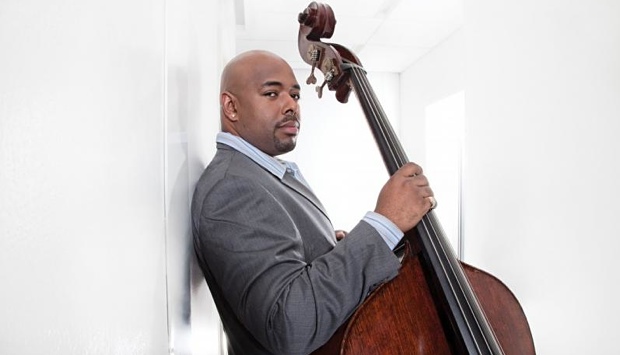

Suggesting that the same could be said about McBride himself, he answered with a big laugh, "Nawh. Well, I'm knocking on the door and asking to be let in."
Ask anyone who has been following McBride's career over the last 20-plus years, and you're certain to come away thinking that that McBride has already pulled open that door to greatness—sheared it right off its hinges—quite a long time ago. He's renowned for his astounding technique, brilliantly inventive solos, telepathic sensitivity as an accompanist, impeccable time and swing, and the full, rich, powerful sound he gets from his bass. He is deeply steeped in the great traditions of jazz and, at the same time, shows influences from R&B, fusion, and funk—a protégé of the iconic jazz bassist Ray Brown who also reveres the Godfather of Soul, James Brown.
Since his arrival in New York in 1989 from his hometown of Philadelphia, the bassist has played with a host of jazz masters, starting with a stint in saxophonist Bobby Watson's band just two weeks into McBride's first semester at Juilliard. Before long, he signed up with trumpeter Freddie Hubbard, touring with him for over two years. Another especially important early gig for McBride was with Ray Brown's Super Bass, working alongside Brown and John Clayton in the unusual setting of a three-bass trio. Over the years, he's played with saxophonist Sonny Rollins, vibraphonist Milt Jackson, pianists McCoy Tyner, Herbie Hancock and Chick Corea, and guitarist Pat Metheny, among many others. And he's worked with a wide spectrum of collaborators outside of jazz, including Isaac Hayes, Natalie Cole, James Brown, Sting, Carly Simon, the Shanghai Quartet, and Kathleen Battle.
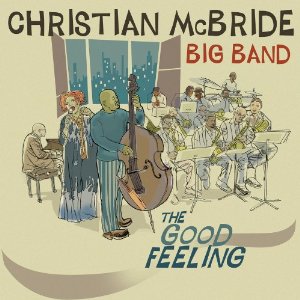
McBride recorded his first album as a leader, Getting' to It (Verve), in 1995, when he was 22 years old, and he has long led his own bands. Inside Straight, the quintet he formed in 2008, has met with enormous success and continues to tour widely. In addition to fronting the Christian McBride Big Band, he also leads a trio, working with pianist Christian Sands and drummer Ulysses Owens, Jr.. Along with The Good Feeling, he had another CD release in 2011, Conversations with Christian (Mack Avenue), a star-studded collection of duet recordings. And beyond his nearly constant touring, active recording schedule, composing and arranging, he's busy as an educator and advocate for jazz. He's Artistic Advisor for the National Jazz Museum in Harlem, has hosted his own radio show on Sirius XM, coordinated jazz programming with the Los Angeles Philharmonic, been the Creative Director of the educational organization Jazz House Kids for the last ten years—and that's just a sampling of his many activities.
All About Jazz: You finished up a tour of Europe with your trio recently. How did it go?
Christian McBride: It wasn't a long tour—it just felt long. The travel was really intense. Every day was two modes of transportation or more—either two planes and a train, or a plane and a train and a drive. It was really back breaking every day. We played every night. We went to Europe on April 22nd from St. Louis—I had a gig with my big band there—and I took my trio to Europe straight from St. Louis. And we played, I believe, six or seven straight dates. Then, I flew back to New York to play at the International Day of Jazz concert at the U.N. All in all I was home for three days and then flew back to Europe to finish the rest of the tour. And we finished by playing six straight dates. My manager called me last night; he said, hey a last minute offer came in for you to play—before he finished the sentence, I said, "no." "But I haven't told you..." I said, "I don't want to know what it is. I am not going anywhere for a couple of weeks."
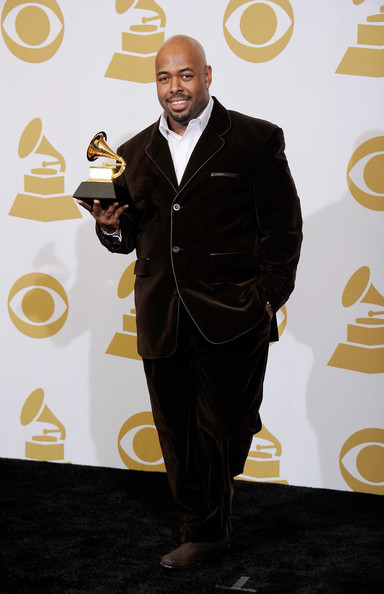 AAJ: Your CD, The Good Feeling won the Grammy for the big band category. How did that feel? What was it like at the ceremony?
 CM: It feels nice to win a Grammy. You know, there are so many great musicians out there who haven't won Grammys that have deserved them. I'm very happy about it, but I'm not the kind of guy who thinks "now I'm a star!" The ceremony was great. They do about 85 percent of the awards before the telecast. I think they give out over 60 awards during the morning and then in the afternoon. When they do the televised portion, that's just basically a concert, and they give out not much more than a handful of awards.
It was great sitting there with Melissa. She screamed and gave me a big, wet kiss when they called my name. We were with all the guys from Mack Avenue Records. For the award that was announced before the big band category—Chick Corea won. So, Chick and Stanley Clarke were on the stage, and they were walking off when the big band category came up. And it was really sweet when all of Chick's family stood up and applauded—because I know those guys so well—and that was a big thrill. I went up on stage and made my little speech and then went back stage, and they took all these pictures. Terri Lyne Carrington was there; she won also. So, it was a big thrill. And then they had some press person scoop me up and take me to four or five different press rooms and talk to reporters and get pictures taken. It was a whirlwind.
AAJ: You brought the big band to New York in May for the Highlights in Jazz series at the Tribeca Performing Arts Center—a fabulous show.
CM: Thank you! If only you knew what was happening before that concert! The music for the band didn't show up until the last minute. Man, I thought I was going to commit suicide!
AAJ: But it came off perfectly, from where I was sitting.
CM: Thank you. That was just the second show we played since the Grammy, but we have a nice chunk of work coming up the month of June and July, so I'm excited. We're going to L.A. to play the Playboy Jazz Festival. We're doing the San Francisco Jazz Festival. We're doing the Clifford Brown Jazz Festival in Wilmington, Delaware. And then we're going to play for four nights at Dizzy's Club at Jazz at Lincoln Center in July. So, I figured an engagement like Dizzy's—that's the perfect opportunity to start breaking in some new material, maybe start putting together some small pieces for the next recording. You know, because you don't want to keep repeating the same stuff night after night after night. So, I'm looking forward to that week at Dizzy's so I can work out some of these new charts. We start July 12th and go through the 15th.
AAJ: At the Highlights in Jazz concert, you had another bassist with you, Ben Williams, featured on your tune "In a Hurry," a real up-tempo flag-waver that had the two of you trading solo choruses—a great finale.
CM: Thank you. I like doing that with Ben. I figure that, to me, Ben Williams is one of the new, young, important musicians to come on the scene. And I really like the way he plays. So, I figured this was a good situation to make him like he could grow and put a little extra heat on him—like Ray Brown and Ray Drummond and all those guys did to me.
AAJ: He was with you also at Ron Carter tribute concert at Alice Tully Hall in March, "Ron Carter at 75." You arranged a piece for a large bass ensemble there—what was that like?

CM: Yes, a piece for 12 bass players. I really wish I could have stayed for the rest of evening, but that was the night that Inside Straight opened at Birdland, so I played that one song with the 12 basses, which was the opening number of the concert, and then I had to get out of there. So I missed the whole concert. I saw a little bit of the rehearsal. I was flattered that I was asked to write the arrangement. Buster Williams was there—anybody could have written that arrangement. And Ron had a specific request that I arrange "Mister Bow Tie," which was a song that he had written for his father. Then I went to listen closely to the tune and I thought, man, that's going to be hard to arrange for 12 bassists—how am I going to do that? But when Ron Carter has a special request, you go out of your way to accommodate him. So, I came up with what you heard and saw that night, and I got a very nice email from Ron a couple of days later thanking me for the arrangement—big thrill...
AAJ: You've done quite a lot of writing over the years—including all the arrangements on the big band CD. How did you get started writing for big band?
CM: I got a commission from the Jazz at Lincoln Center Orchestra to write a piece for them. They were doing a concert centered around songs of New York, and Wynton Marsalis asked me and a couple of other different musicians to write something about New York. I told Wynton, "Man, I've never written for big band before." I said I wanted to, and it was on my list of things to learn how to do, but I didn't know if I'm ready quite yet. He said, "I'm sure you'll get it together." So, he really forced me into writing for big band a little earlier than I had expected. I always loved big bands. I always admired anybody who could sit down and orchestrate for that many horns. And that's how "Bluesin' in Alphabet City" happened. After that concert, here and there over the course of the next 15 years I had some different writing projects—little things under the radar. The next thing I knew, I had built up all this material for the big band. And, in the process, I'd like to think that I had gotten better and much quicker at writing for big band. So, I thought, now seems to be the perfect time to go ahead and record it.
AAJ: You originally wrote a number of the compositions on the CD for smaller ensembles—like "Shake 'n' Blake" as a duet with Ron Blake and number that you recorded with Inside Straight. How would you compare the experience of writing for small groups and large ensembles?

CM: I'm starting to wonder—if I ever get the discipline—if the big band could be my main band one day. Because I'm really starting to hear layers all the time now, and when I started taking songs like "Shake 'n' Blake" and "The Shade of the Cedar Tree" and "In a Hurry" and started expanding them for big band, it seemed really natural. So I actually plan to see how far I can take this big band.
AAJ: Who are some of your influences for big band writing?
CM: Oh, everybody. Anybody who has made any music remotely connected with a big band—that's who my influences are. On the liner notes of The Good Feeling, I included a list of people, being facetious, saying "just to name a few," and it almost took up the whole page.
AAJ: Well you mention Duke Pearson in particular.
CM: Right. My arrangement of "I Should Care" is basically an arrangement of his arrangement. Duke Pearson is a big influence. I probably would have to say Oliver Nelson may be my biggest influence. I think a lot of people, even in the jazz world, are asleep about how important he was in the '60s and early '70s, not just in jazz but in the commercial world, writing for television and film. I guess he just never really had the opportunity to write the big Hollywood movie score like Quincy Jones or Lalo Schifrin did, but had he lived, I believe he would have eventually gotten there.
AAJ: About the musicians in the big band—I noticed that saxophonist Steve Wilson was counting everybody off at the beginning at the Highlights in Jazz concert.
CM: Well, the lead alto man is the man, and for me, Steve Wilson is unequivocally the man. He is probably the most focused and professional musician I've ever known. You know, he approaches every situation the same way. It could be some little small gig in a supermarket with maybe five people, or we could play in front of 15,000 people at Yankee Stadium. He approaches every gig the same exact way. And I totally respect that about him.
AAJ: And Nicholas Payton is also in the band.
CM: Yeah, it was really sweet. Nicholas and I have worked together on and off for years in a lot of different contexts, and my original intention was to just have him play on the CD. But Nicholas kind of volunteered himself. He said, "Well, if you're going to have me play on the CD, why don't you just have me do the gig?" We were going to play at Dizzy's a week before we made the recording, just so that we could kind of warm up and get everything together. So he made the gig with us at Dizzy's, and then we went straight into the studio, and you saw him again at that concert.

AAJ: He's been kind of on people's minds lately with some broad statements about jazz. Where do you stand on that?
CM: Yeah, I have pretty broad statements on jazz, too. I'm not quite sure I would come off as incendiary as he has, but, you know, I agree with him on many issues regarding what jazz is. I once said that jazz now seems to be the only kind of music where a mistake can be changed into a concept and then be applauded for it. Now, on the one hand, that could be good, because a mistake could be something like, "Wow! I didn't know that could work! Check that out!" Somebody like Herbie Hancock can get away with that. But it's almost like—if I gave you a guitar, and I said, "Here, play a tune for me." And you say to me, "But I don't play guitar—I don't know what I'm doing." I say, "Well, play it anyway." And you get up there and play the guitar, fumbling and stumbling; you're getting your fingers all in the wrong place. Jazz is the only kind of music where there's one out of five people that will listen to you and go, "Wow, he's got something there! Yeah, that's different!"
It's so easy to fool people in jazz. And you can't do that with any other style of music. You can't do it. What I love about playing with a lot of musicians in the funk and R&B world is that you can do anything you want—kind of like jazz. You can play any kind of weird chord changes. You can sing anything you want, as long as it's funky. As long as it's got some power behind the groove, you can put anything you want in there. So, I like that. When you mess around playing European classical music, even if you play something more so-called modern or cutting edge, I think even the untrained ear can tell when you're faking it. But in jazz, you can really get away with a whole lot.
 AAJ: It's funny you bring that up, because at the Highlights in Jazz concert, you were introducing the song "I Should Care," and you made a joke about playing in free-jazz style. And then, during that song, when it came time for Loren Schoenberg to take his tenor sax solo, as a joke, he started out his first couple of bars sounding like Albert Ayler.
 CM: Which was amazing, I thought. It was amazing because I'd never heard him do that before. I didn't even think he knew how to do that. Just the contrast of it was brilliant, I thought, for those first two bars.
AAJ: And then, when it came time for your solo—
CM: I had to do the same thing. I had to steal his idea.
AAJ: You also work with Loren at the National Jazz Museum in Harlem.
CM: I've been working with Loren and the Museum now for seven years. Loren and I have a very long relationship. We first met in 1990 or '91, something like that. He was leading the American Jazz Orchestra down at Cooper Union. And he called me for a gig. I knew who he was, and he tracked me down, and we worked together. That was also the first time I played with Steve Wilson. And we did all of the music from Miles Davis and Gil Evans projects. Dick Katz played piano and Kenny Washington played drums. It was a very memorable gig. Jimmy Knepper was in the trombone section. And Loren and I always kind of loosely stayed in touch ever since, and we started working together at Jazz Aspen in the summer of 2000. I was the Artistic Director; he was the Educational Director. And we had such a nice rapport in Aspen. He had already been working with the Museum for a couple of years, and he said, "I think we need you. Come up to the Museum, and let's work together. Let's build this from the ground up." So, at that time in 2005, it was nothing like it is now. The entire museum was our back office space. But the free programs that we helped implement in those early days, kind of put the Museum on the map. "Jazz for Curious Listeners"—I did a whole month of session in that series in December—and "Jazz for Curious Readers," and particularly "Harlem Speaks," that's been a very popular program. I enjoy it. It's much, much bigger now; we have a very powerful board. We have our approval to move into a new building, and hopefully, we'll be in there by 2015—the old Mark 25 building, which is directly across the street from the Apollo Theatre. So, it's been something to watch how it's grown over the last seven years. And the same thing is happening now with Jazz House Kids.
AAJ: Yes, that's the jazz education program for young people that your wife, Melissa Walker, founded—she's the Executive Director and you're the Creative Director.
CM: Right. It seems like in the course of the last five years, it's just really exploded. Melissa's really put the pedal to the metal, and she is getting out of it what she puts into it. I always think this is a good lesson for people in general. If you really, really focus on something that you want, you can get it, if you work hard enough.
We just did our annual "Inside the Jazz Note" master class June 6 at Montclair State University, and we've the tenth anniversary gala coming up on October 17th at NJPAC—the New Jersey Performing Arts Center in Newark. Diane Reeves came in for "Inside the Jazz Note," working with the Jazz House Kids big band along with the members of Inside Straight. I always love when younger instrumentalists can hear a vocalist's point of view. In jazz, nobody ever wants to hear what the singer thinks. It's like, "You guys aren't musicians, you're just singers." But they can't do that to Diane, because they now that Diane can lay something on them. So, it was exciting to have her there, and I just love working with her anyway. She's one of the greatest singers of all time. I don't think anybody can deny that. And as far as this day and age is concerned, she may just be the greatest jazz singer on the planet.
And then, on October 17th, I'm also excited about the Jazz House Kids' tenth anniversary gala at NJPAC. My big band will be the house band, and we have some serious special guests coming in. We have Angelique Kidjo; we have Maceo Parker and Fred Wesley; we have George Duke; and we have Maurice Chestnut, the great tap dancer. And we're hoping—he's not going to play; it would be great if he did—but we're hoping we can get Wayne Shorter to come so we can give him a lifetime achievement award—have him come back to his home town. I'm really excited about that. I can't wait to see these students' faces when they hear Maceo and Fred Wesley play all that funk up close. I know they won't know what hit 'em.
AAJ: Melissa is also featured as vocalist with your big band, too.
CM: Yes. I'm always teasing her. I say, don't let Jazz House Kids let you forget why you originally got in this business in the first place. I'm glad that she has a vehicle with the big band to still sing.
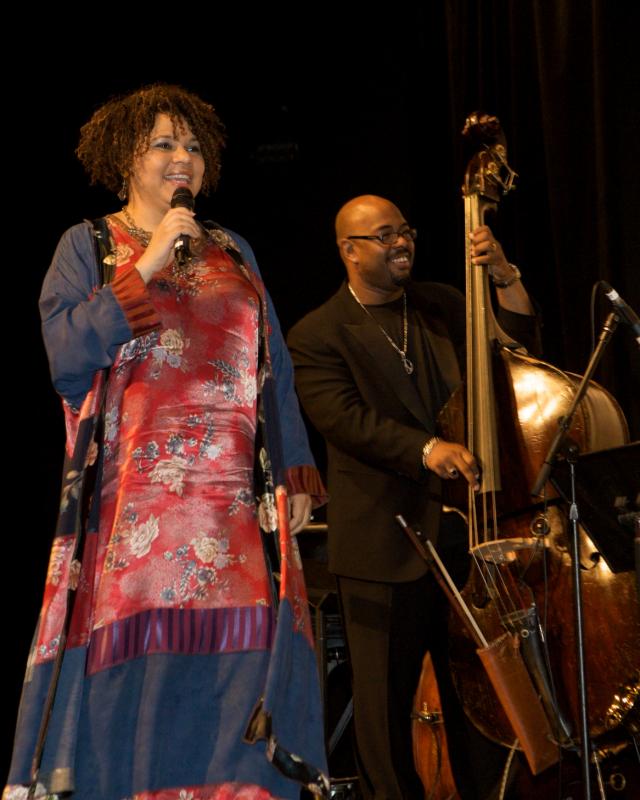 AAJ: She was great on the three songs she sang at the Highlights in Jazz concert.
 CM: "When I Fall in Love," "The More I See You," and "Bright Lights, Big City."
AAJ: How do you approach arranging for a singer in the big band context?
CM: Well, it's actually not that difficult because a lot of the big band stuff I love listening to is stuff with vocalists. Beyond Duke Ellington, Oliver Nelson, the Count Basie band, and all the great instrumental big band material, some of my favorite stuff is Basie with Sinatra, Nat King Cole with the Stan Kenton band, all of the early Ellington stuff with Ivie Anderson, and all of Ray Charles' recordings. So, I've followed that lead when it came to writing for vocalists—all those great Nelson Riddle and Ella Fitzgerald recordings. Knowing what Melissa likes and knowing what was going to be the general personality of the band, I kind of knew where to take it. And I think I've learned a lot not just from the older legendary arrangers, but also from current legends —people like Maria Schneider; John Clayton; Billy Childs, who I think is brilliant; and Gil Goldstein. They've all said one of the big early humps you hit when you're learning how to arrange is over-arranging, because you're trying a lot of different things, and you want to prove to people you can write. So you just start dumping the whole kitchen sink into the arrangement. You have to learn that there's nothing wrong with space, as a general rule. Listening particularly to those Sinatra records—I mean, such a perfect use of space. All of his arrangers had that, under Sinatra's direction, I'm sure.
AAJ: Another key member of the big band is Ulysses Owens, Jr.
CM: The drummer is the bassist's best friend in any band, in any genre. If the bass and drums are not one instrument, then the entire band will suffer. So, in starting any band, really, I start from the drums. When I knew I wanted to put together a big band, my first thought was, who's going to play drums? It's a lot different driving a sports car than an 18-wheeler. Who do I know who can do both? The list is terribly short, because in modern jazz, a lot of drummers seem to come from the same place.
I was trying to think of somebody who—not so much played like Sonny Payne or Papa Joe Jones or Grady Tate, but at least was familiar enough with the language—knowing how and when to set a rhythm up, knowing when you've got to step on the high hat a little harder so the rest of the band can hear it—real big band experience. And it seemed to me that Ulysses was the right person. There's no irony in the fact that he actually did play with the Basie band for a short period. I dig working with him in a big band.
AAJ: How about your own playing in big bands—what other big bands have you played in over the years?
CM: Well, I've never played in anybody else's big band on a regular, steady basis, but anybody who's had a big band in the last 20 years—I'm sure I've played with their band at least once or twice. I've done a number of gigs with Maria Schneider's band. I even sat in as John Clayton with the Clayton—Hamilton Orchestra. As a matter of fact, when Queen Latifah did her last jazz recordings, I guess it's been about five years ago now, the Clayton-Hamilton Orchestra was the band, but I played bass, because John did all the arranging and conducting. And when I was programming for the Los Angeles Philharmonic—I was Creative Chair for Jazz from 2005 to '09—I would say two-thirds of the programs we put together involved some sort of a large ensemble. That was another way I got my chops polished—not just playing in a big band, but my writing chops, too.
 AAJ: "Science Fiction" is one of your most ambitious big band charts.
 CM: That's a good word. It's one of those pieces where I think you try as an artist to get out of your own head—to try to write outside of yourself—that's the phrase I've always heard used. I've heard a lot of actors use that phrase, like in acting school, and musicians as well. Again, talking about those guys like Oliver Nelson, Lalo Schifrin, John Williams—I've always been inspired by action-adventure and dramatic film music. So, I think that was my subconscious audition for writing for, like, a Dreamworks film or something like that.
AAJ: You mentioned at the Highlights in Jazz concert that if there was anybody from CBS, NBC, or ABC in the audience, you're available. Seriously, though, do you have any interest in writing for TV or film?
CM: If I ever do get to do that, I actually wouldn't mind if it were a little later in life, because I've heard some horror stories from musicians I know who've written for major films and television. It's no longer about your music. In the producer's eyes, the music is a very small part of the picture.
AAJ: The title, The Good Feeling—where does that come from?
CM: I don't know, just a random phrase that came to mind when I was thinking of the overall vibe of the project. It just seemed right to call it The Good Feeling.

AAJ: You have another recent CD out, Conversations with Christian—a series of duets. You've also got the podcast interviews on iTunes and the Sirius XM radio show that tie in with that, correct?
CM: What happened was we decided that when I would go into the studio to record a piece of music with my duet partners, I would also interview them. The interview would become a podcast, and the musical performance would be on the CD. So, the podcast and the CD are kind of together. And then there was the radio show on Sirius XM, a live performance radio show kind of based on the same format. So it got a little confusing in trying to explain the difference between the CD, the podcast, and the radio show, because roughly they're all the same thing.
AAJ: The CD has you teamed up with 13 different partners, including five different piano players. You've got Billy Taylor, Hank Jones, George Duke, Chick Corea, and Eddie Palmieri—all strikingly different kinds of performances.
CM: It's hard to believe that both Hank Jones and Dr. Taylor would pass away so soon after we recorded. I knew Hank had been on the decline leading up to the last six months or so of his life. But Dr. Taylor, that surprised me a little bit. I knew he had heart surgery, but I had seen him after that, and he looked like he had never been touched. He looked like the same Dr. Taylor. He hadn't lost any weight. His face was still full, and his skin was beautiful. And the next thing I know, he's gone—cardiac arrest. So, you just never know sometimes.
AAJ: So these recordings were done over some time, then.
CM: Oh, yeah. It took over the course of a year. We started doing the first duets I believe in December of 2008, and we did the last one in around early 2010.
AAJ: The recordings with Hank Jones and Chick Corea are interesting contrasts—with Jones, "Alone Together," an American songbook classic, and with Corea a loosely structured improvisation.
CM: Yeah, it was no structure. That's what I love about working and being around somebody like Chick. I mean, I'm sure Dr. Taylor or Hank Jones would have done it also, but with Chick it's just a little different. We went into the studio, and he says, "Well, what do you want to play?" And I said, "I thought we could just freely improvise—whatever happens, happens." And Chick said, "Great, let's do it." Again, I'm sure that Hank or Dr. Taylor would been game for that, too, but I think the results would have been a shade different than what they were with Chick.
AAJ: You do a James Brown tune with Dee Dee Bridgewater, "It's Your Thing."
CM: That seems to be the hit off the CD. I've gotten more requests for that. I get emails from radio programmers, "Oh, man, 'It's Your Thing'—we play that every day!"
AAJ: And you play one of your own compositions, "Sister Rosa," with Russell Malone, who you played with in a trio setting in February with Monty Alexander—part of a two-week stint Monty did at the Blue Note.
CM: That was so much fun. That gig was so rockin.' Man, I love playing with Monty. He's a one-man big band.
AAJ: He introduced you as "Ray Brown's son—plus!" They billed that show as "Triple Treat Revisited," after Monty Alexander's Triple Treat trio with Ray Brown and Herb Ellis.
CM: I was using one of Ray Brown's old basses for that gig. Ray died—he owned three basses—his wife kept one, I have one, and John Clayton has the other.
 AAJ: Is this the bass you usually play?
 CM: No, but it was the bass I used at the Blue Note with Monty. And we recorded that also. So, I'm dying to hear that. I cannot wait to hear that. I love being around Monty. He's a real guy's guy when it comes to rhythm—and sports. He's a huge sports fan, especially boxing. So, when we're together, we're either talking about R&B or Oscar Peterson and Ray Brown or Muhammad Ali. Great guy to be around.
AAJ: So, for the Triple Treat show, did you try to evoke Ray Brown's playing style at all?
CM: Well, you know musicians don't do that. You do what the gig calls for. But once a year, actually, sometimes couple of times a year, members of what we call the Ray Brown family—you know, Benny Green, Gregory Hutchinson, Russell Malone, Karriem Riggins, Jeff Kaiser, Marlena Shaw, Jeff Hamilton, whoever it might be—we do a series of Ray Brown tribute concerts. This year I think will be the first year we won't get together and do it, although the year's not over yet. Last year we did it with Benny Green and Greg Hutchinson and Dee Dee Bridgewater. So, Ray Brown is still very much alive. His spirit is still alive in all of his former band members who are still here. And so, we get together and try to do that at least once a year.
 AAJ: So, where do you do it?
 CM: We usually do it for the Blue Note. We did it for Jack Kleinsinger one year. We've done it at Yoshi's out in Oakland. We did it in St. Louis—Jazz at the Bistro. We did it in Detroit for the jazz festival—not last year, but the year before. I definitely got to get my Ray Brown fix in.
AAJ: When did you first met Ray?
CM: The first time I met Ray Brown, Benny Green and I were together in early 1991. Benny had met him once before in the mid '80s. He and I were playing a duo gig at the Knickerbocker in the Village. Ray was working at the Blue Note. At that time, Benny and I had the same manager, and she knew Ray Brown extremely well. Mary Ann Topper is her name. She told us earlier in the evening, she said, "Ray has got to hear you guys. You guys are incredible. He's going to love you guys. You guys are coming out of the old school mode that I know he's going to love." So, she got him to come over after he finished at the Blue Note. I couldn't believe it. And knowing what I know now about being on the road, usually, once you've played a long gig, the last thing you want to do is go hear more music. You just want to go somewhere where it's quiet, have a drink, and cool out. But he came and heard us. He heard our last three songs, maybe. And he was so kind. We could see he was a little tired, because he'd been working all night. But he gave us some words of encouragement. He was really sweet. He invited us down to the Blue Note for his final night, which was the next night. And I will never forget this as long as I live. He acknowledged us over the microphone. He said, "Ladies and gentlemen, I want to introduce to you these two young men I heard last night, and for only two guys, they were swinging like dogs." I had never heard that phrase before, so I started laughing my head off. Swinging like dogs?!
AAJ: How long had you been in New York at that point?
CM: About a year. A year and change. A year-and-a-half, because I moved in the summer of '89.
< Previous
In the Clearing / In the Cavern
Next >
Songs For Four Cities
Comments

Tags
Christian McBride
Interview
Bob Kenselaar
DL Media
United States
New York
New York City
Ron Carter
Ray Brown
James Brown
Bobby Watson
Freddie Hubbard
John Clayton
Sonny Rollins
Milt Jackson
McCoy Tyner
Herbie Hancock
Chick Corea
pat metheny
Isaac Hayes
Natalie Cole
Sting
Christian Sands
Ulysses Owens, Jr
Stanley Clarke
Terri Lyne Carrington
Ben Williams
Ray Drummond
Buster Williams
wynton marsalis
Ron Blake
Duke Pearson
Oliver Nelson
Quincy Jones
Lalo Schifrin
Steve Wilson
Nicholas Payton
Loren Schoenberg
Albert Ayler
Miles Davis
Gil Evans
Dick Katz
Kenny Washington
Jimmy Knepper
Diane Reeves
Angelique Kidjot
Maceo Parker
Fred Wesley
George Duke
Wayne Shorter
Ellington
Basie
Sinatra
Nat King Cole
Stan Kenton
Ivie Anderson
Ray Charles
Nelson Riddle
Ella Fitzgerald
Maria Schneider
Billy Childs
Gil Goldstein
Sonny Payne
Joe Jones
Grady Tate
Queen Latifah
Billy Taylor
Hank Jones
Eddie Palmieri
Dee Dee Bridgewater
Russell Malone
Monty Alexander
Herb Ellis
oscar peterson
Benny Green
Greg Hutchinson
Karriem Riggins
Jeff Kaiser
Marlena Shaw
Jeff Hamilton
Jack Kleinsinger
William Parker
Mark Dresser
Warren Wolf
Marian McPartland
Peter Martin
Concerts
For the Love of Jazz
 All About Jazz has been a pillar of jazz since 1995, championing it as an art form and, more importantly, supporting the musicians who create it. Our enduring commitment has made "AAJ" one of the most culturally important websites of its kind, read by hundreds of thousands of fans, musicians and industry figures every month.
You Can Help
To expand our coverage even further and develop new means to foster jazz discovery and connectivity we need your help. You can become a sustaining member for a modest $20 and in return, we'll immediately hide those pesky ads plus provide access to future articles for a full year. This winning combination will vastly improve your AAJ experience and allow us to vigorously build on the pioneering work we first started in 1995. So enjoy an ad-free AAJ experience and help us remain a positive beacon for jazz by making a donation today.Near


Giveaway

Eligible winners: 15
Days remaining: 13
Days remaining: 13