Home » Jazz Articles » What is Jazz? » The Beginnings of Free Form
The Beginnings of Free Form

Since the '40s, jazz has calved several offspring. Musicians have taken traditional beats, rhythms and tempos and tweaked, stretched and tempered them into many genres. We now have a very active free form jazz and improvisational scene in Europe; it coexists alongside traditional jazz but has a largely different audience. There are venues which embrace free form and encourage experimental music whilst others will not touch it.
Somewhere in the intervening years between US-led straight-ahead jazz and now, free form was born and began to grow. For a while, free form jazz became linked with political movements—the art scene as a whole, particularly in the East Village, New York, envisaged a Utopian society with few rules and freedom of thought and religion. Free form is no longer associated with radical thinking, but has evolved into an accepted genre which is still developing. Speak to players, venue managers and promoters and they will tell you the mood is positive and the future looks bright.
I thought I knew about jazz. I played clarinet in orchestras, then oboe, and then switched back to clarinet again, and later sang in bands. I spent years exploring classical, jazz, opera even, but never quite found my niche until I found the Camden Jazz Festival and free jazz workshops, discovering free form for myself. I admit when I was playing or singing I was not that bothered whether the scale was chromatic, minor pentatonic or a harmonic minor, but then again, maybe I was—maybe I was as fettered as many musicians in the past? I decided I needed to learn more.
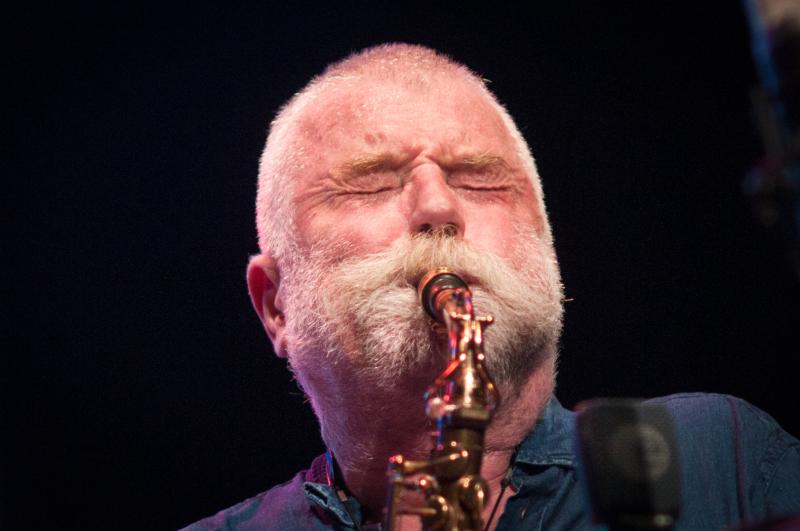
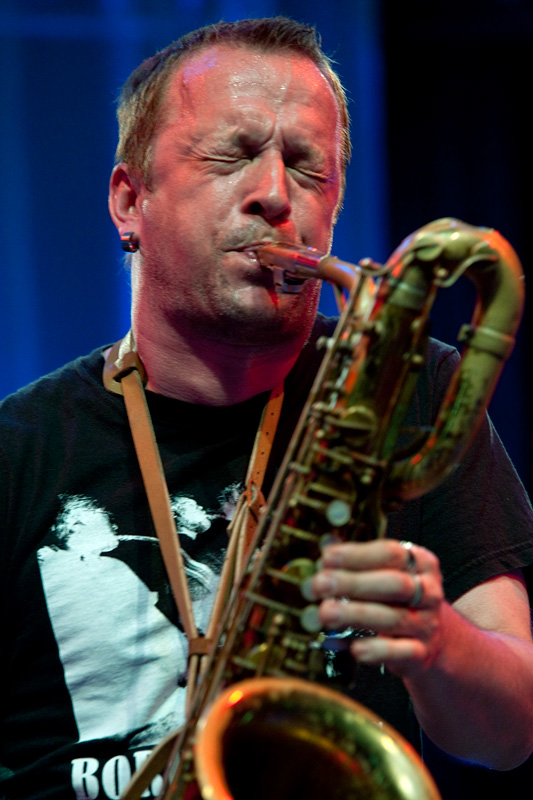
I have spent the past months discussing free form with musicians, venue managers and promoters. I have found willing helpers in musicians like reed multi-instrumentalists Peter Brötzmann and Mats Gustafsson, drummer Terry Day, managers like Alan Wilkinson of FlimFlam, and promoter Ian Storrer of Jazz at the Albert in Bristol, UK, and many others whose material will be used for later Fre-Formation articles. These people have contributed in ways far greater than I expected or deserve and have shown support for what I am trying to do with an unexpected open heartedness. I quote with permission and unashamedly because many of them express viewpoints with far more clarity than my rearranging of their words ever could. This series of articles will first discuss the origins of free form from the viewpoints of those involved, then cover the scene at the moment, venues in Europe, the US and the UK (particularly London), the musicians themselves and the future of the genre, as seen by those involved.
Discovering more about free form has not led to peace and harmony; rather, it has led to a desire to know more. I have learned from people who are in tune, not just with the music but with life itself. Those who have offered their thoughts have helped put clarity to the shapes in the mist; they have painted for me a picture which is clearer. However, the more I look at the picture, the more I find out, the more layers I see and the greater the depths. I have encountered managers and musicians both as a player and writer but none seem genuinely as up front and open as free form players. Perhaps that says a lot about the genre in itself?
Music needs to progress, and by the 1950s, there was already a growing band of musicians who wanted to develop jazz further. It is too simplistic to think of these players as being "radical," pushing boundaries and trying to be different as the reasons behind the emergence of free form; it was more a natural evolution and development of jazz to its extremes. Up to that point, for many musicians, there was a sense that jazz had stopped partway through its development; a feeling of more to explore; more notes than diatonic scales could provide; and a distinct lack of spirit, as they became fettered by what was popular and becoming mundane. The spirit of jazz, that wonderful muse which had led so many to the genre, was dying on its feet.
 Most free form musicians have a grounding in traditional jazz, classical music or both. Without this the musician cannot perform, fully understand or produce good contemporary or improvised free jazz. These genres provide the building blocks upon which to build. However, there comes a time when excellent musicians must decide whether to stick within the traditional/classical boundaries of playing or play free form. A few do both, but most players who decide to play free form play little else because it stretches them in different ways. Classical and traditional playing have their own beauty, and free form players would take nothing away from it, but free form allows them the possibilities of exploring, and finding new ways to evolve and express themselves.
 There are those who argue that free form jazz is a misnomer because experimental, improvised and free playing abandons most of the rules which made jazz, well, jazz in the first place. The more the dependence on fixed and established forms is eliminated, the less jazz-like the result. Others would advocate free form as a natural evolution of the traditional jazz genre and, just like evolution, changes are still happening. Some see free form as taking jazz back to its beginnings, with its primal rhythms and noises. Most free form players readily acknowledge the debt they owe to jazz players of the past. Ornette Coleman, Albert Ayler, Art Blakey, Sidney Bechet and Bix Beiderbecke all introduced more to the music. Bechet brought the soprano sax recognition as a solo instrument and Beiderbecke—an improviser rather than a free form player as such—added his own pure sound to the tunes. Free form players today even mention players of the '30s and '40s like Charles Mingus who spoke of, ''playing a pulse but not having to state time.''
Brötzmann, acknowledged as one of the founding fathers of free form playing, comments that:
''Improvised music is not Dixie or New Orleans or Be-bop but a thing which depends on people like Duke Ellington in the 20s and always depends on the person. Bebop was a process in the connections and influenced Rollins and others. Later musicians can always learn from the guys before.''
Brötzmann is grateful he got to play with some of the greats of previous times. You can celebrate youth, but looking back is part of the process and always, new developments are a consequence of what has gone before. Looking back is why we can turn our heads after all.
A little younger than Brötzmann, the Swedish Gustafsson acknowledges that the evolution of free form owes much to musicians of the past:
" What Beiderbecke was doing, along with Armstrong, Mingus, Ellington, Bird and others was to open things up but they were not free players by definition.''
Then he reconsiders and adds:
"They might have been free. Yes, they were."
Meaning that, for their time, they bucked the trend in what was accepted but had to avoid being too radical if they wanted to work, yet they also set the scene for players who followed.
On the subject of Beiderbecke, Brötzmann is quick to point out he was a German-American, but does not think he saw himself as playing against convention, though he definitely developed his own way. Bechet took the soprano sax, which until then had been a novelty instrument, and got it taken seriously.
Brötzmann, a man with his own definitive style of playing, initially insists he was not influenced by anyone directly but, after a bit more thought, adds that he was influenced by Bechet and Beiderbecke, learning from older guys just by observing and playing with some of them:
"Bechet and Beiderbecke just played. They had their own style and other players found themselves drawn in. As these movements of players who went a little against the grain grew, more players dared to improvise and later free form had the stage set for its true emergence. Without the few taking those small steps, free from would never have developed. It is hard to categories free form or pinpoint when it first really emerged. It naturally took a long time to develop. It did not suddenly 'appear' in the '60s. Players like Duke Ellington and Thelonious Monk underwent a lifelong process until they got to somewhere they wanted to be musically, and it is still the same, whether you are a free form or traditional player. Evan Parker started playing his own way and developed his own free style over time. Sonny Rollins started as a teenager but is still playing his own stuff and in a style he has developed over six or seven decades."
"It does not make sense to jump on any fashionable movement one week and then another the next."
Ian Storrer comments:
"For me, free jazz or avant-garde is improvised music with little preconceived form. It can equally be afforded to contemporary classical music, as some of its origins come from that area as the so-called 'Third Stream,' suggested by Gunther Schuller. With jazz, it was Charles Mingus and George Russell taking an extension to bebop, as a development from Dizzy Gillespie, Charlie Parker and, most importantly, Monk. Then, Miles Davis conjuring up modalism with Gil Evans and John Coltrane, Eric Dolphy and Bill Evans taking it further."

Albert Ayler played his tenor sax like his life depended on it (I defy anyone to listen to his nine-minute version of "Summertime" and not smile) and almost—but never quite—lost the tune while punctuating his playing with wails, whispered notes and other strange noises. When he came to New York in the early '60s he found musicians with whom he connected like Don Cherry. Though he died before his 35th birthday, Ayler, like Beiderbecke before him, proved that you could push the boundaries of limitations set by traditional playing.
From the classically trained stable came pianist Cecil Taylor. Trained at the New York College of Music and the New England Conservatory, and heavily influenced by Duke Ellington and Thelonious Monk, you could hardly get a more traditional background. Yet, by the late '60s, Taylor had developed an almost completely free style. After he began to play with tenor saxophonist Archie Shepp, Taylor played almost exclusively free form.
Sun Ra began to explore electronic music using keyboards, and his Arkestra started regular gigs in New York. These led to new audiences embracing his freer style of playing. Not free from as such but, with his unusual take on life—linked closely to influences from ancient Egypt, religion and science fiction—he appealed to hippies and the '60s youth culture, as well as free jazz lovers.
It is impossible to acknowledge all the influences on the free form movement since the 1950s. Eric Dolphy, Jackie McLean, Evan Parker, John Stevens and Anthony Braxton have all pushed the boundaries musically, and influences came from other cultures as well, including Joe Harriott, with his distinctive fusion of Jamaican roots and free-style playing.
Art Blakey, whilst relying heavily on traditional themes, provided an arena for people like trumpeter Terence Blanchard and saxophonist Kenny Garrett. Despite his passing in 1990, you can still find Art Blakey's Jazz Messengers revue, performing at the Birdland club in Manhattan.
Ornette Coleman was an important artist in the free form style and his 1961 album, Free Jazz (Atlantic) is widely considered the origin of the name which stuck.
No one listening to Coleman's "Eventually" can say he was a true free form player, but there is something very different about his playing. It can make a listener smile, and is a dialogue rather than something that is simply heard. Free form players talk often about the dialogue of playing—the interaction between the players, the audience and parts. As a listener, player or watcher, you are drawn in and become part of the music.
While free form as a name has stuck, Brötzmann thinks the name is a misnomer:
"No one can just do exactly what they want. It is a dialectic process and you have to be responsible. As soon as you work with somebody or something and even if you destroy the existing rules, you make your own. It is always dialectic between what you have in mind and what is possible."
Though it is said to have developed from dissatisfaction with the limitations of jazz in the '60s and musicians attempting to break out of the conventions of fixed chords and tempos, the scene was set long before; the time just had to be right. That time was the early '60s. However, information flowed interminably slowly, and new musical styles were slow to spread or reach new places at the time, so the evolution of free form jazz took a long time.
By the '60s, the need to progress—and there being enough musicians in the US, UK and Europe ready to break away from mainstream—meant the time was right for free form to take its place as a recognized genre. It was time for musicians to really play.
By that time, Europe had become far less reliant on the US. What was once a one-way street from the US to Europe soon became a two-way avenue, as European artists and musicians found their own way of doing things. The development of the free form movement in Europe and the UK meant you no longer had to be in New York for great gigs. Europe began to sever established musical ties with the US and, in Europe, people became more radical, looking for something different.
Derek Bailey, the Sheffield-born guitarist, was a very important figure in experimental music in continental Europe. He experimented with time and rhythm—something which both astounded and enthralled audiences at the time.
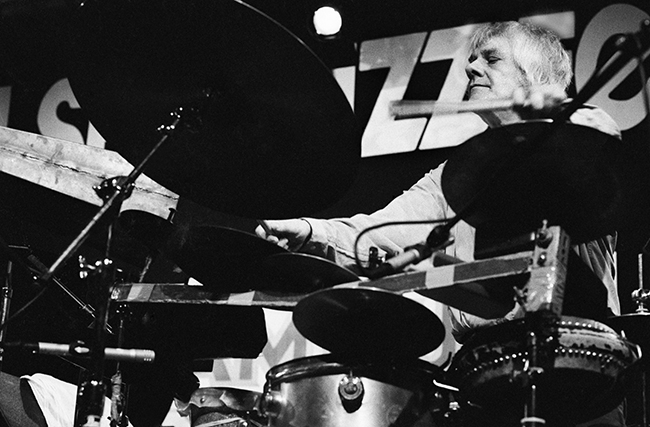
As more musicians sought to experiment, push boundaries and do something different with jazz, free form began to take a solid shape. Because it was a new form of playing, many players had a difficult time getting established and finding gigs.
"No one," says Brötzmann, "made a living in the 1960s from free form playing, and nearly all players had other jobs." Brötzmann himself had a family by the time he was 21, and had to support them by getting other jobs. However, gradually, the response grew and the audiences got larger. Free form players started to record their music and to press more records.
Tony Oxley, the British free form drummer, was a big influence in Europe at the time and there developed solidarity among all players of free from. They had to work hard for every small success and each small step could be seen as a victory. They took time to develop their own style—a process which is still going on today. Fifty years on, free jazz is no longer part of a revolutionary movement but it still allows musicians to create small miracles in terms of musical boundary-pushing.
Brötzmann is also quick to point out that free form emerged in the '60s due to the times in which people were living:
"The mid-60s felt like a violent time. There were race riots in Detroit and Washington; Martin Luther King was stirring the conscience of Americans; and there were burnings of churches and even people. In Europe, there was unease and the generation after the war wanted an alternative society. Music was just a little bit on the side but it was the main way young people could express themselves. There was solidarity between European musicians and the US. Maybe this is missing lately but Vietnam had a knock-on reaction in Europe."
In the early 1960s, Brötzmann was involved in fine art, playing jazz and seeking more, but unsure where this might lead. Through art he met lots of fellow artists, like composer John Cage:
"These kinds of people gave different information from the ordinary jazz scene, so I found it easier to get rid of forms and start from a new point. I began to work without harmonies or any formal format."
Gustafsson continues the thought:
"I don't think that the Vietnam War thing and the general radical situation in the late '60s really effected the development of free form music that much. It was, for me, a very logical development of the music we had before that and it was primarily for both political and artistic reasons that the music opened up and deepened. It was a very logical step to start opening up the forms. It was necessary even after bebop, hard bop on one side and the extreme notation systems of contemporary classical music.
"The only way to go was towards the open forms with electronic music, free jazz and more ideas—based music with, for instance, flux connections. There was similar experimentation in other art forms like the theatre, dance, poetry, art and other fields. Some, of course, had a very direct connection to the political situation at the time but free form jazz, with some exceptions, did not have sharp connections politically."
And he is right. Talk to any musician and they see the free from emergence as a result of both the political stage of the world at the time but also simply the fact that musicians wanted to do something more, something different and to experiment.
Terry Day, who played with Kilburn and the High Roads, Peter Cusack, The People Band and the London Improvers Orchestra to name a few remembers that in the late 1960s and early '70s there were small audiences for free form and this is still true today. In 1965, he met people like Mel Davis, John Stevens, Mike Figgis and George Kahn at The Starting Gate club. They began to play with rhythms and beats, improvising and finding the voice which united the musicians.
Day coerced pianist/fellow Kilburn Russell Hardy into improvisation. Like many other European musicians, they came to the same place at the same time and took a dislike to the accepted formats. They met other musicians seeking greater freedom like Terry Holman, Russell Hardy and trumpeter Henry Lowther. Most were playing in "structured" jazz ensembles, so Day suggested something different. The Continuous Music Ensemble was formed—later to develop into The People Band, an influential free form ensemble of the late '60s that is still playing today. Martin Davidson, of the Emanem label, showed an interest in what they were doing. Recordings were made and sold—in small numbers, admittedly, but still they sold and the audience for free form grew exponentially in the UK.
While capturing free form on CD or vinyl remains difficult to master, live gigs are something else. From small gigs in places like Wood Green Art Centre in the late '60s, crowds have continued to tune into improvisation and free form music.

As far as experimenting is concerned, Day drily expressed that that some of his more offbeat developments had nothing to do with "experimenting," but came from practical considerations:
"Russell Hardy played really quietly but he was a great pianist. I was a drummer and very loud, so I and the audience were missing out on Hardy's great playing. To help with this I first shaved my drumsticks down. Even these proved too loud sometimes, so I played using knitting needles and that worked. People thought I was improvising and I was, but not for the reasons they assumed!"
Whatever the reasons, free form seemed to emerge during the 1960s, and whether you put this down to the political and world situation at the time or feel this was simply the next logical step in the evolution of jazz, free form was different; it was radical and pushed musical boundaries. Musicians and audiences welcomed it with open arms.
Brötzmann considers free form playing as vital and important, but acknowledges it is sometimes hard to go against what is popular and mainstream:
"In society, to do something against the mainstream you have to be aware that you have hard times to face and you have to decide for yourself which way to go."
Brötzmann accepted, from a young age, that when he decided to play free form he would take his own time and perhaps make very little money. He does not argue with making records to keep the cash flowing on occasion (he does it himself), but does not agree with making records in a "popular style" and then coming back to your own style. Brötzmann made his decision back in the '60s, but acknowledges that, for young people today, it is more difficult to plough their own furrow.
There are different pressures both financially and socially due to the changing social and economic scenes, but if you want to say something you have to, in Brötzmann's words:
"Use your own language. There is no other way to speak. If you switch styles you can corrupt your own language."
To young people, he adds:
"Just play, just do it, just try. If you fail you fail. If you succeed, you succeed; it should not matter but just do it."
And what does free form mean to the players? Brötzmann was an artist before he was a musician and sums up the differences:
"You can be an artist and a musician; it is the same person doing both. The difference is that music is not only a musical experience but a social one. You are playing with somebody else and the exchange of voices is the main thing. The difference to working in studios alone with a canvas and materials is that you are creating something together and sometimes you can get a feeling of, 'Yes, that was it,' which is very different to being in the studio where you make your own choices. Pictures can be thrown away or corrected but with music there is nothing to correct and you cannot take it back. It is more of a risk but it is great being on stage with people trying to create something good and maybe more. It is also about connecting with the audience. With music the audience is n front of you. I love that."
Gustafsson, on the other hand, says:
"Free form is a genre—even if you hate categorizations, but it is hard to avoid it if you are trying to discuss and define matters. In the whole history of jazz there has been a striving for freedom in one way or another to improvise music until we get to what you call free form and free jazz."
He is right (again).
Free form is a growing genre still; it has had its fallbacks and the lack of venues is having an effect, but the Fre-Formation series will explore the history, development and current scene as well as discussing where it is going.
Discussing what free form playing gives to musicians, they are adamant. Musicians like Brötzmann will tell you that playing is nothing to do with meditation or similar experiences but if you give 100 percent onstage and feel completely empty this is a process similar to meditation. One thing many players notice is how it is mainly women who are able to say they got "lost in the music," so perhaps they are more sensitive and tune into free form quicker than men? For musicians and the audience a performance is very personal and each gets out of it what they want.
Gustaffson's opinion is that:
"We do this to really become 'one' with the music and the ones you play with; to become in the same state of mind. It is really hard to describe but you know when it is happening, that is for sure. This interaction between people is something rather unique."
Gustaffson, in his wonderful direct way, sums up the situation with playing free form beautifully:
"The music is like life, only better!"
 I could not agree more, and talking to Gustafsson, Brötzmann , Day and many others has taken me a little further along the road of finding out more about free form. Subsequent installments will look at the situation today; the problem of gigs and how once musicians could be on the road for weeks, finding venues readily but now things have changed; the acceptance of free form; and where musicians think it might be going.
 If you prefer a scientific approach and analysis of free from and improvisation, there are theories about the processes. When improvising, there is a surge in the activity of part of the brain called the prefrontal cortex, according to an article by Jonah Lehrer in The Telegraph from April 15, 2012. This part of the brain controls creativity but perhaps more interestingly, when improvising, there is a decline in the activity of the dorsolateral prefrontal cortex—the part of the brain which inhibits us, stops us from overreacting or feeling inhibited and self-conscious. So, playing free form and improvising is, perhaps, due to players having more or less active brain centers.
Some things are certain. If you seek conformity, tunes, refrains, chromatics and songs then you are possibly in the wrong shop. If you seek immediate understanding, traditional teachings and compliance, then free form has nothing to offer you. If, however, you seek to extend your musicality, to explore feelings and allow that muse which is free form jazz to lead, then follow that spirit.
Thanks to Peter Brötzmann, Terry Day, Mats Gustafsson, Alan Wilkinson, Ian Storrer and others for their support in this series, with more input to come.
Photo Credits
Page 1 (Peter Brötzmann): Dave Kaufman
Page 2 (Mats Gustafsson): Michael Hoefner
Page 3 (Ornette Coleman): Madli-Liis Parts
Page 4 (Tony Oxley): Sue Storey
Page 5 (Peter Brötzmann): Juan-Carlos Hernandez
Page 6 (Anthony Braxton): Martin Morisette
< Previous
Simple
Comments
Tags
Fre-Formation
Sammy Stein
Peter Brotzmann
Mats Gustafsson
Terry Day
Ornette Coleman
Albert Ayler
Art Blakey
Sidney Bechet
Bix Beiderbecke
Charles Mingus
[Duke] Ellington
Thelonious Monk
evan parker
Sonny Rollins
Gunther Schuller
George Russell
[Dizzy] Gillespie
[Charlie] Parker
Miles Davis
Gil Evans
[John] Coltrane
[Eric] Dolphy
Bill Evans
Don Cherry
Cecil Taylor
archie shepp
Sun Ra
Jackie McLean
John Stevens
anthony braxton
Joe Harriott
Terence Blanchard
Kenny Garrett
Derek Bailey
Tony Oxley
John Cage
George Kahn
Henry Lowther
For the Love of Jazz
 All About Jazz has been a pillar of jazz since 1995, championing it as an art form and, more importantly, supporting the musicians who create it. Our enduring commitment has made "AAJ" one of the most culturally important websites of its kind, read by hundreds of thousands of fans, musicians and industry figures every month.
You Can Help
To expand our coverage even further and develop new means to foster jazz discovery and connectivity we need your help. You can become a sustaining member for a modest $20 and in return, we'll immediately hide those pesky ads plus provide access to future articles for a full year. This winning combination will vastly improve your AAJ experience and allow us to vigorously build on the pioneering work we first started in 1995. So enjoy an ad-free AAJ experience and help us remain a positive beacon for jazz by making a donation today.

Giveaway

Eligible winners: 15
Days remaining: 13
Days remaining: 13