Home » Jazz Articles » Interview » Luis Perdomo: Walking Towards the Light
Luis Perdomo: Walking Towards the Light
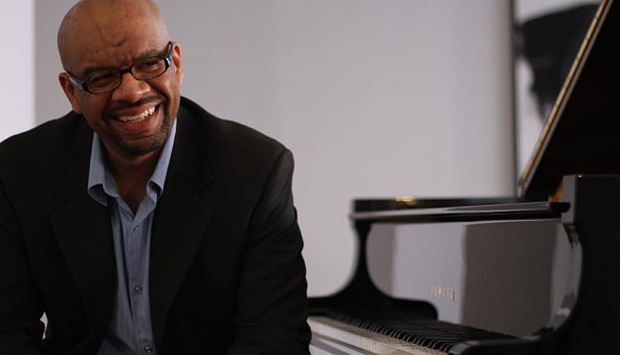

Perdomo's name—he hails from Venezuela—at times has placed him, in the eyes of some, in the Latino bag. Not that there's anything wrong with that. That music is in him, but only part of the influences that have formed with remarkable musician. He's made a living playing with Latin musicians in his homeland, and spent about a decade in the midst of the volcanic improvisations of saxophonist Ravi Coltrane's band. He was brought to jazz by icons like Bud Powell and Oscar Peterson, but the first CD he ever bought, in his high school years, was John Coltrane's raucous Om (Impulse, 1968), and in that period spent a lot of time with Albert Ayler's Spiritual Unity (ESP, 1964). Not your usual stuff for musicians in their early stages. This cat comes completely assembled.
He's played with John Patitucci, Ray Barretto, Alice Coltrane, Brian Lynch, David Sanchez, Dafnis Prieto, Yosvany Terry and many more. But his time may yet be coming. With the Ravi Coltrane quartet that included himself, bassist Drew Gress and drummer E.J. Strickland at an end—or at least on hiatus—Perdomo is eyeing more work as a leader. It's time.
"I'm going to try to concentrate on my music," he explains. "Since I'm not playing with Ravi, I find myself with all this free time on my hands. I'm 40. I have already played with tons of bands. What's the next step for me? I'm thinking this and looking at a stack of music right near the piano that I have written that never gets played ... OK. Time to concentrate on my music. It feels very natural for me. I don't feel like someone's forcing me to do all these gigs with a band, nobody's forcing me to write all this music. Right now, it feels very natural."
He doesn't need a kickoff point for being a leader. He's earned it. But his new recording, 2012's Universal Mind on Coltrane's RKM label, is an exclamation point for his talents. It's a trio outing with longtime accomplice Gress and the brilliant Jack DeJohnette on drums. And it's a gem. Wonderfully cohesive and expansive. The trio engages in jazz conversations that are sophisticated and accessible.
The recording is a personal thrill for Perdomo, because it turns out that DeJohnette has been a strong influence going back many years. There's been a connection even before the two met at Freihofer's Saratoga Jazz Festival in 2007. It shows. DeJohnette is fantastic and the pair is propelled to impressive heights throughout the disk, with Gress equal to the task all the way.
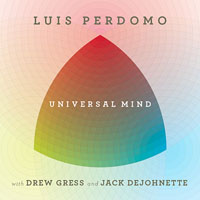 "The first time I heard Jack play, I was still living in Venezuela and I bought a CD by Keith Jarrett," says Perdomo. Actually, an LP. Standards, Vol. 2 (ECM, 1985). I was very impressed by the way Jack played. It sounded very dense to me. That was the first time I heard somebody playing like that. It was also so musical. Everything that he did, musically, had to do with what the piano was playing, what the bass was playing. From there I started buying anything he was on. Every CD I bought that he was on was real killing. From that time on, I became a fan of his. When I moved to New York, I knew that he was here. But at the same time it was kind of like a dream. He's a guy that's played with most piano players that have influenced me. The idea I had was to get to see him a lot here. That was one of the things when I first moved to New York. To this day I always listen to recordings he's on just for inspiration."
Meanwhile, two people—randomly—mentioned that hooking up with DeJohnette should be in Perdomo's future.
"One time I went to see Richie Beirach at Birdland. I had given Richie one of my CDs. We were talking backstage and he was telling me, 'You would really sound good with Jack DeJohnette.' Jack and Dave Holland. He was the first one to mention that to me. Ravi also said I should play with Jack. But it wasn't until many years later I was able to say, 'Why not? Why shouldn't I play with Jack?' I was playing with Ravi. We were in France. After the gig, we were sitting at the hotel. We were outside and the weather was real nice and we were just talking. I said to Ravi, 'How about if we make a CD?' He made it happen."
He notes, "I'm super proud of that CD. Not because it's mine. But the whole thing came out real good." It's drawn high praise from critics and musicians.
 Perdomo wrote most of the music and did so with Gress and DeJohnette in mind. "I wanted to write music that featured the best in these two artists. When you have people like that, you don't really need to write that much direction. I wanted to leave a lot of room for stuff to happen in the studio. I wanted to just have a sketch that we could play the melody and go from there without too much written stuff or rehearsal. I didn't want music that was too complicated and have to be stressful in the studio." He adds, in his good-natured fashion, "This is the kind of thing you find out when you're 40 years old. You know better. If I'd have done this record 20 years ago, I probably would have written a lot of music and have a real stressed-out environment in the studio. But now ... make music ... just relax and let it happen."
The project was done in two days. After listening to the drummer for so many years, it was a special time for Perdomo. "From the beginning, when Jack started testing his drums, I was like, 'Wow. That's Jack DeJohnette.'" The pianist had to suppress some of those feelings of awe, so as to not be overwhelmed. "I just went up there and started playing. Right from the first moment there was a hookup. It might have been from all the years that I've been listening to him. I was very familiar with his style."
DeJohnette's stature on his instrument and in the jazz community could have resulted in a drum-dominated record. It didn't. Perdomo says that's another positive attribute of the drummer. "We had a conversation about music. He found out the kind of stuff that I like. He realized that I actually heard him and had listened to all his music. When we went back to record, that's when he brought his A-game. He just went for it. I was in heaven. When I heard that, I was like, 'Yes!' [But] that really impressed me is that Jack has a way he plays. He played, but he never took over the whole session. He just added to it. And made everything musically get to the highest level possible. Not at any moment did I feel like I have to adapt to him. I felt completely free to play the way I play. We were listening to each other, the three of us, very attentively. It was really cool."
Perdomo produced the session, but label owner Coltrane is the executive producer and the pianist credits him as a major reason for the CD's sound.
"He pays attention to little details, sound-wise," says Perdomo of Coltrane wearing a producer's hat. "He's an excellent sound engineer himself. He knows all about the mics. The sound board. What kind of mic should be used on each instrument. He listens to the way the piano sounds in the room. Then, according to that, he figures out the best way to mic the piano, the best way to mic the bass, the drums. Everything. He pays attention to every little detail, as you can hear in the recording. The sound is incredible. A lot of that is because of him."
 Perdomo was also allowed free creative rein. "The first time I was offered to make a CD, the promoters wanted me to do a Latin thing. They wanted to tell me, 'You should do this and you should do that.' A lot of the stuff was stuff I wasn't really into. Ravi was the first one who told me, 'Record whatever you want, musically. You be in charge of the music.' That's why I said, 'OK. Let's make a CD.' Every time he has done my CDs, he's the best producer you can get ... From the point of view of the music, he gives very little advice. But whatever he says really makes sense. I totally trust him, blindly. I've played in his band for so many years. He knows what I like, musically. When we're in the studio and he's up there listening, I know he's in touch with what I want to express musically."
With the stellar recording out in 2012, Perdomo is trying to get more gigs as a leader. Naturally, because DeJohnette has his own special career, Perdomo will be playing music with other personnel. He would also like to lead a quartet or quintet when the circumstances allow. But, like many sidemen who try to come to the forefront, the footing can be difficult at first. "Even though people know me at most festivals around the world, when you come with your own project, they don't know you. You've still got to prove yourself. A lot of the fees are not the best thing, and I like to pay decent to my musicians. The trio is the best thing for me to do at this time."
 Perdomo will persist with his own thing. "It's a real good time for me. I can feel real happy doing my own group and playing my own music. Another thing I like about being a bandleader right now is that I don't want to get burned out from going on the road. When I finally want to do my own thing with my trio, I don't want to say, 'No. I don't want to go on the road anymore.' Because going on the road has become real hard lately. Even things you took for granted before, like taking a direct flight that will get you somewhere with enough time to take and nap and then eat and then go to the sound check. Now you've got to take two or three planes. So a lot of the time you've got to go straight from the airport to the gig. Right now there's a lot of that happening, because they have eliminated a lot of direct flights. A lot of the time, to make it work financially, you've got to take cheaper flights. If I'm going to do that with my own group. I want to do that while I still have the energy. While I'm still young. From every point of view, it's a good time for me to do my own group."
Perdomo has been playing professionally since the age of 12 when he got his first paying gig. Getting paid was cool, and he never looked back.
The sound of music came from his home. His father was not a musician, but he played a little piano and started showing his son a few things when he was six. "He realized that I had some talent for it. But it wasn't until I was 10 years old that I seriously began taking piano lessons with a private teacher in Venezuela. Taking harmony lessons and all that stuff. With a real good teacher who is still the main jazz teacher in Caracas. His name is Gerry Weil. He's actually from Austria. He's been in Venezuela for about 55 years. I studied with him for 10 years, from 10 to 20. I came to new York when I was 22."
His father had records of Bud Powell, Oscar Peterson, Bobby Timmons. "There was a record my father used to play a lot called Modern Jazz Sextet (Verve, 1956). It's a record with [trumpeter] Dizzy Gillespie and [saxophonist] Sonny Stitt. Skeeter Best on guitar, John Lewis on piano and Percy Heath [bass]. Charlie Persip is the drummer. I lot of my father's records I tried to buy on CD once I came to New York. I still listen to them. There was a Ray Bryant record that I used to listen to a lot called All Blues (Pablo, 1978) I was very influenced by that one. Another record I used to listen to a lot is The Bobby Timmons Trio In Person; Live at the Village Vanguard (Riverside, 1961). With Ron Carter and Albert Tootie Heath. Those are records my dad was always playing."
His early gigs in Venezuela were salsa music and groove music for the dancers. "Then I played in a traditional Venezuelan music group I did that for two years also. I remember my grades started going down because I was playing music, going to sleep real late when I was 14 or something like that. When I was 15, I got my first jazz gig in a hotel in Venezuela. That only lasted for nine or 10 months. The next big break that I had was when I was 18. I became the house pianist in Caracas at this jazz club, called Juan Sebastian Bar. I did that for three-and-a-half years." He played jazz six days a week. "That was a real big break for me."
 Juan Sebastian Bar was a place where the better jazz musicians would hang. When American musicians were touring, they'd stop there. "I met Pharoah Sanders, David Kikoski, James Genus. Since then I've been friends with them. There was a trio from Brazil, called the Zimbo Trio. It was a fantastic trio that played traditional Brazilian music. They did a double bill with us. We did double bills with Chucho Valdes and his group. Gonzalo Rubalcaba. That's where I met all those guys.
Perdomo didn't get any formal institutional music education. He first came to New York to visit a friend who played trumpet. He visited a couple times. The second time, a friend told him about auditions for the Manhattan School of music that were going on. There was a friend of mine who was a trumpet player. He had family in New Jersey. He was the first one to tell me I should get a Visa and go to New York and hang out. I saved my money for a year. We went to New York. I was 19. After that, I came again, by myself. Just to hang out, buy CDs, see music, then go back to Venezuela. At that time a friend of mine who was here [New York], a musician from Venezuela, told me 'Why don't you audition for the Manhattan School of Music.' By chance, I was there during the audition period."
"The next thing, they gave me a scholarship," he says. "I sold all my equipment in Venezuela. I was real close to the man cat in Venezuela, as far as doing all the gigs. I was doing fairly well. I used to play, in addition to Juan Sebastian Bar, with a lot of jazz artists. I also had a real good pop gig that was paying a lot of money. I was doing fairly well, but I always thought I was a big fish in a small pond. I didn't want to do that. I wanted to come to New York. I sold all my equipment and moved. That was 19 years ago."

Excited, but not overwhelmed, Perdomo moved slowly at first in the Big Apple. Language was a barrier at first. When he began to pick up the English language, he had to get into the habit of promoting himself, something that didn't come easy to him. "I was a fulltime student. I was taking 21 credits. So I didn't have that much time to go around the city, try to get some work. So the first two years, it was kind of hard. But then after that I started playing with people like Stefon Harris. He was going to Manhattan School of music at the same time. Myron Walden. Bill Saxton. He was the first guy who took me to Europe. From then on, work was getting bigger and bigger. I started playing with La India, a singer with a salsa band. It was money to pay my bills. The phone just kept ringing and ringing and ringing. Thank god, to this day it's always ringing."
Another important part of his education was his relationship with Roland Hanna. The rigorous training he received under Hanna's tutelage elevated Perdomo as a player and musician.
"I had seen Sir Roland Hanna perform at the Manhattan School of Music. He played a couple of tunes, solo piano. I was like, 'man, I've got to study with this guy.' Just the way he made the instrument sound. The harmonic knowledge that he had. That's what I was crazy for at this time. I went to Queens College and by chance he was teaching there. He auditioned me and the next day it was cool. He took me for a student. I was really happy. I did my master's degree with him.
"That was one of the best things that could have happened to me. He was a super great teacher. He wasn't really interested in hearing me play my best at my lessons. I remember one time I was playing a song that was real fast. He was like, 'Cool. You can play fast. Play me a ballad right now. Real slow. Play me a ballad like Mulgrew Miller, with big chords and a big sound. With real good voicing.' All those little details. I said, 'OK. I'm going to play "I Fall In Love Too Easily," a ballad that I know real well.' He was like, 'Do you really know that ballad?' I knew the lyrics too. When I was getting ready to play, he said, 'I want you to play the melody in the key of A. The solo in the key of E flat. Then the last melody in G major.' Oh man," Perdomo recalls with awe.
"He made me play the whole piece real slow. He would say, 'I don't care how slow you play it. The only thing I want is that you play the right chord every time. Don't mind playing real slow. I have all the time in the world.' For the next four months, we just worked on transposition. He would start my lesson my making me play a ballad in some different key that he would name. He was looking for whatever gray areas you would have in your playing; then he would make that the focus of the lessons."
 Even after getting Perdomo got his master's degree, Hanna felt there was ground that needed to be covered and kept up the lessons. "He said, 'It's really important that you get this. I know you're getting your degree, but if you want you can still come to your lessons. The only thing I ask is that you practice what I told you to practice and do as I say.' He gave me lessons for a year-and-a-half every weekend he never asked me for a penny. He was very happy every time he saw progress. At the same time he could get real mad. Make you feel like nothing. But when he saw you actually practiced, he would be the happiest man." The lessons could last two-and-a-half hours at times. Perdomo's playing became stronger.
"He used to talk to me about stuff that I never really thought about, like the way you use the pedals. I was already playing with Ravi, off and on. I was playing with Ray Barretto. This was in 2001. I was playing with John Patitucci. And with Yosvany Terry, Brian Lynch. I was in eight different bands at that time. He was like, 'You're making a little money. Cool. Maurizio Pollini, the great Italian pianist, is playing a Carnegie Hall. Buy a ticket where you can sit real close to the piano and you can see the way he uses the pedaling.' He opened my mind to different things I wasn't really used to. That was a real cool period in my life."
All the while he was picking up more gigs and his career grew step by step. "I like it more like that, slowly, but always progressing. Now that I think back, I wouldn't like to make it real big. The new sensation in town. Then two years later you don't hear from that person any more. Or you get frustrated. When I young I wish it would have been the other way [a big splash]. But now, looking back, it's actually cool because it's always getting better and better. But 2001 was a real good year for me. I would say it was something that really put me on the map." It included gigs with bassist John Benitez and saxophonist Miguel Zenón.

"In January, I started playing with John Patitucci and played in his band for a year. In February, I started playing with Ray Barretto. In April, I started playing with Ravi, doing some on and off stuff. At the same time I was playing with John Benitez, his trio. I was playing with Yosvany Terry. Dafnis Prieto. Bryan Lynch. I had a lot of work that year. Everything was really happening musically for me that year. I was also playing with Miguel Zenón already.
"Ever since 2001, it's always getting better. Getting better gigs. Teaching ... It's mostly straight jazz. It's funny because some people that don't really know me, they see my name and right away they assume that it's Latin jazz. A lot of the time it's not that. If a gig calls for me to play Latin jazz, that's what I play. But at this point, both are the same to me. I just say it's music."
He first recorded in 2003, for RKM, and has done numerous sessions as a sideman. Meanwhile, Perdomo is always listening, not just to the masters for influence, but younger players with energy and ideas. "I try to listen to everybody. Of the younger guys I've been listening a lot to Gerald Clayton. I really like his playing, his touch on the piano. Robert Glasper I like a lot. Of course I still listen to Cecil Taylor and people like that. I'm pretty open-minded. Anything that might bring some new ideas to my playing I'm open to. Even if there are styles I don't really like at the moment, I maybe give it six months or a year and listen to it again. You never know. When I was playing salsa at 10 or 11 years old, I didn't understand jazz and I didn't like it, even though my father was playing it all the time. Two years later, I started listening to it a lot. In a period of a year, I jumped from listening to Bud Powell and Bobby Timmons to listening to Cecil Taylor and people like that."
What he loves about jazz is "the freedom it gives you over some other styles. You can put different influences into jazz. You have to be careful to keep the balance if you want it to be jazz. It's very flexible to other influences. Also the improvisation. You can express yourself and use your own ideas. It's one of the best musics out there."
Early this year, Perdomo did a successful tour in Europe with Hans Glawischnig on bass and Johnathan Blake on drums. He wants to get to the point where his trio personnel are consistent. "So far, I don't have a lot of work with my group. So I usually keep a rotation of people who know my music and I use whoever is available," he says. "But I'm going to start using the same personnel more often. Look out for Luis Perdomo as a bandleader and the Luis Perdomo trio."
Selected Discography
Luis Perdomo, Universal Mind (RKM Music, 2012)
Miguel Zenón, Alma Adentro—The Puerto Rican Songbook (Marsalis Music, 2011)
Ravi Coltrane, Blending Times (Savoy, 2009)
Luis Perdomo, Pathways (Criss Cross, 2008)
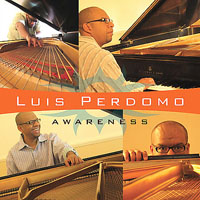
Luis Perdomo, Awareness (RKM Music, 2006)
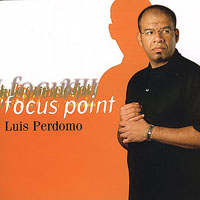
Luis Perdomo, Focus Point (RKM Music, 2003)
Rebecca Coupe Francks, Check The Box (RCF Records, 2010)
E. J. Strickland, In This Day (Strick Muzik, 2009)
Conrad Herwig, The Latin Side of Wayne Shorter (Half Note Records, 2008)
Greg Tardy, Steps of Faith (Steeplechase, 2007)
Ravi Coltrane, Influx (Savoy, 2005)
Dafnis Prieto, About The Monks (Zoho Music, 2005)
Brian Lynch, Conclave (Criss Cross Jazz, 2005)
Miguel Zenón, Ceremonial (Marsalis Music, 2004)
Hans Glawischnig, Common Ground
Ralph Irizarry and Timbalaye, Live at Birdland (RCA Victor, 1999)
Photo Credits
Pages 1, 3, 5: Courtesy of Mariah Wilkins Artist Management LLC
Pages 2, 4: Hans Speekenbrink
< Previous
Nosferatu
Next >
BAM: Bremen Art Music?
Comments

Tags
Luis Perdomo
Interview
R.J. DeLuke
Two for the Show Media
United States
Ravi Coltrane
Bud Powell
oscar peterson
John Coltrane
Albert Ayler
John Patitucci
Ray Barretto
Alice Coltrane
Brian Lynch
David Sanchez
Dafnis Prieto
Yosvany Terry
Drew Gress
E.J. Strickland
Jack DeJohnette
Keith Jarrett
Richie Beirach
Dave Holland
Bobby Timmons
Dizzy Gillespie
Sonny Stitt
Skeet Best
John Lewis
Percy Heath
Charlie Persip
Ray Bryant
Ron Carter
Tootie Heath
Pharoah Sanders
Dave Kikowski
James Genus
Chucho Valdes
Gonzalo Rubalcaba
Stefon Harris
Myron Walden
Bill Saxton
Sir Roland Hanna
Mulgrew Miller
Gerald Clayton
Robert Glasper
Cecil Taylor
Hans Glawischnig
Johnathan Blake
Concerts

For the Love of Jazz
 All About Jazz has been a pillar of jazz since 1995, championing it as an art form and, more importantly, supporting the musicians who create it. Our enduring commitment has made "AAJ" one of the most culturally important websites of its kind, read by hundreds of thousands of fans, musicians and industry figures every month.
You Can Help
To expand our coverage even further and develop new means to foster jazz discovery and connectivity we need your help. You can become a sustaining member for a modest $20 and in return, we'll immediately hide those pesky ads plus provide access to future articles for a full year. This winning combination will vastly improve your AAJ experience and allow us to vigorously build on the pioneering work we first started in 1995. So enjoy an ad-free AAJ experience and help us remain a positive beacon for jazz by making a donation today.

Giveaway

Eligible winners: 15
Days remaining: 11
Days remaining: 11