Home » Jazz Articles » Hardly Strictly Jazz » Sun Ra: The Eternal Myth Revealed Vol. 1
Sun Ra: The Eternal Myth Revealed Vol. 1

I'm starting things off with a look into a document that embodies the great American pioneering spirit. I hope this sets the tone for a look into some very rewarding music that doesn't get its fair consideration. Thanks.
 Sun Ra
 The Eternal Myth Revealed Vol. 1
Transparency
2011
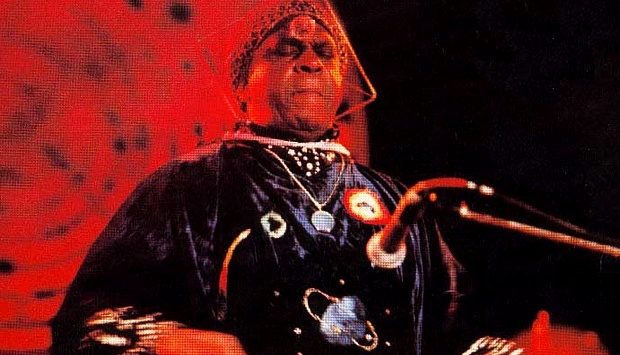
Growing up in Philadelphia in the punk rock era as I did, my teen years were strangely informed by Sun Ra and his Arkestra. They lived in the Germantown section of town, together in a house on Morton Street, kind of a cosmic free jazz version of The Monkees or something. I lived around the corner from that house during the spring months of—I think—1985, and they seemed to rehearse all the time. Their music was literally in the air for me. And the annual Sun Ra Halloween shows at Grendel's Lair were epic, legendary events.
Over the years, I've worked with musicians who either worked closely with Ra and the Arkestra (singer and guitarist Phil Alvin, keyboardist Terry Adams}, or I've played with Arkestra members (saxophonist Knoell Scott, trombonist Tyrone Hill). They all spoke of Ra with intense respect and wonderment. But few people knew enough to comment on Sun Ra's immense recorded legacy. Tom Ardolino, drummer from NRBQ, was the first guy I knew who had all the records dating back to Ra's self-released singles from the 1950s on the Saturn label, and he started turning me onto that stuff in 1991 via his own compilation tapes. Five years later, Evidence put out its justly celebrated Sun Ra: The Singles double disc set. Doo wop, blues, hard bop, avant-garde—The Singles did something few journalists had been able to do: it put Sun Ra squarely in a knowable traditional black music context.
Evidence really did a wonderful job of reissuing the bulk of the early Sun Ra albums, finally presenting Ra's music with clarity and continuity. It suddenly seemed as if his Duke Ellingtonian 1950s hard bop phase had been absorbed into the 1990s post modern jazz conscience. Ra went from being considered the marginalized big band wing of the 1960s avant-garde to deserved veneration as another Charles Mingus. I'm simplifying, but you get the point.
The Eternal Myth Revealed is a 14 disc docu-biography of Ra's life and career, from his birth in 1914 up to 1959. In addition to his own music, it includes music he was influenced by, and a lot of stuff he may or may not have had a hand in as arranger, vocal coach, pianist or something else. Sun Ra's output was as prolific as Ellington's, and discographers have had nightmares and arguments attempting to document it accurately. This mammoth box set will raise as many questions as it sets out to answer, and will no doubt inspire controversy in a few corners. It's 17 hours of history and music, and it's riveting. I listened to it over a weekend, in two seven disc stretches. Then I dumped a bunch of the music into my iTunes.
The auteur behind this landmark is Michael D. Anderson, whose knowledge of jazz, rhythm 'n' blues, blues, Latin music and other styles is pretty staggering. His archival command of pre-war jazz and blues makes me hopeful that he will write a book about this stuff. EMR strips away element by element that almost insulting view of Ra as a hodgepodge crackpot from out of nowhere. Moving between Anderson's own narration are threads of Ra's own recollections, with relevant comments from Ray Charles, Coleman Hawkins, Bobby Blue Bland and a few other heavyweights. A vivid portrait of a black music world transforming itself emerges, as does a clear picture of Ra as a musician living at the crossroads of his time, very much a thorough professional but also a restless experimenter and (to use Uri Caine's expression) checker-outter. Ra was singular but no fluke, and Anderson does a fantastic job of tying together the threads of his influences. He knows his subject deeply, and does not shy away from editorializing and speculating. The approach is bound to infuriate the more scholarly types, but it fits Ra very well.
Anderson's musical selections—not only of Ra's own music, but of the music from which Ra drew as well, are spotless—and his taste is impeccable. The choices he makes not only illustrate why Ra would have been enchanted and influenced, but why you should be. Luis Russell, Don Redman, Bennie Moten, John Kirby and others are represented by some truly exciting Jazz Age jazz.
According to Anderson, Clarence Williams was the first to record a Ra composition—"Chocolate Street"—in 1933. Williams did not credit the song's composer. Ra was then 18 or 19. His first LP as a leader was still 24 years away (Jazz By Sun Ra, Vol 1 on the short-lived Transition label), by which point he had cultivated his space-themed presentation, and "Chocolate Street" gives us a look at the seeds. The piece is properly Ellingtonian, and also—as Anderson points out—a close melodic cousin of Irving Berlin's "Coquette." "Chocolate Street" shows us Ra as a gifted creature of his time, if nearly interchangeable with any number of Ellingtons-in-training. Anderson presents music that Ra dug into—including John Kirby, Mary Lou Williams, Jimmie Lunceford and of course Fletcher Henderson—and we can hear the influences combining in a very apparent way. In the ensuing dozen years from "Chocolate Street," jazz was exploding, and Sun Ra was collecting the resultant sparks, flames and smoke—theorizing, internalizing and developing a lot of music, even if he wasn't yet recording.

The first unrefuted appearance of Ra playing on record finds him backing the legendary blues shouter Wynonie Harris in 1946 on a session for the Bullet label, a Nashville indie. This same year Ra settled in Chicago for what would be a 15 year stay. Arguably, this was his most important period, and he was prolific.
Just how prolific? Well, this is where the arguments will likely pick up, because there is a lot of music included in the box that may or may not actually include Ra's participation. As Anderson himself notes in hundred-plus page book (whose pages are not numbered), "Most of the materials collected here were never discussed by Ra himself in later years; much here has depended on the memories of the engineers and musicians who played with Ra."
To my ears, some of this stuff doesn't have Ra's fingerprints on it. But a lot of it does. I'm speculating, but so is Anderson. It's of little consequence, because whether or not Ra was directly involved with every song on here, this is the music community in which he made his way during that time, and it does sound right together as a fully realized portrait of the time and place.
EMR is rife with fascinating prototypical jewels that are absolutely Ra—including a solo pipe organ session from 1948, early electric keyboard experiments, the Red Saunders stuff he arranged in 1953 (including cuts with vocalist Joe Williams), rhythm 'n' blues sessions, even recordings of Ra as jazz vocalist (he sounds something like Al Hibbler imitating Billie Holiday). It presents a clear and rounded picture of Ra as the consummate post-war black entertainment professional. There are early live recordings that are the important initial steps towards the Sun Ra we would come to know and very often love, culminating in a riveting 1958 live jam session that brings Ra together with no less than saxophonist Gene Ammons and trombonist Janice "Ms. JJ" Johnson. And of course, there is a generous sampling of those incredible Saturn recordings of the 1950s that established him as one of the most original and audacious big band leaders, pretty much ever.
As a document of Ra's life and musical world from 1914-59, EMR is a landmark, even a new take on the jazz biography. Except for Charles Mingus, who else could be examined in so sweeping a format? It's not really a trend waiting to catch on. And its $110 pricetag doesn't exactly encourage imitation. But it will invite speculation and touch off arguments while it stands as the definitive bio-document of this major artist. Cool.
(Postscript: a second volume is planned, which will pick up chronologically where this box leaves off and will cover Ra's work up to his death in 1993.)
Tracks: CD1: 1. Narration—Producer & Sun Ra Introduction Pt. 1; 02. Narration—Production Introduction; 03. 4-22-58—Message To Earth Man—Yochanan (The Space Age Vocalist); 04. Narration—Producer & Sun Ra Introduction Pt. 2; 05. Narration—Ruth Brown Bobby Bland & Ray Charles Interviews—The Meaning Of The Blues; 06. Narration—Sun Ra Interview—His Early Days In Alabama; 07. Narration—The Early Blues Women 1924-1928; 08. 5-13-21—Oh Daddy—Ethel Waters with Cordy Williams and his Jazz Masters; 09. 10-15-24—Booze & Blues—Ma Rainey with the Fletcher Henderson Orchestra; 10. 11-10-28—Hole In The Wall—Sarah Martin with the Clarence Williams Orchestra; 11. Narration—Sun Ra Interview—His First Piano / Leading The School Band; 12. Narration—The Luis Russell Orchestra 1929; 13. 9-9-29—Call Of The Freaks—The Luis Russell Orchestra; 14. Narration—The Don Redman Orchestra; 15. 1-17-40—Chant Of The Weed—The Don Redman Orchestra; 16. Narration—The Early Jazz Band Influences; 17. 6-12-28—Just Rite—Bennie Moten Orchestra; 18. 7-2-28—Fat Man Blues—Tiny Parham & His Musicians; 19. 2-25-32—Rhythm Spasm—Baron Lee & The Mills Blue Rhythm Band; 20. Narration—The Fletcher Henderson Influence Pt. 1—1931; 21. 1-9-31—Blue Rhythm—The Fletcher Henderson Orchestra; 22. 1-9-31—Sugar Foot Stomp—The Fletcher Henderson Orchestra; 23. Narration—Coleman Hawkins Interview—Hawk Remembers Fletcher Henderson; 24. Narration—The Clarence William Band Records Sun Ra Composition 1933; 25. 1-3-33—Chocolate Avenue—Clarence Williams Orchestra; 26. Narration—The John Kirby Sextet 1939; 27. 5-10-39—Anitra's Dance—The John Kirby Sextet; 28. 5-10-39—Opus #5—The John Kirby Sextet; 29. Narration—The Coleman Hawkins Orchestra Influence 1940; 30. 1940—Chant Of The Groove—Coleman Hawkins Orchestra "Live"; 31. Narration—Sun Ra Interview—Remembers How Musicians Used To Dress. CD2: 01. Narration—Sun Ra In The Military October 1942; 02. Narration—Sun Ra Interview—Sunny Remembers Fletcher Henderson; 03. Narration—The Fletcher Henderson Orchestra "Live" 1945; 04. 1945—Ernie Whitman & Fletcher Henderson Commentary; 05. 1945—You're Driving Me Crazy—Fletcher Henderson Orchestra "Live"; 06. 1945—King Porter Stomp—Fletcher Henderson Orchestra "Live"; 07. Narration—Sun Ra Interview—Sunny Remembers Pianists Art Tatum; 08. Narration—The Art Tatum / Erroll Garner Influence; 09. 1945—Ernie Whitman—Art Tatum Introduction; 10. 1945—Song Of The Vagabond—Art Tatum "Live"; 11. 1945—Ernie Whitman—Erroll Garner Introduction; 12. 1945—Erroll's Bounce—Erroll Garner "Live"; 13. Narration—Swing "The War Years On Radio" 1943-1944; 14. 1944—Ernie Whitman Introduction; 15. 1944—Loose Wig—The Lionel Hampton Orchestra "Live"; 16. 1943—Ernie Whitman—Jimmie Lunceford Introduction; 17. 1943—Little John—The Jimmie Lunceford Orchestra "Live"; 18. 1943—Ernie Whitman—Benny Carter Introduction; 19. 1943—Cuttin' Time—The Benny Carter Orchestra "Live"; 20. 1943—Russian Lullaby—The Cab Calloway Orchestra "Live"; 21. Narration—Sun Ra Interview—Sunny Remembers His School Bands / Why He Left Alabama; 22. Narration—Wynonie Harris w/The Jumpin' Jimmie Jackson Band 1946; 23. 4-14-46—Dig This Boogie—Wynonie Harris w/Jumpin' Jimmy Jackson Band; 24. 4-14-46—Lightnin' Struck The Poorhouse—Wynonie Harris w/Jumpin' Jimmy Jackson Band; 25. 4-14-46—My Baby's Barrelhouse—Wynonie Harris w/Jumpin' Jimmy Jackson Band; 26. 4-14-46—Drinkin' By Myself—Wynonie Harris w/Jumpin' Jimmy Jackson Band; 27. Narration—The Billy Eckstine Orchestra Influence 1944; 28. 1944—Ernie Whitman Introduction; 29. 1944—Airmail Special—The Billy Eckstine Orchestra "Live"; 30. 1944—Ernie Whitman Introduction; 31. 1944—Love Me Or Leave Me—The Billy Eckstine Orchestra "Live"; 32. Narration—The Dizzy Gillespie Big Band Influence 1948; 33. 1948—Minor Walk—The Dizzy Gillespie Orchestra; 34. Narration—Sun Ra Interview—Recalls Chicago In 1946—The Bands He Played In; 35. Narration—The Lil Green Orchestra 1946-1947; 36. 7-23-46—Blowtop Blues—The Lil Green Orchestra; 37. 7-31-46—No Good Man—The Lil Green Orchestra; 38. 7-31-46—How Come You Do Me Like You Do—The Lil Green Orchestra; 39. 4-18-47—Lonely Woman—The Lil Green Orchestra; 40. Narration—Blues Legend Willie Dixon—The Blues Influence. CD3: 01. Narration—The Church Organ Recordings 1948; 02. 1948—All The Things You Are—Sun Ra Plays Church Organ; 03. 1948—Wind In The Trees (Early Avant-Garde)—Sun Ra Plays Church Organ; 04. 1948—Willow Weep For Me—Sun Ra Plays Church Organ; 05. Narration—The Piano & Solovox Recordings 1948 Pt. 1 06. 7-29-48—Deep Purple w/Stuff Smith—Sun Ra Plays Piano & Solovox; 07. Sun Ra Interview—Sunny Remembers Stuff Smith; 08. Narration—The Piano & Solovox Recordings 1948 Pt. 2; 09. 7-29-48—Darn That Dream—Sun Ra Plays Piano & Solovox; 10. 7-29-48—Yesterdays w/Jesse Miller—Sun Ra Plays Piano & Solovox; 11. Narration—The Piano & Solovox Recordings 1948 Pt. 3; 12. 8-10-48—If The Only Knew—Sun Ra Poetry—Sun Ra Plays Piano & Solovox; 13. Narration—The Piano & Solovox Recordings 1948 Pt. 4; 14. 8-10-48—The Darkness Within—Sun Ra Plays Piano & Solovox; 15. Narration—The Mary Lou Williams Composition Influence 1945; 16. 1945—Taurus—The Mary Lou Williams Trio; 17. 1945—Cancer—The Mary Lou Williams Trio; 18. Narration—Sun Ra—His Mary Lou Williams Influenced Compositions 1948; 19. 8-10-48—Ode To Mary Lou—Sun Ra Plays Solo Piano; 20. 8-10-48—I've Got A Secret—Sun Ra Plays Solo Piano; 21. 8-10-48—Something In Your Smile—Sun Ra Plays Solo Piano; 22. 8-10-48—High Steppin'—Sun Ra Plays Solo Piano; 23. 7-21-49—I've Got Some New Blues—Sun Ra Plays Solo Piano; 24. Narration—The Mary Lou Williams Big Band Arrangement Influence 1947; 25. 1947—Lonely Moments—The Milton Orent / Frank Roth Orchestra; 26. 1947—Whistle Blues—The Milton Orent / Frank Roth Orchestra; 27. Narration—Sunny And Jo Jo Adams 1947; 28. Narration—Junior Wells Interview—The Early Days Of Chicago Blues; 29. Narration—Jo Jo Adams w/Tom Archia (possible new Sun Ra arrangement find); 30. 7-3-47—Love Me—Jo Jo Adams w/Tom Archia All-Stars; 31. 7-3-47—Drinkin' Blues—Jo Jo Adams w/Tom Archia All-Stars; 32. 7-3-47—If I Feel Like This Tomorrow—Jo Jo Adams w/Tom Archia All-Stars; 33. 7-3-47—Cryin' By My Window—Jo Jo Adams w/Tom Archia All-Stars; 34. Narration—The 1948 Record Ban / Andrew Tibbs & The Dozier Boys 1948; 35. 10-18-48—He's Got Her And Gone—Andrew Tibbs & The Dozier Boys; 36. 10-18-48—The Holidays Are Over—Andrew Tibbs & The Dozier Boys; 37. Narration—The Dozier Boys w/The Sax Mallard Band 1948 (note: missing tracks); 38. 11-27-48—In A Travelin' Mood—Andrew Tibbs & The Dozier Boys; 39. 11-27-48—In Every Man's Life—Andrew Tibbs & The Dozier Boys; 40. Narration—Bobby "Blue" Bland Interview—The Blues Are About Life. CD4: 01. Narration—The Early Foundations Of R&B Doo Wop; 02. Narration—The Dozier Boys w/The Eugene Wright Band; 03. 12-12-48—Big Time Baby—The Dozier Boys w/ Eugene Wright Band; 04. 12-12-48—Pork-N-Beans—The Dozier Boys w/ Eugene Wright Band; 05. 12-12-48—Dawn Mist—The Dozier Boys w/ Eugene Wright Band; 06. 12-12-48—The Music Goes Down And Round—The Dozier Boys w/ Eugene Wright Band; 07. Narration—Sun Ra & The Red Saunders Orchestra 1948; 08. 12-18-48—Trust In Me—George Floyd w/The Red Saunders Orchestra; 09. 12-18-48—Synthesis—The Red Saunders Orchestra; 10. 12-18-48—Jitterbuggin'—The Red Saunders Orchestra; 11. 12-18-48—Legs Gettin' Bigger—George Kirby w/The Red Saunders Orchestra; 12. Narration—Sun Ra Interview—Lexington, Indiana 1949—The Blue Grass Inn; 13. Narration—The Sonny Blount Trio; 14. 6-4-49—Upstairs—The Sunny Blount Trio; 15. 6-4-49—Sunny's Bop / Just One Of Those Things—The Sunny Blount Trio; 16. Narration—Sun Ra Interview—Sunny Speaks Highly Of Vocalist Billie Holiday; 17. Narration—Louis Armstrong Speaks Of Billie Holiday / Lady Day—Yesterdays; 18. Narration—Sun Ra Sings & Plays Piano; 19. 7-21-49—Smile—Sun Ra Sings & Plays Piano; 20. 7-21-49—Old Man River—Sun Ra Sings & Plays Piano; 21. Sun Ra Song Introduction; 22. 7-23-49—Somewhere Over The Rainbow—Sun Ra Sings & Plays Piano; 23. 7-23-49—Out Of Nowhere—Sun Ra Sings & Plays Piano; 24. Narration—Sun Ra Interview—Recalls His Band In Chicago & Alabama A&M; 25. Narration—The Chicago Blues Influence / Andrew Tibbs w/Leo Blevins Trio; 26. 7-27-49—How Long—Andrew Tibbs w/Leo Blevins Trio; 27. 7-27-49—I Know—Andrew Tibbs w/Leo Blevins Trio; 28. Narration—The Sonny Blount Trio "Live" 1949; 29. 8-17-49—You Go To My Head—The Sunny Blount Trio "Live at Birdland"; 30. 8-17-49—Blue Chicago Blues—The Sunny Blount Trio "Live at Birdland"; 31. Narration—Sugar Chile Robinson w/Red Saunders Orchestra 1950; 32. 1-24-50—Bouncin' The Ball—Sugar Chile Robinson w/Red Saunders Orchestra; 33. 1-24-50—I'll Eat My Spinach—Sugar Chile Robinson w/Red Saunders Orchestra; 34. Narration—Dorothy Donegan 1950; 35. 6-10-50—D.D.D.—Dorothy Donegan w/Red Saunders Orchestra; 36. 6-10-50—Ridin' The Boogie—Dorothy Donegan w/Red Saunders Orchestra. CD5: 01. Narration—The Red Saunders Orchestra w/Joe Williams #1—1950; 02. 6-15-50—Blow Mr. Low Blow—Joe Williams w/Red Saunders Orchestra; 03. 6-15-50—Chi (pronounced "Shy" for Chicago)—Joe Williams w/Red Saunders Orchestra; 04. 6-15-50—Lyin' Girl Blues—Joe Williams w/Red Saunders Orchestra; 05. Narration—Sun Ra Interview—The Innovators & The Youth; 06. Narration—The Mary Lou Williams Jazz Organ & Piano Influence 1950; 07. 1-3-50—Bye Bye Blues—Mary Lou Williams Trio; 08. Narration—Andrew Tibbs w/Sax Mallard Sextet 1950; 09. 10-13-50—You Can't Win—Andrew Tibbs w/Sax Mallard Sextet; 10. 10-13-50—Achin' Heart—Andrew Tibbs w/Sax Mallard Sextet; 11. Narration—Sun Ra & The Unidentified Vocalist 1950; 12. 11-11-50—Pennies From Heaven—Sun Ra & The Unknown Vocalist; 13. 11-11-50—You The Night And The Music—Sun Ra & The Unknown Vocalist; 14. Narration—Sun Ra Meets Alto Saxophonist John Jenkins 1950; 15. 11-11-50—Cocktails For Two / Tenderly—Sun Ra & John Jenkins; 16. 11-11-50—The Phantom—Sun Ra & John Jenkins; 17. Narration—Sun Ra Interview—Hearing Legendary Blues & Jazz Bands; 18. Narration—Sun Ra & Laverne Baker aka Little Miss Sharecropper 1950; 19. 12-17-50—Take Some Time Out—Little Miss Sharecropper w/Red Saunders Orchestra; 20. 12-17-50—I've Tried—Little Miss Sharecropper w/Red Saunders Orchestra; 21. 12-17-50—How Long—Little Miss Sharecropper w/Red Saunders Orchestra; 22. 12-17-50—I Want To Rock—Little Miss Sharecropper w/Red Saunders Orchestra; 23. Narration—The Wilbur Ware / John Jenkins / Leo Blevins Rehearsals 1951 Pt. 1; 24. 2-6-51—The Nearness Of You—Sun Ra & Wilbur Ware; 25. 2-6-51—Sunny's Place #1— Sun Ra & Wilbur Ware; 26. Narration—The Wilbur Ware / John Jenkins / Leo Blevins Rehearsals 1951 Pt. 2; 27. 2-6-51—The Man I Love—Sun Ra / Wilbur Ware & Leo Blevins; 28. 3-17-51—Sunny's Place #2—Sun Ra / Wilbur Ware & John Jenkins; 29. Narration—The Sun Ra Mystery Clip; 30. 2-6-51—All Alone—Sun Ra—The Celeste & Piano Recordings. CD6: 01. Narration—The Red Saunders Orchestra w/Joe Williams #2—1951; 02. 4-20-51—Stop Pretty Baby Stop—Joe Williams w/Red Saunders Orchestra; 03. 4-20-51—Weekday Blues—Joe Williams w/Red Saunders Orchestra; 04. 4-20-51—4AM Blues (instrumental)—The Red Saunders Orchestra; 05. Narration—The Red Saunders Orchestra w/Joe Williams #3—1951; 06. 8-21-51—Last Nights Party—Joe Williams w/Red Saunders Orchestra; 07. 8-21-51—Hey Bartender—Joe Williams w/Red Saunders Orchestra; 08. 8-21-51—Boot 'Em Up (instrumental)—The Red Saunders Orchestra; 09. 8-21-51—Sugar Bounce—Joe Williams w/Red Saunders Orchestra; 10. Narration—The Red Saunders Orchestra w/June Davis 1951; 11. 8-21-51—Gentle Lover—June Davis w/Red Saunders Orchestra; 12. 8-21-51—J.D. Blues—June Davis w/Red Saunders Orchestra; 13. Narration—The Red Saunders Orchestra w/The Hambone Kids 1952; 14. 1-18-52—Hambone—The Hambone Kids w/The Red Saunders Orchestra; 15. 4-3-52—Zekiel, Zekiel—The Hambone Kids w/Red Saunders Orchestra; 16. 4-3-52—Piece Of Puddin'—The Hambone Kids w/Red Saunders Orchestra; 17. Narration—The Red Saunders Orchestra 1952; 18. 1-18-52—La Raspa (instrumental)—The Red Saunders Orchestra; 19. Narration—The Paul Bascomb Band 1952; 20. 3-3-52—Blues And The Beat—The Paul Bascomb Band; 21. 3-3-52—More Blues, More Beat—The Paul Bascomb Band; 22. 3-3-52—Black Out—The Paul Bascomb Band; 23. 3-3-52—Pink Cadillac—The Paul Bascomb Band; 24. Narration—Charlie Gonzales w/Red Holloway Band 1952; 25. 1952—Hi Yo Silver—Charlie Gonzales w/Red Holloway Band; 26. 1952—Such A Darn Fool Over You—Charlie Gonzales w/Red Holloway Band; 27. 1952—Hey Muscatel—Charlie Gonzales w/Red Holloway Band; 28. 1952—I'm Through With You—Charlie Gonzales w/Red Holloway Band; 29. Narration—Sun Ra Interview—Building The Arkestra In Chicago / Pat Patrick Rehearsals 1952; 30. 6-9-52—Wonderful You—Sun Ra Meets Pat Patrick; 31. 6-9-52—A Place In My Heart—Sun Ra Meets Pat Patrick. CD7: 01. Narration—The Afro Cuban Influence—Machito 1951; 02. 11-17-51—Symphony Sid Torin Announcement; 03. 11-17-51—Carambola—Machito Orquesta "Live" At Birdland—New York; 04. 11-17-51—Symphony Sid Torin Announcement; 05. 11-17-51—Picadillo—Machito Orquesta "Live" At Birdland—New York; 06. 11-17-51—Symphony Sid Torin Announcement; 07. 11-17-51—Tanga—Machito Orquesta "Live" At Birdland—New York (song addition); 08. Narration—The Afro Cuban Influence—Perez Prado 1947; 09. 1947—Saca La Mano—Perez Prado Orquesta—Havana, Cuba; 10. 1947—Kuba Mambo—Perez Prado Orquesta—Havana, Cuba; 11. 1947—Kandela—Perez Prado Orquesta—Havana, Cuba; 12. Narration—The Afro Cuban Influence On Sun Ra 1953; 13. 1-21-53—Mambo In Trumpet—The Red Saunders Orchestra; 14. Narration—The Red Saunders Orchestra w/Joe Williams #4—1953; 15. 1-21-53—Honky Tonk Train Blues (instrumental)—The Red Saunders Orchestra; 16. 1-21-53—Probably—Joe Williams w/The Red Saunders Orchestra; 17. 1-21-53—Voodoo Blues—Joe Williams w/The Red Saunders Orchestra 18. Narration—The Gospel Influence On R&B Doo Wop; 19. 1937—Golden Gate Gospel Train—The Golden Gate Jubilee Quartet; 20. 1944—Straighten Up And Fly Right "Live"—The Golden Gate Quartet; 21. Narration—Wilson Pickett & Aaron Neville Interviews—The Gospel Influence; 22. 1950—Our Father (The Lords Prayer)—The Five Blind Boys (Jackson Harmoneers); 23. Narration—The Swing Vocal Group Era—The Cats & The Fiddle 1939; 24. 12-7-39—Mr. Rhythm Man—The Cats & The Fiddle; 25. Narration—The Doo Wop Influence—The Ink Spots 1944; 26. 1944—Ernie Whitman Ink Spots Introduction; 27. 1944—If I Didn't Care—The Ink Spots "Live"; 28. Narration—Johnny Otis Interview—How They Created Rhythm & Blues In The Late 1940s; 29. Narration—The Early Days Of R&B Doo Wop Pt. 1; 30. Narration—Wilson Pickett Interview—The Chittlin' Circuit. CD8: 01. Narration—The Early Days Of R&B Doo Wop Pt. 2; 02. 8-25-52—Blues Train—Browley Guy & The Skyscrapers; 03. 8-25-52—You Ain't Gonna Worry Me—Browley Guy & The Skyscrapers; 04. Narration—The Parrots w/Red Saunders Orchestra 1953; 05. 3-27-53—Weep Weep Weep—The Parrots w/Red Saunders Orchestra; 06. 3-27-53—Don't Leave Me—The Parrots w/Red Saunders Orchestra; 07. Narration—The Spaniels w/The Red Saunders Orchestra 1953 Pt. 1; 08. 5-4-53—Since I Fell For You—The Spaniels w/Red Saunders Orchestra; 09. 7-14-54—I Got Some New Blues—Sun Ra & The Nu-Sounds; 10. Narration—The Spaniels w/Red Saunders Orchestra 1953 Pt. 2; 11. 5-4-53—Bounce—The Spaniels w/Red Saunders Orchestra; 12. 7-14-54—Honeysuckle Rose—Sun Ra & The Nu-Sounds; 13. Narration—The Flamingos w/The Red Holloway Band 1953; 14. 8-?-53—Golden Teardrops—The Flamingos w/Red Holloway Band; 15. 1-17-56—Perfidious Lover—Walter Dunn & The Metros w/The Sun Ra Arkestra; 16. Narration—The Moonglows w/The Red Holloway Band 1953 Pt. 1; 17. 9-27-53—My Love—The Moonglows w/Red Holloway Band; 18. 1956—Bye Bye—The Cosmic Rays w/Le Sun Ra & Arkestra; 19. Narration—The Moonglows w/The Red Holloway Band 1953 Pt. 2; 20. 9-27-53—Just A Lonely Christmas—The Moonglows w/Red Holloway Band; 21. 9-27-53—Hey Santa Claus—The Moonglows w/Red Holloway Band; 22. Narration—The Pelicans w/Paul Bascomb & The Leo Blevins Trio? 1953; 23. 9-28-53—White Cliffs Of Dover—The Pelicans w/Paul Bascomb Band; 24. 6-10-58—I'm Glad You Love Me—Juanita Rogers w/Mr. V's 5 Joys; 25. Narration—The Rockettes w/The Red Saunders Orchestra 1953; 26. 10-11-53—Love Nobody—The Rockettes w/Red Saunders Orchestra; 27. 7-14-54—I'm Through With You—The Nu-Sounds—Rehearsal; 28. Narration—The 5 Thrills (The Earls) w/The Paul Bascomb Band 1954; 29. 1-19-54—Laverne—The 5 Thrills / The Earls w/Paul Bascomb Band; 30. 8-22-55—Dreaming—The Cosmic Rays; 31. Narration—The 5 Echoes w/The Al Smith Band 1954; 32. 1-17-54—So Lonesome—The 5 Echoes w/Al Smith Band; 33. 1-17-54—Broke—The 5 Echoes w/Al Smith; 34. 1-22-54—That's My Baby—The 5 Echoes w/Al Smith Band; 35. 1-22-54—Why Oh Why—The 5 Echoes w/Al Smith Band. CD9: 01. Narration—Sun Ra Interview—Sunny Remembers His Vocal Groups; 02. Narration—The Founding Of Saturn & El Saturn Records 1954; 03. 5-21-54—My Sweet—Rehearsal w/Roland Wilson & The Nu-Sounds; 04. 5-21-54—My Land Of Dreams—Rehearsal w/Roland Wilson & The Nu-Sounds; 05. 5-21-54—Dreams Come True—Rehearsal w/Roland Wilson & The Nu-Sounds; 06. Narration—Sun Ra Interview—Describes His Music As Being Far Ahead; 07. Narration—The 5 Chances (w/Clyde Williams); 08. 4-10-54—Nagasaki—The 5 Chances (w/Clyde Williams); 09. 4-10-54—Make Love To Me—The 5 Chances (w/Clyde Williams); 10. Narration—The Flamingos w/The Al Smith Band 1954; 11. 7-11-54—Dream Of A Lifetime—The Flamingos w/The Al Smith Band; 12. Narration—The 5 Arrows w/The Paul Bascomb Band 1954; 13. 7-17-54—You Got Me Losing My Mind—Gloria Valdez & The 5 Arrows w/Paul Bascomb Band; 14. 7-17-54—Pretty Little Thing—The 5 Arrows w/Paul Bascomb Band; 15. Narration—Walter Spriggs w/The Red Saunders Orchestra 1954; 16. 10-22-54—I'm Not Your Fool Anymore—Walter Spriggs w/Red Saunders Orchestra; 17. Narration—The Rhythm Aces w/Red Saunders Orchestra 1954—1955; 18. 11-11-54—I Wonder Why—The Rhythm Aces w/Red Saunders Orchestra; 19. 11-11-54—Whisper To Me—The Rhythm Aces w/Red Saunders Orchestra; 20. Narration—The Maples w/The Von Freeman Band 1954; 21. 11-19-54—99 Guys—The Maples w/Von Freeman Band; 22. 2-5-55—Honeysuckle Rose—The Nu-Sounds; 23. Narration—The Fortunes w/Unknown Band 1955; 24. 1-25-55—Love—The Fortunes; 25. 1-25-55—Bread—The Fortunes; 26. Narration—The Early Sci-Fi Factuality Influence; 27. Narration—The Walter Dunn "Repeto" Studio Rehearsal & Session 1956; 28. 1-17-56—I'll Close My Heart—Walter Dunn & The Metros—Rehearsal; 29. 1-17-56—When You're In Love This Way—Walter Dunn & The Metros—Rehearsal; 30. 1-17-56—Christina, Eugena, Marie—Walter Dunn & The Metros—Studio; 31. 1-17-56—Perfidious Lover #2—Walter Dunn & The Metros—Studio; 32. Narration—Hamp Jones 1957; 33. 1957—Pack Your Clothes—Hamp Jones w/Unknown Band; 34. Narration—Mel London w/Unknown Band 1957; 35. 1957—Man From The Island—Mel London w/Unknown Band. CD10: 01. Narration—The Serenaders 1957 w/Unknown Band; 02. 1957—The Pajama Game—The Serenaders w/Unknown Band; 03. 1957—A Sinner In Love—The Serenaders w/Unknown Band; 04. Narration—The Supremes "Live" w//Sun Ra & His Rays Of Jazz 1958 05. 1958—Everybody Mambo—The Supremes w/Sun Ra & His Rays Of Jazz; 06. Narration—Odetta Interview—The Body Is The First Instrument; 07. Narration—Sun Ra & The Early Avant-Garde Organ Recordings 1953 Pt. 1 Featuring Thea Barbara & An Unidentified Male Vocalist; 8. 3-9-53—The Many Thoughts Of...; 9. 3-9-53—The Inner Being; 10. 3-9-53—The Haunted Melody; 11. Narration—Sun Ra & The Early Avant-Garde Organ Recordings 1953 Pt. 2 Featuring The Unidentified Male Vocalist; 12. 3-9-53—Pennies From Heaven; 13. 3-9-53—You And The Night And The Music; 14. Narration—The Stan Kenton New Direction Influence; 15. Narration—Sun Ra—The Solo Piano Recordings Pt. 1; 16. 4-27-53—Ebb Tide; 17. Narration—Alberta Adams w/The Red Saunders Orchestra 1953; 18. 7-16-53—Messin' With The Blues; 19. 7-16-53—Remember; 20. Narration—Blues Vocalist Alberta Adams—Why She Sings The Blues; 21. Narration—Jo Jo Adams w/The Red Saunders Orchestra 1953; 22. 9-21-53—Call My Baby; 23. 9-21-53—Rebecca; 24. Narration—Sun Ra—The Solo Piano Recordings #2; 25. 9-25-53—I Remember You; 26. 9-25-53—The Best Things In Life Are Free; 27. Narration—Joe Williams w/The Red Saunders Orchestra 1953; 28. 9-28-53—It's Raining Again; 29. 9-28-53—On The Blue Side; 30. 9-28-53—Detour Ahead; 31. 9-28-53—Blow Mr. Low Blow (remake); 32. Narration—The Red Saunders Orchestra 1953; 33. 12-31-53—Summertime; 34. 12-31-53—Riverboat; 35. 12-31-53—Lawdy Lucy; 36. 12-31-53—Tired Of Movin.' CD11: 01. Narration—The Coleman Hawkins Parrot Recordings 1954 Pt. 1; 02. 5-27-54—I'll Follow My Secret Heart; 03. 5-27-54—What A Difference A Day Made; 04. 5-27-54—September Song; 05. Narration—The Coleman Hawkins Parrot Recordings 1954 Pt. 2; 06. 5-27-54—Blue Blue Days; 07. 5-27-54—Flight Eleven; 08. Narration—The Paul Bascomb Parrot Recordings 1954 Pt. 1; 09. 7-14-54—Jan Pt. 1 & 2; 10. 7-14-54—Liza's Blues; 11. Narration—The Paul Bascomb Parrot Recordings 1954 Pt. 2; 12. 7-?-54—Jumpin' At El Sino; 13. 7-?-54—Alley B On Avenue C; 14. Narration—Sun Ra And The Vee Jay & Duke Labels 1954; 15. Narration—Grant Jones w/The King Kolax Band; 16. 12-31-54—What Have You Done To Me; 17. 12-31-54—Right Now; 18. Narration—The King Kolax Band; 19. 12-31-54—Vivian; 20. 12-31-54—Goodnite Blues; 21. Narration—Billy Brooks w/The Red Saunders Orchestra 1955; 22. 2-18-55—Mambo Is Everywhere; 23. 2-18-55—Song Of A Dreamer; 24. 2-18-54—I Want Your Love Tonight; 25. 2-18-54—This Is My Prayer; 26. Narration—The Early Sun Ra & Pat Patrick Rehearsals 1955 The Treasure Hunt Tape; 27. 7-23-55—Of This I Know take 1; 28. 7-23-55—Of This I Know take 2; 29. 7-23-55—When You're With The One You Love; 30. 7-23-55—Darn That Dream. CD12: 01. Narration—The Billie Hawkins Rehearsal 1956; 02. 1-12-56—I'm Coming Home (rehearsal); 03. 1-12-56—Last Call For Love (rehearsal); 04. 1-12-56—Kiss Me Sweet (rehearsal); 05. 1-12-56—At Last (rehearsal); 06. Narration—The Billie Hawkins Heat Beat Recordings 1956; 07. 2-17-56—I'm Coming Home (studio version); 08. 2-17-56—Last Call For Love (studio version); 09. Narration—Sun Ra Interview—Teaching The Arkestra To Play Like Swing Musicians; 10. Narration—Sun Ra Respected By Musicians / The Le Suny'r Ra Band "Live" 1956; 11. 3-18-56—Big City Blues; 12. 3-18-56—Delilah (John Gilmore Solo Feature); 13. 3-18-56—Velvet; 14. Narration—The James Scales / Wilbur Green / Robert Barry Rehearsal 1956; 15. 4-23-56—Somebody Else's Worlds; 16. 4-23-56—Blues In Outer Space; 17. 4-23-56—Space Aura (incomplete); 18. Narration—The Sun Ra Visits Planet Earth Session 1956—Velvet; 19. 5-17-56—Velvet take 1 (complete take); 20. 5-27-56—Velvet take 2 (F/S); 21. 5-27-56—Velvet take 3 (F/S); 22. 5-27-56—Velvet take 4 (complete take); 23. Narration—Ray Charles Interview—What It Means To Be A Good Singer; 24. Narration—Sun Ra Interview—Clyde Williams; 25. Narration—Clyde Williams w/Sun Ra & His Arkestra 1956—Dreams Come True; 26. 5-27-56—Dreams Come True take 2 (complete take); 27. 5-27-56—Dreams Come True take 3 (F/S); 28. 5-27-56—Dreams Come True take 4 (complete take); 29. Narration—Sun Ra Interview—Dreams Come True (closer); 30. Narration—Clyde Williams w/Sun Ra Arkestra "Live" 1958; 31. 1958—S'Wonderful; 32. 1958—Roll 'Em Pete; 33. 1958—My Funny Valentine (added track). CD13: 01. Narration—The Sun Ra Visits Planet Earth Session 1956 Pt. 1; 02. 5-27-56—Eve take 1 (F/S); 03. 5-27-56—Eve (complete unedited version); 04. Narration—Sun Ra Interview—Playing What People Need; 05. Narration—The Sun Ra Visits Planet Earth Session 1956—El Viktor; 06. 5-27-56—El Viktor take 1 (complete take); 07. 5-27-56—El Viktor take 2 (F/S); 08. 5-27-56—El Viktor take 3 (F/S); 09. 5-27-56—El Viktor take 4 (F/S); 10. 5-27-56—El Viktor take 5 (master take); 11. Narration—The Hattie Randolph Bud Land Rehearsal 1957; 12. 8-25-57—Don't Blame Me take 1; 13. 8-25-57—Hattie and band conversation; 14. 8-25-57—Don't Blame Me take 2; 15. Narration—Sun Ra Interview—Why The Band Is Called The Arkestra; 16. Narration—The Calvin Newborn Bud Land Rehearsal 1957; 17. 8-25-57—Blue Space; 18. 8-25-57—Everything I Have Is Yours; 19. Narration—The Sun Ra Poetry Recordings 1948-1982; 20. Narration—The Pershing Ballroom All-Star Jam 1958; 21. 8-15-58—Chi-Town Blues; 22. 8-15-58—Just You, Just Me; 23. 8-15-58—I Can't Get Started (added track); 24. 8-15-58—Don't Blame Me (added track). CD14: 01. Narration—The 1958 Yochanan Recordings; 02. Narration—Sun Ra & His Arkestra Live At Bud Land 1958—The John Gilmore Feature; 03. 9-23-58—Just One Of Those Things; 04. 9-23-58—Sophisticated Blues; 05. 9-23-58—Will You Still Be Mine; 06. Narration—Sun Ra Interview—Having Discipline In His Band; 07. Narration—Sun Ra & The Arkestra Play Pop Hits 1958—Tequila; 08. 9-23-58—Tequila / End Of Set Theme; 09. Narration—Hattie Randolph Records With The Arkestra 1959; 10. 3-6-59—Round Midnight—mono take 1 (F/S); 11. 3-6-59—Round Midnight—mono take 2 (F/S; 12. 3-6-59—Round Midnight—mono take 3 (master take); 13. Narration—Hattie Randolph With The Arkestra—Live At The Jazz Showcase 1976; 14. 11-28-76—Don't Blame Me; 15. Narration—Sun Ra Interview—Playing Another Kind Of Music; 16. Narration—Producer Michael D. Anderson—Closing Comments; 17. Narration—Sun Ra—Closing Comments Collage; 18. End Music Theme—Discipline.
Personnel: Too numerous to list (you thought the track listing was long?).
< Previous
Celebrando
Next >
Portage
Comments

Tags
Sun Ra
Hardly Strictly Jazz
Skip Heller
United States
Michael Ricci
Transparency
Tyrone Hill
duke ellington
Charles Mingus
Ray Charles
Coleman Hawkins
Bobby Blue Bland
Uri Caine
Luis Russell
Don Redman
Bennie Moten
John Kirby
Clarence Williams
Mary Lou Williams
Jimmie Lunceford
Fletcher Henderson
Wynonie Harris
Al Hibbler
Billie Holiday
Gene Ammons
JJ Johnson
For the Love of Jazz
 All About Jazz has been a pillar of jazz since 1995, championing it as an art form and, more importantly, supporting the musicians who create it. Our enduring commitment has made "AAJ" one of the most culturally important websites of its kind, read by hundreds of thousands of fans, musicians and industry figures every month.
You Can Help
To expand our coverage even further and develop new means to foster jazz discovery and connectivity we need your help. You can become a sustaining member for a modest $20 and in return, we'll immediately hide those pesky ads plus provide access to future articles for a full year. This winning combination will vastly improve your AAJ experience and allow us to vigorously build on the pioneering work we first started in 1995. So enjoy an ad-free AAJ experience and help us remain a positive beacon for jazz by making a donation today.

Giveaway

Eligible winners: 15
Days remaining: 5
Days remaining: 5