Home » Jazz Articles » Big Band Caravan » Stan Kenton-UW Eau Claire / Kirk MacDonald Orchestra / K...
Stan Kenton-UW Eau Claire / Kirk MacDonald Orchestra / Kansas City Jazz Orchestra

 Stan Kenton Orchestra/UW-Eau Claire Jazz Ensemble 1
Double Feature, Vol. 3
Tantara Productions
2012
Volume 3 in Tantara's ongoing two-CD series of Double Features, encompassing heretofore unissued music by the Stan Kenton Orchestra and guests, covers parts of five Kenton concerts spanning the years 1971-77 on Disc 1, and presents a dozen never-recorded charts by Dee Barton, Bill Fritz, Joe Coccia, Hank Levy, Willie Maiden and Ken Hanna, performed by the University of Wisconsin-Eau Claire Jazz Ensemble, on Disc 2.
Director Robert Baca's UW-Eau Claire band has some large shoes to fill, having supplanted the excellent DePaul University Ensemble (Volume 1) and Nova Jazz Orchestra (Volume 2), and does so admirably, in spite of having had time for only one rehearsal before each of the recording sessions (there were three). Baca's enterprising undergrads show respectable chops and a solid empathy for the music, from Barton's groovy "Swing Machine" through Levy's powerful treatment of Ernest Gold's theme from the movie Exodus. There's one more Hollywood motif, David Raksin's haunting theme from The Bad and the Beautiful, this one arranged by Fritz, as well as one folk song, "Scarborough Fair," arranged by Maiden who composed and arranged the upbeat "Harold's Club or Bust." The trumpet soloist on that one, last name Bartlett, isn't listed among the personnel.
Coccia is represented by a pair of his breezy compositions, "North Wind" and "West Wind," Levy (again) by his own "Stillness Runs Deep," "Tribute," the ardent "Bop City Revisited" and swaying "Terracotta," Hanna by the deep-hued, brooding and ultimately rhythmic "Lunada," which he wrote and arranged. The ensemble welcomes as guest soloists three alumni: pianist Josh Gallagher ("Lunada," "Terracotta," "Exodus") and trumpeters Tom Krochock ("West Wind," "Stillness," "Exodus") and John Raymond ("North Wind"). Other soloists of note are alto saxophonists Aaron Hedenstrom and Brian Handeland, trumpeter Joe Niemann, pianist Brandon Covelli and a tenor on "Terracotta" whose surname is Luer (again unlisted). If UW-Eau Claire never quite rises to the level of DePaul or Nova, that can be attributed in part to the meager rehearsal time coupled with relatively unimpressive sound quality and balance.
Turning to the Kenton concerts (Disc 1), they open in grand style at Indiana State University in September '71 with Barton's enchanting arrangement of the standard "Here's That Rainy Day," a tour de force for the trombone section that opens more slowly than usual and builds to a cataclysmic crescendo before the tranquil coda. Three months earlier, at Drury College in Springfield, MO, with Kenton under the weather and replaced at the keyboard by Claude Sifferlen, the orchestra takes advantage of his absence by performing a couple of hard-swinging charts by Lennie Niehaus ("A Foggy Day," "Between the Devil and the Deep Blue Sea") and Bill Holman's burnished arrangement of Jerome Kern's "Yesterdays," written for Bill Perkins and played here by tenor Richard Torres. Holman re-scored George Gershwin's "Rhapsody in Blue" as a vehicle for baritone saxophonist Chuck Carter, while Ray Starling arranged Billy Strayhorn's "Take the 'A' Train," on which Carter moves to soprano sax to solo with Sifferlen, trombonist Mike Jamieson, drummer John Von Ohlen and high-note trumpeter Mike Vax.
The next five numbers were taped during concerts abroad, in February '72 (the Amsterdam Concertgebouw) and February '73 (Colston Hall, Somerset, England). Hank Levy's "Chiapas" and Maiden's arrangement of the theme from the movie Love Story (introduced by Kenton's piano) were gleaned from the Concertgebouw, Levy's dynamic "Samba Siete," Holman's "The Daily Dance" and Kenton's glossy arrangement of Bobby Troup / Neal Hefti's "Girl Talk" from Somerset. Great work here by drummer Peter Erskine and percussionist Ramon Lopez. Fast forward four years for the remaining three selections, taken from a one-nighter in May '77 at the Lancer Steak House in Schaumburg, IL. Levy's carefree "Pegasus" raises the curtain, followed by Bob Curnow's turbulent "Inner Crisis," and the orchestra wraps things up with Kenton's arrangement of Kurt Weill / Maxwell Anderson's "September Song" from the Broadway musical Knickerbocker Holiday, on which the members of the band become a vocal chorus. The soloists are flugel Clay Jenkins and soprano Michael Bard ("Pegasus"), Bard again ("Crisis") and Jenkins ("September Song").
Given the time frame and circumstances, the sound quality on Disc 2 is remarkably crisp and clean, transcending in some respects the studio sonority on Disc 1. Save for the Concertgebouw performance, whose over-all sound is no more than decent, the orchestra seems uncommonly energetic and "alive," perhaps because it was performing for audiences whose response fanned the creative fire. Each of the three volumes released to date has much to recommend it, with Volume 1 easing ahead in these precincts by the slimmest of margins thanks to the superb DePaul University ensemble. But the Nova orchestra (Volume 2) makes it a close call, as does UW-Eau Claire, while the Kenton orchestra is typically persuasive throughout.
 Kirk MacDonald Jazz Orchestra
Deep Shadows
Addo Records
2012
Presumably, there is no law in Canada requiring that a big-band leader's last name begin with "Mc" or "Mac," even though most available evidence would seem to indicate otherwise. First came Rob McConnell (and the incomparable Boss Brass), then Dave McMurdo, followed by Ian McDougall, Dan McNeill, John MacLeod and now Kirk MacDonald whose debut big-band album, Deep Shadows, carries on the tradition and does his kindred Mcs and Macs proud.
Not only did MacDonald write every number (five were arranged by trumpeter Joe Sullivan, the other three by trombonist Terry Promane}, his is one of the more engaging solo voices in an orchestra that is jam-packed with them. MacDonald's sumptuous tenor saxophone is showcased on the lovely waltz "Calendula" and dreamy "Deep Shadows," and he solos again with veteran guitarist Lorne Lofsky (so good to hear him again) on the variable yet persuasive opener, "New Piece," with alto PJ Perry and trombonist Alastair Kay on the Boss Brass-like "Starlight" (dedicated to the memory of Rob McConnell). Perry and tenor Pat La Barbera are the soloists on the ballad "Goodbye Glenn," Lofsky and soprano Mark Promane on the breezy "Greenwich Time," trumpeter Sullivan, trombonist Promane and drummer Barry Romberg on the minor-key "Eleven," Lofsky, LaBarbera, trumpeter Rob Smith and pianist Nancy Walker on the groovy "New Beginnings." Several of the names should be well-known to Canadian and other jazz enthusiasts who recall their tenure with McConnell, McMurdo and some of the other ensembles alluded to earlier.
MacDonald, who is above all a serious musician, waited until the proper moment to put his orchestra to the test, an examination it passes with flying colors, thanks in no small measure to the wealth of experience and talent spread among the various sidemen (and woman). While Deep Shadows eschews much of the sound and fury often associated with big bands, it succeeds on its own terms, presenting music that is both cerebral and charming. And while MacDonald's name is on the marquee, the album is in every respect a team effort, with everyone in the lineup contributing sizably to the collective enterprise. Deep Shadows is a pleasure to hear and easy to recommend.
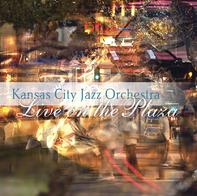 Kansas City Jazz Orchestra
Live on the Plaza
KCJO Records
2012
Live on the Plaza is comprised of thirteen numbers performed by the Kansas City Jazz Orchestra during seven concerts over a four-year period from 2003-06. If it is meant to represent the "best" of the KCJO, it succeeds on almost every level. The ensemble is in superior form throughout, as are its splendid guest artists—singer Ernie Andrews ("You Are So Beautiful") and Deborah Brown ("My Favorite Things"), trumpeter Byron Stripling ("Tiger Rag"), tenor saxophonist Houston Person ("A Sunday Kind of Love") and drummer Harold Jones ("Shiny Stockings").
Stripling, especially, brings the house down with dazzling pyrotechnics on the trad favorite "Tiger Rag"—whose conviviality and enthusiasm fairly burst through the speakers—as does the KCJO's trumpet section on a fiery rendition of Don Menza's finger-busting show-stopper, "Dizzyland." At the other end of the spectrum, Person is all warmth and soul on "A Sunday Kind of Love," implacably supported by the orchestra, as is everyone else. As for Andrews and Brown, they are simply enchanting on their showcase numbers, while Jones keeps the fire burning brightly on Frank Foster's "Shiny Stockings." As if that weren't enough, the ensemble opens with one of the most impressive big-band charts ever written, Bill Holman's inspired arrangement of "Stompin' at the Savoy," follows with Billy Byers' classic arrangement of "All of Me" and Holman's heartwarming look at Hoagy Carmichael's "Stardust," reprises Ellington's "Purple Gazelle" and "It Don't Mean a Thing," climbs securely aboard Juan Tizol's mystic "Caravan" and lowers the curtain with a dynamic reading of Bob Curnow's "Kenton Kollage," a kaleidoscopic medley of themes associated with bandleader Stan Kenton.
While music director Jim Mair is ever-present, the musicians are less so, as there are inevitable personnel changes over the course of four years. Even so, these are the among the finest jazz musicians Kansas City has to offer, and when a sideman steps aside, he (or she) is without exception replaced by someone of comparable stature. Drummer Tommy Morgan is the timekeeper of record on eight selections (including "Savoy," "Caravan" and "Kollage"), and he is excellent, as are Mike Warren and Tim Cambron (two numbers each). The soloists, of whom there are too many to mention, are similarly admirable. Pianist Charles Williams is featured on "All of Me," trumpeter Jay Sollenberger on "Stardust," while the trumpet soloists (in order) on "Dizzyland" are Steve Molloy, Bob Harvey, Fred Mulholland, Stan Kessler and Sollenberger. Ensemble and soloists are electrifying on "Caravan" and "It Don't Mean a Thing."
The reason for the word "almost" in our introductory remarks is the sound, which, while fairly good, especially for concert performances taped originally for archival purposes, not for a recording, is some distance removed from studio quality. In other words, there is a resonant "live-in-concert" ambiance whose presence is easily adjusted to and should in no way lessen the average listener's pleasure. In the end, any deficiency in that area is readily outweighed by the caliber of the music, which is exemplary from start to finish. An admirable anthology that is earnestly recommended.
 The Tommy Vig Orchestra 2012
Welcome to Hungary!
Klasszikus Jazz Records
2012
Let's affirm the positives upfront: Tommy Vig and David Murray are seasoned, well-respected musicians, and Vig's Budapest-based orchestra undoubtedly houses some of the finest sidemen Hungary has to offer. When Vig (vibraphone) and guest artist Murray (tenor sax) duet, as they do to introduce "Sahara," "Buddy and Solita," "Now Is the Time in Hungary!," "In Memory of Dizzy" and "Only You," it is "free jazz" with a purpose, far more than random notes pulled from a hat (or a free-ranging fancy). They clearly have a game plan and know what they are doing. Having said that, the question arises as to whether that is the sort of improvisation created with the listener in mind. For some listeners, the answer would most likely be an emphatic "yes." For this one, it is a reluctant yet equally earnest "no." Without putting anyone down (Vig, Murray and the others are giving the music the best they have to offer), there is simply too much shrillness and discord to seduce these inflexibly conservative ears.
During the instrumental passages, Vig makes use of a couple of Hungarian instruments, the cimbalon (sort of like a Persian sitar that sounds like a full-throated piano) and tarogato (which resembles a clarinet). The former is played by Rosza Farkas, the latter by Balasz Certa, each of whom is apparently a celebrated virtuoso. Farkas solos on Vig's tribute to Johnny Green, "Buddy and Solita," while Certa plays the melody on several selections. Vig keeps his solos to a minimum, deferring instead to Murray who, while technically solid, has a vexatious tendency to screech and growl, which apparently are indispensable weapons in his improvisational arsenal. For those who aren't concerned about that, he has much of interest to impart.
Vig's charts are variable, to say the least, with moments of candor and elegance offset by others that are, shall we say, less than engaging. One of the most pleasing works from end to end is "Rise and Shine," Vig's earnest bow to Hungary's master of light opera, Sigmund Romberg (born Romberg Zsigmond) who gave us "Lover Come Back to Me" and "Softly, as in a Morning Sunrise" among other memorable tunes. Another is the lively "Vig Corn," based on a folk song played in taverns and bars for many years by Hungarian Gypsy groups. It sounds at times like the old Glenn Miller favorite, "American Patrol." The album includes five "bonus" tracks, without Murray and apparently recorded separately. As is the case elsewhere, the music is Vig's (including a reprise of "Only You," dedicated to Vig's wife) and has an explicit Hungarian temperament (along with two handsome vocals by an unnamed female singer).
Even though Vig's music may not be pleasing to everyone's taste, especially those who grew up with Count Basie, Woody Herman, Buddy Rich and other straight-ahead, swing-centered bands, it's good to know that jazz of any kind is being played in Hungary, as it was banned under the Communist regime that ruled the country from 1947-89. Those whose views of big-band jazz lean toward the more adventurous may wish to scrutinize the Vig / Murray alliance for themselves.
 Elmhurst College Jazz Band
Blue Comedy
Self Published
2012
Is it wishful thinking, or are college jazz ensembles in general playing better than ever? Case in point: the Elmhurst College Jazz Band. Big Band Caravan has reviewed three earlier CDs by director Doug Beach's intrepid undergrads and never heard them sound nearly as precocious and polished as they do on Blue Comedy, which showcases the 2011 edition of the ensemble. And the music they are deciphering is by no means simple, encompassing as it does protean charts by Patrick Williams, Jim McNeely, Mike Tomaro, Billy May, Slide Hampton, Neil Slater, Dennis Mackrel and three by Mike Abene.
The Elmhurst lads (there are no lassies save for singer Vanessa Norman, unless unisex-named tenor Shelley Bishop is female) are tight and well-rehearsed from the outset and swing robustly whenever the occasion demands, as on Mackrel's lickety-split arrangement of Lester Young's "Lester Leaps In," Abene's zestful takes on Michael Gibbs' "Blue Comedy" and the Gershwin brothers' "Lady Be Good," McNeely's exhilarating "Jump Start" or Hampton's propulsive "Go East, Young Man." As for Norman, she sings respectably on "Easy to Love," "Swanee" and "Lady Be Good," even though she muffs a few notes by an audible margin and her scatting is nothing to applaud.
The ensemble opens with Williams' rhythmic "Aurora" (solos by trombonist Richie Palys, baritone Tom Zimney, tenor Ben Thompson), "Jump Start" (Joe Re, piano; David Kaiser, trumpet; Bishop, teno) and Tomaro's melodious "Persevere" (Austin O'Brien, soprano sax; Chris Parsons, guitar; Matt Kellen, drums) before Norman enters the picture on "Easy to Love" and "Swanee." Palys and Zimner are out front on "Lester Leaps In," Thompson and trombonist Nate Mihalic on "Blue Comedy," Palys, Kaiser, Bishop and Kellen on "Go East," Kaiser (flugel) on Slater's pensive "Places."
Kellen does a marvelous job navigating the rhythm section, but that is to be expected, as he has an excellent teacher in Bob Rummage one of the Chicago area's finest timekeepers. Re, Parsons and bassist Sean Carolan take their cue from Kellen, confirming their solidarity on every number while steadfastly underpinning the other sections. Even though the competition looms as more formidable with each passing year, the Elmhurst College Jazz Band shows on Blue Comedy that it has no thought of being overrun by its peers. This is an ensemble that is clearly in the race to stay.
Tracks and Personnel
Double Feature, Vol. 3
Tracks: CD1: Here's That Rainy Day; A Foggy Day; Yesterdays; Between the Devil and the Deep Blue Sea; Rhapsody in Blue; Take the "A" Train; Chiapas; Theme from Love Story; Samba Siete; Girl Talk; The Daily Dance; Pegasus; Inner Crisis; September Song. CD2: The Swing Machine; The Bad and the Beautiful; North Wind; West Wind; Stillness Runs Deep; Tribute; Harold's Club or Bust; Lunada; Bop City Revisited; Terracotta; Scarborough Fair; Exodus.
Personnel: CD1: Track 1: Stan Kenton: leader, piano; Mike Vax: trumpet; Jay Saunders: trumpet; Dennis Noday: trumpet; Ray Brown: trumpet; Joe Marcinkiewicz: trumpet; Quin Davis: alto sax, flute; Richard Torres: tenor sax, flute; Kim Frizell: tenor sax, flute; Willie Maiden: baritone sax; Chuck Carter: baritone, soprano sax, flute; Dick Shearer: trombone; Mike Jamieson: trombone; Fred Carter: trombone; Mike Wallace: bass trombone; Phil Herring: bass trombone, tuba; Harvie Swartz: bass; John Von Ohlen: drums; Ramon Lopez: Latin percussion. Tracks 2-6: Gary Pack: trumpet; Paul Adamson: trumpet, for Saunders and Brown; Graham Ellis: bass trombone, tuba, for Herring; Claude Sifferlin: piano, for Kenton; Gary Todd: bass, for Swartz. Tracks 7, 8: Saunders: trumpet; Brown: trumpet, for Pack, Adamson; Kenton: piano, for Sifferlin; John Worster: bass, for Todd. Tracks 9-11: Frank Minear: trumpet; Bob Winkler: trumpet, flugelhorn; Mike Snustead: trumpet, for Saunders, Brown, Vax; Harvey Coonin: trombone; Lloyd Spoon: trombone, for Jamieson, Carter; Peter Erskine: drums, for Von Ohlen. Tracks 12-14: Jay Sollenberger: trumpet; Steve Campos: trumpet; Clay Jenkins: trumpet, flugelhorn; Chuck Schmidt: trumpet; Bob Doll: trumpet; Dick Shearer: trombone; Lloyd Spoon: trombone; Denny Brunk: trombone; Allan Morrissey: bass trombone; A.G. Robeson: bass trombone, tuba; Michael Bard: alto, soprano sax, flute; Roy Reynolds: tenor sax, flute; Gary Clinton: tenor sax, flute; Alan Yankee: baritone sax, flute; Greg Metcalf: baritone sax, flute; Stan Kenton: piano; John Worster: bass; Gary Hobbs: drums; Ramon Lopez: Latin percussion. CD2: Tracks 1-4, 6, 7, 9, 11: Chris Bresette: trumpet; Stuart Wallace: trumpet; Kurt Shipe: trumpet; Joe Niemann: trumpet; Eric Schultz: alto sax; Brian Handeland: alto, baritone sax, flute; Tyler Anderson: tenor sax; Jerod Kaszynski: tenor sax; Joe Tierney: baritone sax; Nicole Brellentin: trombone; Matt Heil: trombone; Chris Caine: trombone; David Behm: bass trombone; Will Horn: bass trombone; Brandon Covelli: piano; Ben Acton: guitar; Andy Detra: bass; Mike Malone: drums, percussion. Tracks 5, 8, 10, 12: Keith Hillson: trombone; Erik Olson: trombone, for Brellentin and Caine; Justin Kevan: tenor sax, for Kaszynski; Josh Gallagher: piano, for Covelli. Additional players—Josh Fuchs: trumpet; Graham Pollack: trumpet; Paul Stodolka: trumpet; Elizabeth Tomlinson: trumpet; Dr. Phillip Ostrander: trombone; Rob Margolis: tuba; Kurtis Polshinski: tuba; Dr. Gerry Young: tuba; Aaron Hedenstrom: alto sax; Justin Kevan: alto sax. Alumni guest soloists: Josh Gallagher: piano (8, 10, 12); Tom Krochock: trumpet (4, 5 12); John Raymond: trumpet (3).
Deep Shadows
Tracks: New Piece; Goodbye Glenn; Greenwich Time; Calendula; Eleven; New Beginnings; Starlight; Deep Shadows.
Personnel: Kirk MacDonald: leader, composer, tenor sax; Joe Sullivan: trumpet, flugelhorn, conductor; Rob Smith: trumpet, flugelhorn; Kevin Turcotte: trumpet, flugelhorn; Brian O'Kane: trumpet, flugelhorn; Alex Kundakcioglu: trumpet, flugelhorn; P.J. Perry: alto sax; Mark Promane: alto, soprano sax; Pat LaBarbera: tenor sax; Dave Neill: baritone sax; Al Kay: trombone; Terry Promane: trombone; Kelsley Grant: trombone; Gordon Myers: bass trombone; Lorne Lofsky: guitar; Nancy Walker: piano; Kieran Overs: bass; Barry Romberg: drums.
Live on the Plaza
Tracks: Stompin' at the Savoy; All of Me; Stardust; You Are So Beautiful; Tiger Rag; Purple Gazelle; It Don't Mean a Thing; A Sunday Kind of Love; My Favorite Things; Shiny Stockings; Dizzyland; Caravan; Kenton Kollage.
Personnel (collective): Jim Mair: music director; Bob Harvey: trumpet; Stan Kessler: trumpet; Steve Molloy: trumpet; Jay Sollenberger: trumpet; Fred Mulholland: trumpet; Dave Aaberg: trumpet; Doug Talley, Kerry Strayer, Bob Long, David Chael, Ron Hathorn, Greg Briggs, Hal Melia, Dan Thomas, Gerald Dunn, Todd Wilkinson: reeds; Jeff Hamer: trombone; Paul McKee: trombone; Stephanie Cox: trombone; Arch Martin: trombone; Karita Carter: trombone; Earlie Braggs: trombone; Lee Hill Kavanaugh: bass trombone; Charles Williams: piano; Rod Fleeman: guitar; Danny Embrey: guitar; Theodore Wilson: bass; Gerald Spaits: bass; Tom Morgan: drums; Tim Cambron: drums. Special appearances by Ernie Andrews: vocals; Byron Stripling: trumpet; Houston Person: tenor sax; Deborah Brown: vocals; Harold Jones: drums.
Welcome to Hungary!
Tracks: Sahara; Buddy and Solita; Now Is the Time in Hungary!; Rise and Shine; In Memory of Dizzy; In Memory of Monk; Only You; Vig Corn. Bonus tracks—I Told You; Only You; Me Shall; Veled Vagyok Meg Gondolatban; Fustbe Ment Terv.
Personnel: Tommy Vig: leader, composer, arranger, drums, vibraphone. Bela Szaloky: trombone, flugelhorn; Akos Tompa: trumpet; Janos Hamori: trumpet; Ferenc Schreck: trombone; Peter Kovacs: tuba; Balazs Nagy, Arpad Dennert: reeds; Balazs Cserta: tarogato; Roszas Farkas: cimbalon. Special guest artist—David Murray: tenor saxophone. Other personnel unlisted.
Blue Comedy
Tracks: Aurora; Jump Start; Persevere; Easy to Love; Swanee; Places; Lester Leaps In; Blue Comedy; Go East, Young Man; Lady Be Good.
Personnel: Doug Beach: director; Tom Klein: trumpet; David Kaiser: trumpet; Adam Nicholson: trumpet; Andrew Ecklund: trumpet; Austin O'Brien, Sam Simpson, Shelley Bishop, Ben Thompson, Tom Zimney: reeds; Richie Palys: trombone; Nate Michalic: trombone; Kevin Kerr: trombone; Timm Migus: trombone; Chris Parsons: guitar; Joe Re: piano; Sean Carolan: bass; Matt Kellen: drums; Vanessa Norman: vocals.
< Previous
The Next Page
Next >
Red Tailed Hawk
Comments
Tags
Big Band Caravan
Jack Bowers
United States
Stan Kenton
Hank Levy
Willie Maiden
Ken Hanna
John Raymond
Lennie Niehaus
Bill Holman
Bill Perkins
George Gershwin
Ray Starling
Billy Strayhorn
John Von Ohlen
Mike Vax
Bobby Troup
Neal Hefti
Peter Erskine
Ramon Lopez
Bob Curnow
Clay Jenkins
Rob McConnell
Dave McMurdo
Ian McDougall
Kirk MacDonald
Joe Sullivan
Lorne Lofsky
P.J. Perry
Pat LaBarbera
Barry Romberg
Nancy Walker
Ernie Andrews
Deborah Brown
Byron Stripling
Houston Person
Harold Jones
Don Menza
Frank Foster
Billy Byers
Hoagy Carmichael
Juan Tizol
Jim Mair
Tom Morgan
Charles Williams
Stan Kessler
Tommy Vig
David Murray
Glenn Miller
Count Basie
Woody Herman
Buddy Rich
Patrick Williams
Jim McNeely
Billy May
Slide Hampton
Dennis Mackrel
Lester Young
michael gibbs
Bob Rummage,
For the Love of Jazz
 All About Jazz has been a pillar of jazz since 1995, championing it as an art form and, more importantly, supporting the musicians who create it. Our enduring commitment has made "AAJ" one of the most culturally important websites of its kind, read by hundreds of thousands of fans, musicians and industry figures every month.
You Can Help
To expand our coverage even further and develop new means to foster jazz discovery and connectivity we need your help. You can become a sustaining member for a modest $20 and in return, we'll immediately hide those pesky ads plus provide access to future articles for a full year. This winning combination will vastly improve your AAJ experience and allow us to vigorously build on the pioneering work we first started in 1995. So enjoy an ad-free AAJ experience and help us remain a positive beacon for jazz by making a donation today.

Giveaway

Eligible winners: 15
Days remaining: 5
Days remaining: 5