Home » Jazz Articles » Catching Up With » Catching Up With Gary Husband
Catching Up With Gary Husband
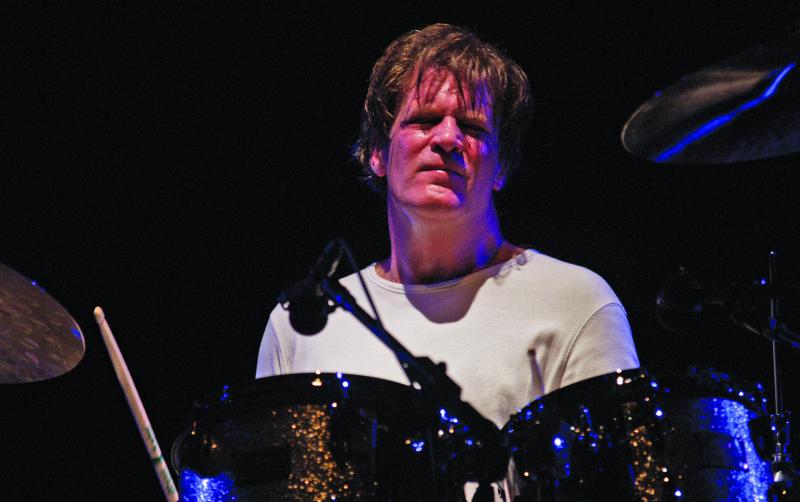

What emerges from Vol 2—in addition to a whole bunch of sparks—is Husband's growing stature as a keyboard player of distinction. Husband made his mark as a pianist with two wonderful solo piano tributes to the music of guitarists John McLaughlin and Allan Holdsworth, but it as a keyboard player—a role he has filled in McLaughlin's 4th Dimension band since 2007— that he is now growing wings and taking flight. Former Mahavishnu Orchestra keyboardist Jan Hammer, who graces both volumes, may be an obvious reference, but Husband's playing, fiery on one hand, caressing on the other, possesses a touch and nuance all of his own; and, like his drumming, is endlessly inventive.
If Dirty & Beautiful Vol 1 was one of the records of 2010, then Vol 2 promises to be one of the musical highlights of 2012.
All About Jazz Dirty and Beautiful Vol 2 sounds like it must have been a lot of fun to record; there's so much energy and so many sparks flying.
Gary Husband Oh yeah. Both volumes have been tremendous fun. The sense of satisfaction and the fulfillment I feel is gigantic. I'm really happy how the records turned out and how they sound too—particularly the new one.
AAJ: It sounds great. The record gets off to a terrific start with "If the Animals Had Guns Too," which features wonderful guitar work from Ray Russell. He's been around since the 1960s and lent his sound to an enormous amount of famous music, and yet still flies under the radar as far as the public are concerned. Could you talk a little about his contribution to this track?
GH: Ray is a contemporary of John McLaughlin in the studio session musician circuit in England in the 1960s. You can trace Ray's name to so much stuff back then. I got to know him in the early '80s when he had a band called RMS with [bassist] Mo Foster and [drummer] Simon Phillips. Simon was doing a lot of different stuff in those days and I got to do a few deps with the band. One concert we did was with [arranger] Gil Evans. Then about five or six years ago I brought some compositions to his solo album Goodbye Svengali (Cuneiform, 2006), which I also played on. So we started playing together again after a decade or two in between [laughs]. That's been a pleasure since he's a terrific player.
AAJ: The featured musicians sound perfectly suited to the music on each track; how much thought went into musician/song selection?
GH: A lot. I chose people for the various pieces very carefully, or I wrote and prepare pieces for specific musicians. "If the Animals Had Guns Too" was a good choice for Ray. He's playing better than ever. What a way to start a record, with him going ballistic like that. I loved it.
AAJ: Bassist Jimmy Johnson also plays a storm on that track. You two obviously go back awhile in guitarist Allan Holdsworth's band. What do you like about playing with Johnson?
 GH: The pure music; I mean, playing with Jimmy is one of the easiest performing relationships I've ever had. It's no coincidence that we're great friends and I think that's reflected in the way we play together too. He's such a musician; meticulous, but also kind of a rock 'n' roller inside. He has the whole melodic thing because he played clarinet, and he knows exactly where to put all those great notes of his. I always cherish the chances that we get to play together so I'm really happy he's on both of these volumes of Dirty & Beautiful.
 AAJ: Another musician who plays superbly is tenor saxophonist Sean Freeman, who might surprise his fans in Level 42 with his solo on McLaughlin's composition, "New Blues, Old Bruise."
GH: I hope fans of Level 42 discover this side of his playing, which actually isn't too dissimilar really, as he plays with the same intensity and truly inspired spirit whoever he plays with. Sean's true passion is to improvise though, and I think that couldn't be more evident by what he does here. He's such a soulful musician. The solo I used was pretty much his first, and I was sobbing when he did it I was so moved. But these records [Dirty and Beautiful Vols 1 & 2] are full of that though—people cropping up in unlikely musical styles and in circumstances they're not really known for being a part of. I get a real thrill out of presenting that.
AAJ: "New Blues Old Bruise" is one of McLaughlin's strongest compositions.
GH: Yes, sure, it's very strong, and it's one I've been playing live with him for the last few years. It's really one of my faves, but I wanted to take it a little slower and give it more moodiness. With the sax in there it's probably got more of a jazz moodiness. I'm really happy about this alternative rendition of it.
AAJ: You've cut two outstanding piano solo albums in the last decade, The Things I See: Interpretations of the Music of Allan Holdsworth (Angel Air, 2001) and A Meeting of Spirits: Interpretations of the Music of John McLaughlin (Alternity Records, 2006), but on this album your synthesizer/keyboard skills really seem to have found a fuller, more nuanced voice than in the past. Do you feel that to the case?

4th Dimension, From left: Ranjit Barot, Etienne M'Bappé, John McLaughlin, Gary Husband
GH: Oh, I don't know. I'd like to think so. I'm growing constantly and with that I'm striving all the time to become more articulate, more fluid and affecting in the way that I play. It's the way of all improvising musicians, I would guess...I would hope!
AAJ: As on Vol 1 the great Jan Hammer graces Dirty and Beautiful Vol 2; how much of an influence has he been on you as a keyboard player?
GH: Jan's influence? Mammoth [laughs], you could say. You don't have to listen to him for very long to detect his deep Eastern European roots and his very distinct harmonic discipline. I would make the comparison to [pianist] Bill Evans whose harmonic discipline was so great. Jan's is probably more distinctly European but equally as disciplined. As a soloist his ideas are very unique and also very attached to early European folk music. When he came to the States and started playing with [singer] Sarah Vaughan and [drummer] Elvin Jones and others, you heard this New York spirit with an Eastern European discipline. What a merging; I've been a fan of Jan's since the early Elvin Jones recordings where he plays so wonderfully, and obviously the Mahavishnu [Orchestra] records too.
AAJ: There's another Jan Hammer composition on Vol 2 ("Rain"), as there was on Vol 1, yet ironically Hammer doesn't play on either of these tracks; was that a conscious decision not to ask him to play on these two tracks?
GH: No; actually, I didn't realize that until you just said it! There are obviously some really clear threads between these two records in ways such as exactly that. Unpredictable or what? Then again, I guess we also have the McLaughlin composition that John himself doesn't play on either [laughs].
AAJ: How much of the material on Dirty and Beautiful Vol 2 stems from the Vol 1 recording sessions from late 2009?
GH: "Sulley," the backing track for "England Green," and the "Fred 2011" take that we recorded in LA. I had these three or so left over, and I had no intention of letting them go to waste. Happily, Souvik [Dutta] at Abstract Logix suggested we should do a follow-up and keep this train moving while it's got this kind of momentum; he got no resistance out of me.
AAJ: You mentioned "England Green," which you first recorded on Diary of a Plastic Box (Angel Air, 1999), and this version seems really tailor-made for Jimmy Herring; was he an obvious choice for you on this track?
GH: Yes; I look at a composition like that and try to imagine who would be suited to interpreting it most. In this case the answer was very much Jimmy Herring, who has a spellbindingly emotional portrayal to his melodies. It's very touching and electrifying at the same time. It's important to me that the musicians like the track too, so I sent a demo to Jimmy and he instantly liked it. He could hear himself on it, and that's important for me. It was that way for the [guitarists] Alex Machacek track, the Mike Stern thing, the piece with Wayne Krantz, the Neil Taylor track—all of them. Also I like taking bold new chances, like putting [bassist] Mark King and John McLaughlin together for instance; I really enjoyed that.
AAJ: That track with King and McLaughlin really rips; they complement each other very well. Have you got material for a third volume of Dirty and Beautiful?
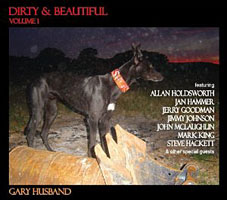 GH: I do have a lot of material that I never got around to recording yet. I'll always have new music, and there are indeed plenty of other people and friends I'd love to play with. I wouldn't want to do it just because of the success of Vol 1 or Vol 2 or whatever; I'd need to have a clear idea of a direction again. But if there is the chance and the funds—which are not so easy to generate for recorded music of this type these days—then I will do it for sure.
AAJ: You are touring again later this year with John McLaughlin's 4th Dimension, which now has Ranjit Barot on drums. That sounds very exciting.
GH: It is indeed. We did a big, summer European tour with Ranjit last year and, for me, the band works extremely well with him now. Just before Christmas we did the 4th Dimension's new album which should come out this autumn. I think it's a very strong recording.
AAJ: What else have you got in the pipeline?
GH: I'm looking at a project to reinterpret the music of [pianist] Bill Evans with piano, violin and cello—a classical piano trio. Then there would be a couple of guest slots, including John McLaughlin who has very kindly offered to play a couple of tracks on acoustic guitar with us. We're having trouble finding a record company for that, and I have to get a good label for it. If we can manage that then we'll certainly do it. But this is going to be a tough task, it'll be writing on the scale of the interpretational albums I did of John McLaughlin and Allan Holdsworth's material, which were both really, really big writing works.
AAJ: You like chucking yourself into these projects though, don't you?

GH: [Laughs] Yes, I do. But also I feel it's the only way. I work very instinctively. I thankfully come into contact with ideas by simply just kind of listening and tuning in, as they say. I trust that process and like to stay pretty true to the original aspiration or intent in what comes about. That method I find most honest.
Selected Discography
Gary Husband, Dirty & Beautiful Vol 2 (Abstract Logix, 2012)
John McLaughlin & the 4th Dimension, To the One (Abstract Logix, 2010)
Gary Husband's Drive, Hotwired (Abstract Logix, 2009)
Asaf Sirkis Trio, The Monk (SAM, 2008)
Gary Husband, The Complete Diary of a Plastic Box (Angel Air Records, 2008)
John McLaughlin, Industrial Zen (Verve Fontana, 2006)
Gary Husband, A Meeting of Spirits: Interpretations of the Music of John McLaughlin (Alternity, 2006)
Gary Husband, The Things I See: Interpretations of the Music of Allan Holdsworth (Angel Air, 2001)
Photo Credits
Page 1: Naoju Nakamura
Page 2: Ina McLaughlin
Page 3: John Kelman
< Previous
Walking Dark
Next >
The Composers
Comments

Tags
Gary Husband
Catching Up With
Ian Patterson
United States
john mclaughlin
Allan Holdsworth
Mahavishnu Orchestra
Jan Hammer
Ray Russell
Simon Phillips
Gil Evans
Jimmy Johnson
Bill Evans
Sarah Vaughan
Elvin Jones
Jimmy Herring
Alex Machacek
Mike Stern
Wayne Krantz
Ranjit Barot
John Kelman
Concerts
For the Love of Jazz
 All About Jazz has been a pillar of jazz since 1995, championing it as an art form and, more importantly, supporting the musicians who create it. Our enduring commitment has made "AAJ" one of the most culturally important websites of its kind, read by hundreds of thousands of fans, musicians and industry figures every month.
You Can Help
To expand our coverage even further and develop new means to foster jazz discovery and connectivity we need your help. You can become a sustaining member for a modest $20 and in return, we'll immediately hide those pesky ads plus provide access to future articles for a full year. This winning combination will vastly improve your AAJ experience and allow us to vigorously build on the pioneering work we first started in 1995. So enjoy an ad-free AAJ experience and help us remain a positive beacon for jazz by making a donation today.

Giveaway

Eligible winners: 15
Days remaining: 10
Days remaining: 10