Home » Jazz Articles » Interview » Nikki Iles: Meditation and Collaboration
Nikki Iles: Meditation and Collaboration
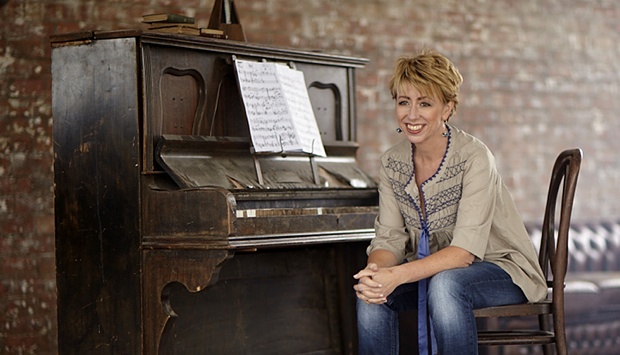

Since graduating from Leeds College of Music in 1984, Iles has recorded a series of albums under her own name, but much of her extensive discography is as a collaborator or band member. She has been an integral part of bands such as Martin Speake's Secret Quartet. Her collaborations include work with saxophonists Stan Sulzmann and Ingrid Laubrock, vocalist Tina May and, in The Printmakers, singer and composer Norma Winstone and guitarist Mike Walker.
Iles' 2012 album Hush (Basho Records) is a transatlantic collaboration on which she is joined by bassist Rufus Reid and drummer Jeff Williams. Iles got together with Reid and Williams through two separate routes. She explains, "I met Jeff first. He lives half the year in London and half in Brooklyn. He was over in the U.K. with his wife, the author Lionel Shriver. He played a lot with Martin Speake, so we'd done a few gigs together. Martin had recorded Change Of Heart (ECM, 2006) with Bobo Stenson, Mick Hutton and Paul Motian. When Martin had some U.K. gigs that the other three couldn't do, I did them with Jeff on drums and Steve Watts on bass. That was the start of our musical relationship. I love playing with him: he has such a broad emotional range."
Another project brought Iles and Reid together: an offshoot of the London Philharmonic Orchestra, called Renga. "Scott Stroman was Renga's conductor. It was a great idea, a group of musicians playing pieces outside the standard classical repertoire. He brought musicians like [singer] June Tabor and [pianist] Huw Warren into the projects. Rufus was one of the composers who got involved. I also went in, with some of my own music. We were teaching LPO players—I felt a bit out of my depth, but Rufus was great. He's such a wise person, and we got on really well. We were playing contemporary pieces with a fairly large ensemble, rather than small-group jazz, but we got such a nice feeling playing together. It was such a pleasure."
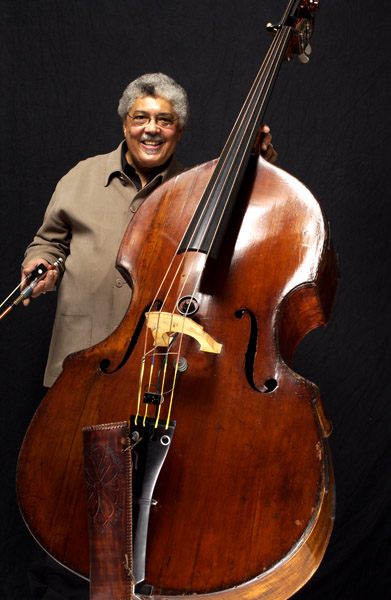 When the collaboration ended, it was Reid (pictured right) who suggested that Iles keep in touch. "I just thought that he was being nice, that it wouldn't ever come to anything—'in my dreams,' you know. But we kept in touch, and then, shortly after one New Year's Eve, I think, I just e-mailed him. Next day, he got back to me and just said, 'Let's do it.' The lovely thing was that Jeff and Rufus had played in so many of the same groups: Stan Getz's band, Joe Lovano's band, Tom Harrell's. But they'd played in them at different times and never actually met each other."
 Iles decided to record with Reid and Williams in the United States, and in September, 2010, she traveled to New York for the session. "The night before the recording we rehearsed in Rufus' shed. It was lovely to hear the two of them talk." That rehearsal was the first time the trio had played together. "You could say that it was rather a dangerous approach—for them, at least. I just had the feeling that the personalities would work."
The session, recorded over two days, resulted in a large number of tunes. "I decided it was best to have too many. I wanted to get the best out of all of us, so I didn't have too many highly arranged tunes: I didn't want anyone to feel too boxed in. There are a few tricky tunes, which I sent to the guys ahead of time. The Dave Brubeck tune ["In Your Own Sweet Way"] we just busked, as an opener. Miles Davis' 'Nardis' is a bit arranged, but we just ran through it once in rehearsal. 'Meditations' [Iles' own composition] I wanted as a vehicle for some freer playing. In some ways, it's one of my favorites. We rehearsed the head then left it until the day of recording to see what happened. The album version is the first take."
 Tony Bennett's son's studio, which is near Rufus' house. We recorded some faster, louder, tunes but I decided not to use them, as the sound on those numbers wasn't quite what I wanted. Peter Beckmann, who mastered the album with me here in the U.K., said it sounded better with this more constant mood. And I was playing music that's very personal to me, so I wanted to use those tunes I felt really close to."
 On Hush, "Nardis" is followed by Ralph Towner's "The Glide." The two seem eminently suited to each other as played by the trio—a contrasting coupling. "I always think of 'The Glide' as a playful piece. I often play it with Norma [Winstone], and she's added some funny, playful, rhymes. 'Nardis' is a bit dark, so I wanted to follow it with a lighter number." The coupling of Michel Legrand's "You Must Believe In Spring" and Rodgers and Hart's "Spring Is Here" is also inspired. A contrast to both "Nardis" and "The Glide," these two tunes have a romantic, ethereal feel. There is a hint of something darker in Iles' approach to "You Must Believe In Spring." Isles explains, "I wanted to make the introduction a bit bleak, stripped down. I was trying not to be too romantic in the beginning. Obviously, the lovely harmonies eventually come to the fore, but it's a bit starker at the start."
Three of Iles' own compositions are included on Hush. Although the trio recorded a few others, Iles wasn't completely happy with the final recordings. "Unfortunately, the sound problems affected some of my tunes. I'd written a tune based on the chord changes of 'Make Someone Happy,' quite an odd, fun piece. That one didn't make it, nor did another one of mine, a straight-eighth tune."
"Hush," the album's title track and another Iles composition, has also developed a life as a big-band arrangement. "It's a tune that starts off quietly then gets going more strongly. It's become a piece for the National Youth Jazz Orchestra, unbelievably. They play it beautifully, with woodwinds and a big chorus." NYJO has yet to record the piece, but the orchestra has played it live on a number of occasions. It's part of NYJO's strategy for commissioning new music, Iles explains. "NYJO has commissioned new pieces from people like Mike Gibbs and Julian Arguelles. I scored 'Hush' specifically for the group."
Although Iles clearly enjoys writing, she's equally at home with other composers' work. "For me to do a whole album of originals isn't a priority. I've always loved playing other people's tunes, especially pieces by people I've worked with. So there's one by Kenny Wheeler ['Everybody's Song But My Own'], one from Julian [Arguelles; 'Hi Steve']. And I want people to recognize one or two tunes too, so I added a couple of standards. Rufus and Jeff have played some of these tunes for years, so it was great to hear them playing them together. On the more contemporary tunes, like Julian's, it was really interesting to see how Rufus approached learning them. He kept saying, 'I'm just working on finding the melodies in these changes.'"
 The eventual sound of Hush is very much a collaborative effort. "Absolutely. Rufus and Jeff played so beautifully. Maybe there isn't a loud, upbeat tune, but there's a lot going on. Jeff's playing is full of ideas, and Rufus is so melodic." Williams' playing is consistently fascinating: he's always playing something interesting but never overpowers Iles or Reid. "He never detracts. It's always inside the music. He's got such a great range. I've heard him play like a wild man on some things, but he always plays for the music."
 On the cover of Hush, Iles poses next to a quite remarkable upright piano; battered, broken and keys awry, it's a visually striking but rather sad instrument. Iles laughs loudly at the mention of the instrument, before explaining its appearance. "Someone bought a CD at a gig last night, and they were convinced that it was the piano I played on the album. It's actually in a loft in Old Street in London. Drew Gardner, the photographer, found the loft for the album shoot, and the piano was being stored up there, so we used it." An old instrument full of character, but presumably completely unplayable? "Well, it does work a little bit. It's a bit funky."
Iles' recording career began in the early '90s. It's extensive, with over 20 albums, but it's predominantly as a collaborator or a band member rather than as a leader. "I'm a slightly reluctant front- person. I do love getting people together, though, and I enjoy collaborating. I love the Printmakers, working with Norma Winstone, and I really enjoy my work with Martin Speake. His music is very different from my own and I've learnt so much from playing it, met so many people—including Jeff, of course."

When composing for a specific ensemble, Iles will often take the individual musicians' strengths into account. "I do like writing for specific people, for their sound and personalities." The Duke Ellington approach, as it were? "Yes. Kenny Wheeler does that, too. The thing that always stays with me after I hear a musician is always the sound, rather than simply the notes that were played."
For Iles, taking on the role of band leader involves other, more pragmatic, decisions as well. "For me, being a constant band leader would be a struggle—the effort of organizing, the financial constraints. Even taking a six-piece like Printmakers on the road isn't something I could do all the time. I do subsidize a lot of gigs to pay people properly, which is something a lot of us do. I've never really been a gigster, out every night playing. But I do like playing with musicians I admire. It's about friendships, too. I love to play gigs with people I don't know, musicians who are new to me, but there's that whole thing of investing in friendships and letting music grow out of that. Mark Lockheart is another example. I started playing with him in Steve Berry's Foolish Hearts about 20 years ago. I've always loved his playing, but nothing else happened for a few years until Printmakers. He was absolutely right for it. Mike [Walker], Printmakers guitarist, is someone else I've had an ongoing musical relationship with."
One of Iles' earliest recordings was with Anthony Braxton; it was recorded in 1994 but not released until 1997 (Composition No. 175 & Composition No. 126: Trillium-Dialogues M, Leo Records). At the mention of his name, she laughs loudly and, without a pause, exclaims, "That was life-changing." So what was such a life- changing experience like? "I was working with the Creative Jazz Orchestra in the north of England—the orchestra was based in Manchester, and I was in Leeds. It was a really wonderful time for those of us 'up north.' Nick Purnell, the CJO's director, arranged some fantastic projects for about five years: people like Vince Mendoza and Kenny Wheeler also got involved. Braxton came to tour with us. The band included four opera singers, classical percussionists playing hairdryers and drills, string players and a full-on big band.
 "Braxton was playing music 'in the cracks.' He would talk to us about having faith in your own music; that's what really hit me. He talked about classical musicians not liking his stuff because it wasn't classical, and jazzers not thinking that it was jazz, but he just carried on. He was so committed to the music. It's the hardest music I've ever played: weird time signatures varying almost from bar to bar, followed by a loop when you would be expected to improvise. It was an astonishing sound, and we all committed to it. The album doesn't sound so wild now as it did at the time, but there are some amazing textures on it. He's a truly unique person, and he did pass something very valuable on to a lot of us: follow your heart. A bit clichéd, but it does hold true. Even at 6:00 in the morning, on the coach from Manchester to Sadler's Wells Opera House in London, he was listening to his own recordings on headphones—wild, mad, saxophone sounds blaring out across the coach."
 As well as being in demand as a performer and composer, Iles is a highly regarded educator. At present, her main post is at the Royal Academy of Music. She also teaches at the Guildhall School of Music and is involved in the National Youth Jazz Collective which works with up-and-coming, teenage musicians. The talented young players in the NYJC must make her feel positive about the future of music in the UK? "Yes, absolutely. The talent at that age is astonishing. I think about my generation—we were much older when we got to that stage. There's so much more available now, so much more support, courses, advice." The NYJC players also seem very comfortable mixing genres, while their teachers are happy to encourage such an approach. "Yes. It's a great team—excellent teachers who are very open to ideas."
Iles' work diary is pleasingly full, with a varied selection of projects to add to her regular teaching schedule. "I'm recording with Kenny Wheeler. He's working on his 'Mirrors' suite with the London Vocal Project. Mark Lockheart and James Maddren, the drummer, are involved, too. The LVP is an amazing group. It's directed by Pete Churchill, my other half. He set it up after he left the Guildhall, where he'd taught for over 20 years, and its members come from the Guildhall and other London music colleges. The group has worked with Bobby McFerrin, Dame Cleo Laine and Cleo Laine. I'm also hoping to get Printmakers together for a new recording. I'm writing some educational texts for the Oxford University Press. There's also a project with Tina May and some classical musicians, based on songs from '20s and '30s Paris. That's at the Crucible Theatre in Sheffield."
The Stan Sulzmann Big Band and the Karen Sharp Quartet are also benefiting from Iles' piano skills. Domestic life doesn't stop for Iles and Churchill either. "We've just moved house, so that's still taking up a lot of our time." As for the next album with Iles' name on the front, that might still be some way off, but the pianist is appropriately sanguine about the prospect. "It'll probably take me 10 years to do another album of my own. But that's fine."
Selected Discography
Nikki Iles/Rufus Reid/Jeff Williams, Hush (Basho Records, 2012)
Secret Quartet, Bloor Street (Edition Records, 2010)
Tina May, I Never Told You (33 Jazz, 2009)
Mike Walker, Madness And The Whole Thing There (Hidden Idiom, 2008)
Nikki Iles, Everything I Love (Basho Records, 2004)
Tina May, Nikki Iles, Tony Coe, More Than You Know (33 Jazz, 2004)
Nikki Iles Quintet, Veils (Symbol Records, 2002)
Foolish Hearts, Snap (Room4Music, 1997)
Martin Speake and Nikki Iles, The Tan T'ien (FMR, 1997)
Anthony Braxton with the Creative Jazz Orchestra, Composition No. 175 & Composition No. 126: Trillium-Dialogues M (Leo Records, 1997)
Stan Sulzmann and Nikki Iles, Treasure Trove (ASC, 1996)
Photo Credits
Page 1, Rufus Reid: John Abbott
All Other Photos: Drew Gardner
< Previous
Hush
Comments

Tags
Nikki Iles
Interview
Bruce Lindsay
Martin Speake
Stan Sulzmann
Ingrid Laubrock
Tina May
norma winstone
Mike Walker
Rufus Reid
Jeff Williams
Bobo Stenson
Paul Motian
Scott Stroman
Huw Warren
Stan Getz
joe lovano
Tom Harrell
Dave Brubeck
Miles Davis
Tony Bennett
Michel Legrand
Julian Arguelles
Kenny Wheeler
duke ellington
Mark Lockheart
anthony braxton
Vince Mendoza
James Maddren
Pete Churchill
Bobby McFerrin
Cleo Laine
Jon Hendricks
Karen Sharp
For the Love of Jazz
 All About Jazz has been a pillar of jazz since 1995, championing it as an art form and, more importantly, supporting the musicians who create it. Our enduring commitment has made "AAJ" one of the most culturally important websites of its kind, read by hundreds of thousands of fans, musicians and industry figures every month.
You Can Help
To expand our coverage even further and develop new means to foster jazz discovery and connectivity we need your help. You can become a sustaining member for a modest $20 and in return, we'll immediately hide those pesky ads plus provide access to future articles for a full year. This winning combination will vastly improve your AAJ experience and allow us to vigorously build on the pioneering work we first started in 1995. So enjoy an ad-free AAJ experience and help us remain a positive beacon for jazz by making a donation today.

Giveaway

Eligible winners: 15
Days remaining: 5
Days remaining: 5