Home » Jazz Articles » Interview » Armen Donelian: Consummate Musician
Armen Donelian: Consummate Musician

It came my turn to take a solo. I played maybe two or three choruses and then I kind of got shy. I turned to Sonny [Rollins] like I wanted to hand it back to him. He turned to me and said, 'Play. Play.'
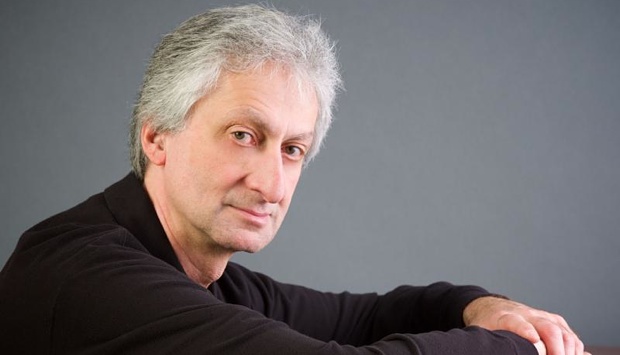
61 year-old pianist Armen Donelian, a New York City native who now lives in upstate New York but who has traveled the globe as a jazz artist and as Fulbright scholar, is one of those improvising musicians. He's played all kinds of music during his lifetime. He studied classical music intensely and he allows other influences to seep in to his creativity. But he's attracted to jazz, leading his own groups of various sizes and playing with the likes of saxophonist Sonny Rollins, percussionist Mongo Santamaria and trumpeter Chet Baker.
His recordings have a noteworthy consistency. His first album as a leader, Stargazer (Atlas, 1981), was a trio outing with outstanding musicians (bassist Eddie Gomez and drummer Billy Hart), but the pianist has set a high standard throughout his discography for improvisation, expression and execution. Donelian has the chops to execute ideas and the passion to reach for them. He explores paths that he finds interesting on Leapfrog (Sunnyside, 2011), a strong quintet date featuring guitarist Mike Moreno and longtime saxophone colleague Marc Mommaas. It's a collection of original tunes, thoughtfully melded. Lyrical and intriguing. Another fine creation.
Donelian has been creating and discovering on his own since about the age of four. His family had a beat-up old upright piano in the basement and it drew the young lad's interest. "I used to go down there and pound out things by ear and make things up. Creating was a part of playing, for me. I didn't start by reading music. I started by playing by ear and expressing myself through music. This, of course, is central to jazz—in fact, all kinds of music—the impetus for self-expression."
Some of Donelian's work might come from his classical side, like his solo disk Full Moon (Sunnyside, 2005), the third volume in his Grand Ideas series. There might even be snippets from his Armenian heritage contained therein. But overall, Donelian is a jazz improviser. Concepts and ideas may come from anywhere, but where this exceptional, yet somewhat unheralded artist lives is in the world of jazz.
"There's that swing feel of jazz. There's the blues feel of jazz. Then there's the improvisation. The ability to express oneself spontaneously, without regard for written notes," says Donelian. "I love to compose. And I see composition and improvisation as two sides of the same coin. It's been said many times before that improvisation is spontaneous composition. Composition is improvisation set down on paper, if you think of it that way. In many cases it's the same process that is required, but with improvisation one needs the technical ability to execute those musical thoughts immediately. That's what sets it apart from classical music.
 "What makes jazz, for me, the most important music? It would have to be the ability to express myself. Jazz has become a worldwide phenomenon. This music that we would say is truly rooted in the Afro-American experience in America has become world music. Many international artists have made significant contributions to the jazz continuum by combining their nationalistic or ethnic heritage with jazz. Brazilian music, jazz from Japan, from practically every country in the world. I found I was able to combine jazz with my Armenian background in some ways and develop my voice in that way."
Seeing his interest in the piano, Donelian's parents got him into formal lessons as a young boy. That process added to his imaginative impulses. He then trained for 12 years as a concert pianist at the Westchester Conservatory of Music in White Plains, NY. "Finer details," he says. "Classical training was a huge plus for me. Without it I would not have become the musician that I am. I wouldn't have had the tools, the ability to read, the piano technique, the sensitivity to musical interpretation and expression that's so critical for classical music. On top of it, being exposed to the great music of Bach, Mozart and Beethoven, right through to the 20th century. That level of music quality gave me insight into what is possible through music."
 Donelian had two older brothers and a younger sister also into music. His oldest brother played clarinet. "He was involved in a Dixieland band led by Arthur Ryerson, a guitarist and arranger. (Ryerson) had played with Louis Armstrong, Paul Whiteman and all kinds of people in the '30s, '40s and '50s. My brother played in a band comprised of Arthur Ryerson's children who were our peers in high school. I heard them play and I was knocked out. That was the music I wanted to play because it was swinging so much and there was improvisation, yet it was quite sophisticated. Eventually, I got to play in that band, later in my teens. So, after my classical studies with Michael Pollon, my classical teacher, Ryerson was probably the next most important musical influence on me in my youth."
At home, his father played Middle Eastern recordings. "Being of Armenian descent was a unique treasure, musically speaking," he says. "I became exposed not only to Armenian music, but Greek, Turkish, all kinds of music. Different time signatures. Different scales. Quarter tones. Tunings. A different aesthetic. We grew up in a multicultural household before that word even came in wide usage. My mom cooked Armenian foods one day. Another day we'd have hotdogs and hamburgers." His other brother played guitar and was into folk music, like The Kingston Trio and Peter, Paul and Mary. Eventually, Donelian was also tinkering with guitar and played in a blues band. "I was involved in a choir at school. The organ at church. All that stuff was in the mix. I'm not sure how much of that directly translates to the music I play now, but I would say I would not be the musician I am now if I hadn't been exposed to all that music and those musical traditions."
But the roads lead to jazz improvisation and his attraction to swing that he first experienced hearing the Ryerson band. "I felt at home there. I don't know how to explain it. I just felt that was the vibration for me. That was the level of vibration, the wavelength. There were other wavelengths I was capable of vibrating at. I can vibrate at the classical vibration or the folk music vibration. But I'd say blues and jazz. Because I love the blues."
That calling has taken him around the world as a performer and even teacher. His first break into the big-time jazz was in 1975 with Mongo Santamaria's Afro-Cuban jazz octet.. His career took off from there. He has taught at the Manhattan School of Music and now teaches at the New School in New York city and at William Patterson College in New Jersey, where Mulgrew Miller is the director of jazz studies. He's all music and all about improvisation, whether playing in his fine groups or solo. His interpretation of Beatles music, for example, on Grand Ideas, Vol. 1: Wave (Sunnyside, 2005), is exquisite, both harmonically and melodically. He grabs more emotion from tunes like "I Will" and "Here, There and Everywhere" with his inventions than Lennon and McCartney ever did. The entire disk is rife with beautiful takes on standards. Again, consistently outstanding.
 For Leapfrog, Donelian was thinking of new harmonies and new approaches to rhythm, springing from his previous work. "The urge to make a record for me kind of builds up," he explains. "It's something I deliberate over, over a period of months and even years. I think my relationship with Mark [Mommaas] is pivotal in the development of this album. I don't want to say it was just Mark's input. But we have a longstanding relationship. He's brought so much to my compositions in the way that he plays and interprets them. Both by the content of his music and the spirit of how he plays. It's that spirit that I wanted to infuse in the whole group. I've had a number of groups over the years with Mark with various musicians, various drummers, bass players. Trumpet. Guitar. Finally, we settled on this combination of musicians in 2009. As the personnel of the band began to coalesce, I felt more and more ready to make a record."
"The central organizing factor was always the compositions. I was looking for the right band to play the music I had written. So for me, it's an expression of my work as a player, as well as a composer," says the pianist. Another key component, different from his last quintet recordings, was a guitarist. Moreno was also a student of his at the New School who impressed his teacher. The same way Moreno has impressed many since, becoming one of the go-to guitarists in the Big Apple.
"I like his voice. The quality he brings with his guitar is very melodic, incisive and rhythmic," Donelian says. "Mike's playing doesn't hit you in the face, like a trumpet does. It blends more easily with the sound of the piano. That's what I was looking for."
Mommaas was also a student of Donelian's, at the Manhattan School, and the two have been close since, playing and recording together. Donelian has known the album's bassist, Dean Johnson,for decades, while young drummer Tyshawn Sorey rounds out the band. "I feel, compositionally, that the music on Leapfrog is an extension of the earlier quintet music. I sit back a little bit. I don't feature myself on the frontline as a pianist. The piano is there in the melody, but Mike and I double the melodic line in many places. Mark is playing more of a second melody and a harmonization role. That's the way I arranged the earlier albums, but with the trumpet on the lead line. I kind of had the guitar taking over the function of the trumpet."

He adds, "Of course, the role of the drummer was very important in the earlier albums, Bill Stewart being very important. In this one, Tyshawn is equally important ... They're playing is very different. They both have the capability to drive a band forcefully when needed, but also color the band with brush work and fine detail work that's very sensitive and almost compositional. I think of them as musicians who happen to play drums, rather than as drummers. [Sorey] is an incredible talent. He plays drums, piano, trombone. He composes. I love his high-power way of playing, yet very sensitive and dynamic. He can go from a hush to a roar. There are not many drummers that cover that same kind of dynamic range. Also stylistic range. He can play just about any style of music and sound great."
The music is excellent. Moreno's sound fits well with the ideas Donelian put to paper. Guitar, sax and piano superbly investigate the melodies and come up with intriguing statements that mark the album for repeated listens. Donelian knows the difference between improvisation and composition. The latter allows a musician to consider possibilities and combinations before committing to them. Musicians have long said leaving "mistakes" on live jazz records is the truest way to hear the music, but Donelian has fine-tuned his view of those instances. "You've got to live with your mistakes," he says of a performance or live recording, but "I've come now to a different realization of what mistakes are, or what they are not. I don't think of them as mistakes anymore, but really just interesting digressions from my musical intention. Thinking of them as mistakes adds a level of self-judgment to the music-making process that doesn't really help the performer to express himself or herself. So rather than thinking of them as mistakes, they're just little blips. Actually, Miles Davis and others have turned 'mistakes' into musical gems.
"A lot of thought went into the mixing," Donelian says. "It's an aspect of music production that's very often not talked about too much. Mostly it's about, 'Do we want the saxophone to be a little louder here? Or the guitar softer there?' I spent a lot of time with the mix on this because I wanted to get a sound that featured everyone and at the same time created a group sound where everyone was equal in a certain way."
 Donelian seems to approach everything in such a thoughtful way. He enjoys investigating new areas. A graduate of Columbia University where he studied music history, theory, and composition, he went on to study more with pianist Richie Beirach, which immersed him more into improvisation and composition. He had been playing blues guitar, and some keyboard, in small group around New York City, but with Beirach, "I became more serious about the piano and decided I wanted to focus all my energy there. I put my guitars down and started focusing on the piano much more seriously than I had been in my college years."
In college, he listened to the music of Herbie Hancock, Chick Corea, McCoy Tyner, John Coltrane and Miles Davis. "I really loved the Miles band in the '60s. Those were my early modern jazz influences. That's when I met Richie, Bud Powell, Bill Evans also entered the picture. I also immersed myself in contemporary classical music in my 20s. I listened to Bartók, Stravinsky, Debussy, Ravel, people like that. Because of the harmonic content of their music."
 By age 25, Donelian found himself the band of Mongo Santamaria, his first big break and first major touring experience. "I'd never played in a Latin band before working with Mongo. Yet because I had a good classical background and good knowledge of jazz, good reading, I was able to learn the art of Afro-Cuban playing pretty quickly. Working with Mongo was one of the best experiences of my life, in terms of my rhythmic development. It's like going to graduate school for rhythm," he fondly recalls. "It taught me how to really listen to the different percussion players in a Latin rhythm section. Focus my attention. Not get overwhelmed. It taught me what to listen for. I had to put my notes with theirs and fit in so we could all sound smooth and coherent."
He also played on a hit record, "Sofrito," which was a new experience. "It was a Grammy nominee and all over the radio. "At the beginning of 'Sofrito' I had this solo piano introduction, leading up to the entry of the rhythm section. When I heard myself (on the radio), I said 'That's me!'"
While on tour, Donelian would run into other musicians. He networked and his name got around the scene more. "Backstage I'd be hanging out with other musicians. I was rubbing elbows with people I hadn't met before and only heard about. Then come back to New York and have sessions together. Tom Harrell was in my band briefly. Joe Lovano I met and we've done a little playing. John Scofield is another one. A number of people. So many great musicians I was able to meet and play with at that stage in my life. My middle and late 20s.
He also intersected with the path of Sonny Rollins.
" That was a whole other level," he recounts. "Sonny's an awe-inspiring figure in the history of music, both in terms of his accomplishments as well as his musical prowess. Just being on the stage with him was ... when I think of it I'm kind of shocked that I played with him. He was very nice to me and very encouraging. My first gig with him was in Philadelphia, the University of Pennsylvania. Sonny opened the set and played a solo, maybe 10 or 15 minutes. Then the guitarist took a solo and it came my turn to take a solo. I played maybe two or three choruses and then I kind of got shy. I turned to Sonny like I wanted to hand it back to him. He turned to me and said, 'Play. Play.' He was very encouraging that way. He knew I could play, but I didn't. I will always be grateful to him for that kind of encouragement."
In December 2011, recently returned from receiving the honor of NEA Jazz Master, Rollins recalled Donelian's work. "I enjoyed playing with him a lot. I haven't played with him in a long time, but as I remember he was a person that whatever I needed him to do, to help me play ... he was perfect. He's a consummate musician. We had some nice times together. Armen is a great musician and he's a wonderful person besides that."
Donelian, like so many musicians, was deeply affected by the great saxophonist. "There was one situation," Donelian says. "I think it was Paul's Mall in Boston. The power went out onstage because of a water leak somewhere in the building. They had to move all the sound equipment from one location to another, then re-plug the wires. During that interim, there was no power to the stage. I was playing electric piano with electric bass and guitar. We all dropped out. It was just Sonny and the drummer for a while. After a while, [Rollins] signaled to him to stop playing. He kept playing by himself for about 15-20 minutes. This was on a Friday night. There were maybe 400-500 people in the house. They were all going nuts. It was an awesome display. Then the power came back on, everybody jumped in, and the people went crazy. I'll never forget that."
 From there, another important relationship was with saxophonist Billy Harper's band. "That was a great experience as well. When I played with Billy, I felt I was in a situation where the terms were more peer-to-peer. It wasn't disciple-to-master, like with Sonny. Although Billy is an awesome player. I always respect and love his playing. But with him I was more capable of holding my own after having the Sonny experience. Billy's another one who loves long, extended solos. I found myself really digging into those opportunities, developing as a player, maturing."
His solo recording career moved along as well, and critics were giving high marks for this pianist who seemed to be under the radar. Work opportunities were steady and he has even penned instructional books. In the late 1990s, Donelian started a series of solo recordings under the umbrella of Grand Ideas. And grand they were. Reflective. Poignant. Melancholy in parts, particularly on Vol. 1: Wave.
 "Grand Ideas was a very special period in my life," he reflects carefully. "I really don't talk too much about it." He had a serious injury as a result of losing his temper, he admits. So severe, he nearly lost his left thumb. "There was a severed tendon and two severed nerves. Several lacerations to my hands. I quit playing piano for three months while everything healed. Even after the physical healing was complete, there was inner healing that took a lot longer. I was traumatized by the whole experience. It was shortly after that that I moved from New York [City] to New Jersey for 12 years, before I moved to upstate New York.
"When I was in New Jersey I was part of a meditation group there. I was already doing yoga and was interested in that stuff. Meditation helped me a lot. Helped me to process that trauma and the feelings that came with it. I learned a lot about my stuff in that period. Looking more inwardly, while at the same time continuing to play and teach. Grand Ideas music kind of came out of that meditation period. That's why it's kind of quiet. Not too pushy or forceful."
Solo, trio, duet, quintet, Donelian is always remarkable, coaxing a rich sound out of the keyboard and painting pictures that make an impression.
"As to which I prefer, I love playing solo piano," he says. "In fact, I play quite a bit of solo piano on the early recording, A Reverie (Sunnyside), back in 1984. Solo piano is something I was fascinated with; how to be complete within myself at the piano. It's one of the biggest challenges for a pianist or for any musician for that matter. But people expect it of piano players because the nature of the instrument is such. But I also love playing trio and I love playing in (larger) groups. The experience of playing in bands for me goes all the way back to high school and playing with guitar players, playing that Dixieland music. In college I was in an eight-piece rock band. We played Blood, Sweat & Tears kind of arrangements. Playing in Mongo's band, the Billy Harper quintet. I loved the power of playing in a band like that. Though I can honestly say I never liked playing in a big band. That's why, though I had many opportunities to do so, I never gravitated in that direction."
"I think, when it comes down to a trio, at this stage in my life having gone through those experiences, trio playing is my favorite kind of playing. It has all of them. I can play solo. I can play duo with the bass. I can play trio and we can really blast. It's a little bit more challenging because it's not as loud as a band with trumpet and sax out front. So sometimes the audience won't pay as much attention. But on the other hand, I find the dynamic and emotional range of the trio to give me a lot of opportunities for self expression."
Donelian, a soft-spoken yet focused man, opines, "I'm not sure where it's all leading. I just take one project at a time and focus in on that. I felt it was time for me to do this group album because it had been since 1990 and The Wayfarer (Sunnyside). And I felt I had something new to say."
He's enjoying living in upstate New York—"I love living close to nature"—away from, yet close enough to New York City and New Jersey where he enjoys his teaching gigs. "I'm back and forth every week. There's a good rhythm to my life. It also gives me time to play gigs in the northeast and overseas. It's a balance between all of them."
Selected Discography
Armen Donelian, Leapfrog (Sunnyside, 2011)
Armen Donelian, Oasis (Sunnyside, 2008)
Armen Donelian, Grand Ideas, Vol. 3: Full Moon Music (Sunnyside, 2005)
Armen Donelian, Quartet Language (Playscape Recordings, 2003)
Armen Donelian, Grand Ideas, Vol. 1: Wave (Sunnyside, 2005)
Armen Donelian, Quartet Language (Playscape Recordings, 2002)
Armen Donelian, The Wayfarer (Sunnyside, 1990)
Armen Donelian, Secrets (Sunnyside, 1989)
Armen Donelian, Stargazer (Atlas, 1981)
Billy Harper, The Billy Harper Quintet (Poljazz, 1980)
Roy Ayers, Step Into Our Life (Polydor, 1977)
Mongo Santamaria, Sofrito (Vaya/Fanya, 1976)
Photo Credits
Page 1: Stephen Donelian
Pages 2, : David Lee
Page 3: Roger Siegrist
Page 4: Judy Benvenuti
Comments

Tags
Armen Donelian
Interview
R.J. DeLuke
Terri Hinte
United States
Sonny Rollins
Mongo Santamaria
Chet Baker
eddie gomez
Billy Hart
Mike Moreno
Marc Mommaas
Louis Armstrong
Paul Whiteman
Mulgrew Miller
Dean Johnson
Tyshawn Sorey
Bill Stewart
Miles [Davis]
Richie Beirach
Herbie Hancock
Chick Corea
McCoy Tyner
John Coltrane
Miles Davis
Bud Powell
Bill Evans
Tom Harrell
joe lovano
John Scofield
billy harper
For the Love of Jazz
 All About Jazz has been a pillar of jazz since 1995, championing it as an art form and, more importantly, supporting the musicians who create it. Our enduring commitment has made "AAJ" one of the most culturally important websites of its kind, read by hundreds of thousands of fans, musicians and industry figures every month.
You Can Help
To expand our coverage even further and develop new means to foster jazz discovery and connectivity we need your help. You can become a sustaining member for a modest $20 and in return, we'll immediately hide those pesky ads plus provide access to future articles for a full year. This winning combination will vastly improve your AAJ experience and allow us to vigorously build on the pioneering work we first started in 1995. So enjoy an ad-free AAJ experience and help us remain a positive beacon for jazz by making a donation today.

Giveaway

Eligible winners: 15
Days remaining: 6
Days remaining: 6