Home » Jazz Articles » Interview » Lars Danielsson: Love is the Message
Lars Danielsson: Love is the Message


The reason Landgren continues to use Danielsson has become even clearer upon further exploration of the bassist's own work. Danielsson—who also plays cello and piano—was born in 1958 in the industrial port city of Gothenburg on the east coast of Sweden. His established career in jazz as a bandleader, sideman and producer has taken him on countless journeys around the world, recording and/or touring with international names including guitarists John Abercrombie, John Scofield and Mike Stern, Joey Calderazzo, Jack DeJohnette, saxophonists Bill Evans - Saxophone and Charles Lloyd, , Billy Hart, pianist Joe Sample and trumpeter Kenny Wheeler. Danielsson has also been responsible for productions with his wife, Caecilie Norby, and The Danish Radio Orchestra. Together with Norby, he has been commissioned to write all the music for the theater production Bastards, which will premier in May, 2012 in Iceland. With his own music, however, Danielsson tends to travel inwards, depending on acoustic instrumentation, orchestral arrangements and even sampling as his guide.
Danielsson, who lists Bach, The Beatles and Gabriel Fauré among his favorite composers, takes contemplative strides with each new album. His compositions occupy that hazy territory many refer to as "chamber jazz," lying somewhere between jazz and the European classical music tradition. In his songs, he beautifully contrasts textures and melancholia with soaring melodies, without ever sounding self-absorbed. In six recordings as a leader for the German ACT label, he has used his compositional skills to explore the gentle side of his personality and the cold, northerly world he inhabits. His music affords him a platform for introspection and ample ground upon which to explore the art of elegant jazz-meets-classical music.
 All About Jazz: Tonight is the penultimate show of your tour, which started in Germany over two months ago, in support of Swedish trombonist Nils Landgren's Swedish Grammy-nominated The Moon, The Stars and You (ACT, 2011). How has it gone so far?
 Lars Danielsson: This has been a great tour. This is one of the last shows presenting the album live this fall. We've done 26 concerts in Switzerland, Germany and now Sweden.
AAJ: How did your musical collaboration with Nils Landgren come about?
LD: We met in the mid-'80s. He was producing an album for a Swedish singer called Sharon Dyall. He called me and asked me if I could play on the recording with my trio at the time. I played with Nils in different situations but not as part of his band until the Sentimental Journey (ACT) album, which came out in 2002. He called me to play on The Moon, The Stars and You because he knows me and he knows my way of playing, which is pretty different from other bassists he works with. On this album, we play a range of styles from standards and other famous jazz tunes to funk and pop tunes. He knew I could play all these styles and maybe bring something else to the mix, which I hope I have done.
AAJ: You certainly have. In the quartet's live take on Mancini's "Moon River," you inserted an unexpectedly spatial, five-minute section at the beginning of the song, replete with thoughtful, resonant bass notes and swirling, often experimental passages. What was the thinking behind your intro to "Moon River"?
LD: That's something that only happens live. I played on the recording you can hear on the CD, but my role is much bigger when we're on tour. "Moon River" is where I show off my way of playing. Now that this tour is ending, I'll go out on tour again in March with my quartet and we'll visit Germany, Switzerland, Italy, Sweden and some other places I'm not sure of just yet.
AAJ: Your upcoming release is called Liberetto (ACT, 2012). The word "libretto" is usually used in association with opera and classical music rather than jazz. Why did you choose that title?
LD: "Liberetto" is my own word. "Libretto" (with one "e") is a word used in opera and classical music, but I made up "liberetto" as a link to my earlier recording Libera me (ACT, 2005). This way, there's a connection between the albums' names and a reference to classical music terminology.
AAJ: Liberetto features Swedish drummer Magnus Ostrom, Armenian pianist Tigran Hamasyan and British guitarist John Parricelli, with Norwegian trumpeter Arve Henriksen also appearing on one track. Would you say you have a distinctly European sound?
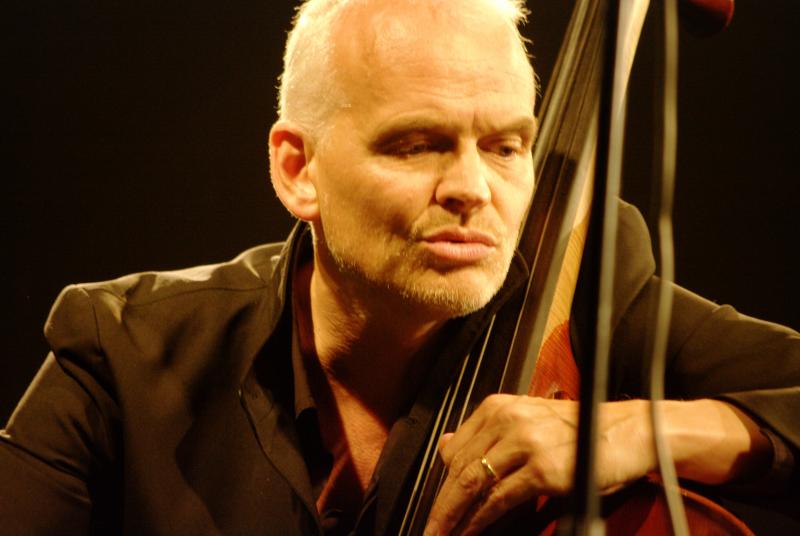
LD: I would say that we definitely have a more European sound. It could be because of the classical music element in the music I write, or my background in classical music, or that our market seems to be more European so we tend to play a more European sound. I don't know. We don't make it to the U.S. very often, but I do get a lot of letters from fans in the States, saying how much they like the music. I also play with a lot of musicians from the U.S.
AAJ: Many AAJ readers will already be familiar with your quartet with Dave Liebman, Bobo Stenson and Jon Christensen. All those players have recorded for the ECM label at one time or another, which is interesting because someone listening to your music blindfolded might guess it were an ECM recording. It seems to possess much of the elegance and classical elements one often associates with that label.
LD: I can see that. I've listened to artists on that label all my life, and I've even played with many of them. While I wouldn't say the ECM label directly influenced me musically, I do think a lot of the artists they record come from the same place I do, which is classical music. A lot of what I play features melodies with a classical music sound. Not only that, but ECM produces albums with a really rich, well-recorded sound, which is something that I try to do as well.
AAJ: You recorded Liberetto in the summer (June 13- 17, 2011) at Tia Dia Studios in the small town of Mölnlycke in Sweden. You also live in that area, so did you choose the studio for its proximity?
LD: Yes, you could say that. The studio is in my house! In fact, the whole house is the studio. We were there for five days, and then I mixed the recording in September, so we worked pretty fast. I wrote the majority of the music before the musicians arrived, and made sure I left a lot of room for improvisation.
AAJ: How do you approach writing music? Do you pick up your bass directly or do you sit down at a piano to compose all the different parts?
LD: Most of the songs were written on the piano. I sometimes write music on the guitar, but this time I just used the piano. I've played the piano and the guitar since I was a kid, as we had a piano at home. My mother got a guitar for her birthday when I was really little, but I grabbed it, and she never got to use it. I went on to study cello at the Music Conservatory in Gothenburg before picking up the bass and getting into jazz.
AAJ: Given your background in classical music, do you feel as comfortable playing with classical musicians as you do with jazz musicians?
LD: Yes, absolutely. I come from a classical background, but I have played jazz most of my career, so I feel just as comfortable playing jazz as classical music, with players from either type of music. I also like the combination of the two styles.
AAJ: So you could never see yourself solely playing bebop?
LD: I like bebop a lot, but it has already been done so well by so many people. I have played a lot of bebop in my career, but the way I play now is a lot freer and much more personal. That's why I could never play with an orchestra, for example, as there would be no room for improvisation and expressing my own personality. Improvising and composing in the moment is an essential aspect of my playing. Of course, it's an important aspect of any jazz musician's playing.
AAJ: As composer, bandleader and producer, do you have very clear ideas in your mind how an album should turn out, even before the other musicians arrive? Did you let the musicians on Liberetto get to know the music before they arrived?
 Tigran Hamasyan, the pianist, was the most important new collaboration on this recording, so we rehearsed together before he came to record. In fact, he invited me to come and play on his own project two weeks before the recording so we got the chance to get to know each other musically.
AAJ: Tigran (Hamasyan) was born in Armenia in 1987. He won the Thelonious Monk International Jazz Piano Competition in 2006 for his reworking of traditional Armenian folk music and poetry with a jazz flavor. Tell us a little about Tigran and why you chose him to join your quartet.
LD: Tigran was 23 or 24 years old when I met him. He's a real monster on the piano. He's just unbelievable. What often happens is that when musicians are as technically advanced as he is, they can have a lot of energy and play too much, which can be stressful to listen to, in my opinion. That's not the case with Tigran. I had never experienced playing with anyone like him before, especially being so young. He's very advanced in his musical way of thinking. He's just fantastic.
AAJ: Tigran counts among his early jazz influences Miles Davis's fusion period and the classic jazz songbook, as introduced to him by a teacher who had studied with Barry Harris.
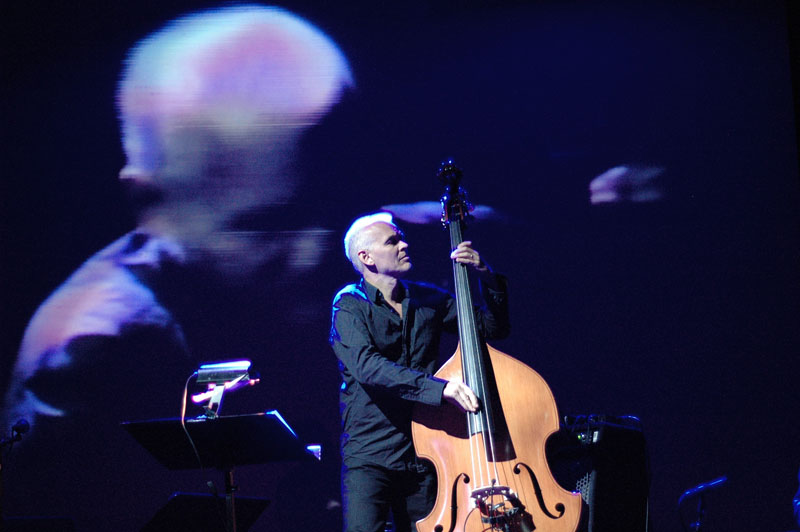
LD: I can see that. Tigran sees my music exactly the way I do, and he composes music the way I do.
AAJ: Where do you feel Tigran gets his inspiration?
LD: I would say his music reflects his life and upbringing in Armenia and his love of jazz, of course. I don't know exactly how far he is influenced by European classical music, but I would say a lot. When I first heard him, I heard straight away how his musical language fits what I do and how I think.
AAJ: This is a new quartet for you, but you've played with some of the musicians before. Can you tell us a little about how you know them?
LD: It's always very exciting for me to create a new group of musicians and see where we can take my music. I've known Arve Henriksen for a number of years. We both collaborated with Jan Bang, who works with sampling. Arve also lives in Mölnlycke. He's Norwegian, but lives here in Sweden. We bumped into each other one day near the lake. I didn't even know he had moved here, so when I found out I invited him to come along and play on Liberetto.
John Parricelli worked on my last album, Tarantella (ACT, 2009). We first met during a recording [Silence, Night and Dreams (EMI Classics, 2007)] with Polish film composer Zbigniew Preisner. John has a really nice sound and always puts a lot of himself into every recording.
AAJ: Then there's Magnus Ostrom, previously one- third of Swedish jazz trio Esbjorn Svensson. His first leader recording, Thread of Life (ACT, 2011), is also nominated for a Swedish Grammy.
LD: I contacted Magnus a couple of months after the death of Esbjorn Svensson [pianist and leader of e.s.t.], who passed away in 2008. Magnus wasn't playing at all during this period, so I invited him to play with my group for a concert in Poland. Since then, we've played together, and it felt really natural to ask him to play on Liberetto. I'm glad he did. He's a wonderful musician.
AAJ: Interaction with other musicians is an important part of your music. You have collaborated with a huge number of international musicians, and the lineup of your group changes almost with each new album.
LD: I really value creating dialogue between myself and others. Communication is everything, so it's really important for me to play with other musicians and react to what they are playing.
AAJ: It must be exciting to discover a musician like Tigran, with whom you connect and dialogue with so well.
LD: I met Tigran for the first time just a couple weeks before we started recording. My manager in Switzerland, René Hess, passed along some of his recordings and told me to check them out. I contacted Tigran, and it turned out he knew my earlier recordings and was as keen as I was to meet up and see what would happen.
AAJ: Things happened pretty fast. Liberetto was recorded in five days over the summer, mixed in September and scheduled for release the following January. From meeting Tigran to the release date, there was a period of just 6-7 months. Do you enjoy working so quickly?
LD: I love it. This was the first time I had done the entire recording at home, so that was a new thing for me, and I am extremely happy with the results. It felt intimate and relaxed at the same time. Since then, other groups have come and used the studio, so it's something I will continue to do. Having five full days in the studio is a rare thing nowadays, so that was a good opportunity.
AAJ: Do the 12 tracks on the album make up a type of suite, or do you see Liberetto more as a collection of individual songs?
 AAJ: Do the 12 tracks on the album make up a type of suite, or do you see Liberetto more as a collection of individual songs?
 LD: I see Liberetto as a collection of individual songs. Each one is unique and sounds different to the rest. While there is not so much of a connection between the songs on the album, I would say that the order of the songs is really important. I spend a lot of time getting the order just right.
AAJ: Why is the order of the songs so important to you? Are you creating a way for the listener to hear the whole album in one sitting?
LD: Yes, the album is supposed to be listened to all together, like in a flow. All my recordings are.
AAJ: How, then, did you approach the Signature series (ACT)? Your album in this collection featured tracks that you personally selected from all your ACT recordings from 1991 to 2009, and was designed as an introduction to your work.
LD: I tried to make whole new albums with songs that had appeared on earlier recordings. I changed the order that the songs appeared in—for example, a song that was the first on one album wasn't necessarily the first song on the Signature album. I even chose different versions of the songs.
AAJ: The artwork for Liberetto is an abstract piece called "Untitled 2010," by Martin Noël. Why choose this image?
LD: The people at ACT chose the painting on the cover. I have no input in the presentation of the album. That's the way it works. I do the music and they do the cover. I approve it before it is released, of course, but I am not involved in the design at all. I know it is a different setup at other labels, but I quite like it this way, and it is interesting to see what they come up to represent my music. The impact a cover has is really important. You only get one second to grab someone's attention, so I am happy to leave that part to the people at the label, as they know what they're doing. Liberetto was recorded in high resolution, so it'll also be released on vinyl. I'm looking forward to seeing how that looks when it is ready.
AAJ: You recently worked with the Jazz Baltica Ensemble as a composer and conductor. How did that come about?
LD: That was a fantastic experience and a really wonderful opportunity. The organizers invited us over to Salzau, Germany in early July, at the 2011 Jazz Baltic festival, and I got the chance to perform with players that I wouldn't normally play with. I have played with the ensemble before but not as composer and conductor. In fact, I have played there nearly every year since 1992.
Selected Discography
Lars Danielsson, Liberetto (ACT, 2012)
Lars Danielsson, Tarantella (ACT, 2009)
Ulf Wakenius, Love Is Real (ACT, 2009)
Wolfgang Haffner, Acoustic Shapes (ACT, 2008)
Lars Danielsson/ Leszek Możdżer, Pasodoble (ACT, 2007)
Lars Danielsson, Mélange Bleu (ACT, 2006)
Ulf Wakenius, Notes From the Heart (ACT, 2005)
Lars Danielsson, Libera Me (ACT, 2004)
Lars Danielsson, Origo (Dragon, 1999)
Lars Danielsson/David Liebman/Jon Christensen/Bobo Stenson, Live At Visiones (Dragon, 1997)
Lars Danielsson, Continuation (L+R Records, 1994)
Lars Danielsson/David Liebman/Jon Christensen/Bobo Stenson, Far North (Curling Legs, 1994)
Lars Danielsson, European Voices (Dragon, 1993)
Lars Danielsson, Fresh Enough (L+R Records, 1992)
Lars Danielsson, Origo (Dragon, 1999)
Lars Danielsson, Poems (Dragon, 1991 )
Lars Danielsson/Alex Acuña, Nighlight (Royal Music, 1990)
Lars Danielsson, New Hands (Dragon, 1986)
Photo Credits
Pages 1, 4: Courtesy of Lars Danielsson
Page 2: Richard Wayne
Page 3: John Kelman
< Previous
Liberetto
Next >
Conversations
Comments

Tags
Lars Danielsson
Interview
James Pearse
United States
Nils Landgren
John Abercrombie
John Scofield
Jack DeJohnette
Bill Evans
charles lloyd
Billy Hart
Joe Sample
Kenny Wheeler
Cæcilie Norby
The Beatles
magnus ostrom
Tigran
John Parricelli
Dave Liebman
Bobo Stenson
Jon Christensen
Thelonious Monk
Miles Davis
Barry Harris
Arve Henriksen
Jan Bang
E.S.T.
Esbjorn Svensson
John Kelman
For the Love of Jazz
 All About Jazz has been a pillar of jazz since 1995, championing it as an art form and, more importantly, supporting the musicians who create it. Our enduring commitment has made "AAJ" one of the most culturally important websites of its kind, read by hundreds of thousands of fans, musicians and industry figures every month.
You Can Help
To expand our coverage even further and develop new means to foster jazz discovery and connectivity we need your help. You can become a sustaining member for a modest $20 and in return, we'll immediately hide those pesky ads plus provide access to future articles for a full year. This winning combination will vastly improve your AAJ experience and allow us to vigorously build on the pioneering work we first started in 1995. So enjoy an ad-free AAJ experience and help us remain a positive beacon for jazz by making a donation today.

Giveaway

Eligible winners: 15
Days remaining: 10
Days remaining: 10