Home » Jazz Articles » From the Inside Out » Jazz Mergers & Acquisitions
Jazz Mergers & Acquisitions

 T. K. Blue
Latin Bird
Motéma Music
2011
Saxophonist Charlie Parker is primarily remembered as an incendiary, revolutionary, improvisatory soloist, but he often expressed his style through composition, and many of Parker's original tunes became part of the modern jazz canon. Latin Bird, saxophonist T.K. Blue's label debut for Motema, his ninth release as a leader, reworks eight of Parker's tunes in Afro-Cuban, Brazilian, Caribbean and related rhythmic styles.
Blue serves as musical director for pianist Randy Weston, with whom he's played for more than three decades, and also serves as Director of Jazz Studies at Long Island (NY) University's C.W. Post Campus. But the first time he studied Charlie Parker, Blue recalls, "It just messed up my mind completely."
Blue doesn't really play alto in Parker's firebrand style (who does?) so the real star of Latin Bird isn't Parker, or even Blue, but Blue's arrangements of Parker's tunes, along with a Blue version of the timeless "'Round Midnight" and his solo improvisation "He Flew Away Too Soon."
The first two tunes—"Chi Chi" and "Si Si"—and closing "Buzzy," all played in two three clave, burn with the piano and percussive fire of Latin jazz. In "Si Si," Blue and Steve Turre hide sly Thelonious Monk references within the first lines of their alto and trombone solos; pianist Theo Hill and the percussion battery swirl in vibrant Latin rhythms and colors. Parker's melody laughs as it dances through Blue's bright calypso arrangement of "Barbardos." Trap drums beat and roll a refreshing New Orleans second line bounce into "Visa," which is otherwise just the sort of jumpy, angular melody that led some to call Parker's bebop "Chinese music."
Parker was also a great blues player, and Blue makes sure to paint much of his Latin Bird portrait in blue: Turre's trombone and Hill's piano trace the deep creases of Parker's melody, then snuggle down into the soft thick layers of "Blue Bird." Blue's alto verses inject depth and passion into this stark and quiet "'Round Midnight," at first in conversation with just bassist Essiet Okon Essiet until piano and drum enter gently. "Moods of Parker" (Blue's original, inspired by Bird's own "Parker's Mood") opens dramatically and then instantly stretches out into a relaxed, slow-rolling blues that seems to simultaneously laugh and cry—the least Latin, but most straight up blue, tune.
Blue dedicates Latin Bird to trombone player Benny Powell, who was scheduled to appear on these sessions but passed away from complications after surgery, and in whose honor Blue improvises the solo piece "He Flew Away Too Soon."
 Todd Clouser
Todd Clouser's A Love Electric
Ropeadope
2010
"A Love Electric is possibility and energy," explains guitarist, composer and bandleader Todd Clouser. "I come from a rock place as a player. I still love Jimi Hendrix, Led Zeppelin, and the total madness in noise, even if I'm listening to Charlie Parker, Monk, or Wayne Shorter more often these days."
"All that was once new was initially regarded as 'out,' 'nasty,' and 'evil,' from Robert Johnson to Ornette Coleman to electric Miles Davis to electric Bob Dylan," he concludes. "That's the stuff that feels real to me and it's always been that way."
After his musical education at Berklee, Clouser relocated to Baja, Mexico, to simultaneously pursue his muse and a less frantic lifestyle. The first two albums he released from the Baja so impressively caught the ear of trumpet conceptualist Steven Bernstein that the trumpeter toured Mexico in 2009 and 2010 with Clouser co-leading Bernstein's band. Clouser's guitar and trumpet from Bernstein and Kelly Rossum are the primary solo instruments on A Love Electric.
In the opening "Serenity Now," Clouser demonstrates his diverse, almost encyclopedic, guitar approach while his tune descends into a chaotic free guitar/trumpet duel passage until the crack of the unifying downbeat steers the ensemble safely home. "Curtis" exercises a steamy soul-jazz-rock workout with hot trumpet blasting like artillery fire. "Brass Suite 1970" busts out the funk from that same decade: drummer Greg Schutte kicks out a plump backbeat, bassist Adam Linz churns up its undertow, and Clouser's guitar continually nudges farther and deeper into blues-rock space.
Clouser's Hammond organ/guitar blues shuffle "Littlest Number" swings from the frame of his phased-reverb guitar hook. "The Border at Pachacan" seems to return Clouser to Mexico, a colorful panorama decorated with acoustic piano and percussion that accent its Latin tinge so evocatively that you can imagine Booker T. & the MGs jamming this tune in a Mexican cantina. Guitar and companion trumpets next paint a somber "Autumn City Portrait."
A Love Electric also reworks two tunes by notable pop songwriters, "One" (popularized by Three Dog Night but written by Harry Nilsson) and Clouser's closing guitar soliloquy on Leonard Cohen's aching "Hallelujah."
Clouser also works as an advocate and educator for the arts in Mexico through his non-profit organization Arts Day Out.
 Miles Davis
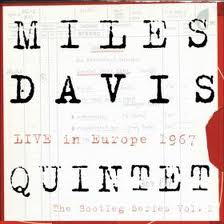
Miles Davis Quintet: Live in Europe 1967: The Bootleg Series Volume 1
Columbia/Legacy
2011
Miles Davis Quintet: Live in Europe 1967: The Bootleg Series Volume 1 compiles an enormous amount of simply incredible music: three CDs and one DVD spanning five European performances that the trumpeter recorded in late 1967 with Wayne Shorter (saxophone), Herbie Hancock (piano), Ron Carter (bass) and Tony Williams (drums)—what was known, even then, as Davis' second great quintet—as part of a "Newport Jazz Festival in Europe" tour produced by George Wein. (Most of the concert footage in Clint Eastwood's acclaimed 1988 documentary Thelonious Monk: Straight, No Chaser comes from this same tour.) The CDs cover concerts in Belgium and Denmark, plus a long Paris show; the DVD presents performances in Germany and Sweden.
Looking back at these 1967 performances through the perspective of Davis' 1971 jazz-rock fusion masterpiece Bitches Brew (Columbia), when the trumpeter completely remade his band and sound, annotator Ashley Kahn writes, "The groundbreaking music of the Miles Davis Quintet at the height of their fourth year together represented the calm before the electric storm."
Every note captures and releases a spirit of mutual freedom and discipline rarely embodied by a jazz quintet. As free as their form and sound may seem, all three versions of "Agitation" (which open the CD concerts) come to rest within one minute of each other. Davis' opening line in the first version (first show) drifts down like a cloud, note by note, with a pliant softness that evaporates like mist from the heat of Shorter's saxophone fire.
Expansive versions of "No Blues" are also featured, and seem to serve as the centerpiece, on every concert CD. Each version sketches a roomy framework full of individual exploration. If Davis and band are playing the blues in "No Blues," they're almost ridiculously abstracted. Williams' solo breaks down, and then reconstructs, the second version, fifteen whirlwind minutes that Williams and Shorter determinedly fill up with crackling, liberating sound.
There's no overstating how essential Tony Williams was to this music. His crashing waves of sound and rhythm absolutely refuse to let the musicians or the music stand still. His solo breaks down the third "No Blues" with bracing rolls, rhythms and counter-rhythms, all played in exacting, concise freedom. Williams simply detonates the aptly-titled "Riot," helps cook "Gingerbread Boy" with relentless rolls, and blows away with hurricane force each version of "Footprints" like they were written in sand. Williams looks so young and casual on the DVD that there's no wondering why some observers speculated that Davis was crazy to hire him.
From these recordings, it sounds like Davis only occasionally featured his ballad playing with this band—the Paris set features "I Fall in Love Too Easily" with his gorgeous solo trumpet introduction—except for their ensemble interpretation of the timeless bebop classic "'Round Midnight," which appears in every set. Davis introduces these with trumpet that captures the magical sound of wonder and regret, its hand held only by Hancock's sympathetic piano. This ballad may be tender, but with Hancock as piano man, it's never soft.
The aural and visual clarity of the concert DVD are exceptional. The audio is so good in "I Fall in Love Too Easily," which reappears in the Germany performance, that you not only hear Davis' opening solo but can actually hear the reverb of his trumpet echoing back at him from the venue walls just a heartbeat later. His melancholy blue sound smolders like hot coals until the rest of the band enters, led by Williams' cymbals, and its heat erupts into an open flame. "'Round Midnight" reappears in the show from Sweden, with Davis' introduction, once more accompanied by Hancock, heart-rending and time-stopping. This show in Sweden also features a strikingly different version of "Agitation," slower and less agitated, with Shorter and Hancock respectively displaying their more gentle and reflective sides. Hancock's solo is some of the most beautiful sounding music in this entire package.
 Gowanus Reggae and Ska Society
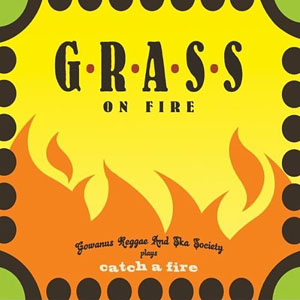
GRASS on Fire: Gowanus Reggae and Ska Society Plays Catch a Fire
Mighty Gowanus Records
2010
At first look, jazz seems to have little use for reggae. After all, isn't the essence of jazz its flights of improvisatory fancy, while reggae's trademark is that resolute, lockdown rhythm? But a solid point from which to take off and return is most helpful when flying, and reggae provides a rhythmic foundation more solid than most.
The Gowanus Reggae and Ska Society (G.R.A.S.S.) is made up of Brooklyn area musicians who enjoy the improvisational spontaneity of jazz and the profound depth of Jamaican reggae. They collectively reach just about every corner of the musical universe: saxophonist Ohad Talmor, for example, was born in Israel, grew up in Switzerland, and co-leads groups with friend and mentor Lee Konitz. GRASS bandleader and bassist J. "Sumo" Granelli, son of drummer Jerry Granelli, has studied with Charlie Haden, played with pianist Mose Allison, and also performs in two other bands. "It's impossible to understand jazz fully without an understanding of African and Western European classical music, for instance," Sumo explains. "'Mento-ska-rocksteady-reggae-dance hall' all spring originally from these same roots, so in effect our study of jazz and other forms of American roots music led us to Jamaican music naturally."
And so GRASS lit upon Catch a Fire, the breakout album for The Wailers—reggae's "holy trinity" of Bob Marley, Peter Tosh, and Bunny Wailer. "Our thing is a pretty different version of the music, so we put it in the order that worked best for what we had created," Granelli explains. "We also combine two songs ("Kinky Reggae" and "Midnight Ravers" here meld to become "Kinky Midnight") and added one that never made the original release ("High Tide, Low Tide") so the original order would not have worked anyway."
From both the jazz and reggae perspectives, their "thing" seems to work quite nicely. Trombone and alto sax flesh out "Concrete Jungle" over its reggae skeleton, with the alto's clarinet overtones bringing a kind of klezmer sound to its Caribbean beat. Bass and drums whip up the time of "400 Years" into a free jazz-for-all, the scrambled sound of wandering lost tribes.
In "Slave Driver," the chanted vocal ("Slave driver...catch a fire...slave driver...catch a fire...") echoes horns that sway like elephants in a conga line. "Stop That Train" jumps upon a cacophonous section where all the saxophones and trombone simultaneously play—a great ejaculation of New Orleans ensemble jazz, cast in reggae but with a tinge of second line rhythms in the drum and bass. Harmonica puffs the melody to "Stir It Up," a light and carefree sound that warmly illuminates perhaps the most famous Wailers tune in this set.
 Marbin
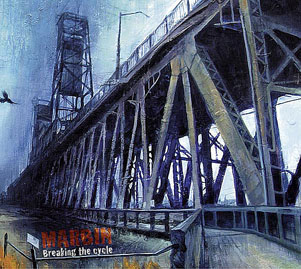
Breaking the Cycle
MoonJune Records
2011
At its jazz-rock core, Marbin is the Israeli duo of guitarist Dani Rabin and saxophonist Danny Markovitch, sort of a Jewish version of Walter Becker and Donald Fagen, the essence of Steely Dan. Bassist Steve Rodby and drummer Paul Wertico, who cumulatively won 18 Grammy Awards as members of the Pat Metheny Group, provide the rhythm support for Marbin's second album and MoonJune debut; Wertico herewith returns the favor of Marbin's melodic contributions to the drummer's 2009 release Impressions of a City (Chicago Sessions).
The windy, electric "Loopy" melody bursts open with all the bright, hot splendor of the morning's glory: guitar screams like a siren, then shimmers in background chords while saxophone sings in its wake, and the drum/percussion section downpours and thunders. Markovitch's clarinet sound and fluttering attack on saxophone, plus its accompanying rhythm, help "A Serious Man" sing a song of jazz fusion that's rooted in, but branches out beyond, Israel. The weighty "October Revolution" sounds and feels the same way.
"Bar Stomp" would sound at home in blues joints the world over, too, with Rabin's guitar rampaging in electric mayhem and moaning like a worn out delta bluesman. In a nice bit of sequencing, it's preceded by "Mom's Song," a tiny but no less splendid reflection of gratitude so profound that it cannot be spoken, with the poignant wistfulness in the saxophone melody underlined by Leslie Beukelman's wordless vocal.
Viewed from different shores, "Western Sky," "Claire's Indigo" and the pastoral waltz "Snufkin," color complementary pastel vignettes of softly evocative, mainstream jazz Americana. But "The Old Silhouette" paints this set's most striking musical portrait with saxophone lines that swoop and dovetail in an intricate rhythmic dance against a percussive backdrop that softly pulses and clatters, the set's most vibrant mixture of acoustic and electric music.
"Burning Match" is more directly inspired by an Israeli melody, serpentine music so thick with sensuality that you can nearly taste it, ringing in a carnal yet holy tone which seems to span and then transcend its regional styles into a global jazz sound.
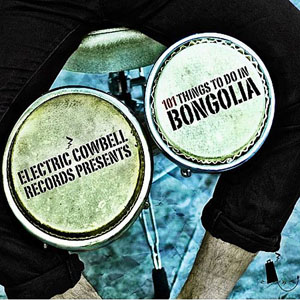 Various Artists
101 Things to Do in Bongolia
Electric Cowbell Records
2011
101 Things to Do in Bongolia compiles the first year of 45rpm singles, plus a few bonus remixes and other surprises, released and digitally compiled by Brooklyn-based Electric Cowbell Records, founded by percussionist/entrepreneur Jim Thomson. Thomson also plays in two bands featured here (the CSC Funk Band, and Bio Ritmo) and has continued Cowbell operations with assistance from keyboardist Marlysse Simmons (also in Bio Ritmo) and Stuart Bogie, who has helmed horns and production for Medeski Martin & Wood, Sharon Jones & the Dap-Kings, Antibalas Afrobeat Orchestra and numerous others.
Believe it or not, Bongolia is even more ridiculously eclectic than its roots, and presents music from New York City's best Latin boogaloo band (Spanglish Fly), one of modern salsa's best bands (Bio Ritmo), and Boston's best Ethiopian groove band (Debo Band), among others.
Bongolia organically renders a funky boutique sound, the ultimate "random shuffle" listening experience. The opening "Human Happiness," the first of three wildly different tunes by Superhuman Happiness, serves up a glistening, gelatinous slice of wobbly electronic funk, while "Hounds" thumps out a tail-wagging, sing-along funk beat.
Several different Latin quarters are well represented in Bongolia. Spanglish Fly's "Let My People Bugulú (Remix)" excels from its minimalist approach, building from vocal chants and handclaps atop clanging drums into an irresistibly limber sing-along groove replete with spicy piano, hearty trombone and thick Afro-Cuban percussion. "Silbando (GRC Remix)" reshapes Los Riberenos' tune with new electronic effects and loops that don't interfere with or overshadow, but genuinely accessorize and complement, the skeletal rhythm of their original tune (from the label's acclaimed retrospective Roots of Chicha Volume 2). Bio Ritmo rolls out the textbook "Dina's Mambo" and "La Muralla," a simply delicious modern Latin groove overflowing with vocals and topped like whipped cream with frothy congas, while "Majadero (EC Remix)" shifts its Latin pulse between Afro-Cuban and Caribbean, the sound of an iPod in the modern musical barrio.
Other singles come from completely different directions, especially the remix of the Debo Band's Middle Eastern trance/chant "Adderech Arada," which scratches, cuts and loops the original vocal into a modernist collage of ancient sound; the thick electronic Brooklyn Chimp remix of "A Troll's Soiree" by CSC Funk Band, a hurricane of kalimbas and horns; and the freakout "Freddie's Tea," which explores deep progressive rock space with monstrous organ chords and interstellar guitar that culminate and dissolve in a foggy, dark Pink Floyd meets Grateful Dead haze.
Electric Cowbell Records may be headquartered in Brooklyn, but the music it promotes genuinely comes from all over the map.
Tracks and Personnel:
Latin Bird
Tracks: Chi Chi; Si Si; Visa; Blue Bird; 'Round Midnight; Barbados; Steeplechase; Moods of Parker; Donna Lee; He Flew Away Too Soon; Buzzy.
Personnel: T.K. Blue: composer, arranger, alto saxophone, flute; Willie Martinez: trap drums; Roland Guerrero: congas, percussion; Essiet Okon Essiet: acoustic bass, electric bass; Theo Hill: piano; Steve Turre: shells, trombone; Lewis Nash: trap drums.
Todd Clouser's A Love Electric
Tracks: Serenity Now; Meet me at the Polo Grounds; Curtis; Bobby White in the City; The Habit Kick; Jimena; Littlest Number; The Border at Pachacan; Autumn City Portrait; One; Brass Suite 1970; Mo City Kid; Hallelujah.
Personnel: Todd Clouser: guitars; Gordy Johnson: bass; Greg Schutte: drums; Bryan Nichols: Rhodes; Steven Bernstein: trumpet; Julio de la Cruz: piano; Jason Craft: Hammond B-3; Adam Linz: bass; Kelly Rossum: trumpet.
Miles Davis Quintet: Live in Europe 1967: The Bootleg Series Volume 1
Tracks: CD1: Agitation; Footprints; 'Round Midnight; No Blues; Riot; On Green Dolphin Street; Masqualero; Gingerbread Boy; The Theme. CD2: Agitation; Footprints; 'Round Midnight; No Blues; Masqualero; Agitation; Footprints.CD3: 'Round Midnight; No Blues; Masqualero; I Fall in Love Too Easily; Riot; Walkin'; On Green Dolphin Street; The Theme. DVD: Agitation; Footprints; I Fall in Love Too Easily; Gingerbread Boy; The Theme; Agitation; Footprints; 'Round Midnight; Gingerbread Boy; The Theme.
Personnel: Miles Davis: trumpet; Wayne Shorter: tenor saxophone; Herbie Hancock: piano; Ron Carter: bass; Tony Williams: drums.
GRASS on Fire: Gowanus Reggae and Ska Society Plays Catch a Fire
Tracks: Concrete Jungle; Baby We've Got a Date; Slave Driver; 400 Years; Kinky Midnight; Stir It Up; Stop That Train; High Tide; No More Trouble.
Personnel: J. "Sumo" Granelli: bass; Nate "Natecha" Shaw: keyboards; Mark Miller: trombone; Russ Meissner: drums; Nick Balaban: keyboards; Ohad Talmor: tenor saxophone; Paul Carlos: tenor saxophone, soprano saxophone; David Bailis: guitar; David Barnes: harmonica; Michael Blake: tenor saxophone; Brad Shepik: guitar.
Breaking the Cycle
Tracks: Loopy; A Serious Man; Mom's Song; Bar Stomp; Outdoor Revolution; Western Sky; Burning Match; Claire's Indigo; Snufkin; The Old Silhouette; Winds of Grace.
Personnel: Dani Rabin: guitar; Danny Markovitch: saxophone; Paul Wertico: drums; Steve Rodby: bass; Jamey Haddad: percussion; Matt Davidson: vocals; Leslie Beukelman: vocals; Makaya McCraven: drums; Daniel White: vocals.
101 Things to Do in Bongolia
Tracks: Human Happiness; Adderech Arada; Let My People Bugulu (Remix); Dina's Mambo; GMYL; I Gettupa; Silbando (GRC Remix); Hounds; Majadero (EC Remix); Tiny Raindropz; Cosmic Attitude; Adderech Arada (Remix); La Muralla; String Theory (GRC Vocal Mix); A Troll's Soiree (Brooklyn Chimp Remix); Freddie's Tea; Gravity.
Personnel: Superhuman Happiness; Debo Band; Spanglish Fly; Bio Ritmo; Amazing Ghost; Los Riberenos; Talibam!; Debo Band + Kiddid; Sahr vs. Superhuman Happiness; CSC Funk Band; Greg Ginn & the Taylor Texas Currugators.
< Previous
Latin Bird
Next >
Trip the Light Fantastic
Comments
Tags
From the Inside Out
Chris M. Slawecki
United States
Charlie "Bird" Parker
Randy Weston
Steve Turre
Thelonious Monk
Theo Hill
Benny Powell
Hendrix
Led Zeppelin
Charlie Parker
Monk
Wayne Shorter
robert johnson
Ornette Coleman
Miles Davis
Dylan
Steven Bernstein
Kelly Rossum
Greg Schutte
Adam Linz
Three Dog Night
Herbie Hancock
Ron Carter
Tony Williams
Ohad Talmor
Lee Konitz
Jerry Granelli
Charlie Haden
Mose Allison
bob marley
Walter Becker
Donald Fagen
steely dan
Paul Wertico
pat metheny
Leslie Beukelman
Bio Ritmo
Medeski, Martin & Wood
Sharon Jones
Antibalas
Pink Floyd
Grateful Dead
For the Love of Jazz
 All About Jazz has been a pillar of jazz since 1995, championing it as an art form and, more importantly, supporting the musicians who create it. Our enduring commitment has made "AAJ" one of the most culturally important websites of its kind, read by hundreds of thousands of fans, musicians and industry figures every month.
You Can Help
To expand our coverage even further and develop new means to foster jazz discovery and connectivity we need your help. You can become a sustaining member for a modest $20 and in return, we'll immediately hide those pesky ads plus provide access to future articles for a full year. This winning combination will vastly improve your AAJ experience and allow us to vigorously build on the pioneering work we first started in 1995. So enjoy an ad-free AAJ experience and help us remain a positive beacon for jazz by making a donation today.

Giveaway

Eligible winners: 15
Days remaining: 6
Days remaining: 6