Home » Jazz Articles » Interview » Chris Taylor: Never Make Your Move Too Soon
Chris Taylor: Never Make Your Move Too Soon
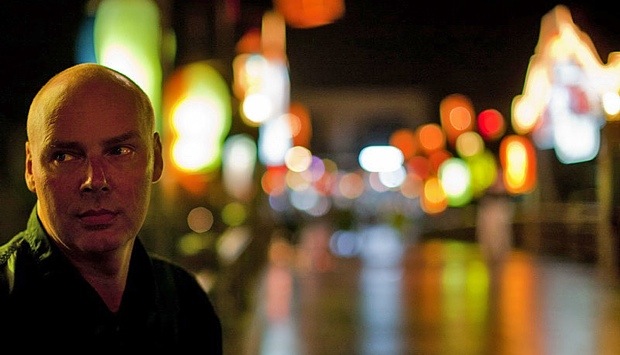

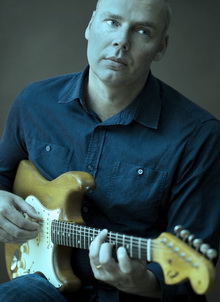
The journey to Nocturnal has been a long one. Having dropped out of Berklee after three semesters with the wolf at the door, Taylor started gigging, and found himself playing in every conceivable setup imaginable, from pop and rock, to jazz and R&B. But, as Taylor confesses, "my love was always jazz." Came a day, however, when the more lucrative pop session work began to dry up: "When you get to a certain age in pop music they're not interested in you as a sideman any more," explains Taylor. "Once you get to be in your mid-30s they say they want young guys on stage. It was time to head in another direction."
Composing music for TV, commercials and films provided that new direction, but there was a voice waiting for the right moment to make itself heard. Thirty years after leaving Berklee, Taylor found he had something to say. With an enviable cast of musicians including keyboardist Scott Kinsey, drummers Gary Novak, Joel Rosenblatt and Kirk Covington, and multi-reed player Steve Tavaglione, Nocturnal is an impressive debut which heralds the arrival, after several decades preparation, of a vibrant new voice on the creative music scene.
All About Jazz: Congratulations on a very fine debut recording; you must be pleased with the way it's turned out?
Chris Taylor I'm at the point where I can't really hear it yet. After going through the whole mixing and mastering phase I think I need about a year of not listening to it before I can really hear it.
AAJ: After so many years working as a sideman you've stepped out as a leader in your own right with Nocturnal; how did this transformation come about?
CT: I don't think there was a single reason. I've been writing and recording jazz music for at least three decades and, several times over the last 30 years, I've started solo projects, but I think, like most musicians, I'm a pretty tough critic about my own work and I also felt I didn't think of myself as a leader for a long time. I was content in my sideman role and composing for and producing other people. But the music I've been writing over the last five years had a reaction from musicians I really respect and they said, "You should really release this. You're really doing something interesting." That helped push me in that direction. Also, as I've gotten older I've got a lot less guitar-centric, for lack of a better word. I'm more concerned being a musician than a guitarist. When you're young you're all wrapped up in trying to play as well as you can and as you get older you're more concerned with the art of the music itself. I see myself more as a musician now than as a guitarist.
AAJ: Had this music been brewing in you for a long time?
 CT: I've been writing this way for the last five years, though Nocturnal probably represents the last two or three years. I have a great deal of influences; I have really diverse listening habits and that kind of creeps in. I just let it come out. I stayed away from conventional song forms for the most part. A lot of the music is through-composed and I wanted the record to have a cinematic quality to it, which a lot of my favorite discs have. In other words, I can listen to them from start to finish and they have a feel to them. That's what I was going for.
 AAJ: Nocturnal certainly has a flow to it which makes for uninterrupted listening from beginning to end; would you be against releasing individual songs as MP3 downloads?
CT: That's already out there; you can't avoid that. I'm definitely a product of the vinyl generation. You'd buy a record, you'd look at the art work, you'd read all the credits. It's a habit. I still buy CDs and I enjoy music that way. To be realistic, I know that the younger generation buys a song. Probably they'll just download the record for free and keep what they want [laughs].
AAJ: How did you come to release Nocturnal on Abstract Logix? You must be delighted to be on such a funky label?
CT: That was my first choice. The connection there was [keyboardist] Scott Kinsey who's on the label, and who also plays on the record. He spoke to [label head] Souvik Dutta and told him he should check out my record. I spoke to him and he said: "How do you want to do this?" I thought, "Okay, this sounds like the right label to me." It just happened. It was amazing. I think in this day and age that being on a label is so important. One of the great things about technology is that anyone can do a record these days. Anyone who owns a guitar and a computer can put out a record. But the problem is that everyone who does own a guitar and a computer is putting out a record. I think it's great that a lot of people who never would have had the opportunity to make music will now make great music, but there's also a lot to wade through. So, to get a little more notice you need to be with a label these days.
AAJ: That's interesting; the technology has given this freedom to every would-be musician but maybe a record label is the best place to be after all.
CT: It is, for fringe music. What used to be Indie music now needs the label to get noticed. In an independent market it's harder to get noticed now. I think it's true in all the art forms, like publishing and writing; now, everyone's got a blog. Everyone who can type assumes they're a writer now.
AAJ: In another 10 years the only jobs people will be doing will be writing, making music or doing photography. It could mean the extinction of the human race.
CT: [laughs] Exactly. My wife's a photographer and it's the same deal with that. Now everyone's a photographer.
AAJ: You mentioned Scott Kinsey, and there's a whole raft of tremendous musicians on Nocturnal, quite a few of whom are Abstract Logix recording artists; did you know these guys before starting to make the record?
CT: Some of them, I did. It wasn't a conscious plan to use these people. Ric Fierabracci , who plays bass on most of the tracks, I had worked with on another project where I was writing and producing a guitarist by the name of Ed Degenaro. I was writing really complex stuff for that and Ric's playing was just incredible. We'd never met before but we had a similar work ethic and he was one of the first people I wanted to go to when I started recording this. He had done a record with Steve Tavglione who I've admired for a long time. He gave me Steve's number and I called him and through him Scott Kinsey, and through both of them Gary Novak got involved. Then Kirk Covington got involved because Scott Kinsey said: "You really want him for this track ["Odd Hours"]. He was absolutely right.
George Whitty, I've known for 30 years, and I know Dave Weckl through him. I didn't plan to make this an all-star record, and sometimes those things can really be a mistake. I was conscious of not putting everybody's name on the record cover because I didn't want to market it as "look who I've got playing with me." The truth of the matter is they're all amazing musicians and they all played incredibly for the record, so I was very fortunate.
AAJ: They really play fantastically well. What do you like about Fierabracci's bass playing?
CT: Ric plays bass in a way that I love. He's got incredible technique, great chops, great soloist, but he plays in the rhythm section as a bassist first and foremost. A lot of this music I had originally written for upright bass and he plays fretless in a way that kind of gets that quality. He's got an organic way to his playing that I really love. He wants the music to be right.
AAJ: Whitty only plays on three tracks but he leaves a large impression on the disc.
CT: I knew George back in Berklee and he's just one of the best musicians I've ever met. I have complete trust in his ears and his playing. He was also involved in the mixing of the record. It's great to have that trust. If he says: "I don't think this is quite working" I would really listen. Or if he says "I think this is great," again, I totally trust him.
AAJ: Tavaglione plays out of his skin on this album.
CT: He's amazing. As a matter of fact we're in the process of gearing up to do a record together as co-leaders because we enjoyed working together so much. He's got great lyricism and a melodic quality I just love. He's really dedicated to doing a great job and he just has such personality and vibe that he brings into the music. Plus he plays EWI along with bass clarinet and all the saxophones; he's a consummate professional.
AAJ: His EWI playing on the composition "Here to There" sounds like a harmonica. It could almost be Toots Thielemans; he brings out quite a unique tone from that instrument.
CT: Yeah, he's got an incredible touch on the EWI. I think I first heard him use that on a ballad on a [bassist] Gary Willis record. I thought it was real harmonica because it's a breath-controlled instrument it has that same kind of attack. His lyricism really shines through.
AAJ: There are quite a lot of programmed voices on Nocturnal; what were you after?
CT: There's some African voices, some Indian, some Tibetan voices.; it's something I kind of hear and I like to add in as a texture. [keyboardist/composer] Joe Zawinul was a big influence in this direction. It's something I try not to use in a gratuitous way. There is also a lot of spoken voice in there from old TV shows and old movies and radio broadcasts. It's just something I hear. I collect different samples and I kind of hear a spot for it, most often as texture. When it's a melodic piece it's something to orchestrate around, something to push the music in a different direction.
AAJ: You talked before about being a musician first and a guitarist second, and that seems to be the order overall on Nocturnal; the solos are generally quite succinct. What dictated the degree of improvisation?
CT: I kept the solos short to a degree, mainly for myself, because I'm composing and I don't want to have five minutes of soloing surrounded by 30 seconds of writing on either side. I wanted the improvisation to seep into the composed part so you don't really notice the transition.
 AAJ: The process seems to be one of subtly unfolding contrasts; how do you see it?
 CT: Thank you, that's a great compliment. It's the way I write. I have an idea of what I want to do tonally and feel-wise, and I kind of get an image in my mind of the contours of the tune, almost as a visual image. Then I try and get down as quickly as possible melody, harmony and rhythms, and then I go back and refine it. But it has a shape to it. The unfolding definitely describes the contours. That's exactly what I'm trying to get so I'm very happy you heard it that way.
AAJ: You talk about the visualization of the music, and the track "Green Divided by Blue" is dedicated to or inspired by Russian-born American painter Mark Rothko; can you talk about your relationship to his paintings and your music?
CT: I'm just a huge fan of his art work. His work has always had a big effect on me. I like the simplicity on the outside of his paintings and the depth to them. One of my favorite quotations of all time is by him when he said, "silence is so accurate," which is ironic to say during an interview. I think that was in response in talking about his artwork. If he didn't speak about his art work because it said everything. I try to capture tonally a little of how his paintings affected me.
AAJ: Rothko was always classified as an abstract painter though he didn't like the term; can you relate to that feeling if people say of you:"Oh, Chris Taylor, the fusion guitarist."?
CT: Yes, exactly. The fusion word has such bad connotations. It has great connotations too but the bad ones are the excesses, a lot of notes, long solos, you know, dated. Those connotations can be really bad. On the other hand, you have albums like [trumpeter] Miles Davis' In a Silent Way (Columbia, 1969), Bitches Brew (Columbia, 1970) , and bands like Weather Report, who produced amazing music. But I don't like trying to put a genre on the music I write. And calling it jazz—which is such a wide open field these days—I don't know that that covers it either. To me, jazz is more about a ride cymbal. My music is influenced by all these different genres.
AAJ: There's another Rothko quotation which is thought-provoking, which I quote in part here: "To paint a small picture is to place yourself outside your experience. However you paint the larger picture, you are in it." Can you relate to that in your own creative process on Nocturnal?
CT: Not consciously , but that's definitely true. I like that wider expanse. I think that's part of the whole cinematic approach to music that hauls you in. It's certainly true of his paintings. When you stand in front of his paintings they are bigger than you, so you're definitely pulled into them in a way that is much more intimate. Musically, I would hope that I achieve that, to pull the listener in a way that is intimate, instead of music that is concise and easy to define. I like to leave more for the imagination.
AAJ: A very striking track on the record is "All of Us." It sounds like a hybrid of guitarist Bill Frisell's darker-hued country blues and bassist/producer Bill Laswell's alchemy, with the sotto voce tabla and electronic undercurrents. Can you talk us through this number?
CT: Yeah, Bill Laswell's definitely a big influence on me and so is Bill Frisell. I've been listening to Laswell since the Material days. I was in college when that record Memory Serves (Celluloid Records, 1981) came out and it just blew my mind. It was not like anything I'd ever heard before and I loved it because of that. That's definitely the angle I'm coming from in that song.
AAJ: Are you planning to tour with this music? How difficult is to get a band together?
CT: I'm hoping to get out and perform some of this music on Nocturnal. A lot of the guys are out on the west coast and I'm in the midst of working out a way to perform this live. A quintet would be ideal for this music. But it's more difficult to travel and play this music now. Ideally, you want to get other musicians who have their own records out and pull your resources, so that you tour and play music from each person's record. Of course, you have to find something that is compatible that way. It's really difficult; you see people like [guitarist] Scott Henderson who can't tour the States, and I don't think [Scott] Kinsey's played the east coast with his music yet. It's shocking.
strong>AAJ: It defies all logic. Henderson, Kinsey, these people knock you out. Now that you've stepped out as a leader with Nocturnal—you've also talked about a co-leadership project with Steve Tavaglione— is recording your own music and doing your own projects the way you want to go from here?
CT: I definitely want to keep putting out music as a leader. It was really cathartic. In a way I'm very glad I waited because I feel like I got to the point where I had something to say.
Selected Discography
Chris Taylor, Nocturnal (Abstract Logix, 2011)
Photo Credit
All Photos Courtesy of Chris Taylor/Abstract Logix
< Previous
Devil's Dress
Next >
Nocturnal
Comments

Tags
Chris Taylor
Interview
Ian Patterson
United States
Joe Zawinul
Scott Kinsey
Gary Novak
Joel Rosenblatt
Steve Tavaglione
Dave Weckl
Toots Thielemans
Gary Willis
Miles Davis
Weather Report
Bill Frisell
Bill Laswell
Scott Henderson
For the Love of Jazz
 All About Jazz has been a pillar of jazz since 1995, championing it as an art form and, more importantly, supporting the musicians who create it. Our enduring commitment has made "AAJ" one of the most culturally important websites of its kind, read by hundreds of thousands of fans, musicians and industry figures every month.
You Can Help
To expand our coverage even further and develop new means to foster jazz discovery and connectivity we need your help. You can become a sustaining member for a modest $20 and in return, we'll immediately hide those pesky ads plus provide access to future articles for a full year. This winning combination will vastly improve your AAJ experience and allow us to vigorously build on the pioneering work we first started in 1995. So enjoy an ad-free AAJ experience and help us remain a positive beacon for jazz by making a donation today.

Giveaway

Eligible winners: 15
Days remaining: 6
Days remaining: 6