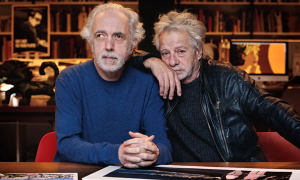
Home » Jazz Articles » In the Artist's Own Words » Steve Khan: The Making of "Parting Shot"
Steve Khan: The Making of "Parting Shot"


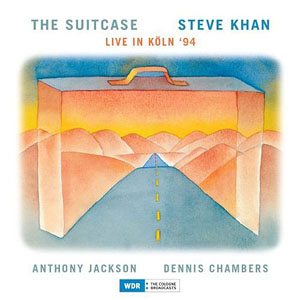
For all I know, this recording could well be my own parting shot. I can't really envision a way that I would be able to again produce such a recording, just as I had to do for The Green Field (2005) and Borrowed Time (2007). After the latter recording, The Suitcase (2008) came along as a bit of a miracle, it only served as a distraction from having to think about my musical future. For the first time in as long as I can remember, when Borrowed Time concluded I really did not have a clear vision of what was to be next. In the past, even while completing a recording project, I had always seen what was coming. To now have that vision be completely vacant seemed so strange to me. And time kept passing, and passing, and passing, and nothing changed. I had no new music, and really wasn't thinking about other music to interpret. In short, I was lost, and suddenly, it was 2010.
And then, on a day like so many others, an email arrived via the Contact Steve page from my website. It was from an old love of mine, one from the distant past, and thus began a series of inspired communications, exchanges about our lives, philosophy, and somehow, her enthusiasm and positive energy served to motivate me to see a direction, and to attack going after it. I realized that the one area of the jazz idiom where I am all by myself, as a guitarist, is the sub-genre of Latin Jazz. None of my esteemed colleagues are involved in this area. And so, I began to assemble music, and compose new music with this in mind. It wasn't long before I was sitting here with 9 pieces of music ready to go.
As you will read, two older tunes came back to me, and they were soon included. Ironically, there actually was a title tune, "Parting Shot" but I was never able to record it, because we got way behind schedule on the first day of recording, and I knew that I was going to have to let one tune go. I had hoped to record five tunes the first day, and six on the second. But, we only got four done on the first day due to some technical issues at the studio. So, that night, at home, with Dennis Chambers here with me, we talked, and I told him that I was just going to let "Parting Shot" go. And that was that!
Some of you have already commented to me: "Steve, why no cover art by Jean-Michel Folon this time?" Obviously, my love for Folon's work is unchanged, but I have always wanted to have a cover image by Michel Granger, whom I discovered at around the same time, during the mid-'70s. His work, like Folon's has always had a great social conscience, a global perspective, and I thought that Granger's allusions to the fragile condition of our planet might represent a "parting shot" from the earth to all of us as its inhabitants. So, I chose one image for the USA/European releases, and another image for the Japanese release.
In my liner notes, I wrote about the fact that, it seems that most average music listeners are not capable of listening to too much cowbell. Why that is, I'm just not certain. But, for me, I'm really thrilled to now be able to present this collection of songs to you all with my fantastic band mates: Anthony Jackson, Dennis Chambers, Manolo Badrena, and Marc Quiñones and Bobby Allende.
And so, here are my Personal Reflections for this recording:
[1] Chronology (Ornette Coleman)(4:17)
Reflecting back to my college years at U.C.L.A., between '65-'69, the period of greatest discovery for me, I was buying LPs at an alarming rate ($2 per LP), and trying to digest and assimilate everything that I had heard. After having stumbled upon the music of Ornette Coleman and, soon after, falling in love with his tune, "Blues Connotation," I tried to buy every other LP that I could find. One of those new LPs for me was, The Shape of Jazz to Come(Atlantic), which had been recorded on May 22nd, 1959. Obviously, "Chronology" was recorded well before "Blues Connotation."
 But, the bigger question became just how could I interpret this great piece of music in a true Latin style? So, I immediately consulted with the authentic Latin grooves that the great Marc Quiñones performed on his Audio Sampling CD for LP Latin Percussion, recorded in 1995. I found that his Songo groove was perfect for this tune. And so, when I was fortunate enough to have the brilliant Rob Mounsey make the demos for me, we used Marc's Songo. However, the greater challenge for me was, how could I maintain a healthy respect for all the Latin traditions, and the clave, and still embrace the looseness, the spacey-ness, the zaniness achieved on all the various Eyewitness recordings? I hoped that this could be done.
 "Chronology," from a melodic perspective, gives one the feeling that it might be a version of some kind of "rhythm changes" tune. But, of course, it's not really approached that way by the original quartet at all. I decided to transcribe the first [B] section that Ornette improvised on the original recording. As I had already transcribed the bass, as Charlie Haden had played it, the improvised melody did not seem to "make any sense" with the harmonic indications of the bass notes. Yes, it sounded great when they did it, but I had no confidence that it would achieve the same affect if Anthony Jackson and I played it that way. In the key of F major, one might expect that a "rhythm changes" bridge would cycle through the following chords: A7-D7-G7-C7. I suppose one could say that Ornette's first lines might indicate a sense of Eb7, which is the b5 substitute of A7, but, after that, things became very fuzzy. So, I just tried to make sense of it all in a way that was musical for me. And that's what you now hear the two times that [B] appears.
For the recording, we only had two rehearsals. The first just included Anthony Jackson; Dennis Chambers; and Manolo Badrena and myself. As Dennis felt that this was best for him, I was fine with that. The second rehearsal, which took place the day before the two recording sessions, Marc Quiñones(timbal) and Bobby Allende(conga) joined us—and it was then that the music began to work its way into its final recorded form.
As we played through all the pieces, I wasn't at all certain that my ideas for just how this Eyewitness meets Latin music concept could work would, and, in fact, become a reality. In the end, those ideas changed greatly—as I simply took the suggestions from everyone, but especially from Marc and Bobby. The key element to executing the pieces in performance while recording would be just how I could cue us all into the next section while soloing. The layout of Studio "A" at Avatar Studios, here in New York City, is certainly workable, if everyone is willing to sacrifice a little for the sake of the group sound, and, perhaps, above all, to create good sightlines between Anthony; Dennis and me. This is crucial. Of course, right away, as soon as Anthony walked in, he refused to play the way James Farber, our engineer, had configured his iso-booth, which was the best possible solution, given that Anthony likes to "feel" his amp next to him. But, Manolo would be in the iso-booth behind him, and so, when Anthony chose to reconfigure the booth, with his amp now facing directly at Manolo's booth, it meant that the bass would be leaking all over Manolo's tracks. And, worst of all, it meant that Dennis and I could not have clear eye contact with Anthony. This made me feel horrible—and, I felt that my concept of just how we could pull-off the "looseness factor" was rapidly "floating out of the window."
I tried a stopgap solution by making a platform for myself, constructed by stacking the gobos on the floor in my iso-booth and thus elevating my position so that I could see Anthony a bit better. But, this was not adequate! And so, on the first day, in order to try to accomplish getting five tunes recorded, I decided to go after the tunes that would be, in my view, the easiest to perform under these conditions. We did however record "Chronology" second on the first day. After that, I had to make that big decision about how to best finish Day #1.
 In some aspects, the end result was better than I had anticipated given the conditions. And so, this piece opens the recording, because it does reflect the tone, the mood, and the attitude that we were trying to present. When we were recording, my sense was that the performance was long, perhaps in the 7-8 minute area. But, when we were listening to the playback in the control room, and I asked our assistant engineer, Rick Kwan, how long the track was, he responded by telling me that it was barely 4-1/2 minutes, and I couldn't believe it. Anthony felt the same way as me. It's remarkable how your perception of the passage of time can be skewed when you're under tremendous pressures. And now, realizing that the tune is but 4:17? Well, this is probably the shortest track I have ever presented on a CD of mine!
 I should note that the nature of the bass part, and its relation to Dennis' kick drum in the intro, is a most respectful nod to Issac Delgado's Salsa classic, "Deja que Roberto te toque," a tune which I just love to death!
[2] Los Gaiteros (Steve Khan)(6:02)
"Los Gaiteros" was originally composed for what would have been my third CD with the Caribbean Jazz Project, which also featured Dave Samuels and Dave Valentin. We were scheduled to record in early 2002, but personal and musical problems with Dave Samuels caused me to quit the group before I could record this tune. I always liked this one, because the piece is written in 3/4, but the bass tumbao makes it sound as though it is in 4/4. Anthony's bass, linked to Dennis' foot makes this seem completely "normal" when it is obviously not! After much thought, now I believe that I should have written the tune out in 6/4.
The title is, perhaps, a word that I made up in tribute to the great musicians from Venezuela, oftentimes from Maracaibo, or that vicinity, who play a style, a genre of music called "gaita," which most Venezolanos associate with the Christmas holidays. To me, rhythmically, gaita is often so complex that I have no idea where "one" is, nor what else is going on. I remember once asking my dear friend, Rafael Greco, a master of this music, to build a track for me from the bottom up, to show me just how "gaita" is constructed, from a rhythmic perspective. As he created the track, I was following along pretty well—but, when he began to place the vocal, I was, as usual, completely and totally lost. So, this piece is my most humble tribute to the musicians who play this kind of music so effortlessly. I admire them greatly!
When we began to rehearse this tune, Marc Quiñones begged me to please record this tune last—he just could not get comfortable with what was going on. It all felt so backwards for him. In addition, at that same rehearsal, Bobby Allende told me that he didn't want to solo over the last solo section created for conga. Needless to say, that was about the last thing that I wanted to hear. However, when we recorded this tune, at some point on Day #2, for some reason, all the players assembled found something within, and this performance is now one of my personal favorites on the entire recording. I have always told people, when they have asked, that if the music I play has "mood" and "attitude" then I can be happy with the results. This piece, in its way, has plenty of those two elements! In the end, both Marc and Bobby played beautifully in all the ensemble sections, and contributed great solos as well.
I must also note that, on this tune, we have the first appearance of Rob Mounsey's orchestration talents, which are vast. Initially, I just asked him to enhance the guitar harmonies of the [B] sections where they appear. Yet, he added a few other wonderful touches here and there as well.
[3] Change Agent (El Catalizador) (Steve Khan)(8:15)
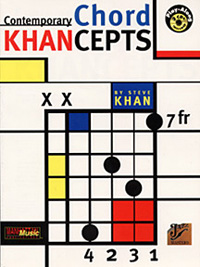
This piece was originally completely improvised, and appeared on the Red CD that is part of the package for my book, Contemporary Chord Khancepts. I liked the melodic content of the chordal passages and the attitude so much that I decided to make a full piece of music out of it. Finishing it, just like everything else on this recording was a great struggle for me. The little breakdown section, which appears as an interlude, was inspired by something similar on the title track from Cal Tjader's influential recording, Soul Burst (Verve), recorded in 1966, and that recording featured a very young, but exceptionally polished, Chick Corea.
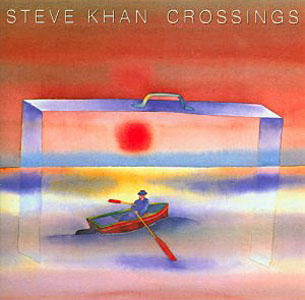
 It was always my plan to record this tune first, because I knew that it would give a clear group picture, and I would know immediately if we had the best possible recorded sound for the chordal passages, and the single-note line passages. One of the reasons that I wanted to work again with recording engineer James Farber was that the sound that he created for Crossings (1994) remains as my most beautifully recorded CD. When I heard the rough mixes of this tune, I knew that we would be relatively close to that sound. However, there's a huge difference between the old Skyline Studios on the 6th Floor, and Avatar Studio A."
 Of course, I had a very definite structural plan for this tune, with the idea being that, after the solo section and a final "breakdown" section, we would play both parts of the melody, but only one time each. Then, the piece would fade out as I returned to soloing over the Bb blues form. Well, Bobby Allende had other ideas, and suggested that, after the final melody section, we should just play the breakdown figure, and Dennis would solo on the way out. I can't say that I loved that idea—structurally speaking—but I've learned to listen to my band mates, and I just went with "the flow." What you now hear is exactly what happened. As always, Dennis played a great solo, and I left the performance completely intact. As you can hear, there is no fade.
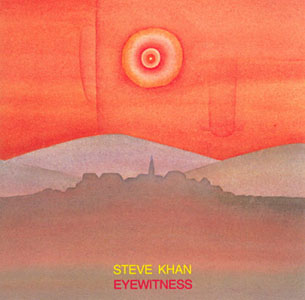
My impression now, after some listening to the performance, is that this piece best exemplifies what can happen when the looseness of the Eyewitness concept of music-making meets some of the most important elements of Latin music. You can hear Manolo's spirit floating/darting in-and-out of the texture—just as it should, and as it has always been in the past. You can also hear the interplay, the level of communication between Anthony, Dennis, Manolo and me—this, of course, is hugely important!!
On a side note, and this rarely, if ever, happens, the great John McLaughlin stopped by the studio that day to say "Hello!" to everyone, as he had been in town to tape a TV performance w/ The Roots on Jimmy Fallon's show. I think that the last time that I saw John was somewhere in Europe when I was touring with Anthony and Dennis.
[4] Bye-ya (Thelonious Monk)(4:30)
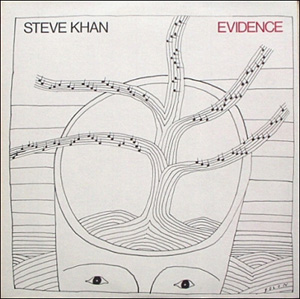
When I first recorded this tune on Evidence in 1980, I had been inspired by Monk's version that appears on his Monk's Dream recording, from 1963. But, early in 2010, when I writing a piece for my website on Joe Zawinul's interpretation of "Little Rootie Tootie," I discovered that I hadn't been aware of the original recorded version of "Bye-ya" which appeared on Monk's first recording for the Prestige label in 1952, The Thelonious Monk Trio. But, what was most stunning for me about this "discovery" was that drummer Art Blakey approached the tune with a decided Latin feel. Later in 2010, when I was certain that my recording would be totally committed to Latin music, I knew that this was a tune that I wanted to interpret again, but this time from a different rhythmic perspective.
I had made the original demo for this piece using Marc Quiñones' "plena" groove from his Latin Samples CD. But, when Marc and Bobby arrived for the rehearsal, and this tune was called, he told me that he thought that it would be better if we played it as a "bomba." Once again, I just gave in to the experts and had to let go of what I had thought that we were going to do.
As I often try to do when interpreting Monk's music, I take the given elements and try to make a solo format that feels comfortable to me, but at the same time, is also faithful to the composition, just not as rigidly tied to all the elements. I just don't believe that any soloist has to become a "prisoner" of the solo form. So, I expanded the [A] sections, though the [B] sections remain exactly as Monk conceived them. Also, during the [A] sections, Marc makes a series of accents, catching Rob Mounsey's pizzicato string hits, and this touch reflects the accents contained within Monk's composition.
 Emerging from the guitar solo, there's a brief 16-bar reprise of the intro, over which Dennis Chambers plays a fantastic solo. Of course, looking back, I wish that this had been much, much longer!!!
 [5] María Mulambo (Steve Khan-Manolo Badrena)(10:20)
I don't know where I came up with the idea that James Brown's "Doin' It To Death" groove could be combined with an Afro-Cuban 6/8 feel—but, I was confident that this could work. However, I knew that, in order to make it feel right from both perspectives, I would have to have two rhythm guitar parts playing. So, knowing that, I knew that I would have to create a track against which the band would perform live, and we would not lose the improvised element that is the most important element of all.
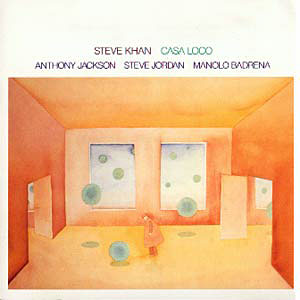
So, along with the help in pre-production of the great, Rob Mounsey, the track was constructed. At that point in time, the only missing element, but a crucial one, was the fact that Manolo Badrena had not yet created the chants that would form the all-important vocal element of the piece. Anthony Jackson, Manolo and I have been involved in these "extended song form" pieces since 1983, when we composed and recorded the music that appeared on Casa Loco.

Eyewitness, from left: Manolo Badrena, Anthony Jackson, Steve Khan, Dennis Chambers
Perhaps the first such piece that we experimented with was the title song from that CD, "Casa Loco"—and yes, the title is extremely poor Spanish. It should have been titled "Casa Loca"—but I knew a lot less about the Spanish language then. That piece clocked-in at 12:32, and includes one of the great, great drum solos ever recorded. It was played by Steve Jordan}.
Some years later, we finally recorded another series of songs in this style for the CD, Public Access (1989). Those songs became: "Sisé," "Kamarica," "Botero People," and "Mama Chóla." All featured the voice and lyrics of Manolo Badrena, plus extended soloing from the group.
To put together such a piece of music requires a great deal of time and patience, and, in the world, as it presently exists, both of those commodities are in short supply for me. Trying to work with Manolo, to create what is needed from him, becomes more difficult with each passing year. But, that stated, I am thrilled with the results, and very proud of what we have now created with "María Mulambo." Why did Manolo's inspiration lead him to write something with primarily Brasilian Portuguese lyrics? I have no idea, none at all. But, when he presented me with various vocal and melodic ideas for these sections, this was the one that spoke to me! So now, we have a piece of music that joins together: James Brown; Afro-Cuban 6/8; the wondrous music of Brasil; and, of course, the atmospheres of Eyewitness. Put 'em together and what have you got? "Bibbidi-bobbidi-boo"!
There are many great percussionists in this world, a few of them can play freely, and float in-and-out of any music—and, of course, there are great vocalists of all types, and of all nationalities in this world—but, to find all of this, and in one person, that is not such an easy task. Had I never met Manolo? None of this would have been possible. The results are certainly not everyone's taste, but this is, for me, one of the signature musical moments on the recording.
Though everyone had heard the demo of this tune, on which Rob Mounsey sang the vocal parts, no one, except me, had actually heard what Manolo was going to sound like, and do, when the "red light" went on. His adventures in percussion, and his shouts of encouragement were all essentially recorded live as we played together on that Sunday, November 7th, 2010. But, his final vocal performances of the crucial melody sections were not performed and recorded until Monday, November 15th, 2010 at Rob Mounsey's 333 Studios in downtown New York City. It was then that the piece finally began to round into its now finished shape. I hope that everyone will take the time to go on this musical journey with us.
 [6] Influence Peddler (Traficante de Influencias) (Steve Khan)(10:19)
 I have had the basic germ for this piece, the intro that you now hear, rumbling around in my head for probably well over 10 years, and I just could not somehow hear where it was supposed to go. But, during March-April of 2010, when I finally dredged myself out of a really dark emotional place, in which I had found myself for a couple of years, I finally found the courage to complete the tune.
The intro section contains a couple of rhythmic oddities, which I know take the tune out of clave, but, I just felt that, after openly recognizing that fact, Marc Quiñones and Bobby Allende would just find a way to deal with it, and not bust my balls about it—at least not too much! In the end, this tune is one of three cha-cha-chas that appear on the recording.
I suppose that it has more of its rhythmic and harmonic roots in the world of R&B, more than in the Latin idiom, or jazz, for that matter. And, like much of the material that Eyewitness has always chosen to play, the piece wanders and drifts into differing moods and attitudes.
 When I had written the portion that became letter [C], I realized that the movement of the top note of the guitar voicings would not be enough to carry the full melodic weight of the section. So, I then composed, what some would refer to as, a "real" melody line to be sung by a vocalist. Of course, my initial thought was that Manolo Badrena would sing the part. But, thanks to yet another miracle of the Internet Age, I had become "friends" with Andrés Beeuwsaert, who plays piano and sings as part of the wonderful Aca Seca Trio from Argentina. The more that I listened to the vocalese section of this piece, I thought that maybe Andrés would be a great choice for someone to sing it. So, via email, he and I spoke about this idea, and I sent him an MP3 of the original demo. After listening, he wrote that he would love to participate, and that he wanted to have his "novia"—Tatiana Parra, a great singer from Brasil, sing the part as well. Knowing her music and singing style too, I thought that this would be wonderful. How much luckier could I possibly be? And so, they sang to a rough mix, and then sent me their tracks via the wonders of the Web. Simply put, it's a great honor for me, and an extreme musical pleasure, to have their spirits present on this recording.
 Like "María Mulambo" this tune is also another adventure into the world of the extended song form. I don't know that Andrés and Tati envisioned themselves as part of some 10-minute epic, with long drum and percussion solos at the end, but that's what the piece became. In truth, when I was laying out the format for the tune, I had always envisioned the ending as a long drum solo for Dennis Chambers—but, at the last moment, at the recording session, Bobby Allende suggested that the solo section might be better served if the solos alternated between Dennis; Marc and Bobby. And so, as an exercise in my newly developed flexibility as a person, I went along with this concept, and that is what you now hear.
In two distinct ways, "Influence Peddler" also features the wonderful orchestration touches by Rob Mounsey. During the percussion solos as the harmonic movement constantly shifts amidst a mysterious guajeo, I asked Rob to accentuate the movement in the lowest voice with great subtlety as the sections moved along. He did this beautifully, starting out very simply, and then adding a voice each time as the sections progressed.
In another very small but important touch, I asked Rob if he could give me some string tremolos and trills, but just over the bars during the melody section and the guitar solo where the Abmaj7#4 chord appears. In a very obscure and off-handed way, this orchestral device is actually a tribute to Michael Brecker and Joe Henderson.
I always remember that, during my earliest years here in New York, each time I played with Mike, and any major 7#4 chord would appear in any tune, we would look at one another and Mike would then launch into his various Joe Henderson tenor sax impressions, born of his immense respect for Joe's Blue Note recordings. These "impressions" never failed to make me smile and laugh. Now, when I hear these very brief Lydian moments during this tune, I get that same feeling, and that warm and familiar smile just reappears.
[7] When She's Not Here (Cuando Ella no Está) (Steve Khan)(7:43)
This is "the ballad" of the recording, and it is performed with the Latin bolero rhythm as its foundation. My hope was that Dennis Chambers could utilize his beautiful skills with brushes to give it a more elastic, jazzy feel. People have told me that they hear the influence of Clare Fischer in this tune, and I could not be more pleased about anything, because, if his influence is there, it was purely unconscious. To me, this means that his harmonic style has now firmly rooted itself in my being. The changes are based upon one of my favorite standards.
Once again, for whatever reason it might be, and we recorded this piece on the first day of recording, November 6th, 2010. "When She's Not Here" also captures the best of the sense of Eyewitness music-making, blended with everything that I have come to love so much about Latin music. To have written something with the specific intention that it would be a bolero is very gratifying for me.
 As the composition and the arrangement slowly began to take shape, I thought that this might be a great opportunity to put the fantastic orchestration talents of Rob Mounsey on display. In the end, it is a bit of an insult to reduce such an orchestration to the more familiar term, at least amongst musicians, of "pads." The voicings and the feeling that they create are so warm and spectacular to me that, while listening to a final mix at the studio, when the strings reentered at [B] of the solo section, my eyes actually spontaneously welled up with tears. This took me completely by surprise. Though having an orchestration is almost antithetical to the usage of space and silence, which has become a "calling card" for Eyewitness, somehow, for this recording, these textures just seemed to make perfect sense to me. I hope that for those who choose to listen, they will come to feel the same way.
 Already, friends and acquaintances have speculated as to just who "she" might be. Well, I can tell you that the inspiration for this ballad is not based upon one female figure that has graced my life, but it is a composite recollection. As one arrives at this latter stage of life, there is always time, sometimes too much of it, to reflect on everyone who has passed through one's experiences, and for many of these glorious women there will always exist a great sentimentality attached to those very special shared moments. For me, it matters not whether the parting of ways might not have been ideal, because the warmth of my feelings for them will always remain.
[8] Blues Connotation (Ornette Coleman)(4:52)
As I previously stated, during my college years at U.C.L.A. between '65-'69, I was buying LPs faster than you can imagine, and trying to digest and assimilate everything that I had heard. Amongst those early purchases was Ornette Coleman's This is Our Music (Atlantic), which was recorded on July 19th, 1960. "Blues Connotation," which opens that recording just hit me right away, and has always stayed with me. Perhaps just because of the word, "blues"? At that point in time, I was just happy that I could play the head along with the musicians on the album.
When we started Eyewitness, with Anthony Jackson, Manolo Badrena and Steve Jordan in 1981, this was one of the few non-original pieces of music that we chose to play. It wasn't long before Anthony, Steve, and Manolo had transformed the piece into something uniquely personal. We never had the chance to record it. So, with an "Eyewitness Reunion" of sorts, I felt that this was the perfect moment to try and finally record our interpretation. But, what you now hear is very different from the way that we interpreted the tune in 1982.
My original concept for the Intro to the piece was that Dennis would lead us into the first figures by playing a long, extended "solo" dialogue with Bobby and Manolo, and perhaps even Marc. But, once again, Bobby spoke up and, what could have been two-three minutes of percussive improvisation became 16-bars—and that was that! I have thought about just why this happened—and how I could possibly have ended-up with three tunes under five minutes—and what make the most sense to me now is that so much of the musical lives of Marc and Bobby have been involved with the best Salsa recorded and played during the past two decades, and virtually all of those wonderful songs, all rooted in and made for dancing, are compact and usually around 4:30. So, keeping things concise is just a part of their musical point-of-view. Of course, I am the complete opposite, and I like it when things wander and there are dips in the flow and intensity of the music.
 Another new element occurs after the solo section. I wanted to have an ensemble
 Over the years, I have approached playing this tune in a wide variety of ways, but always in a way that keeps "the blues" as the main frame of reference. Because an adherence to the clave was essential for this group of musicians, I tried to come-up with a different way to approach the basic outposts of blues changes. The original idea was that I would make my way through the I7-IV7-V7-I7 chord movements, but in a very deliberate and elongated manner. However, when at the recording session, Anthony sabotaged the sightlines so necessary to doing this in our usual manner that the elasticity factor that I always seek was rendered hopeless. And so, just as it happened on a few other pieces, I simply had Marc Quiñones cue the sections with his timbal set-ups after I had cued him. The idea was that all five harmonic areas would be extended and free, but, the end result was that the Eb7(IV) area, and the returns to Bb7(I7) both became 16-bar sections. This was not my vision at all. What you hear now is that the first Bb7 section and the F7(alt) pedal are the areas that are free and open, and without restrictions as to the amount of bars.
As you will hear, the F7 pedal section becomes a magical Manolo Badrena moment, and here he presents his vision of just what kind of pictures a great percussionist can paint with his imagination. In the end, it is one of my favorite moments on the recording, because it is so uniquely Manolo. I am going to hope that it becomes something special for you as well.
 Like, "Los Gaiteros," this tune was originally composed for, what would have been, my third CD with the Caribbean Jazz Project which, again, featured Dave Samuels and Dave Valentín. In all, I had written four new tunes for the group, and two of them, "El Faquir" and "Face Value" were finally recorded in 2007 for my Borrowed Time CD. With the Latin feeling being a part of each and every tune on Parting Shot," I knew that this would be my one and only chance to interpret this piece in my own way.
 Because of the presence of both vibes and flute in the CJP, I had written a melody in a completely different style. So, for this recording, I put that [A] section melody aside, and wrote something much more guitar-oriented, and more blues-oriented. The main mood and attitude is set by a "groove" and "feel" that I had been exploring at home on my acoustic steel-string guitar, and eventually, I brought it in to Rob Mounsey to see what we could do with it around the time, when we were assembling music for You Are Here, in 1998. That original jam/demo helped to form the basis of what you now hear. When I composed the original version of this tune, I made a demo in Caracas, Venezuela with the help of my dear friend, and master musician, Rafael Greco. We had such a great time doing the demos of the four tunes for the CJP—and we laughed like crazy as we inserted our own "fantasy timbale" fills in various spots.
< Previous
Traverse
Next >
Hot Tuna: Steady As She Goes
Comments

Tags
Steve Khan
In the Artist's Own Words
Michael Bloom Media Relations
United States
Dennis Chambers
Anthony Jackson
Manolo Badrena
Ornette Coleman
Charlie Haden
Issac Delgado
Dave Samuels
Dave Valentin
Cal Tjader
Chick Corea
john mclaughlin
Joe Zawinul
Art Blakey
James Brown
Steve Jordan
Michael Brecker
Joe Henderson
Bernie Williams
Sergio Mendes
Kenny Rankin
For the Love of Jazz
 All About Jazz has been a pillar of jazz since 1995, championing it as an art form and, more importantly, supporting the musicians who create it. Our enduring commitment has made "AAJ" one of the most culturally important websites of its kind, read by hundreds of thousands of fans, musicians and industry figures every month.
You Can Help
To expand our coverage even further and develop new means to foster jazz discovery and connectivity we need your help. You can become a sustaining member for a modest $20 and in return, we'll immediately hide those pesky ads plus provide access to future articles for a full year. This winning combination will vastly improve your AAJ experience and allow us to vigorously build on the pioneering work we first started in 1995. So enjoy an ad-free AAJ experience and help us remain a positive beacon for jazz by making a donation today.

Giveaway

Eligible winners: 15
Days remaining: 10
Days remaining: 10