Home » Jazz Articles » Interview » Roberta Piket: Making a Difference
Roberta Piket: Making a Difference
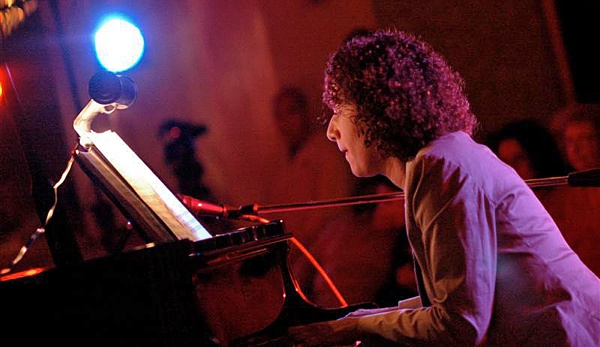

If you're a jazz musician, and you've immersed yourself in it and mastered the music, then anything you do as an artist is going to be informed and influenced by that tradition. My attitude is that if you're a jazz musician, you're playing jazz.
All this is amply manifest in her latest recording, Sides, Colors (Thirteenth Note Records, 2011), where she supplements her usual trio format with an artistic combination of strings and horns, in beautiful arrangements of standards and some originals by herself and long-time associate/drummer, Billy Mintz. Insightfully organized into two sets or "sides" on one CD, reminiscent of the two sides of vinyl LPs, the music ranges from standards and ballads to far out harmonic changes and postmodern expressions of chaos and complexity.
All About Jazz: We'll start out with the "desert island" question. Which recordings would you bring with you to that island? The idea is to respond quickly with whatever comes to your mind.
Roberta Piket: Oh, you mean sort of like a nuclear bomb shelter scenario where you have to make a decision in a hurry! [laughter.] OK. Herbie Hancock's Speak Like a Child (Blue Note, 1968). Bill Evans' Paris Concert (Elekta, 1979).. That was the one he did just before he died, with [bassist] Marc Johnson and [drummer] Joe La Barbera. Some people don't like it, but I love it. Bartok's Concerto for Orchestra. Arnold Schoenberg's Transfigured Nights. All of Beethoven's Symphonies. Elvis Costello's Greatest Hits. And Miles Davis' ESP (Columbia, 1965).
Musical Influences
AAJ: Which jazz players would you say have had the greatest influence on you?
RP: The first jazz pianists I got into as a teenager were Thelonious Monk and Bill Evans. I think that's because in so many ways they were accessible musically. They're both geniuses in their straightforward simplicity. A jazz writer once commented about Evans that "A child could play anything Bill Evans played, but a child couldn't have created it." So as an adolescent, I found him to be quite listenable. But, to go back further, the first time I self-consciously listened to jazz, I heard a trio album with the pianist Walter Bishop, Jr. My brother introduced me to that recording. As soon as I heard it, I knew I wanted to play jazz piano. Later, I absorbed and transcribed solos by all the greats. I tried to absorb things from pianists of different eras, so I transcribed a lot of Herbie Hancock, Bill Evans, and Wynton Kelly, But I also transcribed Earl Hines' solos. I tried to get a good foundation in the early pianists as well as the later ones. Then, of course, I think of Chick Corea and, certainly, McCoy Tyner.
In addition, I was always learning classical music, and when I started studying with Richie Beirach in my twenties, he solidified my interest in blending jazz with classical harmony, because he was already integrating them. I always had an ear for more contemporary harmony, but Richie helped me to find my way through classical influences such as Bartok, Schoenberg, Webern, Berg. And, of course, among jazz players, there was Wayne Shorter, Miles Davis, as well as the various musicians I've worked with.
AAJ: You mentioned Monk. Do you ever play his tunes? I don't recall hearing you doing any.
RP: Just last week, I was guest artist on Piano Jazz on NPR, for the third time, with Jon Weber subbing as host for Marian McPartland, and I played a solo version of "Monk's Dream." Monk's tunes are great vehicles, because you can go anywhere on them. You can play them slow or fast, inside or outside. Monk is universal. Of course, he was controversial when he first came on the scene, but now he's considered one of the giants of the music. Whether straight ahead or avant-garde players, everyone can agree on Monk.
AAJ: Monk's music is idiosyncratic yet, at the same time, most musicians can mesh with him regardless of their own style, and his music is adapted to so many diverse formats today. There's a famous duet album with Gerry Mulligan and Monk, and they're playing totally differently, yet it blends perfectly. Monk had such an ear that his music was in synch with many different genres. But, yet, Monk is Monk.
RP: Yeah, I think great composers are universal. As a player, Monk was a bit quirky, yet there's something very straightforward about it that draws you in.
AAJ: Among your early influences, I understand that your father, Frederick Piket, was a composer who grew up in Vienna, and came to the U.S. by way of Spain to get away from the Nazis in the 1930s.
RP: My father was born in 1903, grew up in Vienna, and then went to Berlin to study with a composer named Franz Schreker. Schreker and Arnold Schoenberg were the two composers with whom everyone came to Berlin to study. My father was one of his last students, because the Nazis forced Schreker out of the school, and my father also had to leave Germany. He stayed in Barcelona for a number of years, and then he was able to immigrate to the U.S. in the early 1940s. He met my mother, who was 22 years younger than him, and they married in the early 1950s. He struggled along as a composer, teaching at the New York College of Music and later at NYU. He made some headway, having some of his symphonic works performed by the New York Philharmonic under Dimitri Mitropoulos. He was also the music director for a couple of synagogues, eventually spending the last twenty years of his life at the Free Synagogue of Flushing in Queens, so he became interested in synagogue music, which at the time was musically conservative, using traditional Jewish modes called
AAJ: Do you yourself have any interest in liturgical music?
RP: No, not specifically. My father was a linguist and spoke English, German, Spanish, and Latin fluently, and picked up Hebrew. I myself never had that kind of interest, other than learning enough Hebrew for my Bat Mitzvah. But I have set texts to music. A few years ago I set some poems by Nabokov to music. I used a classical singer, a violinist, and a pianist. We performed it a couple of times. But I don't feel I have the knowledge or background to set liturgical texts to music.
AAJ: So, what influence did your father have on you musically?
RP: My father passed away when I was eight years old. He gave me my first piano lessons. I was taking violin lessons in school, and he didn't like the way they were teaching me, so he started teaching me violin. But I don't remember anything about how to play violin now.
AAJ: What other musical exposure did you have back then?
RP: After my father passed away, I would go up to his study, and he had a huge record collection. Listening to them, I absorbed a lot of classical influences. He also had a large collection of scores, which I would check out, and sometimes I'd go to the library as well. I grew up in Queens, NY, but I went to high school in Manhattan at Hunter College High School, which didn't have much of a music program. Sometimes I'd go to the Lincoln Center Library and check out both their classical and jazz scores. I don't have a lot of formal training in arranging, other than the standard courses every jazz major takes in music school, but maybe some of that early score reading sunk in subconsciously. Also, my father had a huge book collection, which had a big influence on me intellectually and spiritually.
AAJ: How did you first become interested in jazz as such? You were born in 1965, so you came of age in the 1970s and 1980s.
RP: By that time, fusion was coming in, and I got interested in groups like Weather Report and Brand X, the latter of which no one remembers. Phil Collins was their drummer. It was a really eclectic time, and thank God nobody was debating whether it was jazz or not, it was just about great music.
AAJ: At the time, free jazz was coming into play, and you recently did an artist's residency with one of its innovators, Sam Rivers.
RP: I got to know Sam in 2006 during a residency at the Atlantic Center for the Arts. He's not only an amazing musician, but also a remarkable intellect.
AAJ: It just occurred to me when you mentioned your pianist influences, you notably left out Keith Jarrett and Cecil Taylor. How come?
RP: Well, I got into Keith Jarrett a little later. I never transcribed or studied him as much as I did the others. Of course, Keith Jarrett influenced everyone who came after him, including me, but I wouldn't say he had a major stylistic or spiritual influence on me. I've listened to Cecil Taylor, and again I didn't study his work intensively, but I was certainly influenced by it. I love Cecil and have many of his records.
Becoming A Jazz Pianist: Turning Points
AAJ: When and how did you first start playing jazz piano seriously?
RP: My brother is about 11 years older than me. He was studying jazz, and he introduced me to a recording by Walter Bishop, Jr. It was a trio album called Speak Low (1975), on Muse, with Jimmy Garrison on bass. When I heard that record, I said, "Wow, I really want to learn to play jazz piano!" I loved the sound of it.
AAJ: And of course, now you have your own trio, which may have come out of that experience.
RP: When I studied with Bishop, I was also studying classical piano with Vera Wels, when I was about 16 or 17, trying to learn everything at once. That was when I got really excited about music.
AAJ: Let's talk about your groups. Billy Mintz is your regular drummer. Your bassists seem to have changed.
RP: Everything's changed. I had a couple of other drummers before Billy, but he and I have been playing together for seven or eight years.
AAJ: You've also worked quite a bit for other musicians and groups. Were there any groups with which you cut your teeth?
RP: When I came back to New York, after graduating from New England Conservatory, it was the late eighties, the beginning of the "young men in zoot suits" era of jazz. There were a lot of negative preconceptions about women musicians, and it was very hard to get taken seriously as a female musician, so I didn't have a lot of work offers. I had to make my own opportunities. I always had gigs, but I didn't have the connections in the "old boys' network." I remember once, I filled in at the last minute for another pianist with a very, very famous saxophonist and composer. After a couple of tunes, he said to the audience, "When I was coming up, we used to say, 'She plays good for a girl.' But when you have players like Roberta, you just have to say, 'She plays good!'" And after the set, he came up to me and said, "How come I never heard about you before?" I smiled and said, "Maybe it's because I'm a girl."
So, because I wasn't part of that "boys' club," I made my own opportunities. And it's probably because I had to be a leader back then that I'm a good leader today
AAJ: When did you start your first group?
RP: The first group I had was a quintet, and maybe I was hiding behind the horns a bit. The first record was on Criss Cross. It was quintet, quartet, and trio, Unbroken Line (1997). I wasn't ready to start a regular trio until later. Now I feel completely in command of the trio format. But a bassist who was sort of a mentor to me at the time told me that if you want to get better, you should play with musicians who are better than you. So I got to play with some great musicians because I asked.
AAJ: Tell us about your recent and current trio.
RP: Well, Billy Mintz and I first met around 1998 at a gig with Joey Sellers, a great composer and trombonist who later moved back to California. Billy had been Joey's drummer when he'd originally had the band on the West Coast and Billy came to New York to do a few gigs with Joey. I was subbing in the band. I remember the night well, because Dave Liebman was the guest artist, and it was the first time I played with Lieb. Liebman turned around to me and said, "You have big ears!" That made me feel really good. I noticed Billy, because the room was very dark, and yet he was wearing sunglasses; he seemed very strange. But I got to know him a bit, and eventually he decided to stay in New York.
At first we didn't seem completely musically compatible somehow, but around 2003, it started working better and we've played together regularly since. He's a very individualistic player, with his own concepts and sound, so it took a while for us to groove together, but we developed a really amazing connection, and we can have any bassist come in for us, like when we're on the road, and because we're so strong as a duo, any bassist can just fall in with us.
But our regular bassist, who's on Sides, Colors is Johannes Weidenmueller. He's great. He has a big sound—great quarter notes—and is able to play more open forms as well. He takes an amazing solo on "Make Someone Happy," melodic and swinging. On tunes like Billy Mintz's "Shmear," the interplay among the three of us is just beautiful, and he is a very unselfish player. He's a great asset in any situation he's in, which is why he's become successful.
AAJ: Weidenmueller is from Germany?
RP: Yeah. He was born in Heidelberg, I think. His website is www.bassitis.com.
AAJ: I'm thinking of a couple of other transplants from Germany, both of whom are terrific. There's composer/arranger/band leader Chris Walden and bassist Martin Wind. I first heard Wind on a recording date with the great pianist Don Friedman.
RP: Friedman is a wonderful player. He's on another level of maturity from most of the players in New York. Martin lives near me in Teaneck. I moved here two years ago from Brooklyn.
AAJ: Rudy Van Gelder's studio is somewhere in that neck of the woods. Baroness Nica von Konigswarter lived in Weehawken.
RP: There're a whole bunch of great bass players who live in Teaneck. Rufus Reid, Ray Drummond, Mike Richmond all live in Teaneck. Rudy van Gelder is over in Englewood. But, getting back to the German music scene, when I go over there, I often play with Klaus Kugel. He's a phenomenal player who lives in Cologne and plays with everyone in Europe. We have a very open band with saxophonist Roby Glod, who lives in France, and bassist Mark Tokar, who is from Ukraine.
Recordings
AAJ: Let's go over some of your CDs. Pick out a few—I think you have nine as a leader, which is quite an achievement.
RP: I was talking to Richie Beirach a few months ago, and we said how we wished we had time to collect all our old records—and destroy them. But you know, my first recording, Unbroken Line, actually came out pretty well. I had occasion to listen to it recently, and I thought I would cringe, but I didn't.
From left: Roberta Piket, Marian McPartland
AAJ: Sometimes you go back to the beginning, and see things being born, things that came to fruition later. Also, the earlier work has spontaneity.
RP: I always try to keep it spontaneous. One of the side benefits of not being famous is that you can kind of do what you want to and follow your artistic path. But it should be that your most recent work is your best, because you always want to be growing. My latest CD, Sides, Colors, is coming out in March [2011] and Love and Beauty came out in 2006. Love and Beauty is all trio, and I don't think we did anything really free on there. Sides, Colors is more eclectic, and I wrote several arrangements, using winds and strings. Billy did a beautiful orchestration of one of his ballads as well.
The Making Of Sides, Colors
AAJ: Is Sides, Colors on your own independent record label?
RP: I Self Produced it for a couple of reasons. For one thing, few of the record companies do much promotion or advertising these days, so why give a record company control of my music? Secondly, this particular recording was a large undertaking that was almost a year in the making, and the record companies often take a year or two to release, and I didn't want to have any further delays. Also, with the record companies, you frequently have to give up all your rights to the music. I did that in the past and I didn't want to repeat that. That's why I also Self Produced Love and Beauty (Thirteenth Note, 2006). Unless the record company is going to give you a lot of support in terms of publicity and touring, there's really no reason to give away your music.
AAJ: There are many stories from musicians, about recording companies taking control of the creative process and even exploiting the musicians for their own profit. That even happened to top players like Thelonious Monk and J.J. Johnson. I think your spirit of independence is happening more frequently today. Now, you call your company "Thirteenth Note Records." Is that name a good luck charm? [Laughter.]
RP: No, it came more from the fact that we're all looking for that thirteenth note, the one we can't quite find.
AAJ: It's the note beyond the twelve notes in the chromatic scale. I really like that Sides, Colors is organized in two "sides," A & B, suggestive of vinyl LPs. Except that it's on one CD, and you have a lot more time on it than an LP could incorporate. It's just a nice way of giving a nod to those LPs that have meant so much to many of us.
RP: I'm glad you picked that up because a lot of people won't catch it. I should say, first, that Billy Mintz co-produced this record with me. When we were thinking of the order of the tracks, we had difficulty deciding on it. We had so much to get on there, and we were talking about how there was even less room on the old LPs, and you had two sides of about 20 minutes each. So we got the idea to break the large amount we had of about 70 minutes down into two smaller sets, which we called Sides A and B. It's almost like two records in one. Only people familiar with LPs will catch the reference to that.
AAJ: I like the idea of "sets" in a CD. Also, I appreciate your use of a variety of orchestrations with some top musicians coming in at different points. It gives real "punch" to the music beyond the trio format and adds to the variety of ideas and concepts. I know that you had an extended creative process for this album. Could you give us a guided tour of its creation?
RP: It really started a few years ago, after we completed the trio record, Love and Beauty, when I was living in Brooklyn. I've always composed, and I got to a point where I needed to explore some new sounds, so arranging became a form of composing for me. I did some arrangements, and we started workshopping them. Then Billy Mintz got involved, writing an arrangement of "Billy's Ballad." Over a couple of years, we had extended reading sessions at my apartment. Some great musicians came over just to play the music. Then based on what I heard, I would rewrite and fix parts. Meanwhile Billy and I were doing trio gigs, touring every fall, and some trio ideas jelled that way, and there was plenty of time for the music to cook and percolate. So Sides, Colors is not just the result of the year we spent recording it, but before that we were working it over for a couple of years, trying new things.
AAJ: So it wasn't just, "Hey, let's make a recording!" It was really an extended project. The process makes for a very interesting recording, with a great deal of novelty and stimulation. It's unique and exciting enough to perhaps generate interest among the awards committees, jazz journalists, and so on. Hopefully, it will get that kind of attention.
RP: I appreciate your saying that. Another cool thing about the recording is that we did everything live in ensemble in the studio—we didn't overdub the strings and winds (although we did overdub organ and percussion backgrounds behind my piano solo on "Degree Absolute"). But for the strings and winds, we played as a trio while they were playing, so we were reacting to the orchestrations I had written.
AAJ: Did you do several takes of each track?
RP: We did, at most, two or three takes, because after that you start to lose the musicality and flow. I think the music on this CD is so good because we were all there playing together. Johannes, Billy and I were all in the same room. There was no separate bass booth, because Billy refuses to record like that. And it does make a difference, I have to admit.
Stretching The Limits
AAJ: Let's talk about some of the live venues where you have gigs. One is the University of the Streets; that's a really striking name.
RP: Hilliard Greene is a great bassist, and he's curating a series there and asked me to bring in a group. So I chose a free improvisation trio I have with Louie Belogenis and Mintz. I'm also looking forward to playing some gigs there with Hill himself. He can play free and also play standards, so we have that in common. We'll be premiering a trio project he's put together where we play standards in a more open, free way. We'll be joined by Newman Taylor Baker on drums. All that is coming up in February [2011], and I'm really looking forward to it.
AAJ: Another venue on your roster is the Cornelia Street Café. You did a couple of unique performances there. Would "crossover" be the right term to describe them? For example, your settings of Nabokov's poems are reminiscent of classical songs by Samuel Barber and Ned Rorem.
RP: I don't like the word "crossover," because it makes me think of Pavarotti and Willie Nelson singing together. I think of what I do more as moving along this spectrum of what's possible. It's a continuum. I don't care if it's mainstream or avant-garde or classical or whatever. It's a continuum of improvised music rooted in the jazz tradition.
AAJ: Don Byron said, "God doesn't care if it's jazz or not." I think he had the same sentiment in mind.
RP: Some people say that Miles wasn't playing jazz towards the end of his life. Miles was a jazz musician, period. If you're a jazz musician, and you've immersed yourself in it and mastered the music, then anything you do as an artist is going to be informed and influenced by that tradition. My attitude is that if you're a jazz musician, you're playing jazz.
Marian McPartland and NPR's Piano Jazz
AAJ: You've been on Marian McPartland's wonderful "Piano Jazz show more than once. Tell us about your experience on that show.
RP: I've done the show three times now, and the first two were with her as host. Marian first heard me play in 1993 at the Thelonious Monk BMI Composer's Competition. After that she contacted me out of the blue and asked me to be on her show. This was a great honor to me, just starting out. She's the most honest, unpretentious person you can imagine, and she was so lovely to me. Over the years, she's been very helpful to me. I called her recently and she was nice enough to ask me about my upcoming gigs and offer some helpful advice. She's made many valuable suggestions about how to advance my career. She told me when I was starting out, "When you go on tour, you've gotta get the newspapers in that area to write about you." She made me aware of how important it is for a jazz artist to get the word out.
AAJ: What about your appearances on her show? Did you play any piano duets with McPartland?
RP: Of course. The first time I was on her show was around 1994, the second time was in 2001, and I just did it again, this time with her guest host, Jon Weber, on piano. He's a phenomenal pianist, by the way. On two occasions, Marian and I did a free piece together. Also, the first time I was on her show we played an Alec Wilder tune together, "While We're Young." Marian and Alec were good friends.
A Woman's Experience In Jazz
AAJ: Music is a very rough business, and is often male-dominated. What have your experiences been, as a female jazz instrumentalist, and do you have any tips for young women who are seeking a career as a jazz player?
RP: I don't think any tips are necessary, because I think the scene has changed enormously over the past twenty years. Young women musicians are coming up now, and it's not automatically assumed that they can't play, the way it was in years past. Today, it's almost a status symbol to have a woman musician in your group. By contrast, when I started out, there was a very conservative jazz culture holding sway. It's a much healthier scene now. And for me, it was probably better than for women who came up before me, like Marian and JoAnne Brackeen.
AAJ: Do the guys treat you with respect when you're on a gig? Some male jazz players can be difficult to get along with...
RP: A bassist once told me, "Jazz is a male-dominated sport and will always be that way." I used to occasionally run into issues, but I just let the music speak for itself. These days I just try to avoid those situations, as I'm not really interested in making music with people who have such small minds anyway. And the younger guys don't even think about the gender issue. They're the first generation that's grown up across the board with mothers who worked and had careers. Many guys my age grew up with mothers who didn't have jobs and were housewives. The younger players are more comfortable seeing women as colleagues and friends.
My own generation has been a "transition generation" in that respect, and, in fairness, I think that was very hard for the guys my age. It is interesting that I actually found more acceptance from the older generation, maybe because I was less threatening to them. The first record I was on was a Lionel Hampton recording. And then people like Rufus Reid and David Liebman were very encouraging and supportive.
AAJ: One final question. John Coltrane said his music is his spirituality. Please talk about your own spirituality and philosophy of life.
RP: I just try to be a good and compassionate person, but I don't feel I have any religious views that have an effect on my playing.
AAJ: Do you meditate at all?
RP: I probably should meditate; I'd be calmer. But I feel I have so much music inside me that's bursting to come out that I don't feel I need to draw it out with meditation or a related activity.
AAJ: You could argue that music itself is a form of meditation.
RP: I think that's right. I'm most in touch with myself when I'm playing.
< Previous
Low Down Music
Comments

Tags
Roberta Piket
Interview
Victor L. Schermer
United States
Dave Liebman
Marian McPartland
Walter Bishop
Richie Beirach
Sam Rivers
Bill Evans
Billy Mintz
Herbie Hancock
Marc Johnson
Joe La Barbera
Miles Davis
Thelonious Monk
Wynton Kelly
Earl "Father" Hines
Chick Corea
McCoy Tyner
Wayne Shorter
Jon Weber
Gerry Mulligan
Weather Report
Brand X
Keith Jarrett
Cecil Taylor
Jimmy Garrison
Joey Sellers
Johannes Weidenmueller
Chris Walden
Martin Wind
Don Friedman
rudy van gelder
Rufus Reid
Ray Drummond
Mike Richmond
Klaus Kugel
J.J. Johnson
Hilliard Greene
Louie Belogenis
Newman Taylor Baker
Don Byron
Joanne Brackeen
Lionel Hampton
John Coltrane
For the Love of Jazz
 All About Jazz has been a pillar of jazz since 1995, championing it as an art form and, more importantly, supporting the musicians who create it. Our enduring commitment has made "AAJ" one of the most culturally important websites of its kind, read by hundreds of thousands of fans, musicians and industry figures every month.
You Can Help
To expand our coverage even further and develop new means to foster jazz discovery and connectivity we need your help. You can become a sustaining member for a modest $20 and in return, we'll immediately hide those pesky ads plus provide access to future articles for a full year. This winning combination will vastly improve your AAJ experience and allow us to vigorously build on the pioneering work we first started in 1995. So enjoy an ad-free AAJ experience and help us remain a positive beacon for jazz by making a donation today.

Giveaway

Eligible winners: 15
Days remaining: 4
Days remaining: 4